
In the high-stakes world of firefighting, every second counts. Fire departments worldwide rely on specialized vehicles to tackle emergencies efficiently, and understanding the differences between a firefighter engine and a fire truck is crucial for choosing the right apparatus. These vehicles are not just modes of transport—they are lifelines, equipped to deliver water, rescue personnel, and specialized tools to scenes where rapid response is critical. This article will explore the distinctions between firefighter engines and trucks, their capabilities, and factors to consider when selecting the ideal vehicle for your department.
Understanding the Firefighter Engine
A firefighter engine, commonly known as a pumper or fire engine, is designed primarily for delivering water to fight fires. These vehicles are often the backbone of any firefighting fleet due to their versatility and rapid deployment capabilities. Fire engines are equipped with powerful pumps, water tanks, hoses, and various firefighting tools, making them essential for combating fires directly.
Key Features of a Firefighter Engine:
- Water Pumping Capacity: Firefighter engines are equipped with pumps capable of delivering thousands of gallons of water per minute, providing the necessary pressure for fire hoses to suppress flames effectively.
- Onboard Water Tanks: Most engines carry between 500 and 1,500 gallons of water, allowing firefighters to begin operations immediately before establishing a water supply from hydrants or other sources.
- Hose Reels and Connections: Engines include multiple hose lines, nozzles, and fittings to tackle fires of different sizes and complexities. Some advanced engines have preconnected hose lines for faster deployment.
- Tool Storage: Fire engines often carry basic rescue and firefighting tools such as axes, ladders, thermal imaging cameras, and self-contained breathing apparatus (SCBA).
- Crew Capacity: Standard fire engines typically accommodate 3–6 firefighters, enabling a swift, coordinated response upon arrival at the scene.
Firefighter engines excel in urban environments where water supply systems are readily accessible. Their strength lies in rapid deployment, high water output, and the ability to tackle a wide variety of fires, from residential buildings to industrial sites.

Understanding the Fire Truck
The term “fire truck” often refers to vehicles specialized for rescue operations, aerial firefighting, or heavy-duty support rather than water delivery. While it is sometimes used interchangeably with “fire engine,” a fire truck generally emphasizes ladder operations, rescue capabilities, or transport of specialized equipment rather than pumping water.
Key Features of a Fire Truck:
- Aerial Ladders or Platforms: Ladder trucks, or aerial apparatus, come equipped with extendable ladders or platforms that reach heights of 100 feet or more, enabling firefighters to access upper floors, perform rescues, and direct water streams from above.
- Heavy Rescue Tools: Fire trucks carry hydraulic rescue tools (commonly called the “Jaws of Life”), cutting torches, and other specialized equipment necessary for vehicle extrication, building collapse incidents, and technical rescues.
- Water Support: While some fire trucks include limited water pumping capability, their primary purpose is not direct firefighting. Instead, they may support fire engines by providing elevated water streams or connecting to external water sources.
- Crew and Storage: Fire trucks can carry larger crews and extensive tool inventories, making them invaluable in complex emergencies requiring multiple skills and specialized equipment.
Fire trucks are indispensable in scenarios where high-reach operations, technical rescues, or extensive equipment deployment are required. They are particularly valuable in urban centers with high-rise buildings, industrial complexes, or areas prone to large-scale emergencies.
Comparing Firefighter Engines and Trucks
When deciding between a firefighter engine and a fire truck, understanding the operational strengths and limitations of each vehicle is essential. While both are designed for rapid emergency response, their roles in firefighting are complementary rather than interchangeable.
| Feature | Firefighter Engine | Fire Truck |
|---|---|---|
| Primary Function | Water delivery and direct firefighting | Rescue, aerial operations, and heavy equipment transport |
| Water Capacity | 500–1,500 gallons | Limited or auxiliary |
| Pumping Capability | High-capacity onboard pump | Low or optional pump |
| Ladder Access | Small portable ladders | Aerial ladders or platforms reaching 100+ feet |
| Tools & Equipment | Basic firefighting tools | Specialized rescue and technical tools |
| Ideal Environment | Urban, suburban, and areas with hydrants | High-rise, industrial, or complex rescue scenarios |
| Crew Size | 3–6 firefighters | 4–10 firefighters, depending on apparatus |
Firefighter engines are the workhorses of any fleet, providing immediate fire suppression capabilities. Fire trucks, on the other hand, enhance firefighting effectiveness by offering access, rescue, and specialized tools for complex emergencies. Departments often deploy both in tandem to ensure comprehensive coverage during critical incidents.

Factors to Consider When Choosing the Right Vehicle
Selecting the ideal firefighting vehicle requires careful consideration of your department’s operational needs, geography, and the types of emergencies most likely to occur. Here are key factors to evaluate:
- Urban vs. Rural Deployment: Urban areas with hydrant networks benefit from engines with high pumping capacity, while rural or remote areas may require tankers or combined apparatus with larger water storage. High-rise urban centers often necessitate ladder trucks for access to upper floors.
- Emergency Type: If your region frequently encounters vehicle accidents, industrial fires, or technical rescues, a fire truck equipped with hydraulic tools and ladders becomes essential. Conversely, for structural fires, a pumper engine is indispensable.
- Budget and Maintenance: Fire engines and trucks vary significantly in cost, from the initial purchase price to ongoing maintenance. Fire trucks with aerial ladders or advanced rescue equipment generally require higher investment and maintenance but offer critical capabilities during complex emergencies.
- Response Speed: Engines are typically smaller and faster, enabling rapid arrival at scenes. Larger trucks may have longer setup times, especially aerial apparatus, but their operational advantages often outweigh these limitations in suitable scenarios.
- Crew Training: Fire trucks require specialized training to operate aerial ladders, hydraulic tools, and rescue equipment. Departments must consider available personnel and training resources when investing in these vehicles.
Integrated Firefighting Solutions
Modern fire departments increasingly recognize the value of a balanced fleet that integrates both engines and trucks. By deploying engines for rapid suppression and trucks for access and technical rescue, departments achieve a versatile, high-performance response capability. Some departments also invest in combination vehicles—pumper-ladder trucks—that merge water delivery with aerial operations, providing the best of both worlds for constrained budgets or limited personnel.
Case Study – CSCTRUCK Fire Rescue Truck Vehicles:
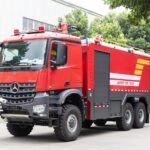
Companies like CSCTRUCK Fire Rescue Truck specialize in producing fire engines and trucks designed for rapid deployment, certified safety, and ultimate performance. Their fire engines are built with high-capacity pumps, large water tanks, and ergonomic crew cabins for efficient operations. Meanwhile, their aerial ladder trucks offer advanced reach, hydraulic controls, and extensive tool storage to handle complex rescues and urban firefighting scenarios. For fire departments evaluating fleet options, CSCTRUCK Fire Rescue Truck vehicles exemplify modern integration of speed, power, and versatility.

Conclusion
Choosing between a firefighter engine and a fire truck is not merely a matter of preference—it’s a strategic decision that directly impacts the effectiveness of emergency response. Fire engines deliver immediate fire suppression capabilities with water pumping and hose deployment, while fire trucks provide essential rescue, aerial, and specialized tool support.
Departments must carefully assess their operational environment, common emergency scenarios, crew training, and budget constraints to make the best choice. Often, a combination of both vehicles ensures comprehensive coverage, rapid response, and ultimate performance on the front lines of firefighting. By understanding the distinct roles and capabilities of firefighter engines and trucks, fire departments can equip themselves with the right tools to save lives, protect property, and respond efficiently to emergencies.