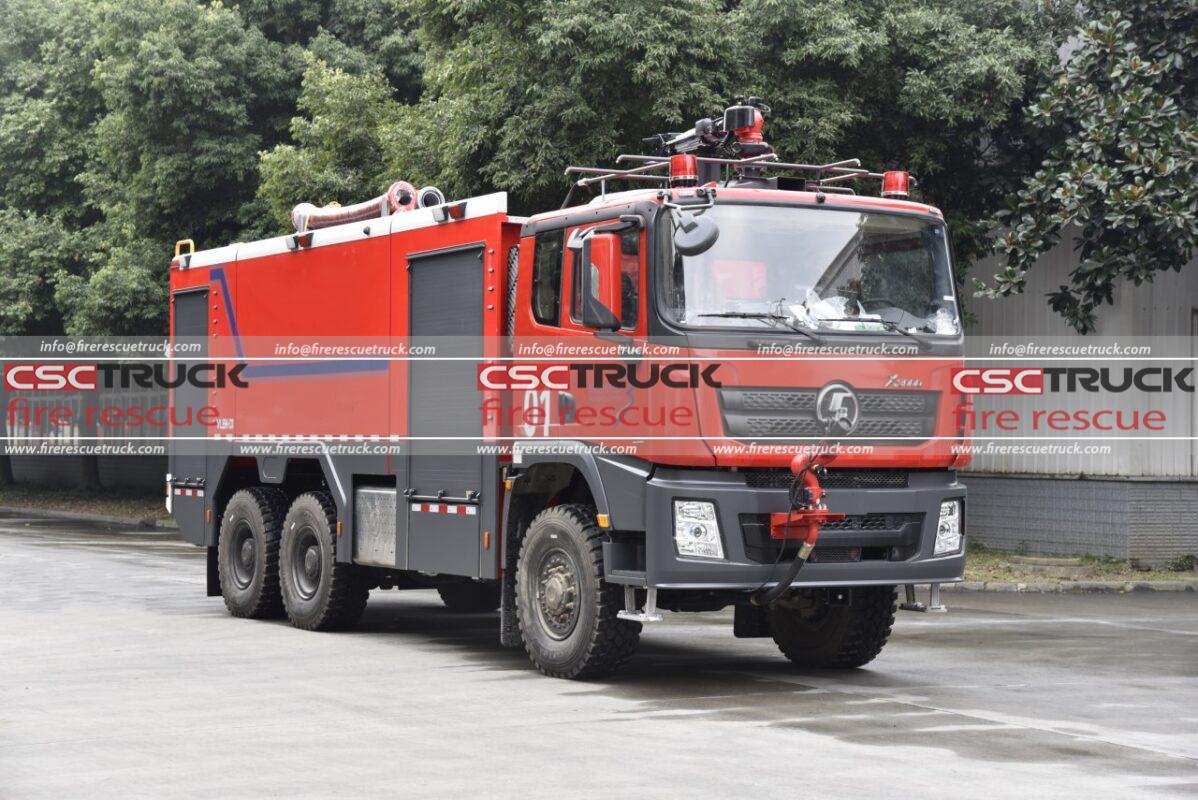
Airport Rescue and Firefighting (ARFF) vehicles are specialized machines designed to handle emergencies in the unique environment of airports. Unlike municipal fire trucks, ARFF vehicles are tailored to respond to aircraft incidents, fuel spills, and other aviation-related emergencies with speed, precision, and specialized firefighting agents. With airports varying in size, location, and traffic, ARFF vehicles come in multiple types and configurations, each designed to meet specific operational needs. This article provides a comprehensive overview of ARFF vehicle types, their key functions, and their use in airport operations worldwide.
1. Overview of ARFF Vehicles
ARFF vehicles, sometimes referred to as airport fire trucks or crash tenders, are engineered for rapid response to aviation incidents. These vehicles must navigate airport runways, taxiways, and ramps while carrying large amounts of firefighting agents such as water, foam, dry chemicals, or Halotron. They are built with powerful engines for high-speed response, advanced pump and turret systems for firefighting, and reinforced cabins for crew safety.
International standards, including those from the International Civil Aviation Organization (ICAO), define ARFF vehicle requirements based on airport size and aircraft types. Airports are categorized from Index A to Index F, which determines the minimum number and capacity of ARFF vehicles required.

2. Key ARFF Vehicle Types
ARFF vehicles can be broadly categorized into several types based on size, capability, and operational purpose. The most common types include:
2.1 Rapid Intervention Vehicles (RIVs)
Rapid Intervention Vehicles are smaller, highly maneuverable fire trucks designed for fast response. Typically used in airports with lower traffic or in secondary areas of larger airports, RIVs are capable of reaching incidents quickly to provide initial firefighting and rescue support.
Key Features:
- High acceleration and top speeds to navigate long runways quickly.
- Equipped with foam, dry chemicals, or a small water tank.
- Compact design allows access to tight airport areas or crowded ramps.
- Often used in tandem with larger ARFF vehicles to suppress fires until reinforcements arrive.
2.2 Large Foam Tenders / Crash Tenders
These are the most recognizable ARFF vehicles, typically seen at major international airports. They are designed to carry large volumes of water and foam for the rapid suppression of aircraft fires.
Key Features:
- Large-capacity water and foam tanks (up to 12,000 liters or more).
- Roof-mounted and bumper turrets for high-pressure foam projection.
- Advanced pumping systems for multiple discharge points simultaneously.
- Off-road capability for runway overrun scenarios.
- Enhanced crew protection with armored cabins and pressurized compartments to prevent smoke and heat exposure.
2.3 Off-Road ARFF Vehicles
Some airports, particularly those near rugged terrain or with unpaved airstrips, require specialized off-road ARFF vehicles. These trucks are built to navigate uneven surfaces and reach incidents in areas inaccessible to standard vehicles.
Key Features:
- All-wheel drive with high ground clearance.
- Reinforced suspension systems for rough terrain.
- Versatile firefighting equipment capable of handling both aviation and vegetation fires.
2.4 Dual-Purpose ARFF Vehicles
Certain modern ARFF vehicles are designed to serve multiple functions, including rescue, firefighting, and medical support. These dual-purpose vehicles combine traditional firefighting systems with integrated rescue tools such as hydraulic cutters, spreaders, and stretcher support.
Key Features:
- Onboard rescue equipment in addition to firefighting agents.
- Modular design to accommodate rapid mission changes.
- Often deployed in airports handling both passenger and cargo operations, where space and resources are limited.
2.5 Specialized Agent Vehicles
In addition to water and foam tenders, some ARFF fleets include vehicles designed to deploy specific extinguishing agents, such as dry powder, Halotron, or CO₂, for chemical or electrical fires. These are often used in cargo or maintenance areas where specialized hazards exist.
Key Features:
- Agent-specific tanks and delivery systems.
- Precise application for chemical fires, aircraft electronics, or fuel spills.
- Smaller, agile design for targeted suppression.
3. Functions of ARFF Vehicles
The primary mission of ARFF vehicles is to suppress fires and perform rescue operations during aviation emergencies. However, each type has specific functions that make it suitable for different scenarios:
3.1 Rapid Response
The first 90 seconds after an aircraft incident are critical. Rapid Intervention Vehicles and smaller crash tenders are designed to reach the scene as quickly as possible, applying initial firefighting measures to contain the fire and prevent escalation.
3.2 Fire Suppression
Large crash tenders provide the bulk of firefighting power. Using water, foam, and combined agents, they can suppress fuel-fed fires effectively. Modern turrets allow firefighters to direct foam streams accurately over large aircraft surfaces or into cabin windows and engines.
3.3 Rescue Operations
ARFF crews use integrated rescue tools to extricate passengers and crew. Some vehicles carry hydraulic rescue systems, ladders, and stretchers. In dual-purpose vehicles, firefighting and rescue functions can occur simultaneously.
3.4 Hazardous Material Response
Airports often handle flammable fuels, chemicals, and pressurized gases. Specialized agent vehicles allow ARFF teams to tackle chemical fires safely, preventing explosions or toxic exposure.
3.5 Off-Airport Operations
Certain ARFF vehicles are equipped for terrain challenges, making them suitable for incidents on remote runways, cargo aprons, or adjacent industrial areas. These vehicles combine firefighting capacity with off-road mobility.

4. Global Variations in ARFF Deployment
ARFF vehicles and operational strategies vary significantly across countries based on airport size, regulatory standards, and local hazards:
- North America: Major international airports often deploy multiple large crash tenders alongside smaller RIVs, with robust training for foam, water, and dry chemical suppression.
- Europe: Emphasis on multifunctional ARFF vehicles, capable of combining rescue, firefighting, and hazardous material management. Smaller regional airports often rely on compact, rapid intervention units.
- Asia: High-volume airports in countries like China, Japan, and the UAE operate a mix of super-sized foam tenders and fast-response vehicles to handle high passenger loads and frequent aircraft movements.
- Remote Regions: Airports in Africa, South America, and parts of Oceania often utilize off-road ARFF vehicles capable of tackling fires on unpaved or temporary airstrips.
5. Technological Advancements in ARFF Vehicles
Modern ARFF vehicles are increasingly integrated with cutting-edge technologies:
- Thermal imaging cameras for locating passengers and hotspots.
- Foam proportioning systems to mix foam agents accurately.
- Automatic fire detection systems are linked to the airport’s operations center.
- Telematics and GPS navigation to optimize response times.
- Enhanced ergonomic design to reduce firefighter fatigue during prolonged operations.

6. Conclusion
ARFF vehicles are indispensable to airport safety, offering specialized capabilities to respond to a wide range of emergencies. From rapid intervention units to massive crash tenders and off-road vehicles, each type plays a critical role in safeguarding passengers, crew, and airport infrastructure. Understanding the diverse types and functions of ARFF vehicles helps airports plan efficient emergency response strategies tailored to their size, layout, and operational demands. As technology continues to advance, ARFF fleets worldwide are becoming faster, more versatile, and increasingly effective at saving lives and limiting damage during aviation emergencies.