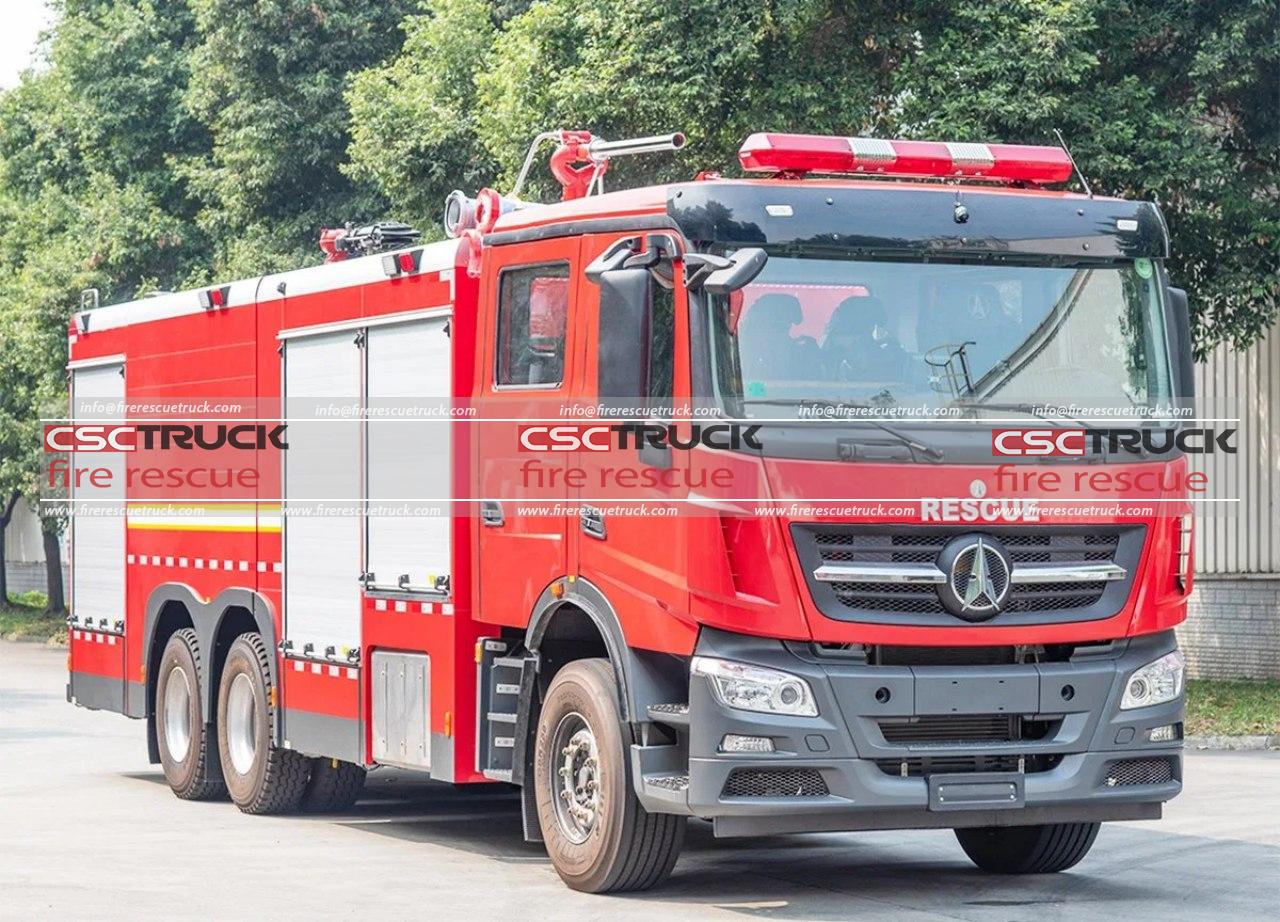
In modern emergency response operations, hazardous material (Hazmat) incidents pose some of the most complex and dangerous challenges for fire departments. Chemical spills, toxic gas leaks, radioactive releases, and biohazard threats require specialized equipment and highly trained personnel to contain and mitigate risks effectively. At the forefront of these responses is the hazmat fire truck—a specialized firefighting and rescue vehicle engineered for detecting, containing, and decontaminating hazardous materials. Designed with advanced technologies and purpose-built systems, the hazmat fire truck serves as a mobile command and response unit for managing chemical emergencies safely and efficiently.
1. Purpose and Role of the Hazmat Fire Truck
Unlike traditional fire trucks that primarily focus on extinguishing fires, the hazmat fire truck is designed to identify, contain, and neutralize hazardous substances. Its primary mission is not fire suppression, but risk assessment, monitoring, and safe mitigation of chemical, biological, radiological, nuclear, and explosive (CBRNE) materials.
These trucks are essential in industrial zones, ports, chemical plants, refineries, and urban environments where hazardous materials are transported or stored. They respond to emergencies involving chemical spills on highways, gas leaks in manufacturing plants, toxic vapor releases, or biological contamination events.
The presence of a hazmat fire truck ensures that emergency responders have immediate access to specialized detection instruments, containment gear, protective suits, and decontamination systems, enabling them to safely handle dangerous substances while minimizing public exposure and environmental damage.
2. Design and Construction
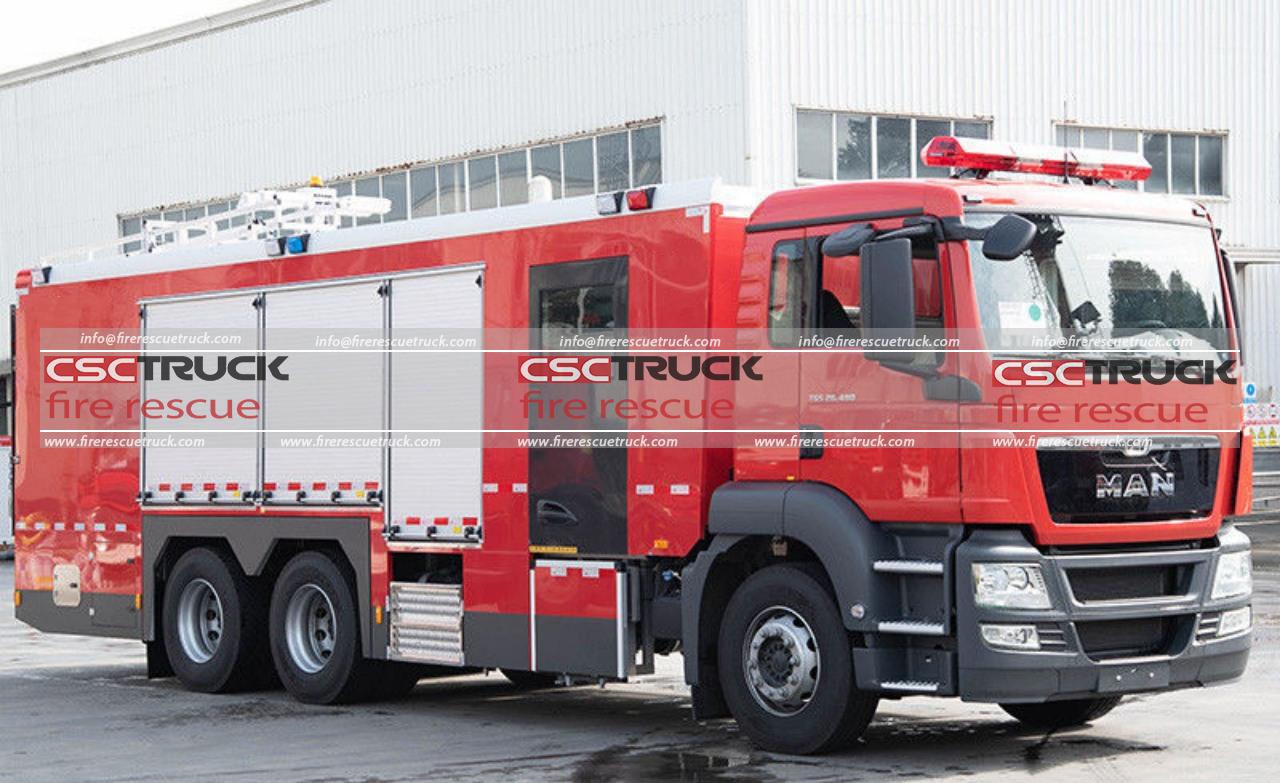
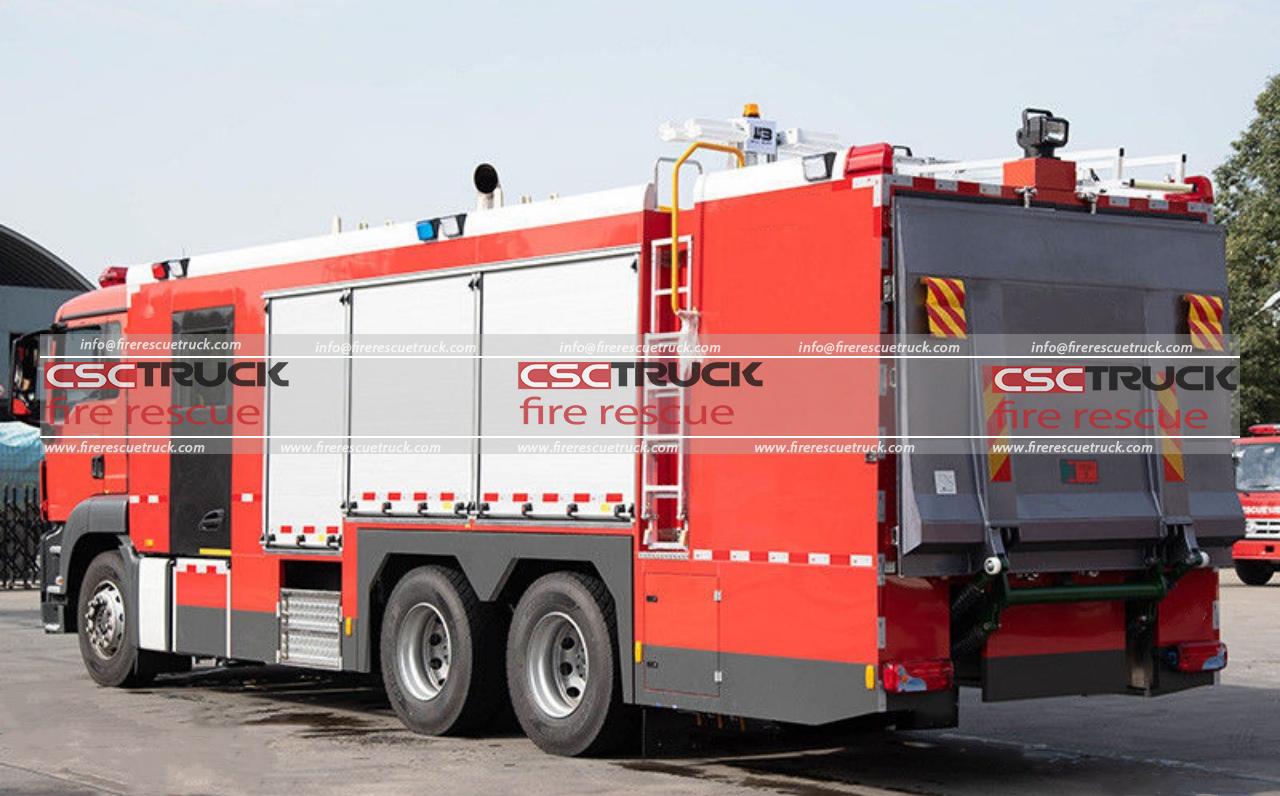
A hazmat fire truck is typically built on a robust commercial chassis—such as MAN, Scania, Mercedes-Benz, or International—ensuring stability and durability under demanding conditions. The vehicle is configured as a mobile laboratory and operations center, with reinforced compartments that house sensitive instruments and equipment.
The truck body is often constructed from corrosion-resistant aluminum or stainless steel, as it must withstand exposure to corrosive chemicals and harsh environments. Inside, the layout is divided into multiple sections:
Command and Control Cabin – Equipped with communication consoles, mapping systems, and data terminals for real-time coordination.
Detection and Analysis Area – Contains instruments for chemical identification and atmospheric monitoring.
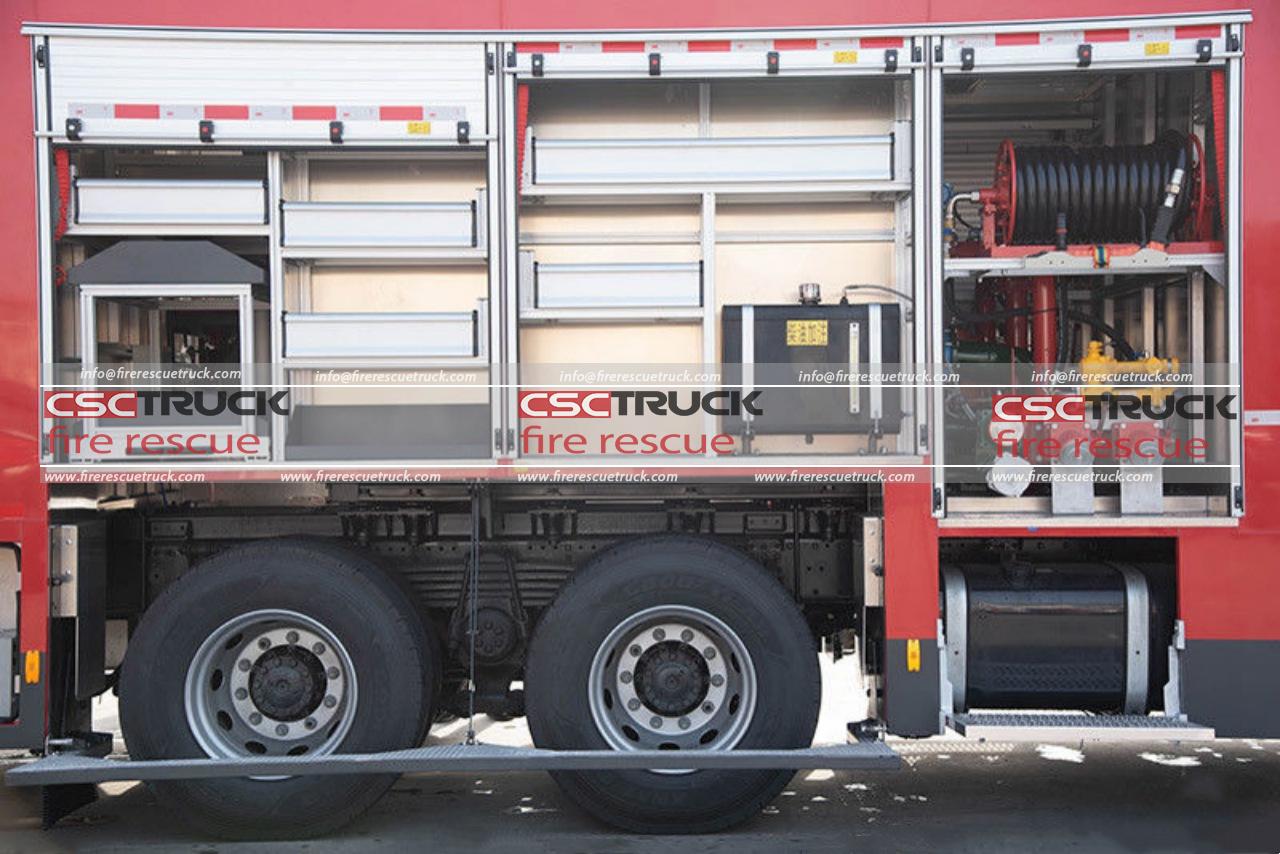
Storage Compartments – Securely hold protective suits, containment tools, and decontamination supplies.
Decontamination Section – Some units are fitted with integrated showers, rinse systems, and wastewater collection tanks.
Many modern Hazmat fire trucks are built on modular designs, allowing fire departments to customize configurations based on regional risks and operational needs.
3. Key Equipment and Systems
The defining characteristic of a hazmat fire truck is its advanced suite of specialized equipment for detection, containment, and cleanup of hazardous materials. Some of the most vital systems include:
a. Detection and Monitoring Instruments
Gas and Vapor Detectors: For identifying flammable, toxic, or oxygen-deficient atmospheres.
Chemical Agent Monitors: Detects nerve, blister, and blood agents in the environment.
Radiation Detectors: Measures gamma, beta, and neutron radiation levels.
Photoionization Detectors (PIDs): Used for volatile organic compounds (VOCs).
Infrared Spectrometers: For real-time chemical substance analysis.
These tools enable first responders to identify unknown substances rapidly, assess risk levels, and determine the appropriate containment strategy.
b. Containment and Neutralization Tools
Sealing Kits and Absorbent Materials: Used to stop leaks from containers and pipelines.
Overpack Drums and Recovery Tanks: For safely storing and transporting hazardous materials.
Chemical Neutralizers: Specialized agents that neutralize acids, alkalis, or toxic substances.
c. Protective Equipment
Hazmat trucks carry multiple levels of personal protective equipment (PPE), including:
Level A fully encapsulated suits with self-contained breathing apparatus (SCBA).
Level B splash-protective suits with supplied air respirators.
Chemical-resistant gloves and boots.
d. Decontamination Systems
Many hazmat fire trucks include onboard decontamination systems with heated water supplies, pumps, and foldable shower tents. These systems enable the rapid decontamination of personnel and equipment exposed to harmful substances, thereby preventing secondary contamination.
e. Communication and Data Systems
The Hazmat Fire Truck acts as a mobile incident command center, featuring:
Satellite communication systems and digital radios.
Real-time data transmission from field sensors to command posts.
GPS tracking and environmental mapping tools.
These technologies enable effective coordination between fire, police, medical, and environmental agencies.
4. Performance and Capabilities
While firefighting capacity is not its primary function, many hazmat fire trucks are equipped with small water and foam tanks (ranging from 1,000 to 3,000 liters) and low-flow pumps to handle limited suppression tasks such as washing down contaminated surfaces or cooling chemical containers.
Typical specifications include:
Chassis: 4×2 or 6×4 heavy-duty truck platform.
Engine Power: 250–400 horsepower diesel engine.
Maximum Speed: Around 85–100 km/h.
Crew Capacity: 4 to 6 personnel.
Electrical System: 24V power supply with auxiliary generator.
The truck also supports independent power and lighting systems, allowing continuous operation at night or during power outages.
5. Operational Deployment
During a hazardous materials incident, the hazmat fire truck is deployed as part of a multi-agency response. The sequence of operation typically includes:
Initial Assessment: Detection instruments are used to identify the type and concentration of contaminants.
Isolation and Containment: Leaks or spills are controlled using sealing kits and containment booms.
Neutralization: Chemical reagents are applied to stabilize or neutralize the hazard.
Decontamination: Exposed personnel, victims, and equipment undergo systematic cleaning.
Environmental Monitoring: Air, soil, and water samples are analyzed to verify safety.
This structured response minimizes danger to personnel, the public, and the environment while restoring safety efficiently.
6. Safety Features and Crew Protection
Because of the extreme dangers associated with chemical incidents, crew safety is paramount. The hazmat fire truck is equipped with:
Positive-pressure cabin filtration systems that prevent toxic gas intrusion.
Integrated SCBA storage and recharging stations.
Emergency eyewash and shower units.
Thermal imaging cameras for visibility in low-light or smoky environments.
Some models even include airlock-style entry systems, enabling responders to don or remove protective suits without exposing the cabin interior to contaminants.
7. Importance in Modern Emergency Response
The significance of the hazmat fire truck extends beyond firefighting—it represents a vital public safety and environmental protection asset. In an era of increasing chemical transport, industrialization, and urban density, the potential for hazardous material incidents is ever-present.
These trucks allow responders to act swiftly and intelligently, reducing the risk of large-scale contamination and saving lives. Moreover, with their mobile laboratory and command capabilities, Hazmat fire trucks play a critical role in disaster preparedness and inter-agency coordination.
8. Conclusion
The hazmat fire truck stands as a testament to the evolution of emergency response technology. Combining scientific precision, operational versatility, and life-saving design, it enables firefighters to tackle some of the most dangerous situations with confidence and control.
From detecting invisible gases to neutralizing toxic spills and protecting entire communities from hazardous exposure, the hazmat fire truck embodies the future of specialized firefighting and rescue. As technology continues to advance, these vehicles will only become more sophisticated—ensuring that when the next chemical emergency strikes, responders have the tools they need to safeguard both people and the planet.