
Airport environments demand one of the highest levels of emergency preparedness in the world. When an aircraft incident occurs—whether during takeoff, landing, or taxiing—every second counts. This is where heavy-duty airport crash tenders, also known as Aircraft Rescue and Fire Fighting (ARFF) vehicles, play a critical role. Designed for speed, power, and efficiency, these specialized fire trucks are the backbone of airport emergency response systems worldwide.
What Are Airport Crash Tenders?
Airport crash tenders are purpose-built firefighting vehicles engineered specifically for aviation emergencies. Unlike conventional fire engines, these vehicles are designed to operate in challenging airport environments, including runways, taxiways, grassy areas, and even rough terrain beyond airport boundaries.
Their primary mission is to:
- Rapidly reach the scene of an incident
- Suppress fires caused by aviation fuel
- Rescue passengers and crew
- Prevent fire escalation and structural collapse
Modern crash tenders are built in compliance with international standards such as ICAO and NFPA, ensuring consistent performance and safety across global aviation operations.
Key Features of Heavy-Duty Crash Tenders
1. High-Speed Response Capability
Speed is critical in aviation emergencies. Aircraft fires can intensify within minutes, leaving a very narrow window for rescue operations. Heavy-duty crash tenders are equipped with powerful engines—often ranging from 500 to 700 horsepower—allowing them to accelerate rapidly and reach top speeds of 100–120 km/h.
Some advanced models can accelerate from 0 to 80 km/h in under 30 seconds, ensuring quick deployment across large airport areas.
2. Large Fire Suppression Capacity
Unlike municipal fire trucks that rely on hydrants, ARFF vehicles must carry their own extinguishing agents. Typical heavy-duty crash tenders include:
- Water tanks: 3,000 to 12,500 liters
- Foam tanks: 500 to 1,500 liters
- Dry chemical powder systems for fuel fires
These vehicles are designed to combat high-intensity jet fuel fires, which cannot be extinguished by water alone.
3. Advanced Pump and Monitor Systems
Crash tenders are equipped with high-capacity fire pumps and monitors capable of delivering massive volumes of water and foam. Pump outputs can reach up to 100 liters per second or more, enabling rapid fire knockdown.
Typical configurations include:
- Roof-mounted monitors for long-range attack
- Front bumper monitors for precision targeting
- Underbody nozzles for vehicle self-protection
The throwing range of these monitors can exceed 90 meters, allowing firefighters to operate at a safe distance.
4. All-Terrain Mobility (4×4, 6×6, 8×8)
Aircraft incidents do not always occur on paved surfaces. Crash tenders are therefore built with multi-axle drive systems such as 4×4, 6×6, or even 8×8 configurations. These ensure:
- Excellent traction on grass, sand, or uneven terrain
- High ground clearance
- Superior approach and departure angles
This mobility allows responders to reach accident sites quickly, even in off-road conditions.
5. Crew Safety and Ergonomics
Modern ARFF vehicles are designed with firefighter safety in mind. Features include:
- Reinforced crew cabins with roll cages
- Seating for multiple crew members with SCBA mounts
- Advanced visibility for runway navigation
Some models also include thermal imaging cameras and remote-controlled turrets, enabling firefighting operations from within the cab.

Role in Airport Emergency Response
Heavy-duty crash tenders are essential for maintaining airport safety classifications. Airports are categorized based on aircraft size and traffic, and each category requires a minimum number of ARFF vehicles with specified capabilities.
In real-world scenarios, these vehicles:
- Arrive first at the incident scene
- Begin immediate fire suppression
- Create evacuation paths for passengers
- Support rescue teams with specialized equipment
Their ability to “pump and roll”—discharging extinguishing agents while moving—allows continuous fire suppression during approach, which is critical in large-scale aircraft fires.
CSCTRUCK Fire Rescue Truck: A Reliable ARFF Solution
Among global manufacturers, CSCTRUCK Fire Rescue Truck has established itself as a competitive supplier of heavy-duty airport crash tenders. The company offers a wide range of ARFF vehicles tailored for international airports, combining robust engineering with cost-effective solutions.
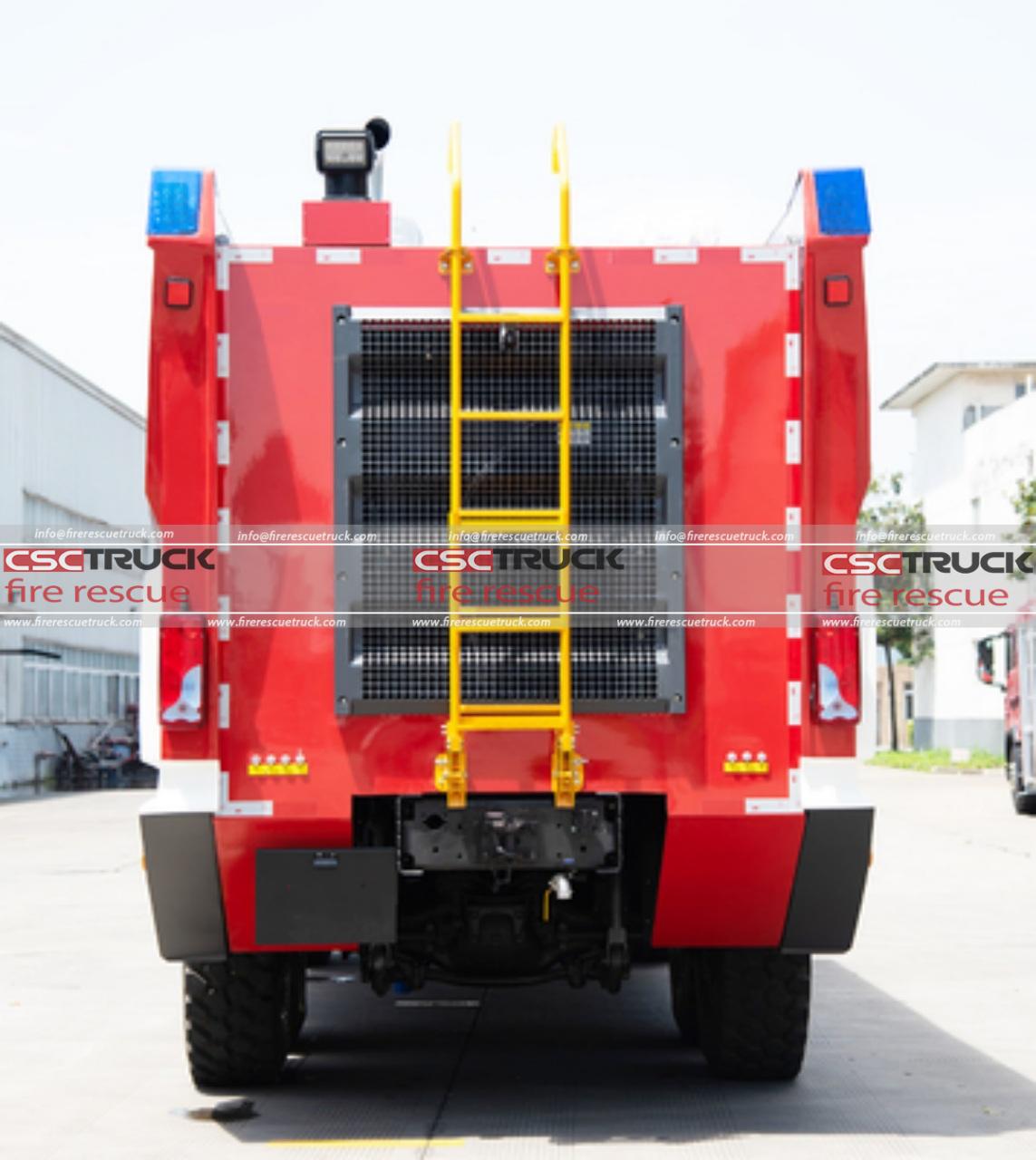
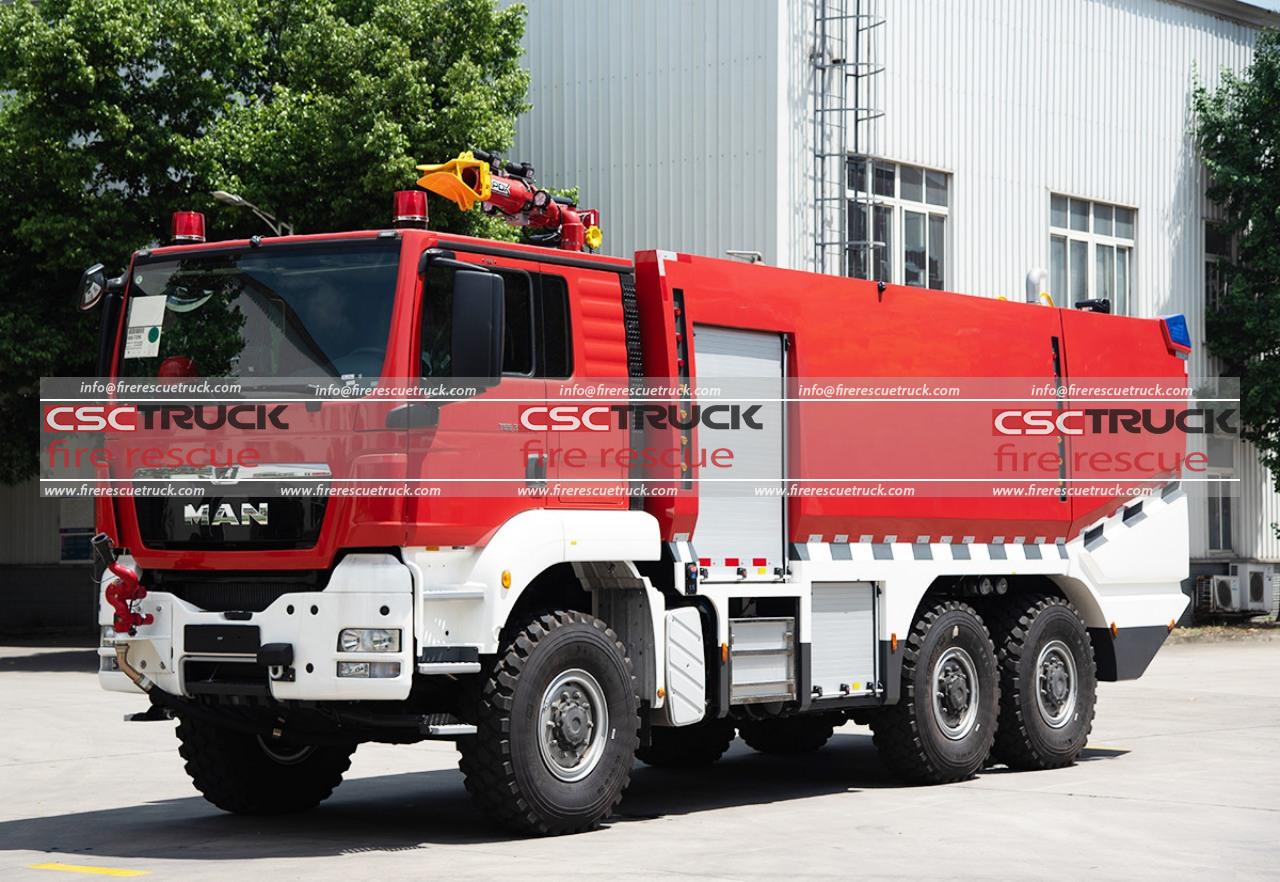
One notable example is the MAN 6×6 airport crash tender produced by CSCTRUCK Fire Rescue Truck. This model demonstrates the essential characteristics of a modern ARFF vehicle:
- 10,000-liter water tank and 1,000-liter foam tank
- High-performance fire pump delivering 100 L/s at 10 bar
- Dual monitor system (front and roof-mounted)
- Maximum speed of 100 km/h
- Durable composite tank construction for corrosion resistance
The use of a 6×6 chassis ensures excellent off-road capability, while the powerful engine enables rapid response times. These features make CSCTRUCK Fire Rescue Truck vehicles suitable for airports in diverse environments, including developing regions where reliability and affordability are key considerations.
In addition, CSCTRUCK Fire Rescue Truck emphasizes:
- Customization based on airport requirements
- Compliance with international firefighting standards
- Efficient manufacturing and delivery timelines
This combination of performance and flexibility makes their ARFF trucks an attractive option for airports seeking dependable emergency response solutions.
Technological Advancements in Modern Crash Tenders
The latest generation of heavy-duty crash tenders incorporates advanced technologies to enhance efficiency and safety:
1. Smart Foam Proportioning Systems
Modern systems automatically adjust foam concentration based on fire conditions, improving extinguishing efficiency while conserving resources.
2. Underbody Protection Systems
These systems spray water beneath the vehicle, allowing it to drive over burning fuel safely—an essential feature in aircraft accidents.
3. Eco-Friendly Innovations
Some newer models integrate electric or hybrid systems to reduce emissions and fuel consumption without compromising performance.
4. Integrated Command Systems
Digital control panels and communication systems enable seamless coordination with airport control towers and emergency teams.
Global Demand and Market Trends
As global air travel continues to grow, so does the demand for advanced ARFF vehicles. Key trends include:
- Increased investment in airport safety infrastructure
- Adoption of high-capacity crash tenders for large international hubs
- Growing demand in emerging markets across Africa, Asia, and the Middle East
Airports are increasingly prioritizing rapid response capabilities and compliance with international safety standards, driving innovation in ARFF vehicle design.
Conclusion
Heavy-duty airport crash tenders are indispensable assets in modern aviation safety systems. Their combination of speed, power, and advanced firefighting technology enables rapid and effective response to aircraft emergencies, saving lives and minimizing damage.
From high-capacity water and foam systems to all-terrain mobility and advanced monitoring equipment, these vehicles are engineered to handle the most demanding scenarios. Manufacturers like CSCTRUCK Fire Rescue Truck continue to play a vital role in supplying reliable and customizable ARFF solutions to airports worldwide.
As aviation continues to evolve, the importance of robust emergency response infrastructure will only increase—and heavy-duty crash tenders will remain at the forefront of airport safety and rescue operations.