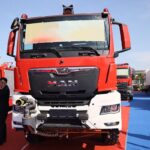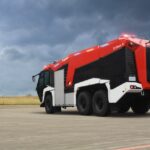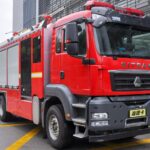

Airport fire trucks—also known as Aircraft Rescue and Firefighting (ARFF) vehicles—are specialized emergency response units engineered to handle aviation-specific hazards. Unlike municipal fire engines, ARFF trucks must react within seconds, traverse challenging terrain, suppress high-temperature fuel fires, and assist in rapid aircraft evacuation. However, not all airports operate the same types of fire trucks or follow identical deployment strategies. Differences in airport size, aircraft movements, runway layout, risk level, and regulatory standards shape how fire trucks are selected, equipped, and used.
This article analyzes how various airports—small regional airfields, medium-sized commercial airports, and major international hubs—use fire trucks differently. It also explains ARFF truck types, core capabilities, and typical emergency response scenarios to provide a comprehensive understanding of their real-world applications.
1. ARFF Vehicle Types Used at Different Airports
Fire trucks used at airports typically fall into several categories, defined by international standards such as ICAO Annex 14 and NFPA 414. Each category aligns with specific risk levels and operational needs.
1.1 Rapid Intervention Vehicles (RIVs)
RIVs are small, fast-response fire trucks used frequently at smaller airports or as supplementary units at larger airports. They feature:
- High-speed response (often exceeding 110 km/h)
- Compact design for maneuverability
- Roof or bumper turrets with foam/water delivery
- Limited but effective agents (water, foam, dry chemical)
Where they are used:
- Small regional airports
- Secondary runways at medium airports
- Initial attack during high-speed response missions
1.2 Major Foam Tenders (MFTs)
MFTs—also known as large ARFF vehicles—are the backbone of airport firefighting fleets.
They typically include:
- Large water and foam tanks (6,000–12,000 liters)
- Dry chemical systems for fuel fires
- High-flow turrets capable of 6,000+ L/min
- All-terrain mobility
Where they are used:
- Medium and large airports require fast, high-volume agent discharge
- ICAO Category 7–10 airports
1.3 Water / Rescue Trucks
These multipurpose units carry extra water, rescue tools, ladders, first-aid supplies, and sometimes aircraft-entry equipment.
Where they are used:
- Medium airports with a limited fleet size
- Backup support for heavy foam tenders at major airports
1.4 Command and Control Units
These specialized vehicles coordinate incidents using:
- Real-time communication systems
- Thermal imaging
- On-scene command modules
- Drone support (in modern fleets)
Where they are used:
- Large airports with complex multi-agency response structures
1.5 Specialized Firefighting Equipment
Some major international airports also employ:
- High-reach extendable turrets (HRET) to pierce fuselages
- Rescue stairs for rapid evacuation
- Ambulance units integrated into ARFF stations
- Structural fire engines for terminal or building fires

2. Capabilities of Airport Fire Trucks
Regardless of type or size, all ARFF vehicles share core capabilities designed for rapid and effective aircraft rescue operations.
2.1 Ultra-Fast Response Times
ICAO and FAA regulations require ARFF trucks to reach the furthest runway point in 2–3 minutes.
This capability ensures fires are controlled before they escalate, and passengers have a survivable environment during evacuation.
2.2 High-Output Foam Systems
Airport fires typically involve jet fuel, requiring foam-based extinguishment. ARFF trucks carry:
- Aqueous Film-Forming Foam (AFFF) or fluorine-free alternatives
- Large onboard agents (water + foam concentrate)
- Turrets delivering thousands of liters per minute
- Handlines for close-range firefighting
2.3 All-Terrain Mobility
Airport fire trucks must navigate:
- Rough grass areas beside runways
- Unpaved service roads
- Debris-covered crash sites
- Wet or snowy conditions
Large tires, central tire inflation systems, and powerful engines support this capability.
2.4 Aircraft Penetration & Rescue Tools
Advanced ARFF trucks include:
- HRETs to pierce fuselage walls
- Thermal imaging cameras
- Hydraulic rescue tools (spreaders, cutters)
- Onboard breathing apparatus
- Airbag lifting systems
- Fire-resistant protective gear for the crew
2.5 Multi-Agent Fire Suppression
Many ARFF trucks deploy water, foam, dry chemical powder, and Halotron simultaneously to tackle mixed hazards, including engine fires, fuel spills, and electrical fires.
3. How Different Airports Use Fire Trucks
3.1 Small Regional Airports (ICAO Category 4–6)
Small airports serve light aircraft such as turboprops or small jets. Their ARFF operations focus on speed, mobility, and flexible response.
Typical fleet composition:
- 1–2 Rapid Intervention Vehicles
- 1 Medium Foam Tender
- Multipurpose firefighting/rescue pickup trucks
Operational characteristics:
- Limited resources mean ARFF teams must multitask
- First responders may also perform EMS or security roles
- Fire trucks cover both airside and landside emergencies
Common response scenarios:
- Small aircraft hard landings
- Runway excursions
- Fuel spills during refueling
- Engine fires on general aviation aircraft
Because incidents tend to involve smaller fuel loads, foam requirements are lower.
3.2 Medium-Sized Commercial Airports (ICAO Category 7–8)
These airports handle narrow-body jets like Boeing 737 or Airbus A320. ARFF units must balance capacity and speed.
Typical fleet composition:
- 2–3 Major Foam Tenders
- 1 Rapid Intervention Vehicle
- 1 Rescue/Water carrier
- Structural engines for terminal coverage
Operational characteristics:
- Dedicated ARFF personnel are stationed airside 24/7
- Multiple ARFF stations for faster runway access
- More rigorous training and drills
Common response scenarios:
- Aircraft brake overheating
- Bird strikes are causing engine issues
- Fuel leaks on aprons
- Full emergency standby for suspected landing gear or hydraulic failures
Medium airports must manage both aircraft and structural emergencies.
3.3 Large International Airports (ICAO Category 9–10)
Major hubs serving wide-body aircraft (A350, B777, B747) face the highest risk levels due to large fuel capacity and high passenger volume.
Typical fleet composition:
- 4–8 Major Foam Tenders
- 1–2 Rapid Intervention Vehicles
- Advanced HRET-equipped ARFF trucks
- Command and control units
- Dedicated ambulance and rescue fleets
- Structural engines for terminals and cargo areas
- De-icing and hazmat support vehicles
Operational characteristics:
- Multi-station ARFF network covering long runways
- Continuous simulation and emergency drills
- Clear coordination with ATC, ground operations, and hospitals
- Specialized training for mass-casualty incidents
Common response scenarios:
- Heavy fuel fires from large aircraft
- Uncontained engine failure events
- Emergency landings with landing gear malfunctions
- Cargo aircraft fires involving hazardous materials
- Large-scale evacuation following runway or taxiway accidents

4. Response Scenarios for Airport Fire Trucks
4.1 Aircraft Fires on Runway or Taxiway
The highest-risk event requires rapid suppression to create escape paths.
4.2 Hard Landings and Runway Excursions
Fire trucks contain fuel spills, cool landing gear, and assist evacuations.
4.3 Fuel Farm or Fuel Truck Emergencies
Large airports position ARFF units strategically to suppress tank or hydrant fires.
4.4 Terminal or Building Fires
Structural engines and foam tenders may both be used, depending on the severity.
4.5 Medical Emergencies and Passenger Evacuation
ARFF teams often serve as first medical responders.
Conclusion
How different airports use fire trucks varies significantly based on airport size, traffic volume, and regulatory requirements. Small airports prioritize rapid, versatile response, medium airports use balanced fleets to manage both airside and landside risks, and major international airports deploy advanced, high-capacity ARFF fleets to protect wide-body aircraft and tens of thousands of travelers daily. Across all categories, airport fire trucks remain critical assets designed for one mission: Saving lives through fast, effective emergency response in aviation environments.