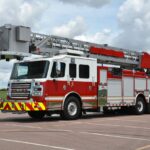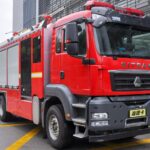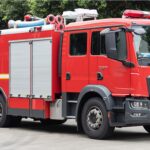

Fire trucks are essential lifelines in emergencies, rushing to the scene with sirens blaring to fight fires, perform rescues, and provide critical support. One of the most crucial aspects of a fire truck’s effectiveness is its water-carrying capacity. Understanding how much water a fire truck can hold is not just a curiosity—it’s vital for fire departments, safety planners, and even the general public to appreciate the scale of these life-saving vehicles.
The Basics of Fire Truck Water Capacity
At its core, a fire truck is designed to transport both firefighters and water to an emergency site quickly. The water carried on board is stored in a tank specifically engineered to fit the truck’s chassis while ensuring stability during travel. The water tank allows firefighters to begin combating a fire immediately upon arrival, even before connecting to external sources like hydrants.
Most modern fire trucks are equipped with water tanks ranging from 300 gallons (1,136 liters) to 1,500 gallons (5,678 liters). The size of the tank depends on the type of fire truck, its intended use, and the operational needs of the fire department.

Different Types of Fire Trucks and Their Water Capacity
The water capacity of a fire truck is closely linked to its type. Let’s explore the main categories:
1. Pumper Trucks (Engine Companies)
Pumper trucks, also known as fire engines, are the most common fire trucks in municipal fire departments. They are designed primarily to pump water onto fires and usually carry hoses, ladders, and essential firefighting equipment.
- Water Capacity: Pumper trucks typically carry between 500 and 1,000 gallons (1,893–3,785 liters) of water.
- Purpose: These trucks are ideal for urban environments where fire hydrants are readily available. The onboard water acts as an initial supply while hoses are connected to hydrants for sustained operations.
2. Tanker Trucks (Water Tenders)
Tanker trucks are specialized vehicles designed to carry large volumes of water to fire scenes in areas without hydrants, such as rural or wildland regions.
- Water Capacity: Tankers can hold 1,500 to 3,000 gallons (5,678–11,356 liters) or even more in some configurations.
- Purpose: These trucks provide a mobile water supply, often working in tandem with pumper trucks to ensure a continuous flow of water to combat large fires.
3. Wildland Fire Engines
Wildland fire trucks are designed to navigate rugged terrain and fight forest or brush fires. They are typically smaller and more maneuverable but still carry sufficient water for remote firefighting.
- Water Capacity: Generally, wildland trucks carry 200 to 400 gallons (757–1,514 liters) of water.
- Purpose: Their focus is rapid deployment and mobility, often using portable pumps and water backpacks in addition to their onboard water supply.
4. Aerial Ladder Trucks
Aerial ladder trucks, also called ladder companies, focus on rescue operations and high-rise firefighting. Many of these trucks have smaller water tanks, as their primary role is to provide access to tall structures rather than deliver large volumes of water.
- Water Capacity: Most aerial trucks carry 300 to 500 gallons (1,136–1,893 liters).
- Purpose: They often rely on external water sources such as hydrants or tanker trucks to supply water to hoses connected to their ladders.
Factors That Influence Fire Truck Water Capacity
Several factors determine how much water a fire truck can carry:
1. Chassis and Vehicle Size
Larger trucks built on heavy-duty chassis can support bigger water tanks. The design must balance water weight with vehicle stability, braking, and maneuverability. Water is heavy—1 gallon weighs approximately 8.34 pounds (3.78 kilograms). For example, a 1,000-gallon tank adds over 8,000 pounds to the truck, requiring reinforced suspension and braking systems.
2. Purpose and Operational Area
Urban fire trucks may carry less water, relying on the abundance of hydrants. Rural or remote-area fire trucks carry more water because they may not have access to immediate external supplies. Fire departments design their fleets based on response zones and expected scenarios.
3. Regulations and Road Limits
Weight limits on roads and bridges also influence water tank size. Fire trucks must adhere to local transportation laws to ensure safe travel. This often requires compromises between maximum water capacity and vehicle dimensions.
4. Pump and Hose Configuration
The efficiency of a truck’s pump system also affects water usage. Advanced pumps can deliver water at high pressure over long distances, reducing the need for excessively large onboard water tanks. Some trucks are designed to work with hydrants or other water sources, minimizing the need for a large onboard supply.
How Fire Trucks Use Water in Emergencies
Carrying water is only part of the story. How the water is used on-site determines a truck’s effectiveness:
- Direct Attack: Firefighters apply water directly to flames, which requires high-pressure pumps and hoses.
- Exposure Protection: Water is sprayed to protect nearby structures or vegetation from catching fire.
- Foam Application: Some fire trucks mix foam with water to fight chemical or fuel-based fires. Foam often requires a proportion of water for proper operation.
A truck with a 1,000-gallon tank, for instance, may deploy a high-pressure hose that empties the tank in 10–15 minutes of continuous firefighting. This illustrates why fire trucks are often supplemented by hydrants, tankers, or additional engines on larger incidents.
Innovations in Fire Truck Water Storage
Fire truck manufacturers continually innovate to optimize water storage:
- Compartmentalized Tanks: Dividing the tank into sections prevents water from sloshing, improving stability and vehicle handling.
- High-Strength Lightweight Materials: Using aluminum or composite tanks reduces overall weight while maintaining capacity.
- Integrated Foam Systems: Many trucks now carry both water and foam concentrates, allowing versatile firefighting without needing separate vehicles.
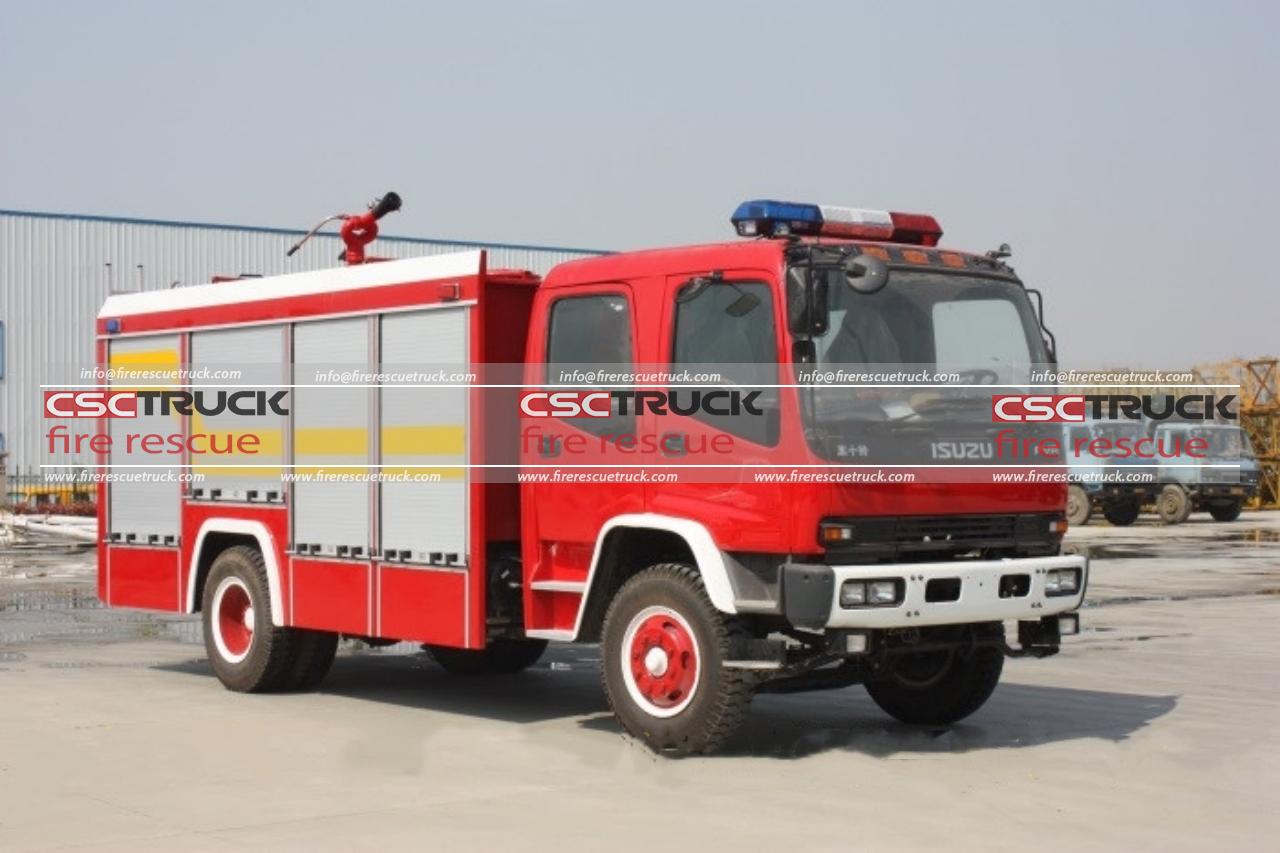
For example, companies like CSCTRUCK Fire Rescue Truck offer fire rescue trucks equipped with advanced water and foam systems that balance capacity, mobility, and safety for rapid deployment in urban and rural scenarios.

Conclusion
So, how much water can a fire truck hold? The answer depends on the type of truck, its purpose, and operational requirements. Municipal pumper trucks generally carry 500–1,000 gallons, tankers may exceed 3,000 gallons, while specialized vehicles like wildland and aerial trucks carry smaller amounts.
Water capacity is carefully engineered to balance effectiveness, vehicle stability, and rapid response needs. Whether it’s a rural tanker delivering thousands of gallons to a wildfire or an urban engine using hydrants to supplement its 500-gallon tank, water remains the lifeblood of firefighting operations. Understanding a fire truck’s water capacity highlights the incredible planning, engineering, and logistics that go into ensuring firefighters can respond quickly and safely to emergencies.
Fire trucks may vary in size, water capacity, and purpose, but they all share a common mission: Delivering life-saving water when and where it’s needed most. The next time you see a fire truck rushing down the street, remember the thousands of pounds of water it carries—and the critical role it plays in protecting lives and property.