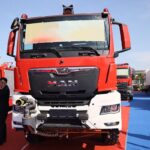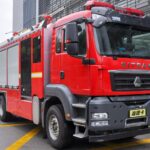

Airport Fire Trucks—commonly known as Aircraft Rescue and Fire Fighting (ARFF) vehicles—are among the most advanced and specialized firefighting machines in the world. Designed to respond within seconds to aircraft emergencies, these vehicles play a critical role in ensuring aviation safety. For airports seeking reliable, high-performance equipment, ICAO-compliant ARFF trucks are the global benchmark.
In this article, we explore the engineering, features, standards, and buying considerations of airport fire trucks for sale, along with an introduction to CSCTRUCK Fire Rescue Truck, a leading manufacturer in this field.
What Are ICAO Standard ARFF Vehicles?
ARFF vehicles are purpose-built firefighting trucks designed specifically for airport operations. Their primary mission is to rescue passengers and crew and suppress fires—especially those involving aviation fuel—within extremely tight response times.
The standards for these vehicles are set by the International Civil Aviation Organization (ICAO), which defines airport fire categories based on aircraft size and traffic volume. Each category determines the number of vehicles required, as well as the minimum extinguishing agent capacity.
Unlike municipal fire engines, ARFF trucks must:
- Reach any point on the runway within minutes
- Operate effectively on both paved and off-road terrain
- Deliver massive volumes of extinguishing agents quickly
These requirements make ARFF vehicles uniquely powerful and technologically advanced.

Key Features of Airport Fire Trucks
1. High-Speed Response and Mobility
Speed is critical in aviation emergencies. ICAO standards require that ARFF vehicles reach incident locations rapidly—often within 2–3 minutes of alarm activation.
Modern ARFF trucks feature:
- Engines ranging from 500 to over 1,000 horsepower
- Top speeds exceeding 110–130 km/h
- Acceleration optimized for heavy vehicles
Additionally, all-wheel-drive configurations (4×4, 6×6, 8×8) and advanced suspension systems allow these trucks to traverse grass, gravel, and uneven terrain with ease.
2. Large-Capacity Fire Suppression Systems
Airport fire trucks carry significantly more extinguishing agents than standard fire engines. This is essential for tackling large-scale jet fuel fires.
Typical capacities include:
- Water: 11,000–15,000 liters
- Foam concentrate: 1,000–2,000 liters
- Dry chemical powder: up to 250–450 kg
High-performance pumps can deliver thousands of liters per minute, ensuring rapid fire knockdown.
3. Advanced Firefighting Technology
ARFF vehicles incorporate cutting-edge systems designed specifically for aircraft incidents:
- Roof and bumper turrets: Allow long-range foam or water discharge while moving
- High Reach Extendable Turret (HRET): Can penetrate aircraft fuselage to suppress internal fires
- Pump-and-roll capability: Enables continuous extinguishing while driving
- Thermal imaging cameras: Improve visibility in smoke-filled environments
These technologies enable firefighters to act quickly and effectively—even before reaching the aircraft.
4. Robust Construction and Safety Design
Airport fire trucks are engineered for durability and crew safety:
- Lightweight aluminum or composite bodies for strength and corrosion resistance
- Panoramic cabins for enhanced visibility
- Fire-resistant materials and ergonomic controls
- Seating for 2–4 firefighters with integrated communication systems
The design ensures both operational efficiency and maximum protection for personnel.
ICAO Categories and Vehicle Configurations
ICAO defines airport rescue categories (typically Category 1 to 10), which dictate the type and number of ARFF vehicles required.
Small Airports (Categories 1–5)
- 4×4 compact ARFF vehicles
- Lower water and foam capacity
- Designed for regional or general aviation
Medium Airports (Categories 6–8)
- 6×6 ARFF trucks
- Water capacity: 7,500–11,300 liters
- Balanced performance and versatility
Large International Airports (Categories 9–10)
- 6×6 or 8×8 heavy-duty ARFF vehicles
- Maximum agent capacity and pump output
- Equipped with HRET and advanced systems
This classification ensures that every airport is equipped to handle its specific risk level.

CSCTRUCK Fire Rescue Truck – A Reliable ARFF Manufacturer
CSCTRUCK Fire Rescue Truck, based in China, has become a trusted supplier of airport firefighting vehicles worldwide. The company specializes in manufacturing ICAO-compliant ARFF trucks tailored to different airport categories and operational needs.
Key Advantages of CSCTRUCK Fire Rescue Truck ARFF Vehicles
- Compliance with International Standards
Vehicles are built to meet ICAO, NFPA, and EN requirements, ensuring global compatibility. - High-Performance Engineering
Designed for rapid response, off-road mobility, and high-capacity firefighting operations. - Customizable Configurations
Options include 4×4, 6×6, and 8×8 chassis, as well as tailored tank capacities and equipment packages. - Quality Certifications
Manufactured under ISO 9001, ISO 14001, and ISO 45001 standards for quality, environmental, and safety management. - Cost-Effective Solutions
Competitive pricing without compromising performance, making them ideal for developing and expanding airports.
CSCTRUCK Fire Rescue Truck’s ARFF vehicles are designed to operate in diverse environments—from tropical climates to desert airfields—making them a versatile choice for global buyers.
Applications of Airport Fire Trucks
ARFF vehicles are essential for a wide range of airport operations:
- Aircraft crash response
- Fuel spill and fire suppression
- Rescue operations during emergencies
- Standby protection during takeoff and landing
- Support for hazardous material incidents
Their ability to deliver high volumes of foam rapidly makes them indispensable in aviation safety systems.

Buying Considerations for ARFF Vehicles
When purchasing airport fire trucks, buyers should consider several key factors:
1. ICAO Compliance
Ensure the vehicle meets the required ICAO category for your airport.
2. Agent Capacity
Select appropriate water, foam, and dry chemical capacities based on aircraft size and traffic.
3. Performance Specifications
Evaluate:
- Engine power
- Acceleration
- Pump output
- Off-road capability
4. Technology and Equipment
Look for features such as:
- HRET systems
- Thermal imaging
- Remote-controlled monitors
5. After-Sales Support
Reliable maintenance, spare parts availability, and technical support are crucial for long-term operation.
Conclusion
Airport fire trucks for sale today represent the pinnacle of firefighting technology. Built to meet stringent ICAO standards, ARFF vehicles combine speed, power, and advanced suppression systems to protect lives and infrastructure in high-risk aviation environments.
Manufacturers like CSCTRUCK Fire Rescue Truck are playing an increasingly important role in delivering cost-effective, high-performance ARFF solutions worldwide. Whether for small regional airports or major international hubs, investing in the right ARFF vehicle ensures compliance, safety, and operational readiness.
As global air traffic continues to grow, the demand for reliable, ICAO-compliant airport fire trucks will only increase—making them a critical asset for every modern airport.