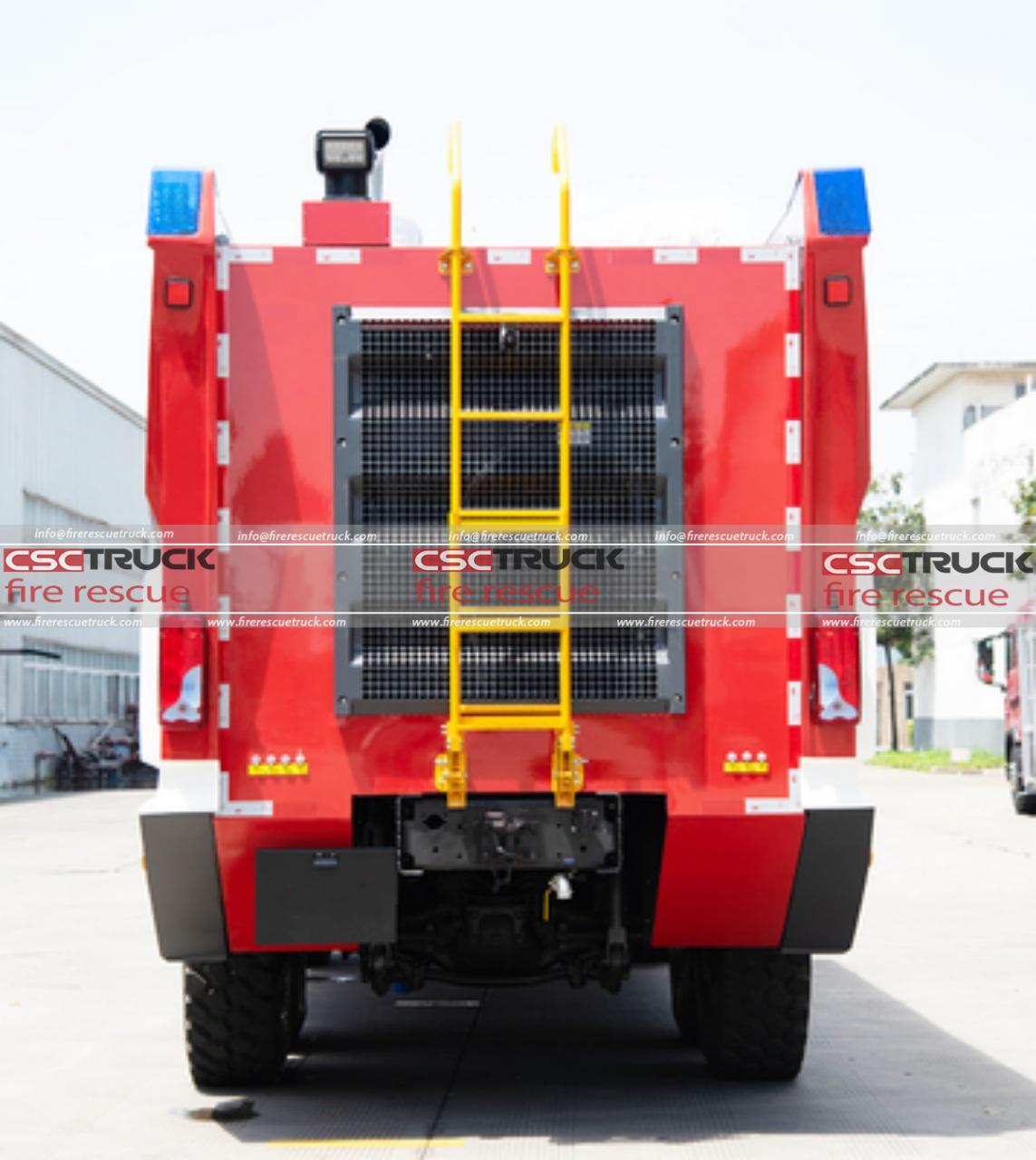

Airport rescue and firefighting vehicles — often called ARFF (Aircraft Rescue and Fire Fighting) vehicles or simply airport fire trucks — look like heavy-duty superheroes on wheels: Low-slung, heavily armored, and built to hurl huge amounts of water, foam, and extinguishing agents in seconds. But behind that dramatic silhouette, there’s a great deal of engineering and operational thinking: Pumps rated for thousands of liters per minute, integrated foam systems, advanced sensors, and ergonomic cabins that help crews work faster and safer. This article walks through the modern technologies, the must-have features, and how these vehicles are used in real airports around the world.
What makes an airport fire truck “modern”?
A modern ARFF vehicle combines three things: High-output fire-suppression systems, robust mobility and survivability, and digital systems that improve situational awareness and coordination. Unlike municipal engines, ARFFs are tuned for aircraft incidents — highly combustible fuel loads, fast-spreading fires, tight time windows, and the need to rescue large numbers of people quickly.
Key technical pillars include:
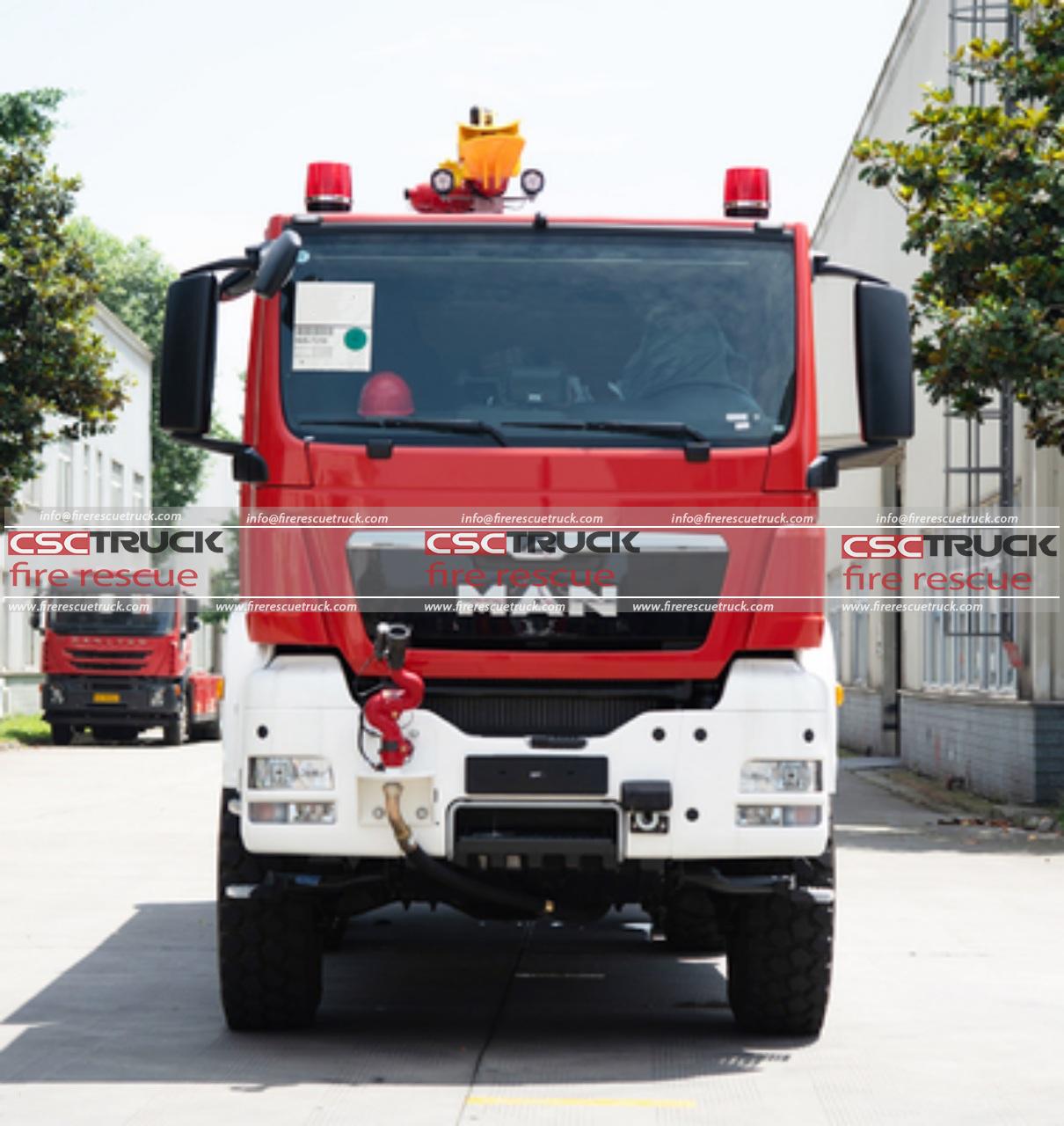
- High-capacity pump and agent delivery: Modern ARFFs commonly feature pumps and turrets capable of delivering thousands of liters of water per minute, plus foam proportioning systems to create effective film-forming foam. Remote-controlled turrets (roof and bumper) enable precise aiming from a safe distance.
- Multi-agent capability: Water, fluorine-free foam concentrates (increasingly replacing legacy AFFF due to environmental and health concerns), dry chemical powders, and sometimes gaseous agents or CO₂ for enclosed-space applications. Onboard tanks often carry several thousand liters of water and hundreds of liters of foam concentrate.
- Rapid mobility and off-road performance: Low center of gravity, powerful diesel or hybrid drivetrains, and specialized suspensions let ARFFs reach remote parts of the airfield across rough surfaces and debris.
- Crew protection and ergonomics: Armored cabins, heat shielding for pumps and agent lines, and quick egress designs prioritize crew survival and speed during operations.
- Digital systems: Thermal imaging, integrated cameras, sensor fusion (temperature, gas detection), telematics, and vehicle-to-control-tower data links now assist decision-making on the move.

Notable features explained
Remote turrets and piercing tools
Remote-operated turrets let operators control nozzle direction, flow, and foam mixing from inside the protected cabin. Some vehicles add specialized piercing monitors or lance systems to penetrate fuselages and apply extinguishing agent directly into aircraft interiors — useful when interior access is impossible.
Foam proportioning & alternative agents
Modern proportioning systems ensure the correct foam-to-water ratio automatically at any flow rate. With environmental scrutiny of PFAS compounds in older foam formulations, many airports are switching to fluorine-free foams and experimenting with combined tactics (foam plus dry chemical) to maintain extinguishing performance while reducing long-term contamination risk.
Thermal imaging and camera suites
Thermal cameras mounted on booms or turrets give crews a real-time heat map of an incident — crucial at night, in smoke, or with hidden fires inside wreckage. Pan-tilt cameras also provide situational awareness for aiming monitors and for incident commanders coordinating multiple resources.
Telematics and incident reporting
Modern ARFFs transmit vehicle status, location, pump performance, and camera feeds to command posts. This improves coordination with air traffic control, police, and medical responders, and creates post-incident logs for analysis and training.
Lightweight composite bodies & corrosion resistance
Newer vehicles use composites and corrosion-resistant materials to reduce weight, increase payload capacity, and resist the harsh, fuel-laden environment of crash sites. Lighter weight improves acceleration and maneuverability — critical when seconds count.
Electrification and hybrid systems
There’s growing interest in hybrid drivetrains and electrified auxiliary systems (electric pumps, on-board power for sensors and HVAC) to reduce idling emissions, improve silent operation for night responses, and provide resilient electrical power for sensors and comms. Fully electric ARFFs are being explored but face challenges related to energy density and the need to run high-power pumps for extended periods.
How ARFFs are used in real airports
Rapid response and staging
Airport firefighting doctrine emphasizes immediate response: ARFFs are dispatched to the incident perimeter within seconds and staged to contain fires and protect rescue crews. Their high-flow monitors may apply a containment curtain of foam while ground teams disembark to perform rescue and suppression.
Coordinated multi-vehicle attack
Major airports operate fleets of ARFFs with complementary roles. A lead vehicle establishes suppression and visibility control, a secondary vehicle focuses on rescue and protected egress routes, and support vehicles provide water shuttle, rehab, or additional agent. Modern communications help coordinate these simultaneous tasks.
Specialized rescue and overhaul
Beyond extinguishing, ARFF units perform extrication, interior firefighting, and overhaul (searching for and suppressing hidden hotspots). Tools include hydraulic rescue tools, cutting torches, and thermal cameras to quickly find residual heat in composite materials and wheel bays.
Training & standardized drills
Real-world effectiveness depends heavily on training: Crew rotations, full-scale live-fire exercises, and simulator work with integrated displays and voice comms. Airport categories (often defined by aircraft size and movement statistics) determine minimum ARFF resources and response times for compliance with international and national standards.
Environmental and community considerations
Discharge of foam and runoff is an environmental concern. Airports implement containment plans, runoff capture, and investigate fluorine-free alternatives to reduce groundwater contamination. Community notification and joint planning with local fire services are also part of modern practice, especially at airports with shared rescue responsibilities.
Challenges and future directions
Balancing speed, weight, and range
Designers must balance pumping capacity, onboard agent volume, armor and crew protection, and vehicle size. Too large a vehicle can be slow to accelerate or navigate airfield obstacles; too small reduces on-scene endurance. Modular designs and support vehicles help address this tradeoff.
Agent performance vs. environmental impact
Transitioning away from PFAS-laden foams is a major shift. New chemistries must match firefighting performance without adverse ecological effects, and training must adapt as tactics change.
Data integration and cybersecurity
Connected ARFF systems raise concerns about data integrity and communications security. Ensuring reliable, hardened links between vehicles and command centers is now an operational priority.
Electrification & sustainability
As airports pursue net-zero targets, ARFFs will be part of the roadmap: Electrified pumps, hybrid drivetrains, and sustainable materials will appear first in auxiliary systems, then — as battery and powertrain tech improves — in full propulsion.
Conclusion
Modern airport fire trucks are a fusion of mechanical muscle and digital intelligence, engineered to respond within seconds to high-risk scenarios. They combine high-capacity pumps and foam systems with thermal imaging, remote operation, and data links that transform firefighting from isolated action into a coordinated, informed response. As environmental pressures, electrification, and data integration reshape the technology landscape, ARFF vehicles will continue evolving — but their core purpose remains unchanged: to protect lives and assets on one of the most unforgiving stages imaginable, the runway.