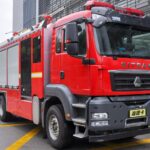

Airport fire trucks are specialized vehicles designed to respond to emergencies in airports, particularly aircraft fires. Unlike municipal fire trucks, airport fire trucks must meet rigorous performance standards to operate in high-risk environments with rapid response times, extreme fire suppression needs, and challenging terrains such as runways and tarmacs. Around the world, these vehicles vary significantly in design, capacity, and technology, reflecting differences in airport size, regulations, and local firefighting practices. This article explores the various types of airport fire trucks, their functions, and the international standards governing their deployment.
Types of Airport Fire Trucks
Airport fire trucks are generally categorized based on their design, function, and size. The main types include:
1. Rapid Intervention Vehicles (RIVs)
Rapid Intervention Vehicles are small, highly maneuverable units designed to reach the scene of an aircraft emergency quickly. They typically carry smaller quantities of water and foam compared to larger trucks, but are essential in the critical first minutes of a fire. RIVs are particularly common in smaller airports or in parts of larger airports where quick access to remote runways is needed. Features often include high-powered turrets, dry chemical extinguishing systems, and compact designs for navigating tight areas.
2. Airport Rescue and Firefighting (ARFF) Trucks
ARFF trucks are the most recognized type of airport fire truck. These large vehicles carry substantial quantities of water, foam, and dry chemicals. ARFFs are designed to handle high-intensity fires involving jet fuel, often reaching speeds of up to 80 km/h or more, to quickly arrive at crash sites. Some modern ARFFs are equipped with advanced firefighting technology, including thermal imaging cameras, telescopic booms, and automated foam proportioning systems. They are crucial in large international airports where aircraft size and passenger volume demand heavy-duty firefighting capabilities.
3. Foam Tanker Trucks
Foam tankers focus primarily on providing large volumes of firefighting foam, which is more effective than water alone in suppressing aviation fuel fires. These trucks are often used in conjunction with ARFFs to ensure a sustained firefighting response during prolonged incidents. Some foam tankers also have built-in monitoring systems to manage foam consumption efficiently.
4. Multi-Purpose Fire Vehicles
Some airports deploy multi-purpose fire vehicles capable of performing various roles beyond firefighting. These vehicles can carry medical rescue equipment, extrication tools, and environmental hazard kits. They are common in regions where airports double as emergency response hubs for surrounding areas.

Functions of Airport Fire Trucks
Airport fire trucks are not just vehicles—they are mobile firefighting units with specific operational roles:
1. Fire Suppression
The primary function of any airport fire truck is to suppress fires as quickly as possible. Rapid deployment and high-capacity extinguishing systems ensure that flames, particularly those fueled by jet fuel, are controlled before spreading. ARFF trucks, for instance, may discharge thousands of liters of water and foam per minute, along with dry chemicals to extinguish high-temperature fires.
2. Rescue Operations
Many airport fire trucks are equipped to perform rescue operations alongside firefighting. This includes rescuing passengers from aircraft, providing medical assistance, and supporting evacuation procedures. Modern ARFFs may have ladders, hydraulic platforms, or robotic arms to reach passengers in hard-to-access areas.
3. Hazard Mitigation
Airports handle large quantities of hazardous materials, including jet fuel, chemicals, and cargo with potential fire risks. Fire trucks often carry equipment for containing spills, neutralizing chemical reactions, and preventing environmental contamination.
4. Rapid Response and Coordination
Time is critical during aircraft emergencies. Airport fire trucks are designed for rapid deployment, often reaching the scene within 2 to 3 minutes from the alert. Many ARFFs are equipped with GPS tracking, real-time communication systems, and thermal imaging cameras to coordinate effectively with airport control centers and ground personnel.
International Standards for Airport Fire Trucks
The design, capabilities, and deployment of airport fire trucks are governed by international standards, ensuring consistency and reliability worldwide. Key standards include:
1. International Civil Aviation Organization (ICAO) Standards
ICAO sets comprehensive guidelines for airport rescue and firefighting (ARFF) services. These include specifications for vehicle response times, water and foam capacity, and minimum staffing levels. ICAO also categorizes airports based on aircraft size and traffic volume, influencing the types and numbers of fire trucks required.
2. National Fire Protection Association (NFPA) 414
In the United States and other countries that follow NFPA standards, NFPA 414 provides detailed requirements for ARFF vehicles, including pump capacity, speed, water and foam discharge rates, and turret performance. Compliance ensures vehicles can handle the highest-intensity fuel fires efficiently.
3. European Standards (EN 1846-1 & EN 1846-2)
European airports follow EN 1846 standards, which outline specifications for firefighting vehicles, including construction, performance, and safety requirements. These standards also address environmental considerations such as foam usage and emissions from heavy firefighting vehicles.
4. Country-Specific Regulations
While international standards provide a baseline, many countries have additional requirements. For example, Japanese airport fire trucks often emphasize compact design for congested airfields, whereas Middle Eastern airports prioritize extremely high-capacity foam delivery to handle large international aircraft in hot climates.

How Airport Fire Trucks Differ Around the World
Airport fire trucks differ globally in response to local conditions, regulations, and airport requirements:
1. Size and Capacity
Large international airports in the U.S., Europe, and the Middle East often operate massive ARFFs with water and foam tanks exceeding 10,000 liters. In contrast, regional airports in Asia or Africa may rely more on smaller rapid intervention vehicles or foam tankers due to budget constraints or smaller aircraft sizes.
2. Technology and Equipment
Developed countries typically equip their ARFF trucks with advanced features such as automated foam proportioning, infrared cameras, and robotic nozzles. In less-developed regions, trucks may be simpler, relying on manual systems but still meeting basic ICAO performance standards.
3. Operational Strategies
In Europe, airport fire services often coordinate with municipal fire departments, using multi-purpose vehicles for both airport and urban emergencies. In contrast, many U.S. airports maintain dedicated ARFF units with specialized crews trained solely in aircraft rescue operations.
4. Environmental Adaptations
Hot, arid regions require fire trucks with enhanced cooling systems and dust-resistant filters, while cold climates need vehicles capable of operating in sub-zero temperatures without equipment freezing. Airports in monsoon-prone regions might prioritize vehicles with robust all-terrain tires and high-capacity water pumps.
Conclusion
Airport fire trucks are a vital component of aviation safety, designed to respond rapidly to high-risk incidents involving aircraft and fuel fires. Around the world, these vehicles vary in size, technology, and functionality, influenced by local regulations, airport scale, and environmental conditions. From small rapid intervention vehicles to high-capacity ARFF trucks, every design prioritizes speed, fire suppression capability, and rescue operations. By adhering to international standards set by ICAO, NFPA, and EN, airports ensure their firefighting units can effectively protect passengers, aircraft, and infrastructure from catastrophic incidents. Understanding these differences highlights the complexity and global importance of airport fire safety.