
Airports around the world are bustling hubs of activity, with thousands of flights taking off and landing daily. Ensuring passenger safety in such high-risk environments is paramount, and one critical component of airport safety is the deployment of specialized firefighting vehicles. Airport firefighting vehicles, also known as Aircraft Rescue and Firefighting (ARFF) vehicles, are purpose-built machines designed to respond to aviation-related emergencies efficiently. These vehicles vary in design, equipment, and operational protocols across the globe, influenced by regional standards, airport size, and aircraft types. This article explores the global types of airport firefighting vehicles, their applications, and the regulatory requirements established by the International Civil Aviation Organization (ICAO).
Types of Airport Firefighting Vehicles
Airport firefighting vehicles are engineered to handle the unique challenges of aviation incidents. Unlike municipal fire engines, ARFF vehicles must tackle high-intensity fires, fuel spills, and rescue operations simultaneously. Globally, these vehicles are classified based on their size, capacity, and firefighting capabilities.
1. Rapid Intervention Vehicles (RIVs)
Rapid Intervention Vehicles are compact, highly maneuverable units designed for quick response. Common in smaller regional airports or airports with space constraints, RIVs prioritize speed and accessibility over firefighting capacity. These vehicles typically carry a moderate amount of water and foam, along with dry chemical agents for fuel fires. They are equipped with roof-mounted turrets and hand-held hoses to suppress flames while awaiting larger apparatus.
2. Medium Rescue and Firefighting Vehicles
Medium ARFF vehicles are larger and more robust than RIVs, capable of transporting more personnel and firefighting agents. These vehicles often serve airports with mid-sized aircraft and moderate traffic levels. They combine mobility with considerable fire suppression capacity, featuring high-capacity water/foam tanks, high-pressure pumps, and extended-range nozzles. Some models are also equipped with telescopic booms for aerial firefighting, allowing firefighters to target flames on larger aircraft fuselages.
3. High-Capacity Crash Tenders
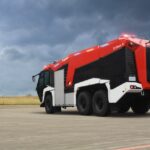
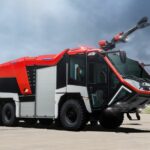
High-capacity crash tenders are the backbone of firefighting operations at major international airports. These massive vehicles are designed to carry thousands of liters of water and foam, along with dry chemical powders for rapid suppression of jet fuel fires. Their advanced suspension systems, all-wheel drive, and reinforced chassis allow them to operate on unpaved surfaces near runways. High-capacity crash tenders often include roof and bumper-mounted turrets, remote-controlled monitors, and integrated rescue tools such as hydraulic cutters and lifting airbags.
4. Specialized Vehicles
Some airports employ specialized firefighting vehicles designed for unique hazards. These include snow and ice firefighting units in cold regions, airport fireboats for seaplane operations, and vehicles with chemical spill containment systems for airports handling hazardous cargo. These units are usually part of a comprehensive firefighting fleet and are deployed according to specific risk assessments.

Applications of Airport Firefighting Vehicles
The applications of ARFF vehicles extend beyond mere firefighting. Their design and functionality are tailored to address the complex challenges of airport emergencies:
1. Aircraft Fire Suppression
ARFF vehicles are primarily deployed to suppress fires on aircraft, both in-flight and on the ground. The vehicles’ foam and dry chemical agents are specifically designed to extinguish aviation fuel fires, which burn hotter and spread faster than conventional fires. Crash tenders, with their large water and foam capacity, are crucial for controlling fires involving wide-body aircraft and fuel-laden cargo planes.
2. Rescue Operations
Airport firefighting vehicles are equipped to rescue passengers and crew from distressed aircraft. Integrated tools such as hydraulic cutters, lifting airbags, and ladders facilitate rapid extrication. Many ARFF vehicles have compartments to carry emergency medical equipment, including oxygen and first aid kits, enabling firefighters to provide immediate care before paramedics arrive.
3. Hazardous Material Containment
Modern airports handle various hazardous materials, including jet fuel, chemicals, and pressurized gases. ARFF vehicles are often equipped with foam concentrates, dry powders, and containment tools to mitigate chemical spills and prevent secondary incidents. Some vehicles are fitted with onboard detection systems to identify flammable or toxic substances quickly.
4. Airport Infrastructure Protection
Beyond aircraft-related emergencies, ARFF vehicles are also used to protect airport infrastructure, such as fuel depots, hangars, and terminal buildings. Their mobility and firefighting capabilities allow them to respond quickly to fires anywhere on the airfield, minimizing damage and maintaining operational continuity.
ICAO Requirements and Standards
The International Civil Aviation Organization (ICAO), a specialized agency of the United Nations, sets global standards for airport firefighting capabilities. ICAO’s Annex 14, Volume I, outlines specific requirements for ARFF services, ensuring uniformity and safety across airports worldwide.
1. Rescue and Firefighting Categories
ICAO assigns airports to rescue and firefighting (RFF) categories based on the length and width of the largest aircraft operating at the airport. Categories range from 1 to 10, with higher categories requiring larger fleets of high-capacity ARFF vehicles. Each category specifies the minimum water and foam capacity, discharge rates, and response times for firefighting units.
2. Response Times
ICAO mandates that ARFF vehicles must reach any point of an operational runway within 2 to 3 minutes of an alert. This requirement emphasizes the importance of vehicle speed, accessibility, and strategic positioning around the airport.
3. Equipment and Agent Requirements
ICAO guidelines dictate the types and quantities of extinguishing agents, including water, foam, dry chemical powder, and, in some cases, Halon alternatives. Vehicles must carry sufficient quantities to suppress the maximum credible fire scenario, which is based on aircraft size and fuel load.
4. Training and Certification
ICAO standards extend beyond equipment to personnel training. Firefighters must be trained in aircraft-specific firefighting, rescue techniques, and hazardous material handling. Regular drills and competency evaluations are required to maintain readiness.

Global Variations
While ICAO provides international standards, local conditions influence vehicle deployment:
- North America and Europe: Airports often employ a mix of high-capacity crash tenders and medium vehicles, with strict adherence to ICAO and FAA/EASA guidelines. Emphasis is placed on rapid intervention and advanced rescue technology.
- Asia: Rapid airport growth has led to investments in modern ARFF fleets, including specialized high-speed response vehicles. Larger airports integrate automation and remote monitoring for improved efficiency.
- Africa and South America: Resource constraints lead to smaller fleets, often relying on versatile medium-sized vehicles. Training and infrastructure development are key priorities.
- Middle East: Desert environments necessitate vehicles with robust cooling systems, high-capacity pumps, and off-road capabilities for desert terrain near airfields.
Conclusion
Airport firefighting vehicles are indispensable components of global aviation safety. Their design, capabilities, and deployment strategies are tailored to meet the unique challenges posed by aircraft incidents, hazardous materials, and airport infrastructure risks. While global variations exist, the International Civil Aviation Organization provides a standardized framework ensuring that all airports maintain effective rescue and firefighting capabilities. As aviation continues to grow, the evolution of ARFF vehicles—including automation, enhanced fire suppression systems, and integrated rescue technologies—will remain central to safeguarding lives and property in airports worldwide.