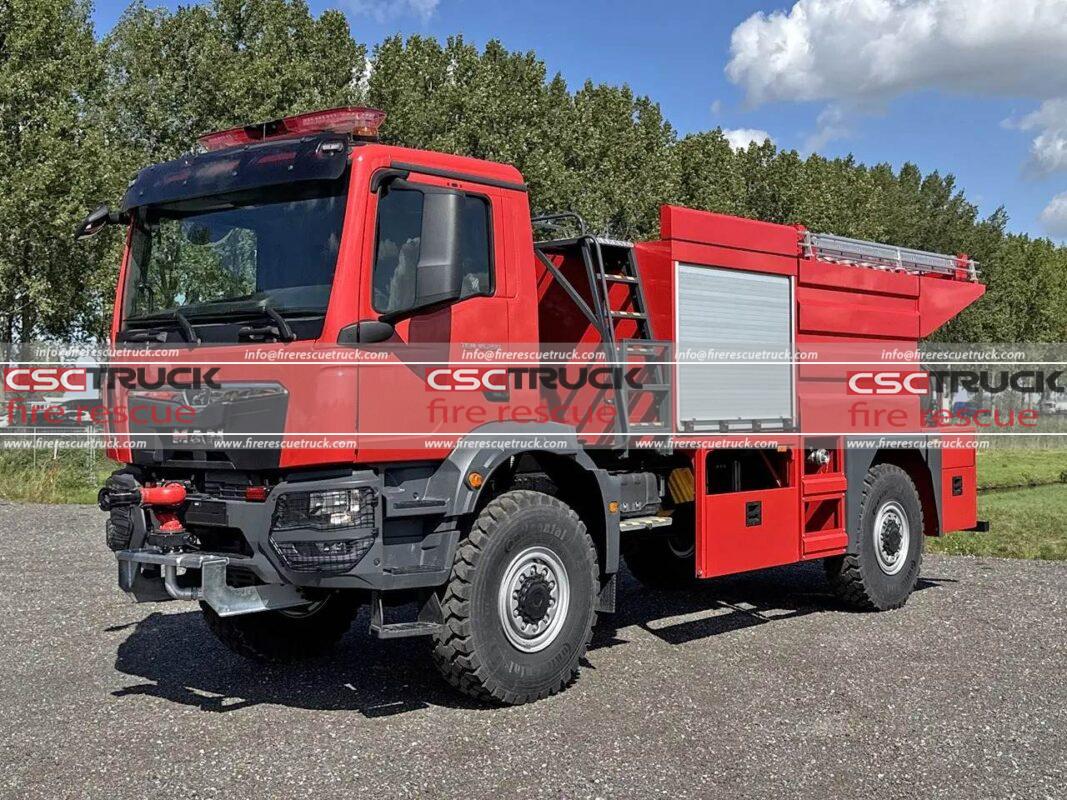
Introduction to CSCTRUCK Fire Rescue Truck
Modern firefighting requires more than just powerful fire engines. In many rural, industrial, mining, forestry, and disaster-response environments, a reliable water supply is the key to successful firefighting. This is where CSCTRUCK Fire Rescue Truck has established itself as a trusted manufacturer of specialized firefighting vehicles. With decades of experience in designing and manufacturing fire apparatus, CSCTRUCK Fire Rescue Truck offers a comprehensive range of water tenders, pumper trucks, foam fire trucks, rescue vehicles, airport rescue firefighting (ARFF) trucks, and customized emergency response solutions for customers worldwide. Its vehicles are built on internationally recognized chassis and can be configured to meet the operational needs of municipal fire departments, industrial facilities, airports, military bases, and emergency response agencies.
Among these specialized vehicles, the water tender plays one of the most essential support roles in firefighting operations. But what exactly does the term “water tender” mean?
Understanding the Meaning of “Water Tender”
A water tender is a specialized firefighting vehicle designed primarily to transport large volumes of water to fire scenes where hydrants or permanent water supplies are unavailable or insufficient.
Unlike a standard fire engine that focuses on pumping water directly onto a fire, a water tender’s main responsibility is supplying water to firefighting operations. In many countries, the terms water tender, water tanker, and water shuttle truck are often used interchangeably, although regional terminology may vary.
The word “tender” itself means a support vehicle that supplies essential resources. In firefighting, the resource being supplied is water.
Therefore, a water tender is essentially a mobile water reservoir that ensures firefighters always have enough water to combat fires effectively.

Why Are Water Tenders Necessary?
Many urban areas have extensive hydrant systems that provide firefighters with continuous water supplies. However, countless emergencies occur in locations where hydrants do not exist, including:
- Rural communities
- Forests
- Farms
- Mountains
- Deserts
- Construction sites
- Industrial plants
- Mining operations
- Airports
- Highways
Without an accessible water source, even the best fire engine cannot continue firefighting for long.
A water tender solves this problem by transporting thousands of liters of water directly to the incident.
Primary Functions of a Water Tender
A water tender performs several important roles during emergency operations.
1. Water Transportation
Its primary job is to carry water from a filling location to the fire scene.
Tank capacities commonly range from:
- 2,000 liters
- 5,000 liters
- 8,000 liters
- 10,000 liters
- 15,000 liters
- 20,000 liters or more
Larger industrial or airport water tenders may carry even greater volumes.
2. Water Shuttle Operations
When fires require continuous water supplies, several water tenders work together in a water shuttle system.
This involves:
- Filling at a water source
- Driving to the incident
- Dumping water into portable tanks
- Returning for another load
This cycle creates a continuous water supply without hydrants.
3. Supplying Fire Engines
Water tenders often connect directly to pumpers or engines.
Instead of attacking the fire themselves, they keep frontline engines supplied with water.
4. Emergency Water Supply
Beyond firefighting, water tenders can deliver potable or non-potable water during:
- Earthquakes
- Floods
- Hurricanes
- Droughts
- Water system failures
- Humanitarian relief operations
Their versatility makes them valuable disaster-response vehicles.

Components of a Water Tender
Although designs vary by manufacturer, most water tenders include several key systems.
Large Water Tank
The tank is the vehicle’s defining feature.
It is usually manufactured from:
- Carbon steel
- Stainless steel
- Aluminum alloy
- Polypropylene composite materials
Internal baffles reduce water movement while driving, improving vehicle stability.
Fire Pump
Many water tenders include a centrifugal fire pump capable of:
- Filling the tank
- Drafting water from lakes or rivers
- Supplying attack engines
- Operating hose lines
- Feeding fire monitors
Pump capacities vary depending on operational requirements.
Hose Storage
Water tenders usually carry:
- Supply hose
- Hard suction hose
- Drafting hose
- Discharge hose
These enable rapid connection with other firefighting equipment.
Portable Water Tanks
Many tenders carry foldable drop tanks.
These portable reservoirs allow multiple tenders to quickly unload water for continuous pumping.
Fire Monitor
Some models feature roof-mounted monitors capable of delivering large water streams for defensive firefighting.
How Does a Water Tender Differ from a Fire Engine?
Although they look similar, their missions differ significantly.
| Water Tender | Fire Engine |
|---|---|
| Carries large water volumes | Carries a moderate water supply |
| Focuses on water transport | Focuses on fire attack |
| Supports other apparatus | Directly fights fires |
| Often operates in shuttle systems | Usually remains at the fire scene |
| Optimized for water capacity | Optimized for pumping and equipment |
Many departments use both vehicles together for maximum effectiveness.

Common Applications
Water tenders are deployed in numerous emergencies.
Rural Firefighting
Most rural communities lack hydrants.
Water tenders become the primary water source during:
- House fires
- Barn fires
- Grass fires
- Wildland incidents
Wildland Firefighting
Forests often have limited infrastructure.
Water tenders transport water deep into wildfire zones where engines cannot easily refill.
Industrial Protection
Factories, oil terminals, refineries, chemical plants, and power stations frequently maintain dedicated water tenders for emergency response.
Airport Operations
Although airports have sophisticated firefighting systems, additional water tenders may support extended aircraft fire incidents or supplement specialized ARFF vehicles.
Municipal Backup
Cities may deploy water tenders during:
- Major warehouse fires
- Multiple-alarm incidents
- Hydrant failures
- Large commercial fires
Can Water Tenders Fight Fires Directly?
Yes.
Many modern water tenders include:
- Fire pumps
- Hose reels
- Fire monitors
- Foam proportioning systems
This allows them to perform limited direct firefighting while also serving as water supply vehicles.
However, their primary mission remains transporting water rather than replacing a dedicated pumper.

Advantages of Water Tenders
Water tenders offer numerous operational benefits.
Large Water Capacity
Their greatest advantage is transporting massive amounts of water to areas without hydrants.
Operational Flexibility
They support:
- Municipal firefighting
- Wildland operations
- Industrial emergencies
- Airport response
- Disaster relief
- Emergency water delivery
Reduced Downtime
Instead of engines leaving the fire scene to refill, tenders keep them supplied, improving firefighting efficiency.
Lower Infrastructure Dependence
Communities without hydrants can still maintain effective fire protection through water shuttle operations.
Multi-Purpose Use
Outside emergency response, many organizations use water tenders for:
- Dust suppression
- Construction support
- Road maintenance
- Agricultural water transport
Choosing the Right Water Tender
Selecting a water tender depends on several operational factors.
Departments should consider:
- Required tank capacity
- Pump performance
- Vehicle size
- Terrain capability
- Chassis type
- Foam compatibility
- Drafting capability
- Crew size
- Maintenance requirements
- Local firefighting strategies
Manufacturers like CSCTRUCK Fire Rescue Truck offer customized solutions that can be tailored for urban, rural, industrial, airport, or off-road applications, ensuring each vehicle matches the customer’s operational needs.

Conclusion
The term “water tender” refers to a specialized firefighting vehicle whose primary purpose is transporting and supplying large quantities of water wherever it is needed. While fire engines focus on attacking fires, water tenders ensure those engines never run out of water, making them indispensable in rural areas, wildland firefighting, industrial facilities, airports, and disaster response.
Today’s advanced water tenders are far more than simple water carriers. Equipped with pumps, monitors, drafting systems, foam equipment, and high-capacity tanks, they have become versatile emergency response vehicles capable of supporting nearly every type of firefighting operation.
As emergency services continue to face increasingly diverse challenges, reliable water tenders from experienced manufacturers such as CSCTRUCK Fire Rescue Truck provide the dependable water supply and operational flexibility that modern firefighters need to protect lives, property, and communities around the world.