
In modern emergency response systems, water access is often the deciding factor between a controlled situation and a rapidly escalating disaster. In areas affected by wildfires, earthquakes, hurricanes, droughts, or infrastructure failures, municipal water networks may be damaged or completely unavailable. In such scenarios, the water tender fire truck becomes one of the most important assets in disaster logistics. But can it really be used for emergency water supply beyond firefighting? The answer is a clear yes—and its role is often broader than many people expect.
Before exploring its disaster response capabilities, it is useful to understand the engineering strength behind these vehicles. Manufacturers such as CSCTRUCK Fire Rescue Truck specialize in producing high-performance fire and rescue vehicles designed for challenging environments. These trucks are built with large-capacity tanks, durable chassis systems, and multifunctional pumping equipment, allowing them to operate not only in firefighting missions but also in large-scale emergency water distribution scenarios.
What Is a Water Tender Fire Truck?
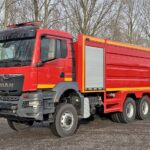
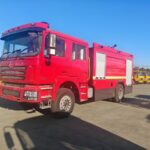
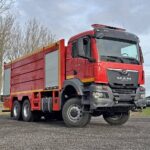
A water tender fire truck—also known as a tanker truck—is a specialized vehicle designed primarily to transport large volumes of water to areas where there is no reliable hydrant system.
According to fire service definitions, water tenders are essentially “mobile water reservoirs” that support firefighting operations by supplying water to engines, portable tanks, or directly to the incident scene.
Typical capacities range from 3,000 to over 5,000 gallons, depending on configuration. Their core advantage is mobility: They can travel long distances, refill from lakes, rivers, reservoirs, or hydrants, and deliver water where fixed infrastructure cannot reach.

Emergency Water Supply Role in Disasters
While their primary mission is firefighting support, water tenders are widely used in non-fire disaster relief operations, especially when public water systems fail.
1. Replacement of Damaged Water Infrastructure
Natural disasters often damage pipelines, treatment plants, and pumping stations. After earthquakes or floods, entire communities may lose access to potable water.
In such cases, water tenders act as temporary mobile water distribution units, transporting clean water from operational treatment plants or reservoirs to affected areas.
They function similarly to mobile hydrants—delivering water where fixed infrastructure is unavailable.
2. Support for Evacuation Centers and Shelters
During hurricanes, wildfires, or large-scale evacuations, temporary shelters are set up in schools, stadiums, or community centers. These facilities require a constant water supply for:
- Drinking and cooking
- Sanitation and hygiene
- Medical support operations
Water tenders can continuously shuttle water to these locations, ensuring basic survival needs are met until municipal services are restored.
3. Wildfire Disaster Zones
In wildfire-prone regions, water tenders are essential not only for firefighting but also for post-fire recovery operations.
After the fire front passes, they may be used to:
- Provide water for hot-spot cooling
- Support firefighting crews during mop-up operations
- Supply nearby communities affected by infrastructure damage
In rural and forested regions where hydrants do not exist, water tenders often serve as the only reliable water source during emergencies.
4. Drought and Water Scarcity Response
In prolonged drought conditions, especially in rural or arid regions, water tenders can be deployed to:
- Deliver potable water to villages
- Support livestock water needs
- Refill community storage tanks
- Assist agricultural operations in extreme conditions
Their large tank capacity allows them to transport thousands of liters per trip, making them highly effective for short-term drought relief.
How Water Tenders Deliver Water Efficiently
Water tenders are more than simple transport vehicles. Their design allows them to actively support emergency logistics.
Mobile Shuttle System
One of the most important operational methods is the water shuttle system, where multiple tenders rotate between a water source and the disaster site. This ensures a continuous supply without interruption.
Portable Drop Tanks
Many units carry collapsible tanks that can be deployed on-site. Water tenders refill these tanks repeatedly, allowing other vehicles or pumps to draw water as needed.
Pumping and Transfer Systems
Some advanced models include onboard pumps that can:
- Offload water under pressure
- Fill storage tanks quickly
- Support firefighting lines if necessary
This makes them flexible tools for both firefighting and humanitarian water delivery.

Advantages in Disaster Response Operations
Water tenders offer several key advantages that make them indispensable during emergencies:
1. High Mobility
They can operate in urban, rural, and off-road environments, reaching disaster zones where infrastructure is destroyed.
2. Large Storage Capacity
A single vehicle can carry thousands of gallons of water, reducing the need for constant resupply.
3. Multi-Role Functionality
Beyond firefighting, they can support drinking water distribution, sanitation, and industrial recovery efforts.
4. Rapid Deployment
They can be mobilized quickly and begin delivering water immediately after arriving on scene.
5. Independence from Infrastructure
They do not rely on hydrants or pipelines, which are often the first systems to fail during disasters.
Limitations and Challenges
Despite their usefulness, water tenders are not without limitations:
- They require continuous refilling from a reliable source
- Transport distance reduces efficiency over time
- Water purification may be required for potable use
- Large-scale disasters may require the coordination of many vehicles
Because of these constraints, they are usually part of a broader emergency logistics system rather than a standalone solution.

Role of Modern Fire Rescue Manufacturers
Companies such as CSCTRUCK Fire Rescue Truck play a critical role in improving the effectiveness of water tenders. Modern designs increasingly include:
- Higher-capacity tanks
- Better off-road chassis systems
- Integrated foam and pump systems
- Improved safety controls
- Modular configurations for dual-purpose use
These improvements allow a single vehicle to transition seamlessly between firefighting, disaster relief, and emergency water supply missions.
Conclusion
A water tender fire truck is far more than a firefighting support vehicle—it is a critical emergency water supply asset during disasters. Whether responding to wildfires, earthquakes, hurricanes, or droughts, these vehicles ensure that water reaches where it is needed most when traditional infrastructure fails.
Their ability to transport large volumes of water, operate independently of fixed systems, and support both emergency responders and affected communities makes them essential in modern disaster management strategies.
As climate-related disasters increase in frequency and severity, the importance of versatile equipment like water tenders—supported by manufacturers such as CSCTRUCK Fire Rescue Truck—will continue to grow, reinforcing their role as a cornerstone of emergency response logistics.