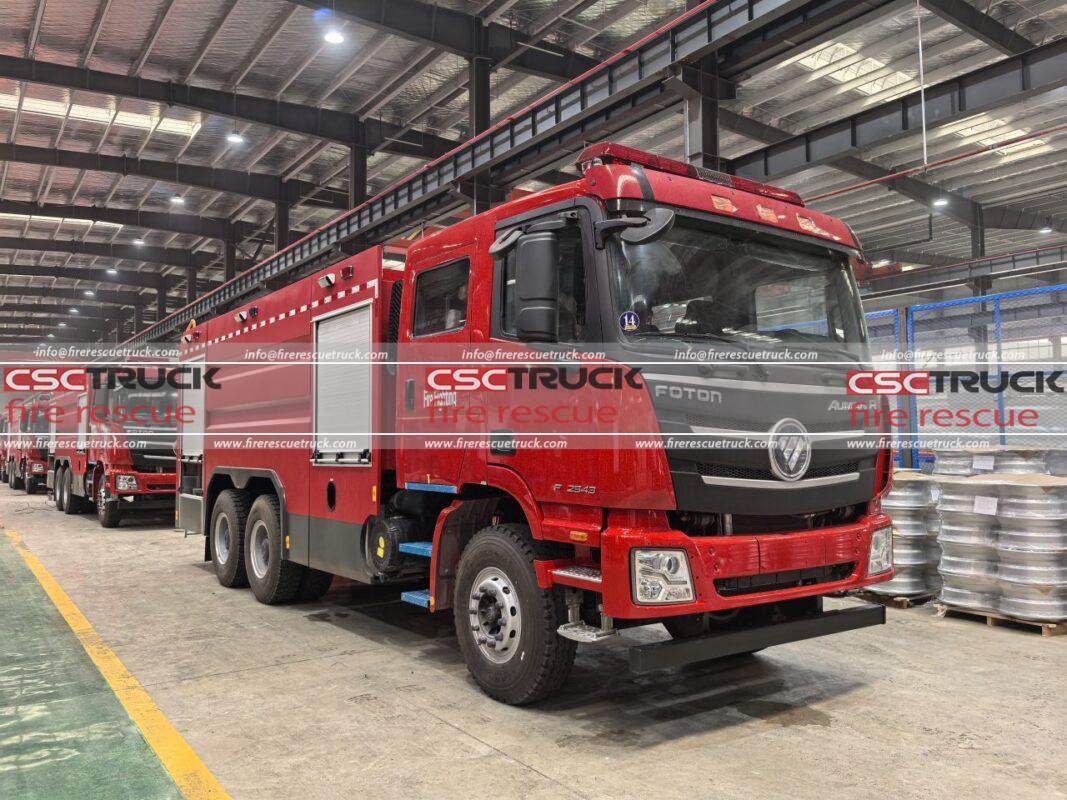
In modern firefighting operations, the demand for highly capable water supply vehicles has never been greater. Urban expansion, industrial complexity, and increasingly remote emergency locations require fire engines that can deliver large volumes of water with consistent pressure and dependable performance. The water tank fire engine developed by CSCTRUCK Fire Rescue Truck represents a powerful integration of engineering strength, large-capacity water storage, and operational reliability, making it an essential asset in both municipal and industrial fire response systems.
A Critical Role in Firefighting Operations
Water tank fire engines, often referred to as fire tankers or water tenders, serve as the backbone of firefighting logistics. Their primary function is to transport and supply water to fire scenes where hydrant access is limited or nonexistent. In rural areas, construction zones, industrial facilities, and highway incidents, these vehicles ensure uninterrupted water delivery to sustain fire suppression efforts.
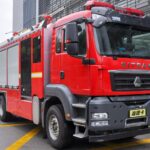
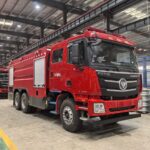
The CSCTRUCK Fire Rescue Truck water tank fire engine is designed specifically to meet these challenges. It combines a reinforced chassis, a high-capacity water tank, and a powerful pumping system to ensure rapid deployment and continuous water flow. This makes it especially valuable during large-scale emergencies where conventional water sources are insufficient or far away.
Powerful Chassis and Engine Performance
At the core of the water tank fire engine is a heavy-duty commercial chassis engineered for strength and durability. The vehicle is built to carry large loads while maintaining stability and maneuverability under demanding conditions. High-performance engines provide the necessary horsepower to transport fully loaded water tanks, often exceeding tens of thousands of liters in capacity.
For example, similar CSCTRUCK Fire Rescue Truck water fire engine configurations can reach capacities of up to 21,000 kg of water while maintaining operational speeds above 90 km/h, depending on the model and configuration. This balance of speed and load capacity ensures that firefighting teams can respond quickly without compromising water supply volume.
The drivetrain is designed for both urban and off-road conditions. Depending on configuration, 4×2, 4×4, or 8×4 systems are used to ensure adaptability across highways, industrial complexes, and rural terrain. This versatility is essential for regions where road conditions vary significantly during emergency response operations.

Large-Capacity Water Storage System
One of the defining features of a water tank fire engine is its onboard water storage system. CSCTRUCK Fire Rescue Truck designs prioritize high-volume tanks constructed from corrosion-resistant materials such as carbon steel or advanced composites. These tanks are engineered to withstand vibration, temperature variation, and long-term exposure to water without structural degradation.
Tank capacities vary depending on mission requirements, ranging from mid-size units around 5,000 liters to heavy-duty systems exceeding 20,000 liters. This large storage capacity enables continuous firefighting operations without immediate reliance on external water sources.
The tank structure is integrated into the vehicle frame to ensure optimal weight distribution. This reduces rollover risk and improves handling, especially when navigating tight urban streets or uneven terrain. Internal baffling systems are also used to minimize water surge during acceleration or braking, improving both safety and driving stability.
High-Performance Fire Pumping System
A key component of the water tank fire engine is its high-pressure fire pump system. CSCTRUCK Fire Rescue Truck integrates advanced pump technology capable of delivering high flow rates suitable for both direct firefighting and water transfer operations.
These pumping systems are designed for dual functionality:
- Low-pressure, high-flow output for large fire suppression zones
- High-pressure output for targeted firefighting applications
In many configurations, fire pumps can deliver flow rates exceeding several thousand liters per minute, ensuring rapid water distribution at the fire scene. Coupled with adjustable fire monitors (water cannons), the system can project water over long distances, making it effective for both structural and industrial fires.
Operational Flexibility and Multi-Scenario Use
The water tank fire engine is not limited to firefighting alone. It also plays a vital role in emergency water supply, disaster relief, and industrial support operations. In situations such as earthquakes, pipeline failures, or drought conditions, the vehicle can be deployed to deliver clean water to affected communities.
In industrial environments such as mining sites, petrochemical plants, and logistics hubs, these fire engines act as standby safety units. Their ability to quickly supply large volumes of water makes them an essential part of risk management systems.
Additionally, many models are equipped with self-protection systems that spray water around the cab and tires to protect the vehicle during high-heat operations. This enhances survivability in extreme fire environments.

Engineering Reliability and Safety Design
Reliability is a cornerstone of CSCTRUCK Fire Rescue Truck engineering philosophy. Every component of the water tank fire engine is designed to withstand harsh operational conditions. Reinforced suspension systems, anti-corrosion coatings, and high-strength steel frameworks contribute to long service life and reduced maintenance requirements.
Safety features are equally important. Modern fire engines include advanced braking systems, stability control, and reinforced driver cabins designed to protect firefighters during hazardous missions. Ergonomic cab layouts ensure that operators can respond quickly and efficiently under stress.
Technological Integration and Modern Enhancements
Modern water tank fire engines increasingly incorporate intelligent control systems. Digital monitoring of tank levels, pump pressure, and vehicle diagnostics allows operators to manage resources more effectively during emergencies.
Some advanced models include remote-controlled water monitors, GPS navigation systems for rapid route optimization, and automated pump controls that reduce manual workload. These innovations significantly improve response efficiency and operational precision.
Environmental and Operational Efficiency
Environmental considerations are also becoming increasingly important in fire engine design. Efficient fuel consumption systems, reduced emissions engines, and optimized hydraulic systems contribute to lower environmental impact while maintaining high performance.
Water usage efficiency is another key focus. Adjustable flow controls and precision spray systems help reduce water waste while maximizing firefighting effectiveness. This is particularly important in regions where the water supply is limited.

Conclusion
The water tank fire engine by CSCTRUCK Fire Rescue Truck represents a comprehensive solution for modern firefighting and emergency water supply challenges. By combining high-capacity water storage, powerful pumping systems, durable engineering, and operational flexibility, it delivers reliable performance across a wide range of emergency scenarios.
Whether deployed in urban firefighting, rural fire control, or industrial disaster response, this vehicle ensures that water is always available when and where it is needed most. Its balance of power, capacity, and reliability makes it a critical tool in safeguarding lives, infrastructure, and the environment in today’s increasingly complex world.



Hello ,
my name is Azizbek , I am a projet manager at Central Asia Automotive Factory located in Samarkand , Uzbekistan. Our factory is the biggest commercial vehicles producer in Uzbekistan with special governmental privileges for CV segment.
We are currently producing FOTON vehicles and selling them in UZbekistan and CIS countries . We are interested in fire truck solutions on FOTON vehicles .
Can you please inform on whick FOTON chassis you have solution for fire trucks with 4m3 and 6m3 tank capacity ?
Looking forward for your reply !
Best regards!
Dear Azizbek,
Welcome!
Yes, we have fire truck solutions on FOTON vehicles with 4m3 and 6m3 tank capacity.
Your RFQ has been sent to our Sales Specialist Sherry Yang.
You will be replied ASAP.
Wish you have a nice day!
Sincerely
Marketing Division