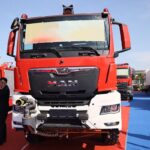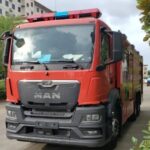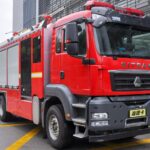

Introduction to CSCTRUCK Fire Rescue Truck
Modern firefighting operations require more than powerful pumps and large water tanks. Fire trucks must reach dangerous locations quickly, maintain stability under extreme conditions, and protect firefighters while carrying heavy equipment. This is especially true for 6×6 fire trucks, which are designed for challenging environments such as airports, wildfires, oil fields, industrial zones, mountains, and disaster areas.
CSCTRUCK Fire Rescue Truck specializes in manufacturing advanced firefighting vehicles, including 4×4 and 6×6 all-terrain fire trucks, rescue trucks, ARFF (Aircraft Rescue and Fire Fighting) vehicles, and customized emergency response solutions. CSCTRUCK Fire Rescue Truck 6×6 fire trucks are engineered with high mobility chassis, powerful drivetrains, differential locks, and advanced safety systems to ensure reliable operation in extreme conditions.
A common question from fire departments and emergency vehicle buyers is: Does a 6×6 fire truck have ABS and traction control? The answer is YES—most modern 6×6 fire trucks are equipped with advanced braking and traction management systems. However, the exact configuration depends on the chassis manufacturer, vehicle application, and customer requirements.
What Is ABS on a 6×6 Fire Truck?
ABS stands for Anti-lock Braking System. It is an electronic safety system designed to prevent the wheels from locking during emergency braking.
Unlike passenger cars, heavy fire trucks have unique braking challenges because of their:
- Extremely high vehicle weight
- Large water and foam tank capacity
- Tall center of gravity
- Heavy rescue equipment loads
- Operation on slippery and uneven terrain
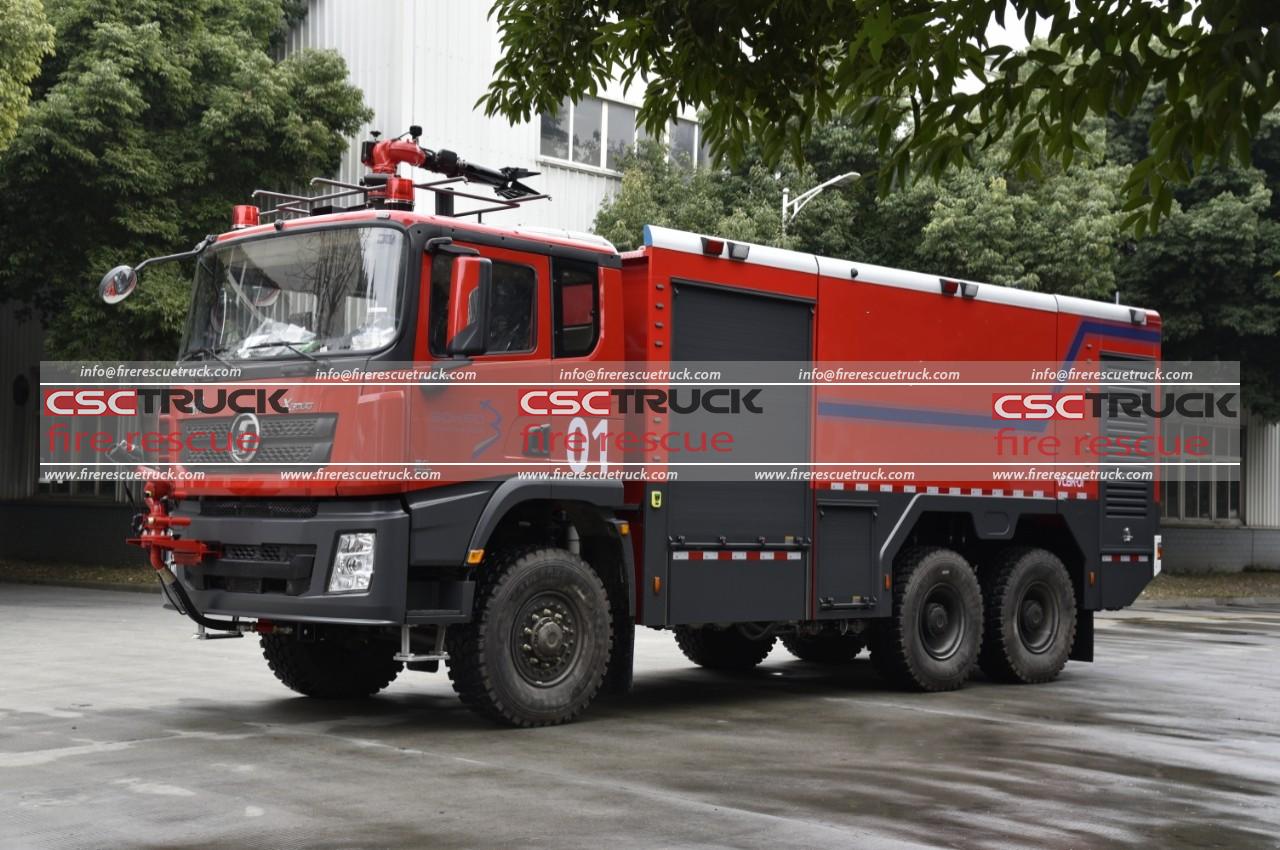
A fully loaded 6×6 fire truck can weigh tens of tons. For example, some CSCTRUCK Fire Rescue Truck 6×6 ARFF fire trucks can reach approximately 39,000 kg gross weight while carrying thousands of liters of extinguishing agents. Without proper braking control, sudden braking could cause wheel lock, loss of steering ability, or vehicle instability.
ABS helps by:
- Monitoring wheel speed through sensors
- Detecting potential wheel lock
- Automatically adjusting brake pressure
- Maintaining steering control during emergency stops
For firefighters responding to emergencies, ABS provides additional confidence when driving at high speed on highways, wet roads, gravel paths, or airport runways.
How Does ABS Improve Fire Truck Safety?
A traditional braking system applies equal pressure to the wheels. If a wheel loses traction, it may stop rotating while the vehicle continues moving forward. This can lead to:
- Longer stopping distances
- Reduced steering control
- Vehicle sliding
- Increased accident risk
ABS solves this problem by rapidly applying and releasing brake pressure many times per second.
For a 6×6 fire truck, ABS is particularly valuable because the vehicle has:
1. Heavy Load Conditions
Fire trucks often carry:
- Water tanks
- Foam tanks
- Pumps
- Hydraulic rescue equipment
- Generators
- Crew members
The additional weight increases braking forces and requires precise control.
2. Emergency High-Speed Response
Airport rescue fire trucks and industrial fire vehicles must often travel quickly to incident locations. Some CSCTRUCK Fire Rescue Truck 6×6 ARFF models are designed for rapid deployment with high-speed capabilities while carrying large firefighting capacities.
3. Difficult Road Conditions
Firefighters may operate on:
- Mud
- Snow
- Sand
- Rocky roads
- Wet grass
- Steep slopes
ABS helps maintain vehicle control when braking on these unpredictable surfaces.
What Is Traction Control on a 6×6 Fire Truck?
Traction control is another important electronic safety system. Its purpose is to prevent excessive wheel spinning when the vehicle accelerates.
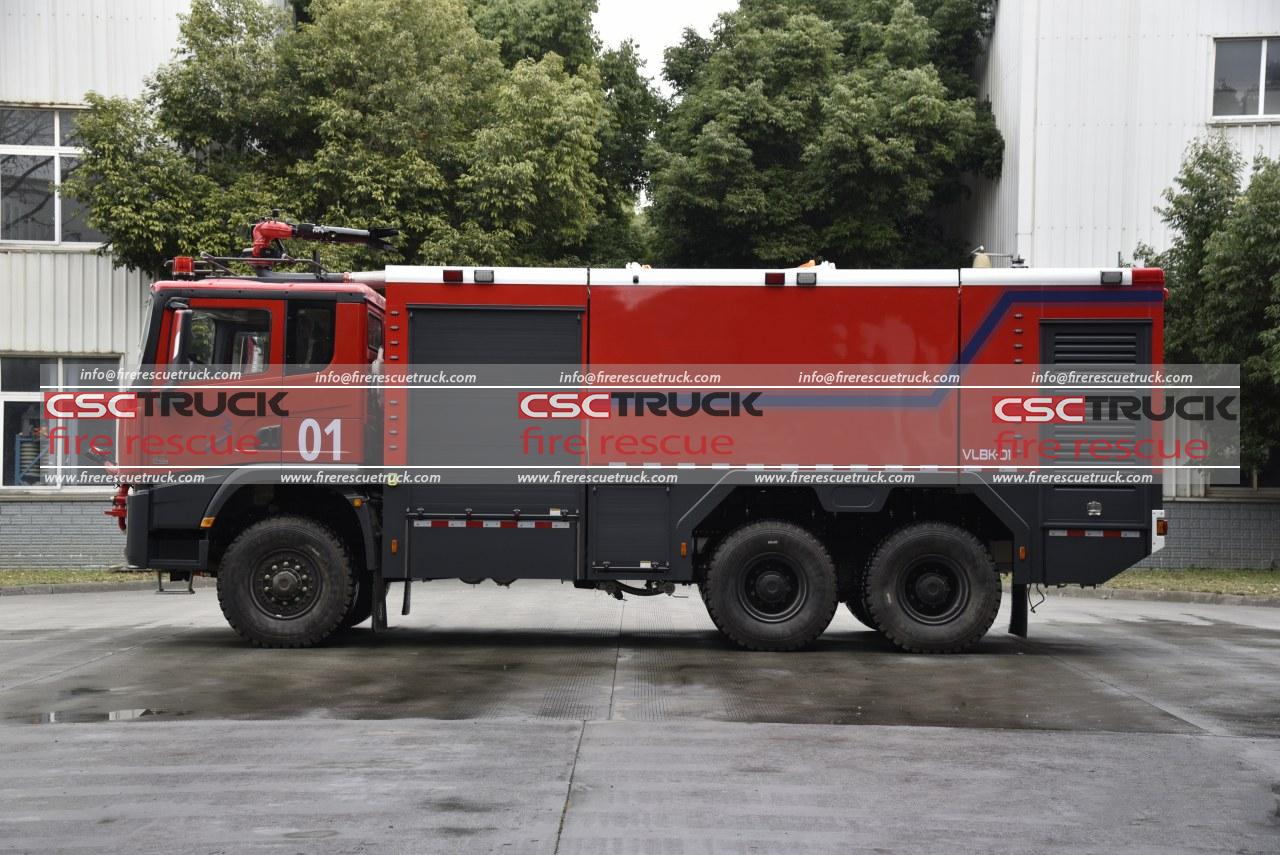
A 6×6 fire truck has 3 driven axles:
- Front axle
- Middle axle
- Rear axle
This configuration provides 6 driven wheels, significantly improving mobility compared with 4×4 vehicles. However, even 6 driven wheels can lose traction under extreme conditions.
Traction control monitors wheel rotation and reduces wheel slip by:
- Adjusting engine torque output
- Applying braking force to spinning wheels
- Optimizing power distribution between axles
This allows the truck to move smoothly through difficult terrain.
Difference Between Traction Control and Differential Locks
Many people confuse traction control with differential locks, but they serve different purposes.
Traction Control
Traction control is an electronic system that automatically manages wheel slip.
Advantages:
- Works automatically
- Improves driving stability
- Protects tires
- Helps maintain control on slippery roads
Differential Locks
Differential locks mechanically force wheels on the same axle to rotate together.
Advantages:
- Provides maximum traction in extreme terrain
- Helps escape mud, sand, and deep snow
- Improves off-road capability
For example, CSCTRUCK Fire Rescue Truck 6×6 fire trucks combine all-wheel-drive systems with differential locks to improve mobility in demanding environments.
In extreme firefighting environments, both systems are valuable:
- Traction control improves everyday driving safety.
- Differential locks provide maximum off-road performance.
Do All 6×6 Fire Trucks Have Electronic Stability Systems?
Many modern 6×6 fire trucks are equipped with advanced electronic vehicle control systems, including:
- ABS
- Traction control
- Electronic stability control (ESC)
- Brake assist systems
- Tire pressure monitoring systems
These technologies are especially important for emergency vehicles because they frequently operate under:
- Heavy payload conditions
- High-speed response requirements
- Sudden braking situations
- Uneven terrain
The specific equipment depends on the selected chassis. CSCTRUCK Fire Rescue Truck offers different chassis platforms from international and specialized manufacturers, allowing configurations to meet different operational requirements.
How Traction Systems Help in Firefighting Operations
A 6×6 fire truck is often selected because normal vehicles cannot reach difficult locations.
Examples include:
Wildland Firefighting
Forest fires frequently occur in areas with:
- Loose soil
- Steep hills
- Narrow trails
Traction control and 6×6 drivetrains help firefighters reach remote fire zones.
Airport Rescue Operations
Aircraft emergencies require rapid response across large airport surfaces. Vehicles must maintain stability while carrying large volumes of water and foam.
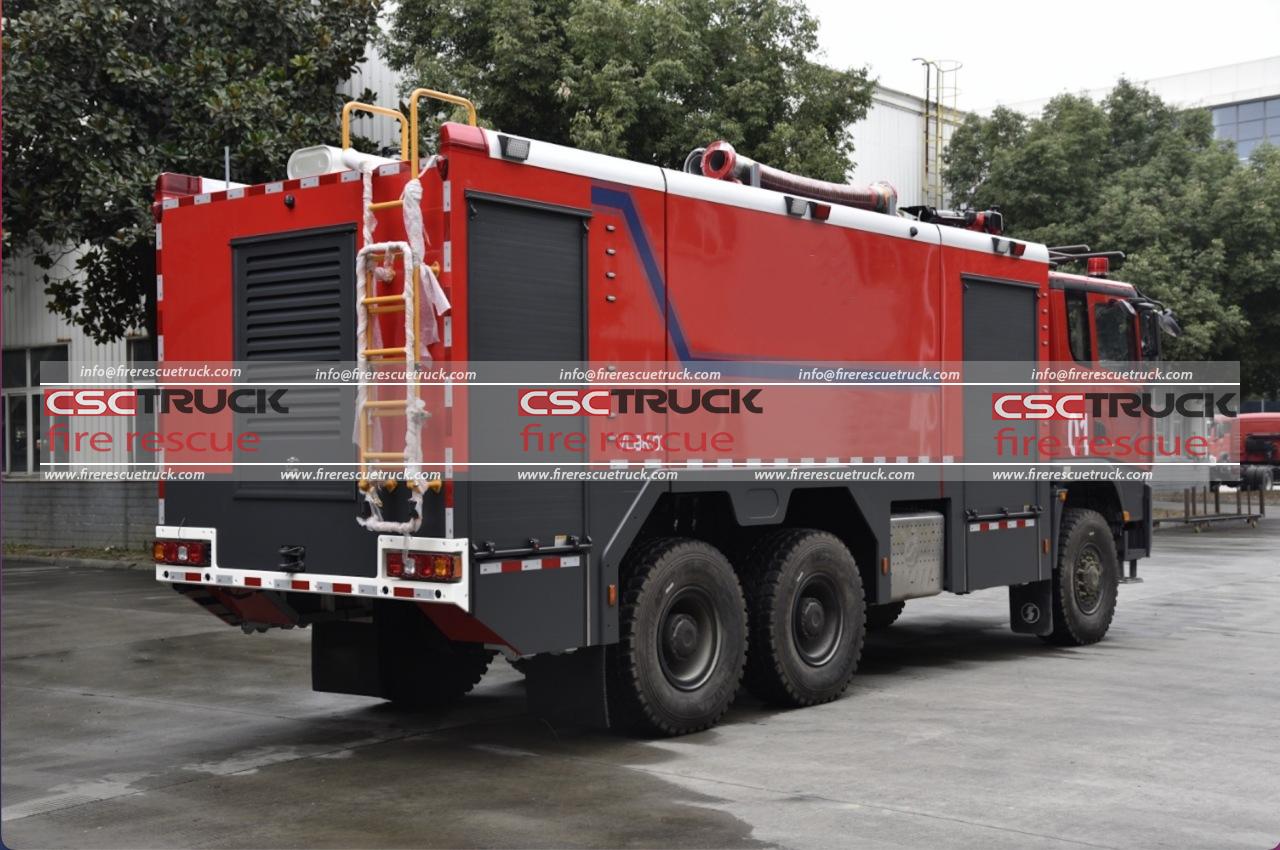
CSCTRUCK Fire Rescue Truck 6×6 ARFF trucks are designed for airport firefighting applications with large tanks, powerful pumps, and high mobility chassis.
Industrial Fire Response
Oil refineries, chemical plants, and mining sites often contain uneven roads and hazardous environments. A 6×6 truck with advanced traction systems can provide reliable access during emergencies.
Are ABS and Traction Control Necessary for a 6×6 Fire Truck?
Although a 6×6 drivetrain already provides excellent traction, ABS and traction control remain essential safety features.
A modern emergency vehicle must not only move forward—it must also:
- Stop safely
- Maintain steering control
- Protect firefighters
- Operate in changing weather conditions
The combination of:
- 6×6 all-wheel drive
- Differential locks
- ABS
- Traction control
- Heavy-duty suspension
creates a balanced firefighting platform capable of handling extreme environments.
Conclusion
Yes, modern 6×6 fire trucks typically have ABS and traction control systems. These technologies improve braking safety, driving stability, and off-road performance, especially when the vehicle is carrying heavy firefighting equipment and operating in challenging conditions.
For professional firefighting applications, a 6×6 truck is not only about engine power or water capacity. Safety technologies such as ABS, traction control, differential locks, and advanced drivetrain management are critical components that allow firefighters to respond quickly and safely.
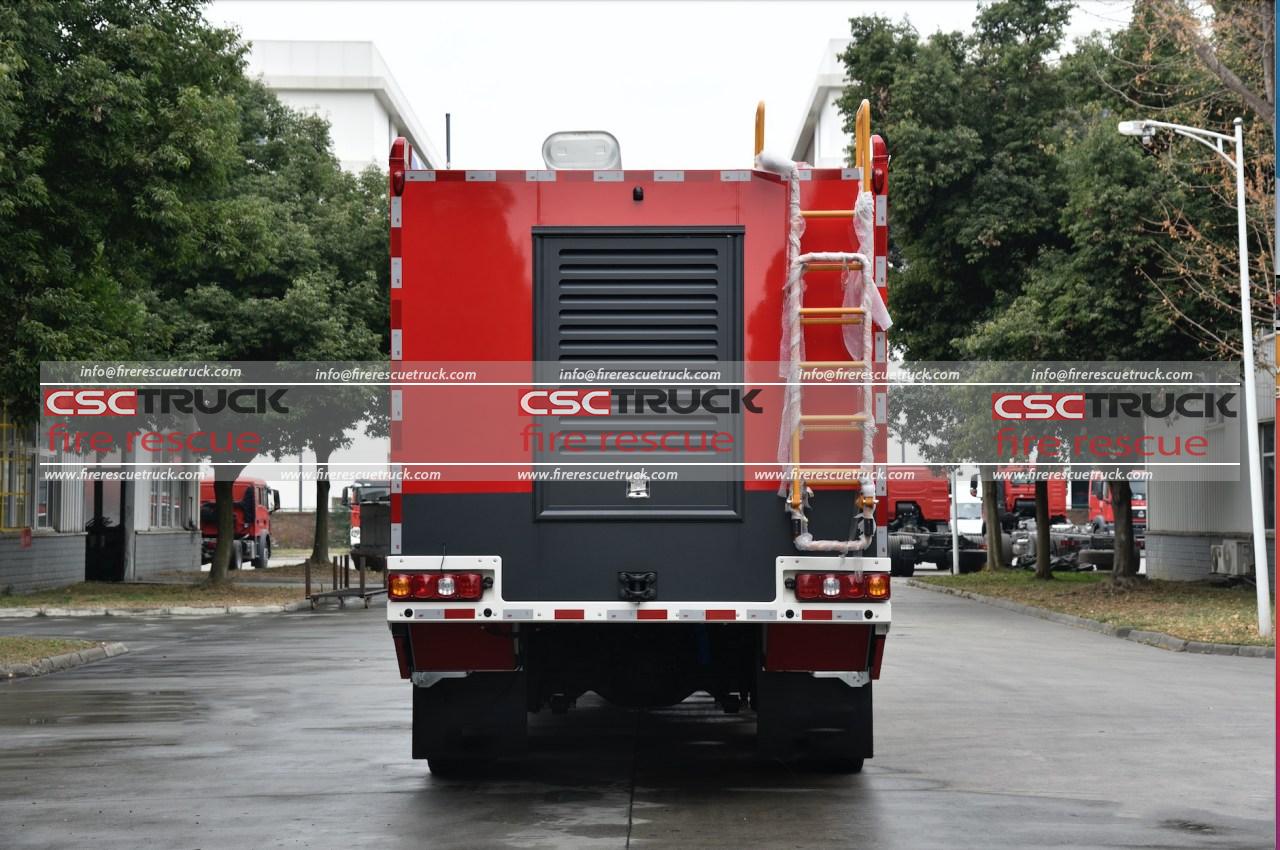
CSCTRUCK Fire Rescue Truck integrates advanced mobility technologies into its 6×6 firefighting vehicles, providing customized solutions for airports, industrial facilities, wildland operations, and emergency rescue missions worldwide.