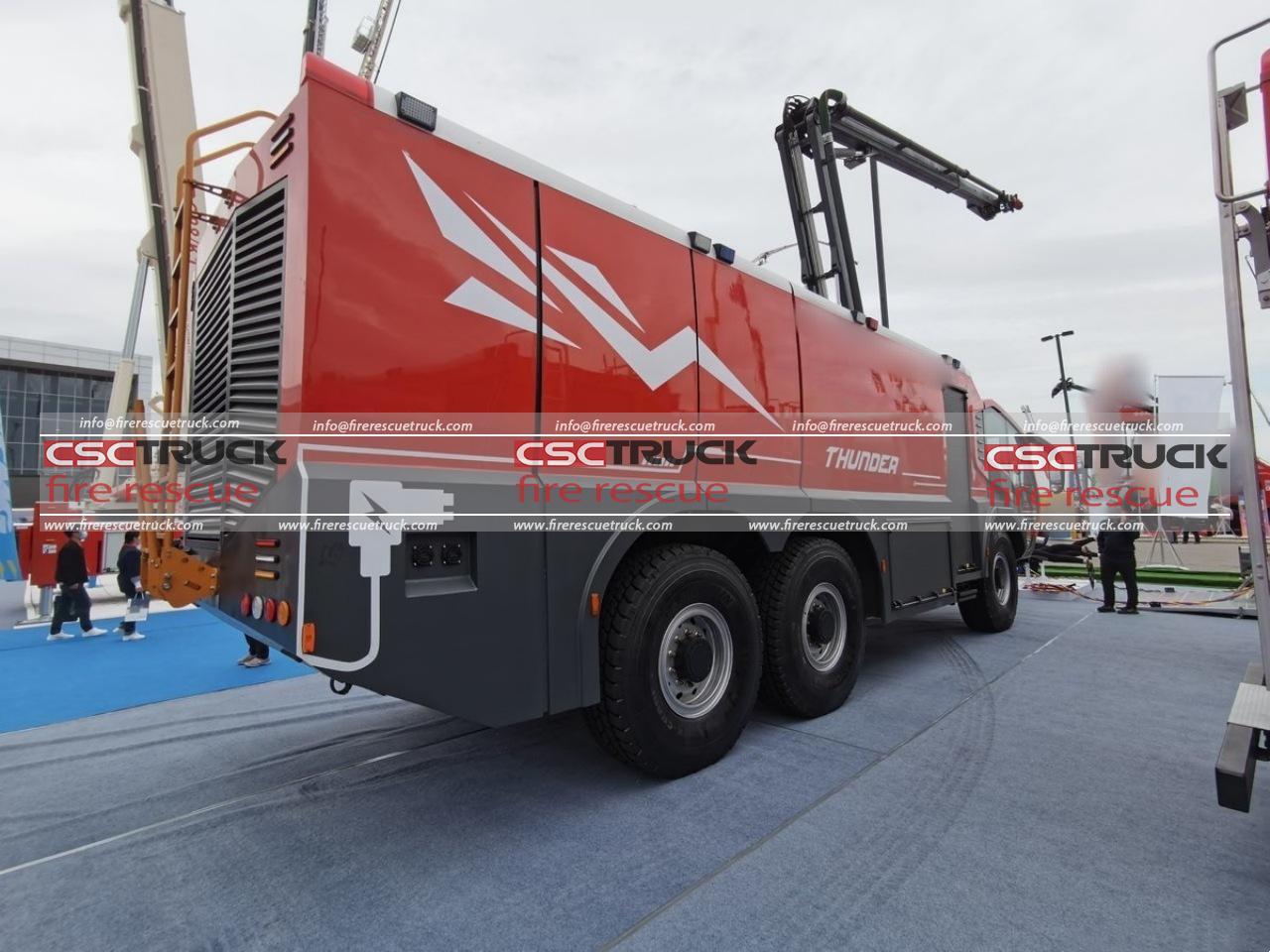
Introduction to CSCTRUCK Fire Rescue Truck
Modern firefighting operations are becoming more challenging due to the increasing scale and complexity of emergencies. Fires at airports, oil refineries, chemical plants, mining areas, forests, and remote industrial facilities often require vehicles that can deliver powerful suppression capability while keeping firefighters away from dangerous environments.
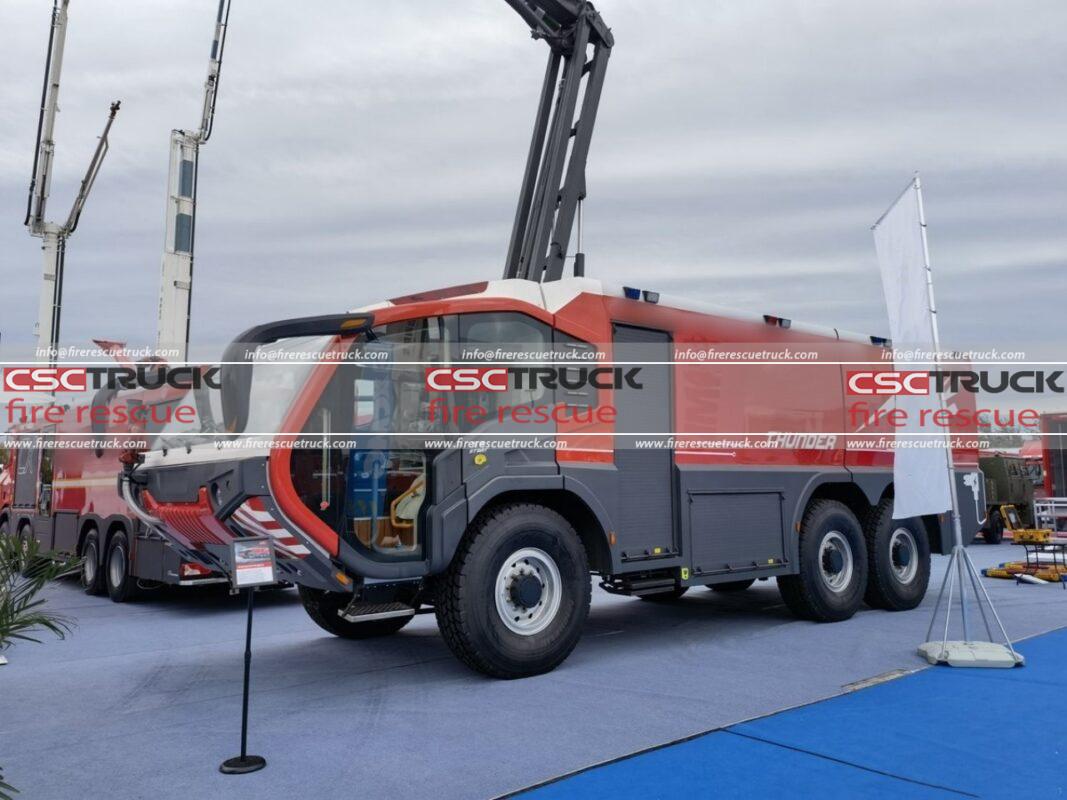
CSCTRUCK Fire Rescue Truck specializes in manufacturing advanced emergency response vehicles, including 4×4 and 6×6 fire trucks, airport rescue firefighting vehicles (ARFF), water foam fire trucks, and customized firefighting solutions. CSCTRUCK Fire Rescue Truck designs its vehicles with high mobility, large extinguishing capacity, powerful pumps, and advanced firefighting equipment to meet demanding rescue missions worldwide.
One important question for many fire departments and industrial users is: Does a 6×6 fire truck support remote-controlled monitors?
The answer is YES. Modern 6×6 fire trucks can be equipped with remote-controlled roof monitors, bumper monitors, and other remotely operated water or foam discharge systems. These technologies improve firefighting efficiency, increase operational safety, and allow firefighters to attack large fires from a protected position.
What Is a Remote-controlled Monitor on a Fire Truck?
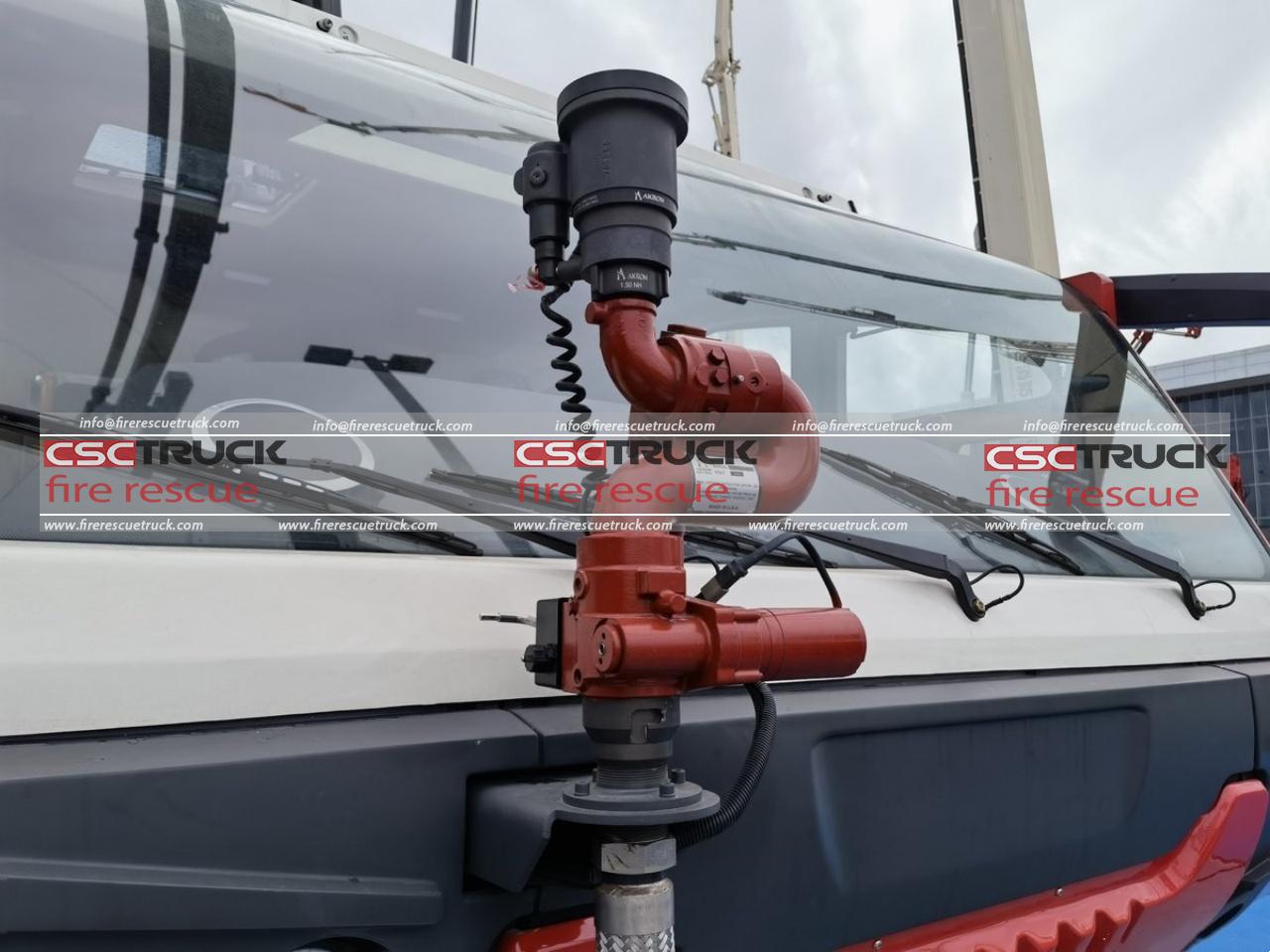
A remote-controlled monitor, also called a remote-controlled water cannon or firefighting monitor, is a high-capacity nozzle system that can be adjusted electronically instead of manually.
Traditional fire monitors require firefighters to physically operate handles or control mechanisms to change the direction and elevation of the water stream. In contrast, remote-controlled monitors use electric, hydraulic, or electronic control systems that allow operators to adjust:
- Horizontal rotation (left and right movement)
- Vertical elevation (up and down movement)
- Water flow
- Foam discharge
- Spray patterns
The operator can control the monitor from inside the cab, from a control panel, or through a wireless remote device.
For large fire incidents, remote-controlled monitors provide a major safety advantage because firefighters do not need to stand close to intense heat, flames, smoke, or hazardous materials.
Why Can a 6×6 Fire Truck Support Remote-controlled Monitors?
A 6×6 fire truck is designed for heavy-duty firefighting applications. Its three-axle, six-wheel-drive configuration provides the strength and stability required for carrying large tanks, powerful pumps, and advanced firefighting equipment.
1. Strong Chassis Capacity
Remote-controlled monitors are commonly installed on heavy firefighting vehicles because they require:
- Large water supply systems
- High-pressure pumps
- Strong mounting structures
- Electronic control equipment
- Foam proportioning systems
A 6×6 chassis provides greater payload capacity compared with smaller fire trucks. This allows manufacturers to install large firefighting modules while maintaining vehicle performance.
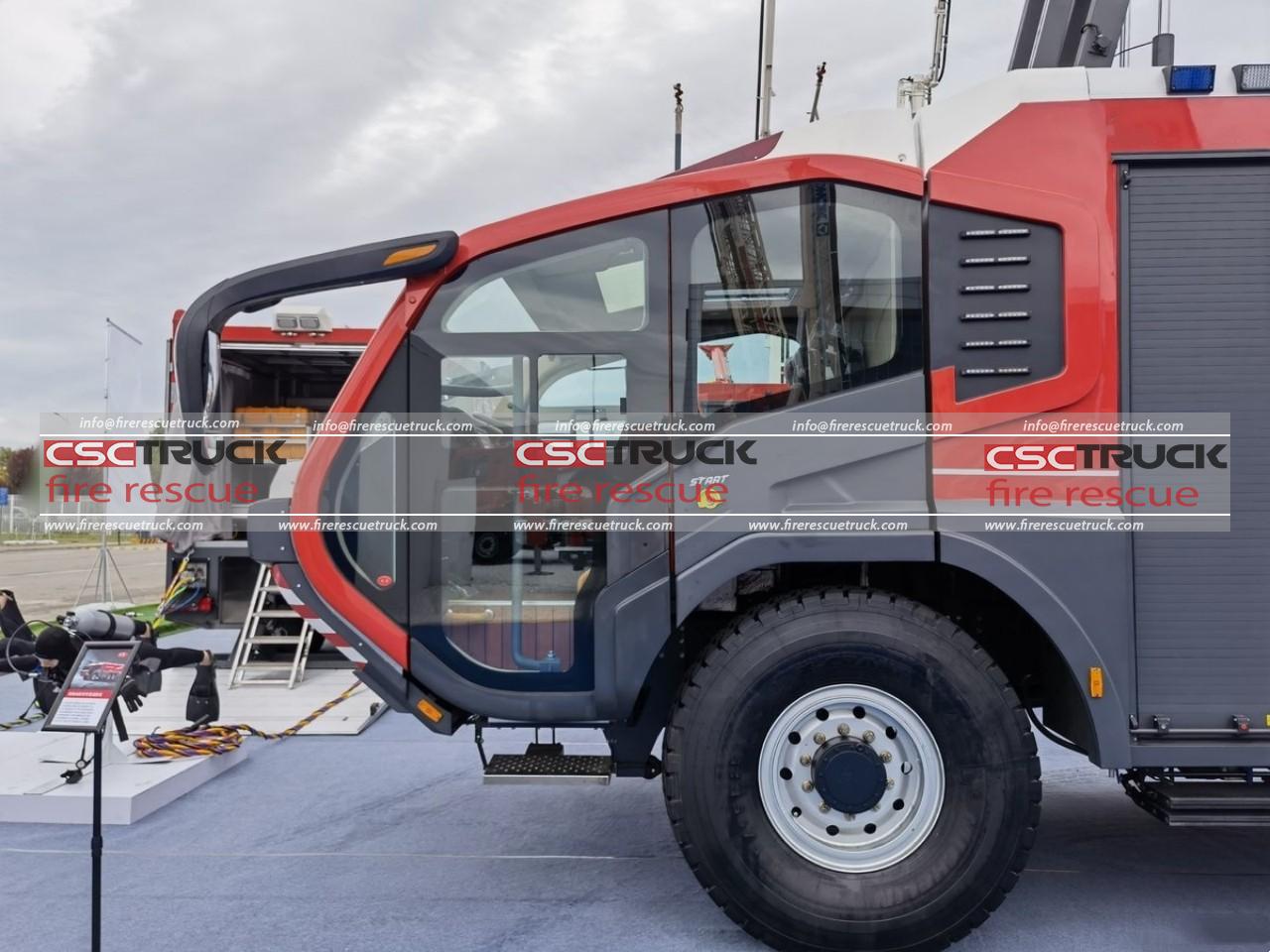
For example, CSCTRUCK Fire Rescue Truck 6×6 fire rescue vehicles can be configured with large water tanks, foam systems, dry chemical systems, and high-flow monitors for industrial and airport firefighting applications.
2. Improved Vehicle Stability During Operation
When a fire monitor operates at high flow rates, the reaction force from the water stream can create significant pressure on the vehicle.
A 6×6 drivetrain improves stability because:
- Weight is distributed across three axles
- More tires provide better ground contact
- Traction improves on rough terrain
- The suspension system can handle heavy loads
This stability is especially important when the monitor is operating at maximum flow capacity.
A large roof-mounted monitor on a 6×6 ARFF fire truck can discharge thousands of liters of water or foam per minute, requiring a stable platform to maintain accurate targeting.
Types of Remote-controlled Monitors Used on 6×6 Fire Trucks
Depending on the application, a 6×6 fire truck can be equipped with different types of remote-controlled monitors.
1. Roof-mounted Remote Monitor
Roof monitors are the most common configuration for heavy-duty fire trucks.
Advantages include:
- Long discharge distance
- Wide coverage area
- Ability to attack fires from a safe distance
- Suitable for airports and industrial facilities
Airport rescue firefighting vehicles often use roof monitors because aircraft fuel fires require rapid application of large quantities of foam and water.
2. Front Bumper Monitor
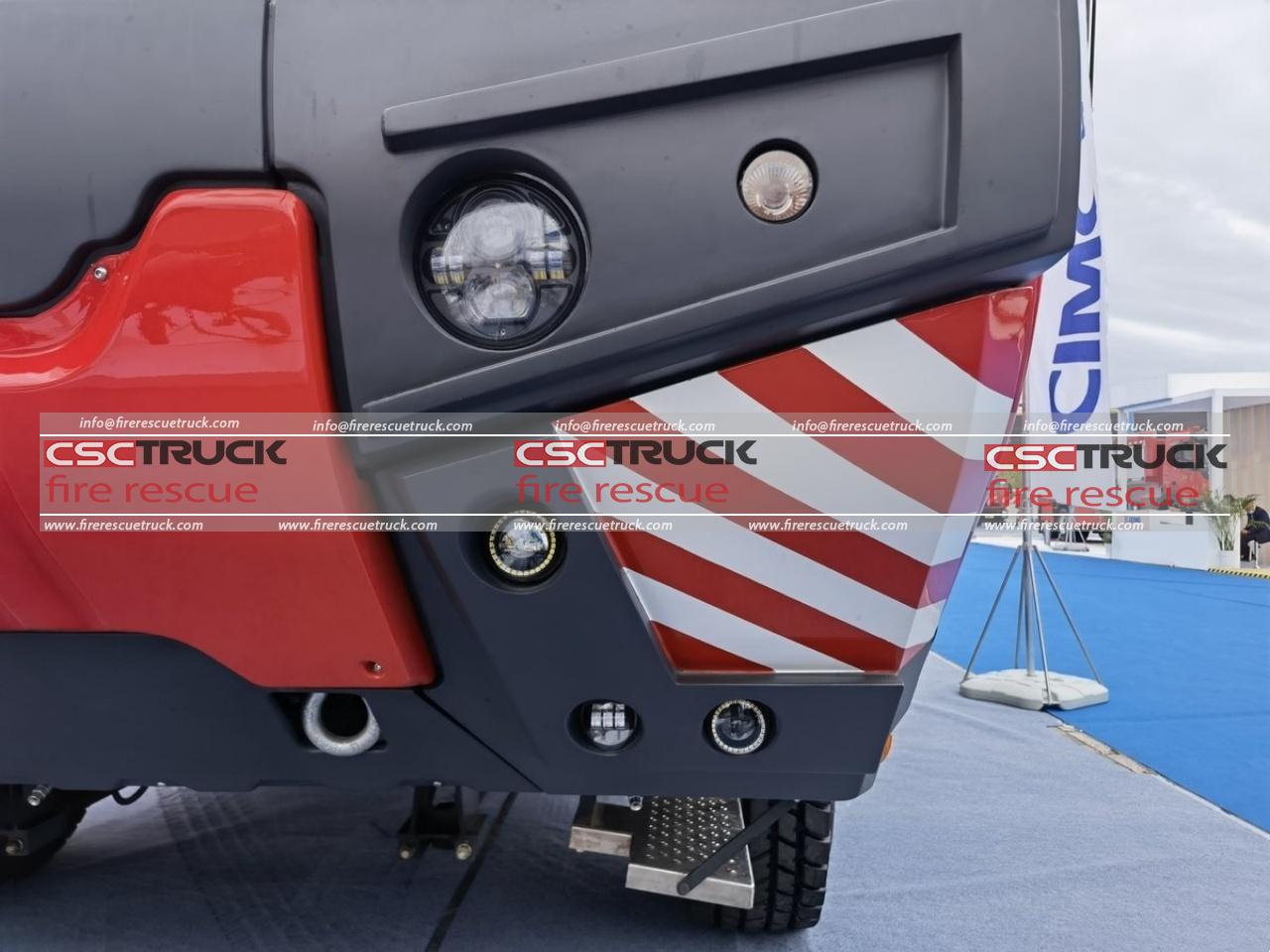
A front bumper monitor allows firefighters to attack fires while the vehicle is moving or approaching dangerous areas.
Common applications include:
- Wildland firefighting
- Vehicle fires
- Road tanker accidents
- Industrial emergencies
The driver or operator can control the water direction without leaving the protected cabin.
3. Foam-capable Remote Monitor
Many 6×6 fire trucks combine remote monitors with foam systems.
A foam-capable monitor can discharge:
- Water
- Foam solution
- Compressed air foam systems (CAFS)
This configuration is especially useful for:
- Fuel storage fires
- Aircraft accidents
- Chemical plant emergencies
- Oil refinery fires
CSCTRUCK Fire Rescue Truck offers firefighting vehicles with integrated water-foam systems and remote-controlled monitor options for specialized applications.
How Does the Remote Control System Work?
A typical remote-controlled monitor system includes several components:
Electric or Hydraulic Actuators
These mechanisms move the monitor horizontally and vertically. They replace manual operation and allow precise positioning.
Control Panel
The operator can control the monitor through:
- Cabin-mounted touchscreen
- Joystick controller
- Pump control panel
Wireless Remote Controller
Some systems allow firefighters to control the monitor from a distance, improving safety during hazardous operations.
Camera and Monitoring System
Advanced vehicles may integrate cameras near the monitor, allowing operators to see the target area even in difficult conditions.
Advantages of Remote-controlled Monitors on 6×6 Fire Trucks
1. Improved Firefighter Safety
The biggest advantage is reducing exposure to danger.
Firefighters can operate the monitor while remaining inside the protected cabin or at a safe distance.
This is valuable during:
- Chemical fires
- Fuel explosions
- High-temperature industrial fires
- Aircraft emergencies
2. Faster Fire Suppression
Remote-controlled monitors allow quick positioning and immediate water or foam application.
Operators can:
- Adjust the stream direction instantly
- Cover larger areas
- Attack fires before they spread
For large-scale incidents, speed is often critical.
3. Better Accuracy
Manual monitors may require physical adjustment, especially under difficult conditions.
Remote systems provide:
- Precise movement
- Better targeting
- Easier operation during smoke or poor visibility
4. Reduced Crew Requirements
Automation reduces the number of firefighters required to operate suppression equipment.
This allows more personnel to focus on:
- Rescue operations
- Fire assessment
- Equipment deployment
- Command activities
Applications of 6×6 Fire Trucks with Remote-controlled Monitors
Airport Firefighting
Aircraft fires require rapid response and large volumes of extinguishing agents. 6×6 ARFF vehicles equipped with remote monitors can quickly deliver foam and water over long distances.
Oil and Gas Facilities
Petroleum fires are extremely dangerous because of explosion risks. Remote monitors allow operators to suppress fires while maintaining a safer distance.
Mining and Remote Areas
Mining sites often have rough terrain and limited emergency infrastructure. The off-road capability of a 6×6 truck combined with remote firefighting equipment provides reliable protection.
Wildland Firefighting
Remote monitors help fight large vegetation fires where approaching the fire directly may be unsafe.
Conclusion
A 6×6 fire truck can absolutely support remote-controlled monitors, and this technology has become an important feature of modern heavy-duty firefighting vehicles.
The combination of a powerful 6×6 chassis, high-capacity water and foam systems, advanced pumps, and remotely operated monitors creates a highly capable emergency response platform. These vehicles can fight dangerous fires while improving firefighter safety and operational efficiency.
For organizations requiring reliable performance in airports, industrial facilities, oil fields, and extreme environments, CSCTRUCK Fire Rescue Truck provides customizable 6×6 firefighting solutions equipped with advanced suppression technologies, including remote-controlled monitors.