
Introduction to CSCTRUCK Fire Rescue Truck
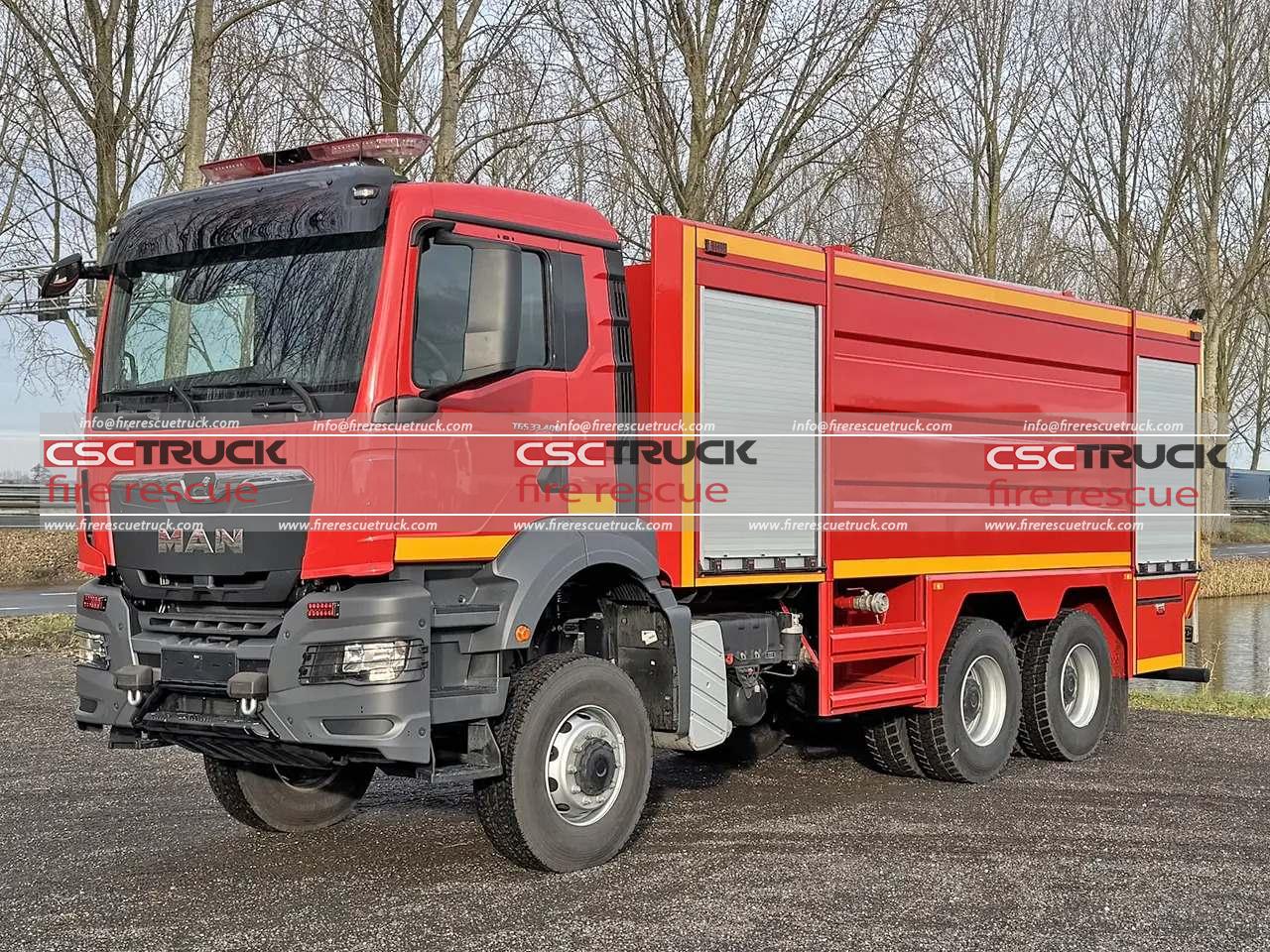
A 6×6 fire truck is one of the most capable emergency response vehicles designed for challenging environments. With 6 driven wheels, a powerful chassis, large water and foam capacities, and excellent off-road performance, 6×6 fire trucks are widely used for forest firefighting, industrial fire protection, airport rescue, and emergency operations in areas with difficult terrain.
CSCTRUCK Fire Rescue Truck specializes in manufacturing advanced fire rescue vehicles, including 6×6 fire trucks, airport rescue firefighting vehicles, water tank fire trucks, foam fire trucks, and special-purpose emergency vehicles. CSCTRUCK Fire Rescue Truck focuses on combining reliable heavy-duty chassis, efficient firefighting systems, and customized configurations to meet the requirements of global fire departments and industrial customers. More information about its fire truck solutions can be found at CSCTRUCK Fire Rescue Truck official website.
One of the most important components affecting the performance of a 6×6 fire truck is the suspension system. The suspension must support thousands of kilograms of firefighting equipment while providing stability, traction, and driver comfort on highways, rough roads, mud, sand, and uneven terrain.
So, what suspension system does a 6×6 fire truck use? The answer depends on the chassis design, mission requirements, and operating environment. Most 6×6 fire trucks use heavy-duty leaf spring suspension, air suspension, or a combination of both.
1. Heavy-Duty Leaf Spring Suspension
The most common suspension system used on 6×6 fire trucks is heavy-duty leaf spring suspension. This design has been used on commercial trucks, military vehicles, and emergency vehicles for decades because of its excellent load-bearing ability and durability.
A leaf spring suspension uses multiple layers of curved steel plates mounted between the axle and the vehicle frame. When the truck travels over uneven surfaces, the steel leaves flex to absorb shocks while supporting the vehicle’s weight.
Many off-road 6×6 fire trucks use multi-leaf spring suspension because these vehicles must carry:
- Large-capacity water tanks
- Foam tanks
- Fire pumps
- Hoses and rescue equipment
- Hydraulic systems
- Crew members
- Additional firefighting tools
The suspension must handle a high gross vehicle weight while maintaining reliability in extreme environments. Heavy-duty leaf springs provide excellent mechanical strength and require relatively simple maintenance.
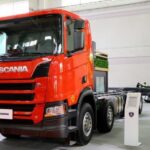
For example, some 6×6 airport rescue firefighting trucks use full leaf spring suspension on all axles. A Scania XT 6×6 airport fire truck chassis uses front and rear leaf springs designed for heavy-duty operation and off-road capability.
Advantages of Leaf Spring Suspension:
1. High load capacity
A 6×6 fire truck may carry more than 10,000 liters of water, making suspension strength extremely important. Leaf springs can handle heavy constant loads without complex components.
2. Excellent durability
Fire trucks often operate in harsh environments such as:
- Construction sites
- Forest areas
- Mountains
- Airports
- Industrial zones
The simple mechanical structure of leaf springs provides long service life.
3. Easy maintenance
Compared with air suspension systems, leaf springs contain fewer components and are easier to repair in remote locations.
2. Air Suspension System
Some modern 6×6 fire trucks use air suspension, especially when ride comfort, stability, and adjustable height are important.
Air suspension replaces traditional steel springs with air bags filled with compressed air. The system uses:
- Air springs
- Air compressors
- Control valves
- Height sensors
- Electronic control systems
The air pressure can automatically adjust according to vehicle load conditions, helping maintain a consistent ride height. Air suspension is widely used in heavy vehicles because it can improve ride quality and reduce vibration.
For fire trucks that frequently travel on paved roads or carry sensitive rescue equipment, air suspension can provide several benefits.
Advantages of Air Suspension:
Improved Driving Comfort
A 6×6 fire truck may travel long distances before reaching an emergency site. Air suspension reduces vibration transmitted to:
- Firefighters
- Electronic equipment
- Communication systems
- Rescue tools
Automatic Load Adjustment
The weight distribution of a fire truck changes depending on:
- Water tank level
- Foam quantity
- Equipment storage
- Crew members
Air suspension automatically compensates for these changes.
Better Road Stability
Air suspension can help maintain better tire contact with the road, improving handling and braking performance.
However, air suspension systems are more complex than leaf springs and require additional components such as compressors and control valves.
3. Independent Suspension Systems
Some advanced 6×6 fire trucks, especially high-performance rescue vehicles, may use independent suspension systems.
Unlike traditional solid axle suspension, independent suspension allows each wheel to move separately. This improves:
- Wheel articulation
- Off-road traction
- Steering control
- Ride comfort
Independent suspension is often found on specialized emergency vehicles where mobility is more important than simplicity.
Fire apparatus manufacturers have developed independent suspension systems because they can improve maneuverability and reduce stress on the chassis.
However, independent suspension usually has:
- Higher manufacturing costs
- More complex components
- More demanding maintenance requirements
Therefore, it is mainly used on premium rescue platforms or vehicles designed for extreme terrain.
4. Suspension Design Between Front and Rear Axles
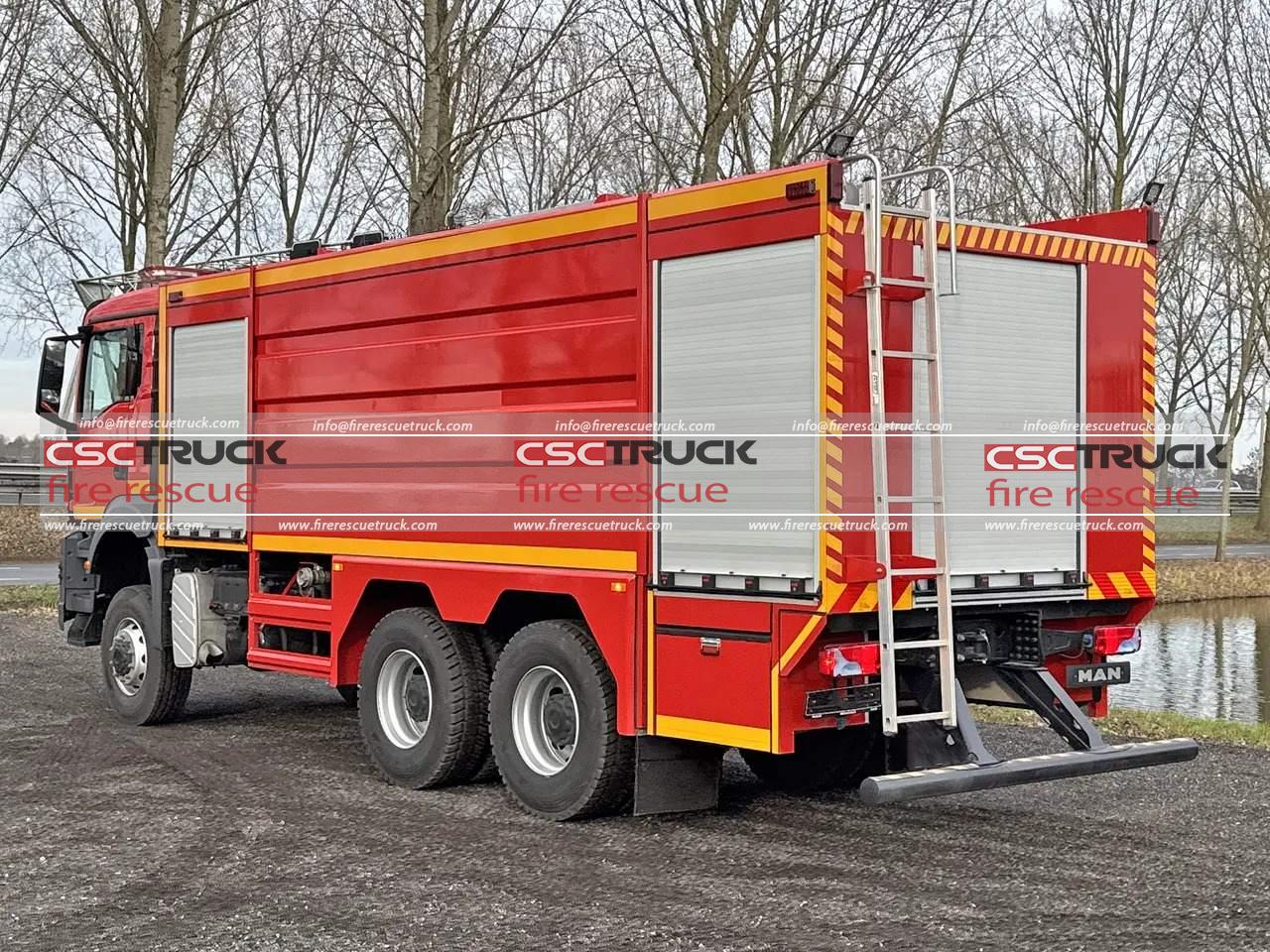
A 6×6 fire truck has three axles:
- One front steering axle
- Two rear drive axles
The suspension configuration is usually different between the front and rear sections.
Front Axle Suspension
The front axle must provide:
- Steering stability
- Load support
- Shock absorption
Common designs include:
- Multi-leaf springs
- Parabolic leaf springs
- Independent front suspension
The front suspension must balance steering precision with the ability to handle heavy loads.
Rear Axle Suspension
The rear axles carry most of the firefighting equipment’s weight. They commonly use:
- Heavy-duty multi-leaf springs
- Bogie suspension
- Air suspension
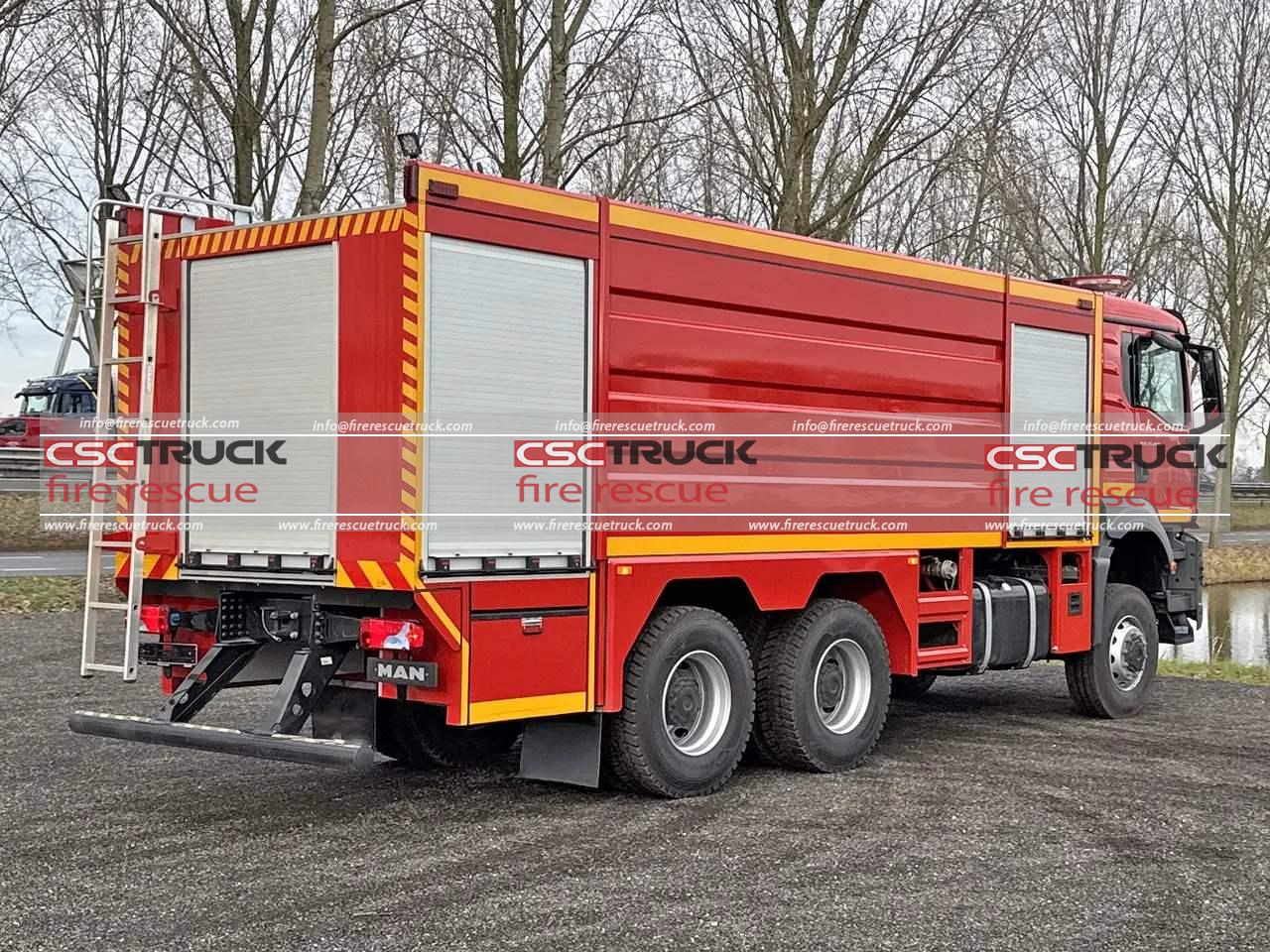
A tandem rear axle system improves:
- Load distribution
- Traction
- Stability
- Ground contact
This is especially important when operating fully loaded on mud, gravel, or steep terrain.
5. Suspension Requirements for Off-Road Firefighting
A 6×6 fire truck is designed to reach locations that ordinary fire vehicles cannot access. Therefore, its suspension system must provide:
High Ground Clearance
Forest fires, mining areas, and industrial sites often have uneven surfaces. Higher clearance helps prevent chassis damage.
Large Suspension Travel
Long suspension travel allows the wheels to maintain contact with the ground when crossing:
- Rocks
- Deep mud
- Slopes
- Ditches
Strong Shock Resistance
Emergency vehicles frequently drive at high speeds during response operations. The suspension must absorb impacts while maintaining vehicle control.
6. How Suspension Affects Firefighting Performance
The suspension system directly influences firefighting effectiveness.
A well-designed suspension system improves:
Vehicle Stability
When a fire truck arrives at an emergency scene, stability is critical. A stable chassis provides a safer platform for:
- Water pumps
- Aerial ladders
- Rescue equipment
Pumping Operations
Excessive chassis movement can affect firefighting equipment operation. Good suspension reduces vibration during water pumping.
Crew Safety
Firefighters often carry heavy equipment and must arrive ready for action. A smoother ride reduces fatigue during transportation.
Conclusion
The suspension system of a 6×6 fire truck is designed to balance strength, mobility, and reliability. Most 6×6 fire trucks use heavy-duty multi-leaf spring suspension because it provides excellent load capacity and durability in extreme environments. Some advanced models use air suspension or independent suspension systems to improve comfort, stability, and off-road performance.
For manufacturers like CSCTRUCK Fire Rescue Truck, selecting the correct suspension system is a key part of designing a reliable emergency vehicle. Whether operating at airports, industrial facilities, forests, or remote areas, a properly engineered suspension system ensures that a 6×6 fire truck can carry heavy firefighting equipment while reaching emergency locations safely and efficiently.
A strong suspension system is not just a mechanical component—it is the foundation that allows a 6×6 fire truck to perform its lifesaving mission under the most demanding conditions.