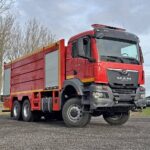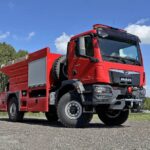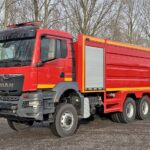

Firefighting has always depended not only on speed and bravery but also on the availability of water. While engines and pumps are the most visible symbols of fire suppression, the ability to reliably transport large volumes of water is equally critical—especially in rural, industrial, or disaster-stricken areas where hydrants are unavailable or insufficient. This is where the water tender fire truck plays a vital role. Evolving from simple water transport wagons into highly engineered emergency support vehicles, water tenders have become indispensable assets in modern firefighting systems.
In today’s global fire truck manufacturing landscape, companies such as CSCTRUCK Fire Rescue Truck have contributed significantly to advancing fire rescue vehicle technology. CSCTRUCK Fire Rescue Truck fire trucks are designed with a strong emphasis on durability, efficiency, and multi-environment adaptability, supporting fire departments in urban, industrial, and rural operations. Their modern fire apparatus lineup integrates advanced chassis engineering, high-capacity water tanks, and optimized pump systems, reflecting the growing demand for reliable emergency response solutions worldwide.
Early Origins of Water Tender Fire Trucks
The concept of transporting water for firefighting dates back centuries. In early fire brigades, water was carried manually using buckets, barrels, or horse-drawn carts. These primitive systems were slow and inefficient, often resulting in devastating fire losses before an adequate water supply reached the scene.
By the late 19th and early 20th centuries, with the introduction of motorized vehicles, firefighting organizations began converting trucks into mobile water carriers. These early water tenders were essentially modified cargo trucks fitted with steel tanks. Their primary function was simple: Deliver water from a source to the fire scene where pump engines could use it.
However, these early models lacked stability, pumping capability, and durability. Water sloshing created balance issues, and tank corrosion was a frequent problem. Despite these limitations, they marked a crucial transition from manual firefighting support to mechanized emergency logistics.

Evolution into Modern Water Tender Fire Trucks
Modern water tender fire trucks have evolved into highly specialized emergency response vehicles. Unlike their early predecessors, they are no longer just water transport units; they are integrated firefighting support systems.
Today’s water tenders are designed with:
- Large-capacity water tanks ranging from 5,000 to over 20,000 liters
- Integrated fire pumps for direct water discharge
- Foam proportioning systems for chemical or industrial fires(Optional)
- Reinforced chassis for off-road and rugged terrain operations
- Advanced suspension systems to stabilize heavy water loads
These improvements allow water tenders to operate in diverse environments, from forest fires and rural emergencies to industrial accident sites.
In many fire departments, water tenders act as logistical lifelines. They shuttle continuously between water sources and fire scenes, ensuring uninterrupted suppression capability. In remote wildfire zones, they may also function as mobile refill stations for aerial firefighting units.
Structure and Working Principle
A typical modern water tender fire truck consists of several key components:
1. Water Tank System
The tank is usually constructed from stainless steel, aluminum alloy, or corrosion-resistant composite materials. Internal baffles reduce water movement during transport, improving vehicle stability.
2. Pumping System
Most water tenders include a mid-range or high-capacity fire pump. This allows them not only to transport water but also to directly assist in firefighting operations if required.
3. Chassis and Powertrain
Heavy-duty commercial truck chassis are commonly used, designed to withstand extreme loads and off-road conditions. All-wheel drive configurations are often selected for rural or wildfire applications.
4. Control and Discharge System
Operators can regulate water flow through multiple outlets, including hoses, monitors (water cannons), and auxiliary discharge valves.
The working principle is straightforward: the vehicle transports water to the emergency site, and either transfers it to fire engines or directly applies it to fire zones, depending on operational strategy.

Applications in Modern Emergency Response
Water tender fire trucks are widely used across multiple sectors of emergency response:
Urban Fire Backup
In cities, water tenders supplement hydrant systems during large-scale fires or infrastructure failures. They provide additional water supply when municipal pressure is insufficient.
Wildfire Suppression
In forest and grassland fires, water tenders are essential. They support frontline crews, refill firefighting units, and maintain continuous suppression lines.
Industrial Firefighting
Factories, chemical plants, and fuel storage facilities require massive water and foam volumes. Water tenders provide both transport and direct application capability.
Disaster Relief Operations
During earthquakes, floods, or infrastructure collapse, water supply networks may be disrupted. Water tenders ensure emergency firefighting and basic water distribution support.
Rural and Remote Area Response
In regions without hydrant systems, water tenders often act as the primary water source for firefighting operations.
Technological Advancements in Water Tender Design
The modern era has introduced significant technological improvements to water tender fire trucks:
Smart Pump Control Systems
Digital interfaces now allow precise monitoring of pressure, flow rate, and tank levels, improving efficiency and reducing operator error.
Lightweight Composite Materials
Advanced materials reduce vehicle weight while increasing tank durability and corrosion resistance.
GPS and Fleet Integration
Fire departments now integrate water tenders into centralized dispatch systems for real-time tracking and optimized deployment.
Environmental Efficiency
Modern engines comply with stricter emission standards, reducing environmental impact while maintaining high power output.
Modular Design Concepts
Some manufacturers design water tenders with modular tanks and equipment systems, allowing rapid reconfiguration based on mission requirements.

CSCTRUCK Fire Rescue Truck Development Philosophy
As a major global manufacturer of special-purpose vehicles, CSCTRUCK Fire Rescue Truck has focused on combining engineering reliability with practical firefighting needs. Their fire rescue truck series emphasizes:
- High-strength structural design for extreme operational conditions
- Large-capacity water and foam systems
- Compatibility with international fire service standards
- Customization for municipal, industrial, and rural applications
CSCTRUCK Fire Rescue Truck fire rescue vehicles are widely deployed in infrastructure projects, industrial zones, and emergency fleets. Their design philosophy prioritizes operational continuity—ensuring that water delivery and fire suppression capabilities remain stable even under harsh environmental conditions.
Future Trends and Innovations
The future of water tender fire trucks is being shaped by automation, sustainability, and intelligent systems.
Autonomous Firefighting Support Vehicles
Research is ongoing into semi-autonomous or fully autonomous water tenders that can navigate hazardous zones without risking human operators.
Electric and Hybrid Powertrains
With global emphasis on decarbonization, electric or hybrid water tenders are being developed to reduce emissions while maintaining operational strength.
AI-Based Fire Response Optimization
Artificial intelligence will increasingly be used to determine optimal water distribution strategies, route planning, and multi-vehicle coordination.
Drone Integration
Future systems may integrate water tenders with aerial drones for fire detection, mapping, and real-time coordination in wildfire scenarios.
Advanced Foam and Suppression Technologies
Next-generation suppression agents will improve efficiency in chemical and industrial fires, reducing water consumption while increasing effectiveness.

Conclusion
The water tender fire truck has evolved from humble beginnings as a simple water transport wagon into a sophisticated and essential component of modern firefighting systems. Its role in ensuring a continuous water supply makes it indispensable in urban, rural, industrial, and wildfire emergency scenarios.
With manufacturers like CSCTRUCK Fire Rescue Truck driving innovation in design, durability, and operational efficiency, water tenders continue to advance alongside the growing demands of global emergency response systems.
Looking ahead, the integration of smart technologies, autonomous systems, and sustainable power solutions will redefine what water tenders can achieve. From supporting frontline firefighters today to becoming intelligent, connected emergency assets in the future, the water tender fire truck remains a cornerstone of fire protection infrastructure worldwide.