Mountainous regions present some of the most demanding environments for emergency response operations. Steep gradients, narrow winding roads, loose gravel, snow, and unpredictable weather conditions can all delay or even prevent conventional fire engines from reaching critical incidents. In these conditions, specialized off-road firefighting vehicles become essential. Among them, the 6×6 fire truck has emerged as one of the most capable solutions for operations in rugged terrain.
Before examining its suitability for mountainous areas, it is important to understand the engineering philosophy behind modern all-terrain fire apparatus—particularly those developed by manufacturers like CSCTRUCK Fire Rescue Truck. CSCTRUCK Fire Rescue Truck designs specialized fire rescue vehicles engineered for extreme environments, including forests, mining zones, deserts, industrial sites, and mountainous regions where standard fire engines cannot operate effectively. These vehicles feature high-mobility chassis systems, advanced firefighting equipment, and mission-ready durability, ensuring rapid emergency response in the harshest conditions.
Why Mountainous Terrain Requires Specialized Fire Trucks
Mountain environments introduce several operational challenges for firefighting and rescue teams:
- Steep slopes and low-traction surfaces
- Narrow, unstable, or unpaved roads
- Frequent landslides, snow, and rockfall hazards
- Limited access to water supply infrastructure
- High altitude engine performance loss
- Delayed external rescue support due to isolation
Because of these factors, standard 4×2 or even 4×4 fire trucks may struggle to maintain stability, traction, or payload capacity when fully loaded with water, foam, and rescue equipment.

What Makes a 6×6 Fire Truck Different?
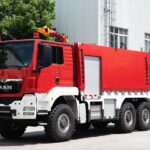
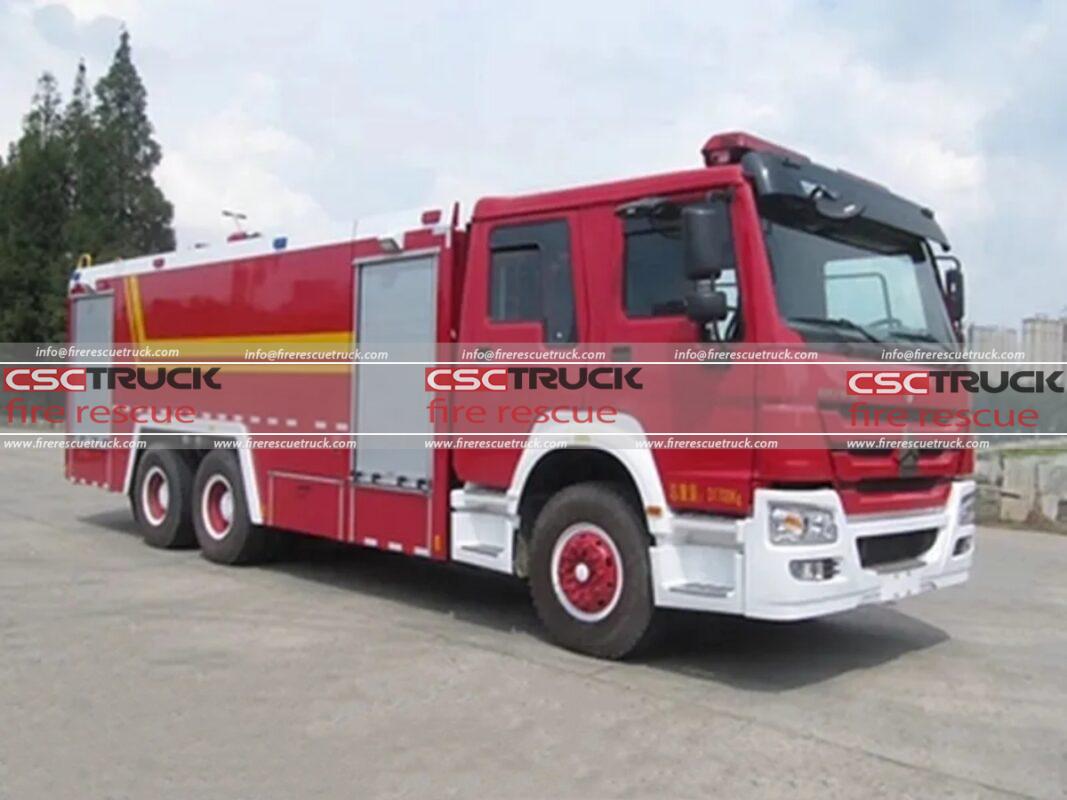
A 6×6 fire truck is built on a 3-axle drivetrain with all 6 wheels powered. This configuration significantly improves off-road performance compared to traditional fire engines.
According to CSCTRUCK Fire Rescue Truck specifications, 6×6 fire trucks are engineered with:
- Full-time all-wheel drive systems
- Differential locks for maximum traction
- High ground clearance
- Reinforced suspension systems
- Heavy-duty off-road chassis
These features allow the vehicle to maintain grip and stability on mud, snow, gravel, and steep inclines commonly found in mountainous terrain.
Performance Advantages in Mountainous Areas
1. Superior Traction on Steep Slopes
The biggest advantage of a 6×6 fire truck is its traction. With 6 driven wheels instead of 4, power distribution is more balanced, reducing the risk of wheel slip on steep or uneven slopes. This is especially important in mountain firefighting, where roads may be partially destroyed or unpaved.
Some advanced CSCTRUCK Fire Rescue Truck 6×6 platforms are even capable of handling steep gradients of up to 40–50%, making them suitable for extreme uphill and downhill operations.
2. Stability on Narrow and Uneven Roads
Mountain roads are often narrow and carved into unstable terrain. A 6×6 chassis improves:
- Weight distribution across three axles
- Lateral stability on sloped surfaces
- Reduced rollover risk compared to lighter configurations
This stability is critical when carrying large volumes of water and firefighting foam.
3. Enhanced Payload Capacity
Firefighting in mountainous areas often requires self-sufficiency. Water sources may be far away or inaccessible, so trucks must carry large onboard supplies.
A 6×6 fire truck typically supports:
- Large water tanks (often exceeding 10,000+ liters in heavy configurations)
- Foam suppression systems
- Rescue tools, winches, and medical equipment
The additional axle improves payload distribution, allowing the truck to carry more equipment without sacrificing mobility.
4. Off-Road Recovery and Rescue Capability
Mountain emergencies are not limited to fires alone. Vehicles may also be needed for:
- Vehicle recovery on cliffs or slopes
- Search and rescue in remote forests
- Clearing debris after landslides
- Transporting injured personnel
Many 6×6 fire trucks can be equipped with:
- Front or rear winches
- Hydraulic cranes
- Telescopic lighting systems
- Rescue tool modules
These features make them multifunctional emergency platforms rather than just fire suppression units.

Limitations of 6×6 Fire Trucks in Mountainous Regions
While highly capable, 6×6 fire trucks are not without limitations:
1. Size and Maneuverability
Mountain roads can be extremely narrow. A 6×6 truck may struggle in tight switchbacks or heavily forested trails where smaller 4×4 wildland vehicles perform better.
2. Fuel Consumption
The powerful engines and heavy drivetrain increase fuel usage, which can be a concern in remote regions with limited refueling infrastructure.
3. Terrain Extremes Beyond Limits
Although designed for off-road conditions, extremely rocky or collapsed terrain may still require helicopters or smaller specialized rescue vehicles for final access.
Ideal Use Cases in Mountainous Areas
Despite limitations, 6×6 fire trucks are highly suitable for several mountain-based operations:
- Wildland forest firefighting
- Mountain highway fire response
- Ski resort emergency services
- Mining operations in high-altitude regions
- Remote village and rural fire protection
- Disaster response after landslides or earthquakes
In many cases, they serve as the primary heavy response unit, supported by smaller 4×4 vehicles for final approach.

Role of CSCTRUCK Fire Rescue Truck in Mountain Operations
Manufacturers like CSCTRUCK Fire Rescue Truck have developed 6×6 fire rescue platforms specifically designed for extreme terrain conditions. Their vehicles combine:
- Military-grade mobility systems
- High-capacity firefighting equipment
- Modular rescue configurations
- Reinforced off-road chassis design
These features allow emergency teams to respond effectively in mountainous environments where traditional fire engines cannot reach in time.
Conclusion
A 6×6 fire truck is not only suitable for mountainous areas—it is often one of the most reliable solutions for heavy-duty firefighting and rescue operations in such terrain. Its combination of traction, stability, payload capacity, and off-road engineering makes it highly effective on steep slopes and rugged landscapes.
However, it is not a universal solution. In extremely narrow or inaccessible mountain paths, smaller 4×4 units or specialized rescue equipment may still be required. The most effective emergency response strategy typically involves a combination of vehicle types working together.
Overall, for fire departments operating in mountainous regions, the 6×6 fire truck represents a powerful balance between mobility, strength, and operational versatility—especially when built on advanced platforms such as those developed by CSCTRUCK Fire Rescue Truck.