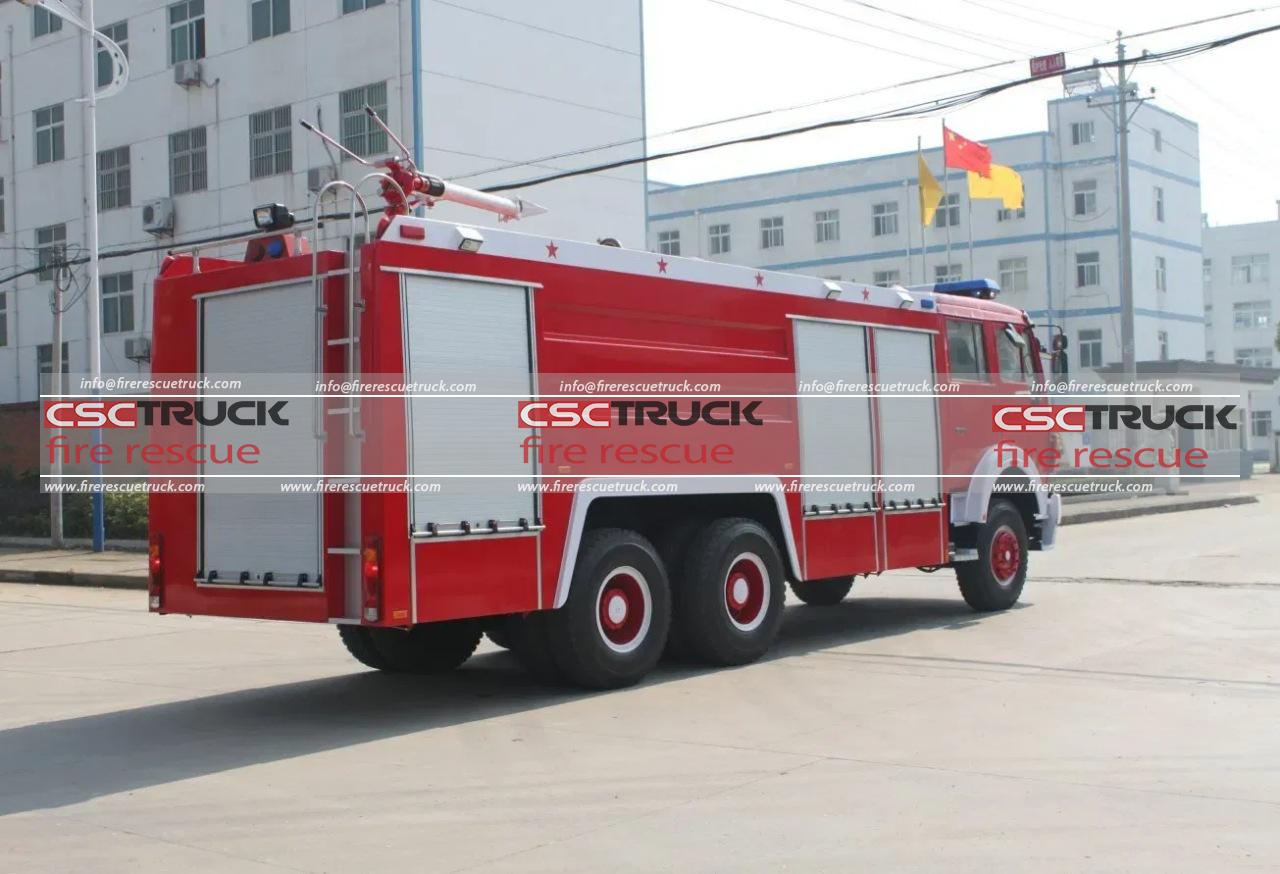

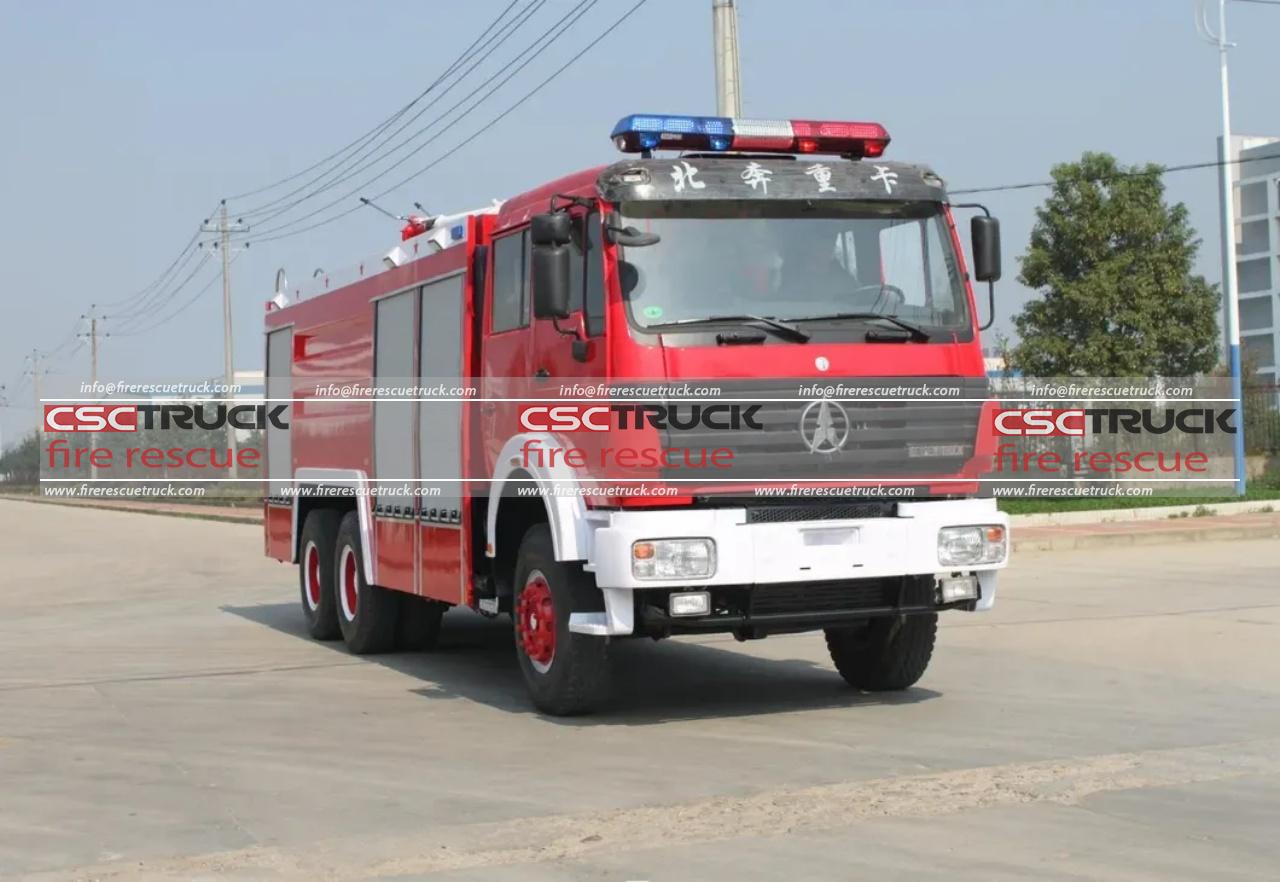
Firefighting in remote or rugged regions often pushes emergency vehicles far beyond paved roads and urban infrastructure. One of the most capable machines in these environments is the 6×6 fire truck, designed for extreme off-road mobility, high payload capacity, and disaster-response versatility. Among manufacturers in this field, CSCTRUCK Fire Rescue Truck has become a recognized supplier of specialized off-road fire apparatus engineered for mining, forest, military, and emergency rescue missions worldwide.
These vehicles are not just “big fire engines”—they are purpose-built all-terrain platforms designed to operate in mud, snow, sand, steep mountain roads, and even water-adjacent environments. But a common question remains: Can a 6×6 fire truck actually cross rivers or streams?
The short answer is: Yes, but only under specific design limits and safety conditions.
Understanding the 6×6 Fire Truck’s Off-Road Capability
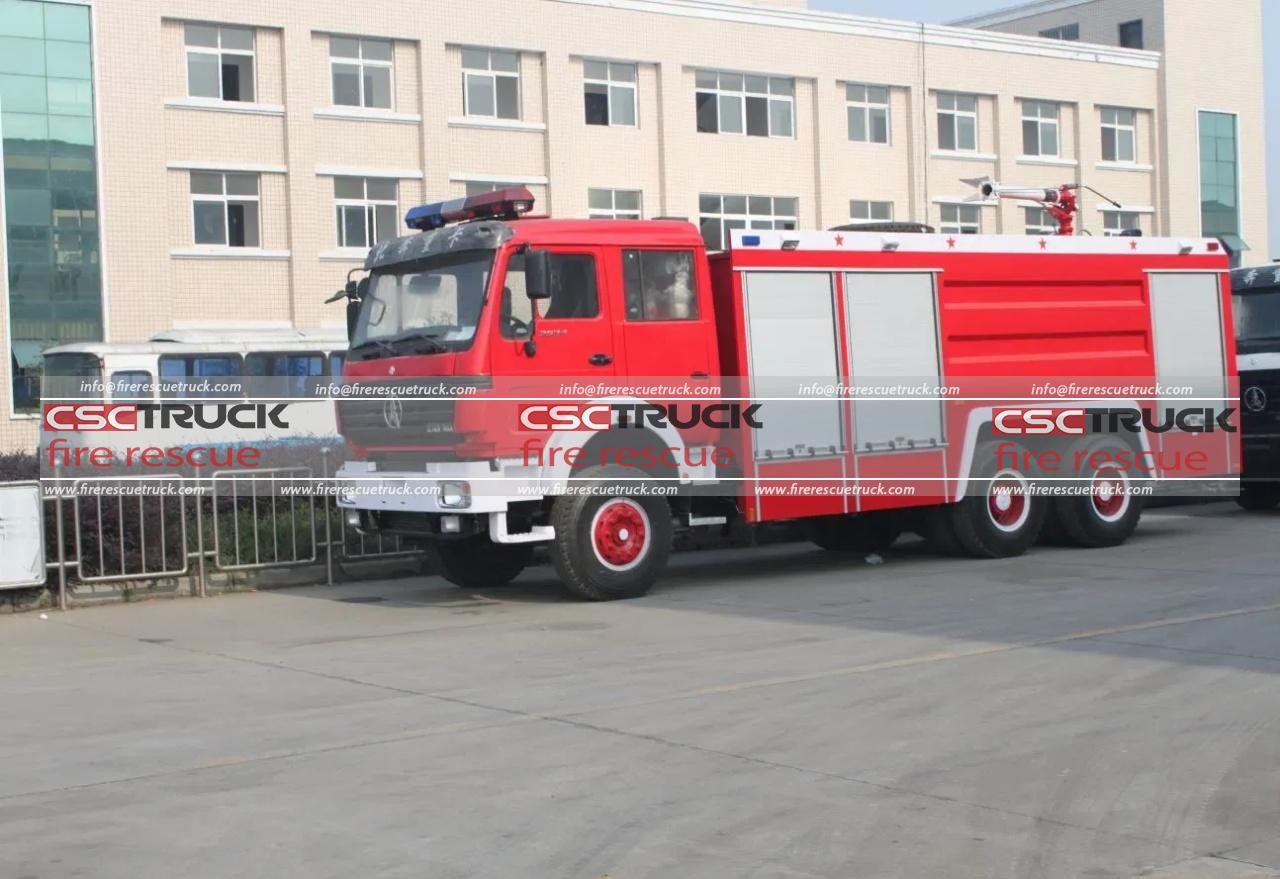
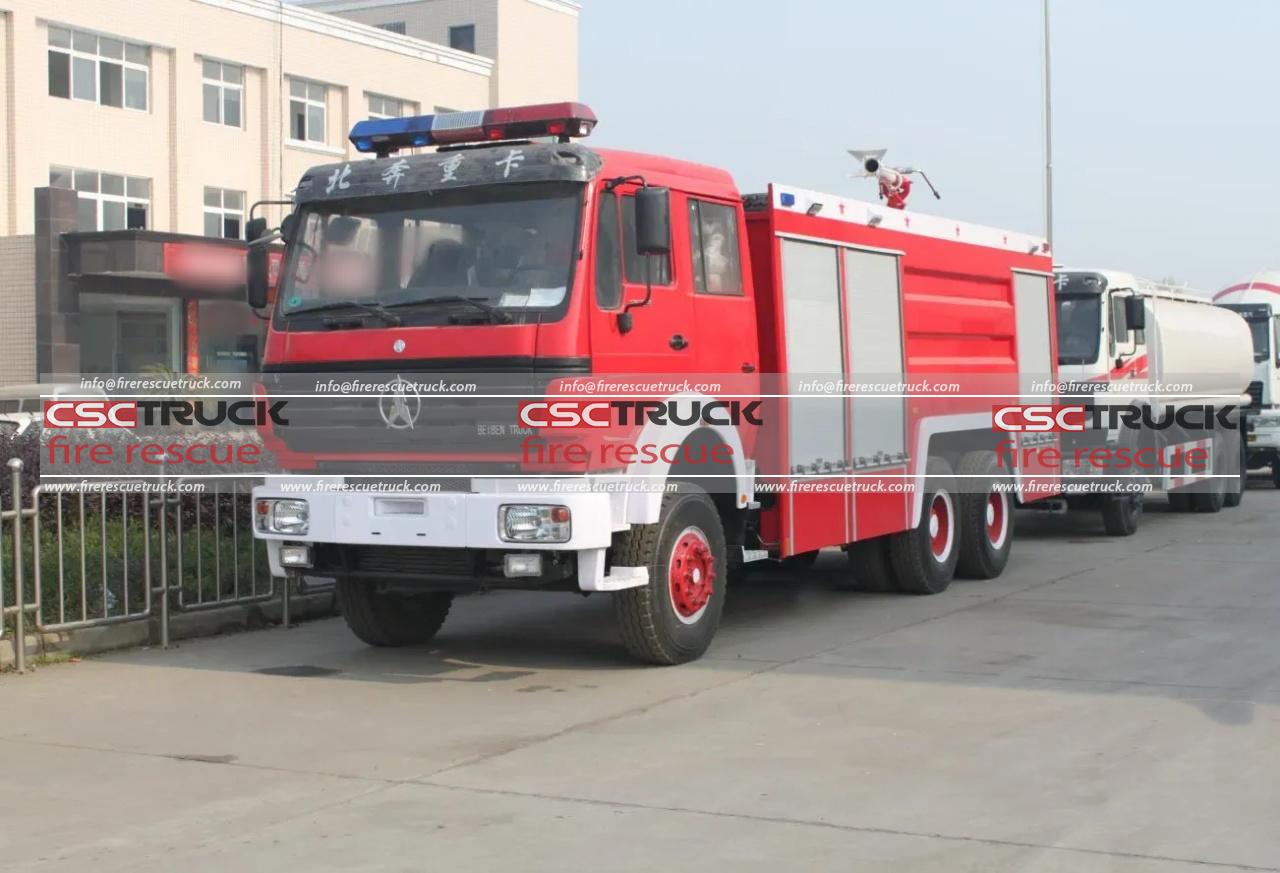
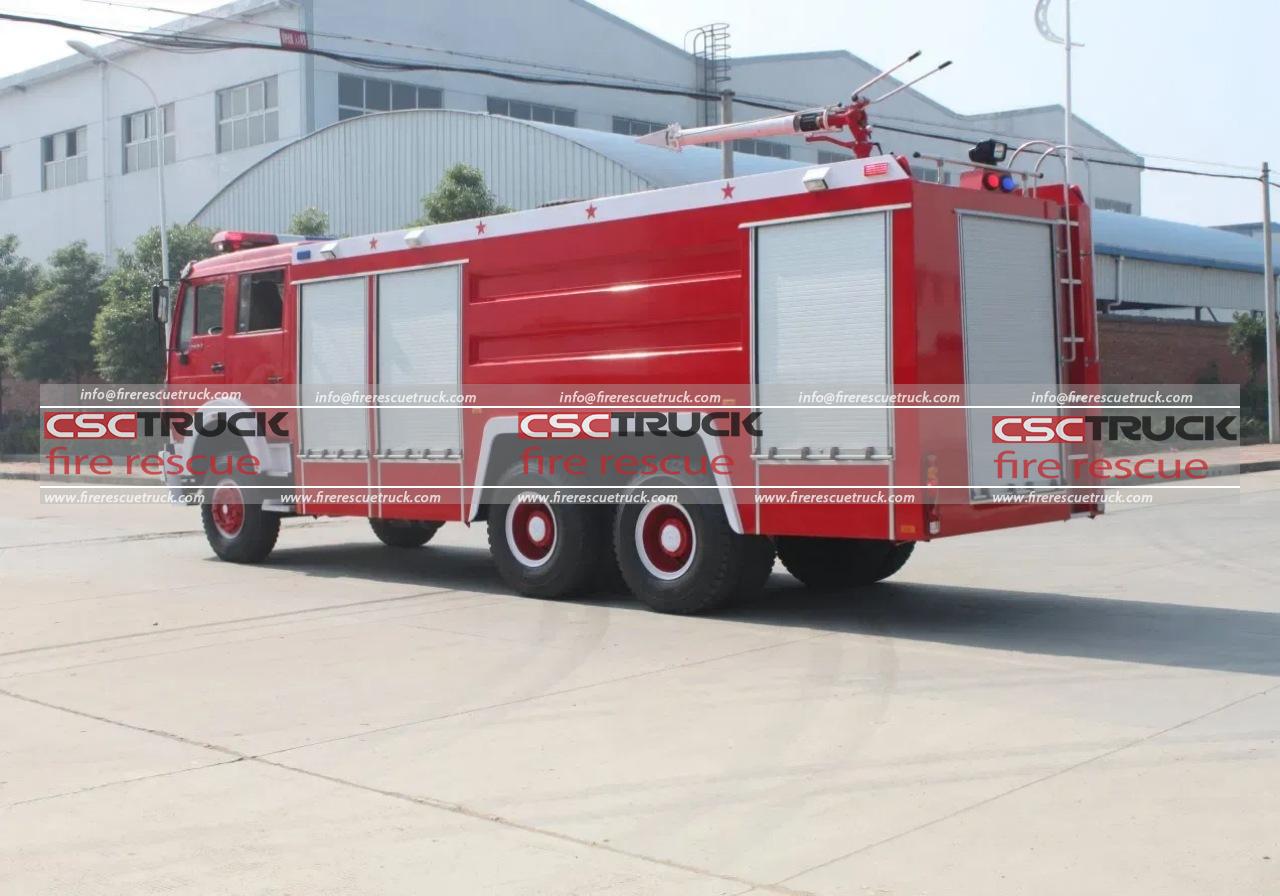
A modern 6×6 fire truck is built on a heavy-duty chassis with 3 axles and all-wheel drive. This configuration provides exceptional traction and stability across uneven terrain.
Manufacturers like CSCTRUCK Fire Rescue Truck design these vehicles with features such as:
- Permanent or selectable 6-wheel drive systems
- High ground clearance
- Differential locks for maximum traction
- Reinforced suspension systems
- Military-grade off-road tires
- Optional central tire inflation systems
These engineering features allow the vehicle to traverse environments such as rocky mountain paths, deep mud, and flood-affected roads where standard fire engines would fail.
Some advanced 6×6 platforms also include deep water fording capability, specifically designed for controlled river or stream crossing scenarios under operational limits.
What “Water Crossing” Really Means for Fire Trucks
When people imagine a fire truck crossing a river, they often picture amphibious vehicles. In reality, most 6×6 fire trucks are not amphibious.
Instead, they are typically equipped for wading or fording, meaning:
- Driving through shallow water
- Crossing streams or flooded roads
- Passing through controlled water obstacles
This capability is fundamentally different from floating or swimming.
Typical specifications for off-road fire trucks may include wading depths around 600 mm to 800 mm, sometimes higher depending on configuration, allowing them to safely cross shallow rivers or streams if conditions are stable and predictable.
When a 6×6 Fire Truck CAN Cross Rivers or Streams
A 6×6 fire truck can cross water obstacles when all of the following conditions are met:
1. Shallow Water Depth
The water level must remain below the manufacturer’s rated wading depth. If water reaches critical components like the engine air intake or electrical systems, the vehicle risks failure.
2. Stable Riverbed or Streambed
The bottom must be firm (rock, gravel, or compact soil). Soft mud or shifting sand can trap even a heavy off-road vehicle.
3. Controlled Flow
Slow-moving streams are much safer than fast-flowing rivers. Strong currents can destabilize a fully loaded fire truck.
4. Proper Vehicle Preparation
Before entering water, crews typically:
- Seal or elevate air intake systems (if applicable)
- Check door seals and electrical protection
- Engage differential locks for traction
5. Experienced Driver Operation
Crossing water is a technical off-road maneuver requiring trained operators familiar with vehicle limits and terrain behavior.
When a 6×6 Fire Truck CANNOT Safely Cross
Despite their rugged design, there are clear limitations.
A 6×6 fire truck should NOT attempt river or stream crossing when:
- Water depth exceeds the rated fording limits
- Currents are fast or unpredictable
- Riverbeds are unstable or unknown
- Water hides deep drop-offs or debris
- Ice conditions are uncertain or breaking
- Floodwaters are contaminated with hazardous materials or strong pressure flows
In these situations, even the most advanced 6×6 fire truck can become immobilized or damaged.
Engineering Behind Water Resistance and Fording
To support limited water crossings, manufacturers reinforce several critical systems:
Sealed Electrical Systems
Electrical wiring and control modules are protected against short circuits and water intrusion.
Elevated Air Intake
Some models relocate the air intake systems higher to prevent engine flooding during wading.
Reinforced Chassis and Suspension
Heavy-duty construction helps maintain stability in uneven underwater terrain.
Waterproof Drivetrain Components
Axles, hubs, and transmission housings are designed to resist temporary water exposure.
These features allow the vehicle to operate in flood-prone or partially submerged environments without immediate mechanical failure.
Role in Disaster and Flood Response
While 6×6 fire trucks are not amphibious, their partial water-crossing capability is extremely valuable in emergencies.
In real-world disaster scenarios, such as:
- Flooded rural communities
- Riverbank wildfires
- Mountain flash floods
- Earthquake-damaged infrastructure zones
These trucks can still deliver firefighters, rescue equipment, and water supply to otherwise inaccessible areas.
CSCTRUCK Fire Rescue Truck designs many of its off-road models specifically for these mixed-terrain disaster conditions, combining firefighting systems with mobility-focused engineering for remote operations.
Why 6×6 Fire Trucks Are Often Used Near Water Environments
Even though they are not designed to float or operate in deep water, they are commonly deployed near rivers, lakes, and flood zones because they offer:
- High payload capacity for water and foam
- Strong traction in muddy floodplains
- Ability to reach isolated emergency zones
- Stability under heavy load
- Long-range autonomous firefighting capability
In essence, they serve as bridge vehicles between dry land and partially flooded terrain.
Conclusion
A 6×6 fire truck can cross rivers or streams—but only within strict engineering and environmental limits. It is not an amphibious vehicle, but rather a highly capable off-road fire apparatus designed for controlled water fording and disaster response.
When conditions are safe—shallow water, stable ground, and manageable flow—these trucks can successfully pass through streams and flooded areas to reach emergencies. However, deeper or fast-moving rivers remain beyond their operational design.
With manufacturers like CSCTRUCK Fire Rescue Truck continuously improving off-road performance, sealing technology, and chassis durability, modern 6×6 fire trucks are becoming increasingly capable tools for challenging environments where land and water hazards overlap.
In short, they don’t swim—but in the right conditions, they can confidently wade where ordinary fire trucks cannot even approach.