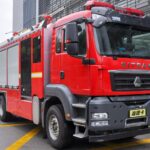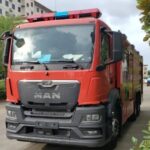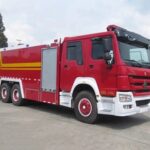

A well-designed 6×6 fire truck is built specifically for environments where conventional fire engines struggle, and snow is one of its greatest strengths. Equipped with all-wheel drive, locking differentials, high ground clearance, and heavy-duty tires, these vehicles maintain traction and stability on snow-covered roads, icy trails, and mountainous terrain. Manufacturers such as CSCTRUCK Fire Rescue Truck produce 6×6 fire rescue vehicles that are engineered for demanding off-road operations, making them suitable for winter firefighting, disaster response, airport rescue, and remote emergency missions. Their heavy-duty rescue trucks combine high mobility with powerful firefighting systems and large equipment capacities, allowing emergency crews to reach incidents even during severe winter weather.
How Does a 6×6 Fire Truck Perform in Snow?
Winter presents some of the most difficult conditions firefighters can encounter. Heavy snowfall, icy highways, frozen forest roads, and remote mountain terrain can prevent conventional emergency vehicles from reaching the scene quickly. When lives and property are at risk, mobility becomes just as important as firefighting capability.
This is where a 6×6 fire truck excels. Unlike standard 4×2 or even many 4×4 fire engines, a 6×6 fire truck is specifically designed to maintain traction and control in challenging environments. By distributing engine power to all 6 wheels, these vehicles provide exceptional grip, stability, and climbing ability on snow-covered surfaces.
Whether responding to mountain wildfires during winter, rescuing stranded motorists, serving remote communities, or supporting airport emergency operations, 6×6 fire trucks offer reliable performance when weather conditions become extreme.

Why Snow Creates Challenges for Fire Trucks
Snow affects emergency vehicles in several ways:
- Reduced tire traction
- Increased stopping distances
- Poor steering response
- Deep snow accumulation
- Hidden obstacles beneath the snow
- Icy hills and steep inclines
- Limited visibility
Traditional fire engines, particularly those with 2-wheel drive, often struggle in these situations. Heavy vehicle weight can also cause trucks to become stuck if traction is insufficient.
A 6×6 drivetrain addresses many of these problems.
How a 6×6 Drivetrain Improves Snow Performance
The primary advantage is that all 3 axles receive engine power.
Instead of relying on only one driven axle, torque is distributed across 6 wheels, dramatically increasing available traction.
Benefits include:
- Better acceleration on slippery roads
- Reduced wheel spin
- Improved hill climbing
- Better stability while cornering
- Greater control during braking
- Increased ability to drive through deep snow
If one wheel loses grip on ice, the remaining wheels continue providing forward movement.

Superior Traction on Snow and Ice
Traction determines whether a fire truck can continue moving safely.
A 6×6 fire truck typically includes:
- Differential locks
- Inter-axle differential locks
- Heavy-duty snow tires
- Central tire inflation systems (on some models)
- Electronic traction control
Differential locks are especially valuable.
Normally, power flows to the wheel with the least resistance. On ice, this causes spinning. Locking the differential forces both wheels to rotate together, ensuring power reaches the wheels with better traction.
This greatly improves performance on frozen roads.
High Ground Clearance Prevents Getting Stuck
Snow depth often becomes the limiting factor for emergency vehicles.
Standard municipal fire engines generally have relatively low ground clearance because they are designed for paved streets.
A 6×6 fire truck typically features:
- Higher suspension
- Larger tires
- Reinforced chassis
- Increased approach angle
- Increased departure angle
This allows the truck to drive over:
- Deep snow
- Snow drifts
- Ice ruts
- Frozen debris
- Uneven terrain
Higher clearance reduces the chance of the chassis becoming “high-centered” on packed snow.

Excellent Performance on Mountain Roads
Mountain regions often receive heavy snowfall.
Emergency responders may need to travel:
- Steep switchbacks
- Narrow forest roads
- Frozen gravel roads
- Snow-covered logging trails
The additional driven axle significantly improves climbing ability.
Many heavy-duty 6×6 rescue trucks are capable of climbing gradients exceeding 50–60% under suitable conditions, making them ideal for mountainous rescue missions.
Stable Handling Despite Heavy Loads
Fire trucks carry enormous amounts of equipment, including:
- Water tanks
- Foam tanks
- Fire pumps
- Rescue tools
- Hydraulic equipment
- Medical gear
- Lighting systems
A fully loaded vehicle may weigh 20–40 tons, depending on configuration.
The third axle helps distribute this weight more evenly, improving:
- Vehicle balance
- Steering stability
- Braking control
- Cornering performance
Better weight distribution also reduces the likelihood of becoming stuck in soft snow.

Better Braking Control
Stopping safely on snow requires more than good brakes.
The 6×6 layout improves braking because:
- More tires contact the road
- Vehicle weight is spread across three axles
- Anti-lock braking systems (ABS) function more effectively
- Traction control minimizes sliding
Drivers still need to reduce speed significantly, but overall vehicle stability is greatly improved.
Tire Pressure Adjustment for Snow
Some advanced 6×6 fire trucks feature a Central Tire Inflation System (CTIS).
This allows operators to adjust tire pressure while driving.
For snow operations:
- Lower tire pressure increases the tire’s contact patch.
- Improved flotation helps prevent sinking into deep snow.
- A better grip is achieved on loose surfaces.
When returning to paved roads, tire pressure can be restored for higher-speed travel.

Reliable Winter Firefighting Capability
Snow doesn’t stop emergencies.
6×6 fire trucks are frequently used for:
Wildland firefighting
Winter forest operations often require driving through snow-covered fire roads.
Structure fires
Remote homes may only be accessible via unplowed roads.
Vehicle rescues
Highway accidents during snowstorms demand a rapid response.
Mountain rescue
Emergency crews can reach stranded hikers or skiers.
Industrial emergencies
Mining operations continue year-round in snowy regions.
Airport rescue
Runways must remain protected regardless of winter weather.
Manufacturers such as CSCTRUCK Fire Rescue Truck offer 6×6 rescue platforms designed for these demanding missions, combining off-road mobility with high-capacity firefighting systems and rescue equipment.
Limitations in Snow
Although highly capable, 6×6 fire trucks are not unstoppable.
Challenges include:
- Extremely deep snow exceeding ground clearance
- Black ice
- Avalanche zones
- Whiteout visibility
- Severe crosswinds
- Narrow mountain roads
Even the best-equipped vehicle requires experienced operators and appropriate winter driving techniques.

Importance of Winter Maintenance
Snow performance depends heavily on proper maintenance.
Fire departments should regularly inspect:
- Tire tread depth
- Tire pressure
- Differential locks
- Transfer case
- Four-wheel-drive systems
- Air brake systems
- Battery condition
- Engine coolant
- Heating systems
- Windshield defrosters
Chains may also be carried for severe ice conditions where permitted.
Driver Training Makes a Difference
Technology alone cannot overcome poor driving practices.
Operators should receive training in:
- Controlled acceleration
- Gentle braking
- Skid recovery
- Snow cornering
- Differential lock operation
- Winch usage
- Off-road recovery
Experienced drivers maximize the benefits of a 6×6 platform while minimizing risks.

Why Fire Departments Choose 6×6 Fire Trucks for Winter Operations
Many emergency agencies operating in northern climates rely on 6×6 fire trucks because they offer:
- Outstanding traction
- Excellent off-road capability
- Increased safety
- High equipment capacity
- Better stability
- Improved hill-climbing performance
- Reliable winter mobility
- Faster response to remote incidents
These advantages make them indispensable for municipalities, military bases, airports, forestry agencies, mining companies, and disaster-response organizations.
Conclusion
A 6×6 fire truck performs exceptionally well in snow because it is engineered for environments where ordinary fire engines may fail. Powered by all 6 wheels, supported by locking differentials, higher ground clearance, and rugged suspension systems, it can confidently navigate snow-covered roads, icy hills, and remote winter landscapes. While no vehicle is immune to extreme weather, a properly maintained and expertly operated 6×6 fire truck provides firefighters with the mobility and reliability needed to reach emergencies quickly and safely.
For organizations operating in regions with harsh winters, investing in a high-quality 6×6 fire truck—such as those offered by CSCTRUCK Fire Rescue Truck—can significantly improve emergency response capabilities, ensuring crews can protect lives and property even under the most challenging snow conditions.