Gas and LPG (liquefied petroleum gas) are widely used in homes for cooking, heating, and other everyday applications. They are convenient and efficient fuels, but because they are highly flammable, a leak can quickly develop into a serious fire or explosion hazard. A gas or LPG fire requires a different response from an ordinary paper, wood, or electrical fire.
For gas and LPG fires, dry chemical powder extinguishers are generally the preferred extinguishing agent. However, the most important step is to shut off the gas supply if it can be done safely. Water should primarily be used for cooling LPG cylinders, tanks, and surrounding equipment rather than directly extinguishing the gas flame.
The most important principle is protect people first, control the fuel source only if it is safe, and evacuate immediately when the situation is beyond your ability to manage. For a leaking gas fire, simply putting out the flame can actually make the situation more dangerous because unburned gas may continue escaping and accumulate in the home. Canadian emergency-response guidance specifically advises not to extinguish a leaking gas fire unless the gas leak can be stopped.
1. Recognize the Signs of a Gas or LPG Fire
A gas or LPG emergency may begin with a relatively small flame around a stove, hose, regulator, cylinder, or gas appliance. In other situations, you may notice a strong gas odor before a fire starts.
Common warning signs include:
- A visible flame around a gas appliance or cylinder
- The smell of LPG or another added odorant
- Hissing or unusual sounds near a cylinder, valve, or gas pipe
- A damaged or disconnected gas hose
- A gas detector alarm
- Unusual flames around a burner or appliance
If you smell gas but there is no fire, do not switch electrical appliances on or off, use matches, operate switches, or create other possible ignition sources. Leave the area and contact the appropriate emergency service or gas supplier from a safe location.

2. Stay Calm and Get Everyone Out
When a gas or LPG fire occurs inside a home, your priority should be human safety.
Warn everyone nearby and evacuate the building. Do not waste time collecting valuables, investigating the source of the leak, or attempting to save appliances.
If there is significant smoke, stay low while moving toward an exit. Do not re-enter the building after leaving.
Children, elderly people, and anyone with limited mobility should be assisted first when possible without exposing yourself to additional danger.
For a significant LPG fire, move to a safe distance and, where practical, position yourself upwind of the incident. The Canadian Centre for Occupational Health and Safety recommends that untrained personnel evacuate to a safe distance upwind during an LPG emergency.
3. Do Not Try to Extinguish a Leaking Gas Fire
This is one of the most important rules to remember.
If LPG is still leaking and you extinguish the flame without stopping the gas supply, the gas can continue escaping. It may accumulate in the surrounding area and potentially ignite later from a spark, electrical source, pilot light, or another ignition source.
Therefore, do not simply put out a gas flame and assume the emergency is over.
Emergency-response guidance states that a leaking gas fire should not be extinguished unless the leak can be stopped.
For homeowners, this generally means that evacuation and professional emergency response are safer than attempting to fight a substantial LPG fire yourself.

4. Shut Off the Gas Supply Only If It Is Safe
If the fire is very small and you can reach the gas shutoff valve without passing through flames, heavy smoke, or dangerous heat, shutting off the gas supply can stop the fuel feeding the fire.
For example, if a small burner fire is contained and the shutoff valve is immediately accessible, turning off the gas may eliminate the fuel source.
However, never put yourself at risk to reach a valve.
If the cylinder, regulator, hose, or valve is already surrounded by flames, do not approach it. Leave the area and allow trained firefighters to handle the situation.
The CCOHS notes that gas supply should be shut off to extinguish a flammable-gas fire only when this can be done safely.
5. Be Extremely Careful Around LPG Cylinders
LPG cylinders require special caution because heating can increase pressure inside the container.
A cylinder exposed to fire can become extremely hot and may release gas through its pressure-relief system. In severe circumstances, a fire-engulfed container can present a major explosion hazard.
For this reason, homeowners should never approach, move, or handle an LPG cylinder that is being heated by flames unless they are specifically trained and can do so safely.
Emergency-response guidance recommends fighting fires involving tanks from maximum distance and using unmanned monitor nozzles when appropriate. Responders are also advised to withdraw immediately if there are warning signs such as increasing venting sounds or discoloration of the tank.
This is one reason professional fire rescue equipment is so important for LPG incidents.

6. What Type of Extinguisher Is Appropriate?
For a small gas fire where the gas supply has been safely shut off, a suitable portable extinguisher may be used by a person who is trained and confident in its operation.
Dry-chemical extinguishers are commonly used for small flammable-gas fires, while CO₂ extinguishers may also be suitable for certain small fires. Emergency-response guidance identifies dry chemical or CO₂ for small flammable-gas fires and water spray or fog for larger incidents.
However, an extinguisher should never become a reason to delay evacuation.
Do not use water as a direct substitute for shutting off a leaking LPG supply. Water spray or fog is primarily an emergency-response tool for controlling larger fires and protecting nearby exposures, rather than a homeowner’s solution to a leaking gas cylinder.
7. Never Use a Flame to Search for a Gas Leak
A dangerous mistake is using a lighter or match to locate a suspected gas leak.
Never do this.
An ignition source can ignite accumulated gas and cause a flash fire or explosion.
Professional guidance recommends using appropriate gas detection equipment; in some situations, soapy water can be used to identify leakage from a cylinder, but this should only be done when there is no immediate fire or explosion hazard.
Regularly inspecting gas hoses, regulators, valves, and connections can also help identify problems before they develop into emergencies.

8. Call Emergency Services From a Safe Location
If the fire is spreading, the gas source cannot be safely shut off, an LPG cylinder is exposed to flames, or there is significant smoke or heat, evacuate immediately and call the local fire department or emergency service from outside the danger area.
Tell responders that the incident involves LPG, propane, natural gas, or another flammable gas if you know the fuel involved.
This information can help firefighters select appropriate tactics and equipment.
Do not return inside because the visible flame appears to have disappeared. Gas may still be present, and the area should be assessed by qualified responders before re-entry.
9. How Professional Fire Trucks Help During LPG Emergencies
Large gas fires require considerably more equipment and water capacity than can normally be provided by household firefighting equipment.
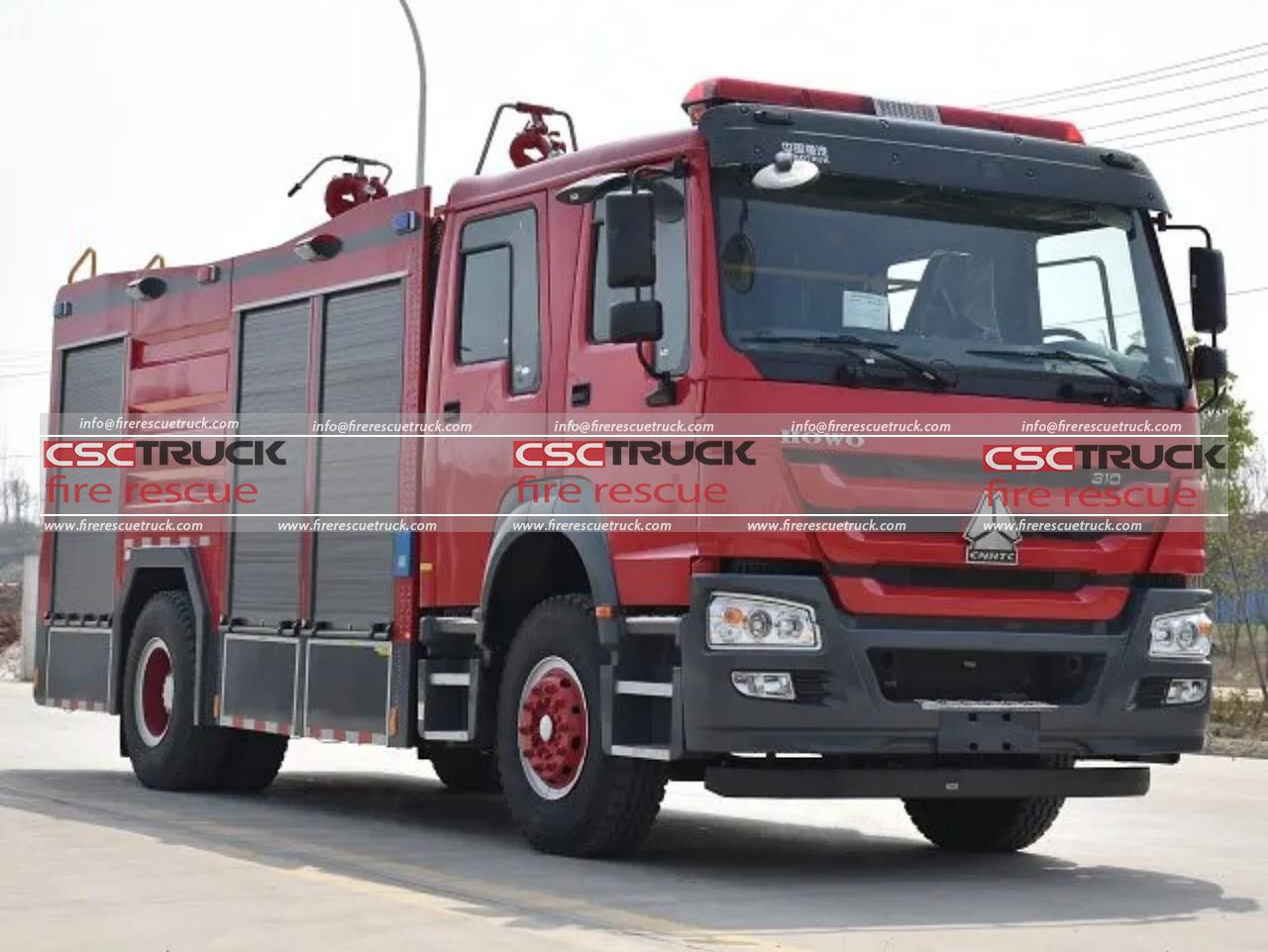
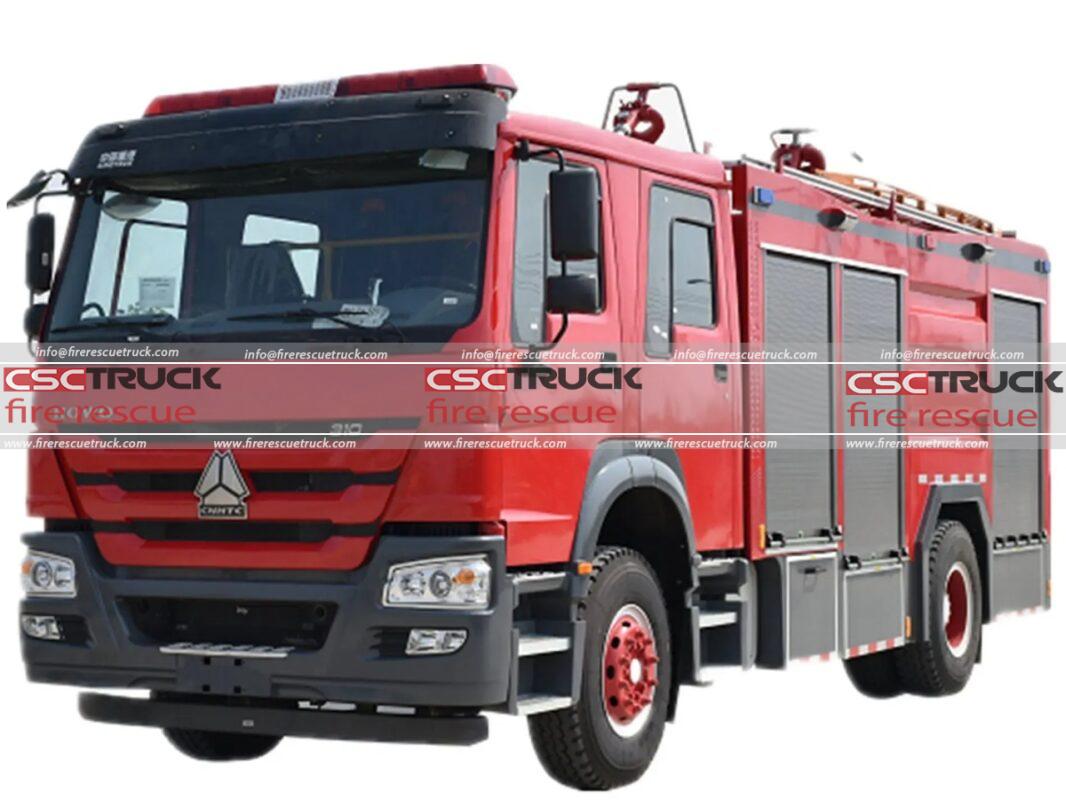
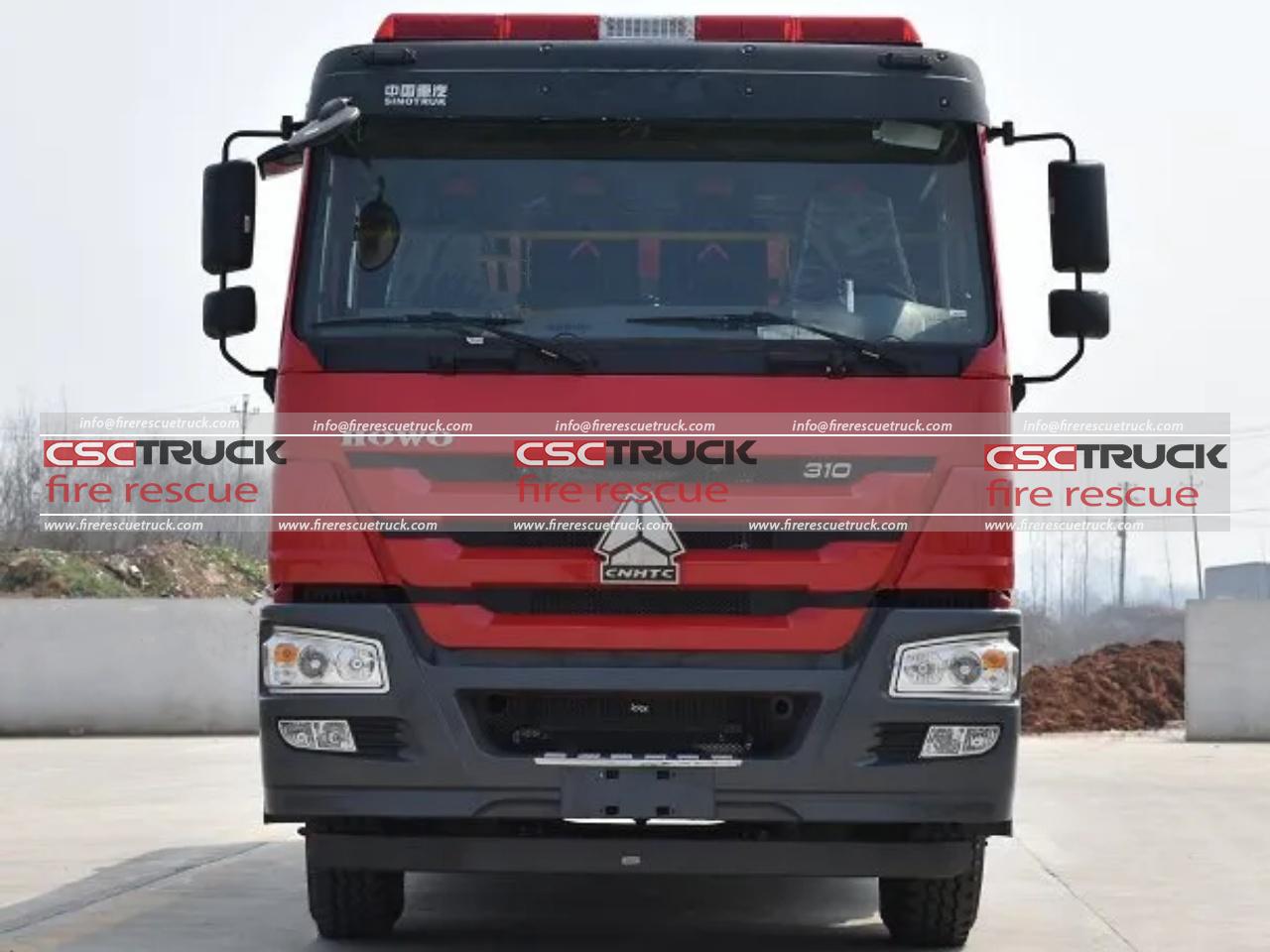
This is where professional fire rescue vehicles become essential. CSCTRUCK Fire Rescue Truck develops specialized firefighting and rescue vehicles designed for demanding emergency-response applications. Its lineup includes multipurpose fire trucks, emergency rescue trucks, 4×4 and 6×6 fire rescue vehicles, and other specialized platforms.
For example, CSCTRUCK Fire Rescue Truck‘s MAN multipurpose fire truck combines water and foam firefighting capability with rescue equipment, a high-capacity monitor, lighting, and other emergency-response systems.
CSCTRUCK Fire Rescue Truck also offers heavy-duty 4×4 and 6×6 platforms designed for challenging environments. These vehicles can integrate water tanks, foam systems, fire pumps, monitors, dry chemical systems, and rescue equipment depending on the mission requirements.
For industrial LPG facilities, fuel-storage areas, gas plants, and other high-risk locations, specialized fire rescue trucks can provide firefighters with greater distance, water delivery capacity, mobility, and firefighting capability than ordinary household equipment.
10. Prevent Gas and LPG Fires Before They Start
Prevention remains the best protection.
Homeowners should:
- Inspect LPG cylinders, hoses, regulators, and connections regularly.
- Replace damaged or deteriorated hoses and components.
- Keep LPG cylinders away from excessive heat and ignition sources.
- Maintain adequate ventilation around gas appliances.
- Never store LPG cylinders in inappropriate enclosed spaces.
- Keep combustible materials away from gas appliances.
- Install suitable gas and smoke detectors where appropriate.
- Make sure household members know where the gas shutoff valve is located.
- Keep an appropriate fire extinguisher accessible and learn how to use it.
- Have gas appliances installed and serviced by qualified professionals.
Conclusion
A gas or LPG fire is one of the most dangerous types of household fire because the fuel itself can continue escaping after the visible flame is extinguished. The safest response is to evacuate, avoid ignition sources, shut off the gas only when it can be done without danger, and contact professional firefighters.
Never take unnecessary risks around an LPG cylinder exposed to fire. When the incident exceeds the limits of household firefighting equipment, professional fire rescue teams and specialized vehicles are essential.
With its range of multipurpose, emergency rescue, 4×4, and 6×6 firefighting vehicles, CSCTRUCK Fire Rescue Truck provides professional emergency-response solutions for municipal fire departments, industrial facilities, airports, oil and gas operations, and other high-risk environments.
For homeowners, however, the most important rule remains simple: When an LPG fire becomes dangerous or uncontrollable, get out, stay out, and let trained firefighters handle it.