Modern firefighting is no longer confined to paved urban roads and hydrant networks. Increasingly, fire departments are required to respond to emergencies in remote forests, mountainous regions, deserts, industrial zones, and disaster-stricken areas where infrastructure is limited or completely absent. In these demanding environments, specialized all-terrain fire apparatus becomes essential.
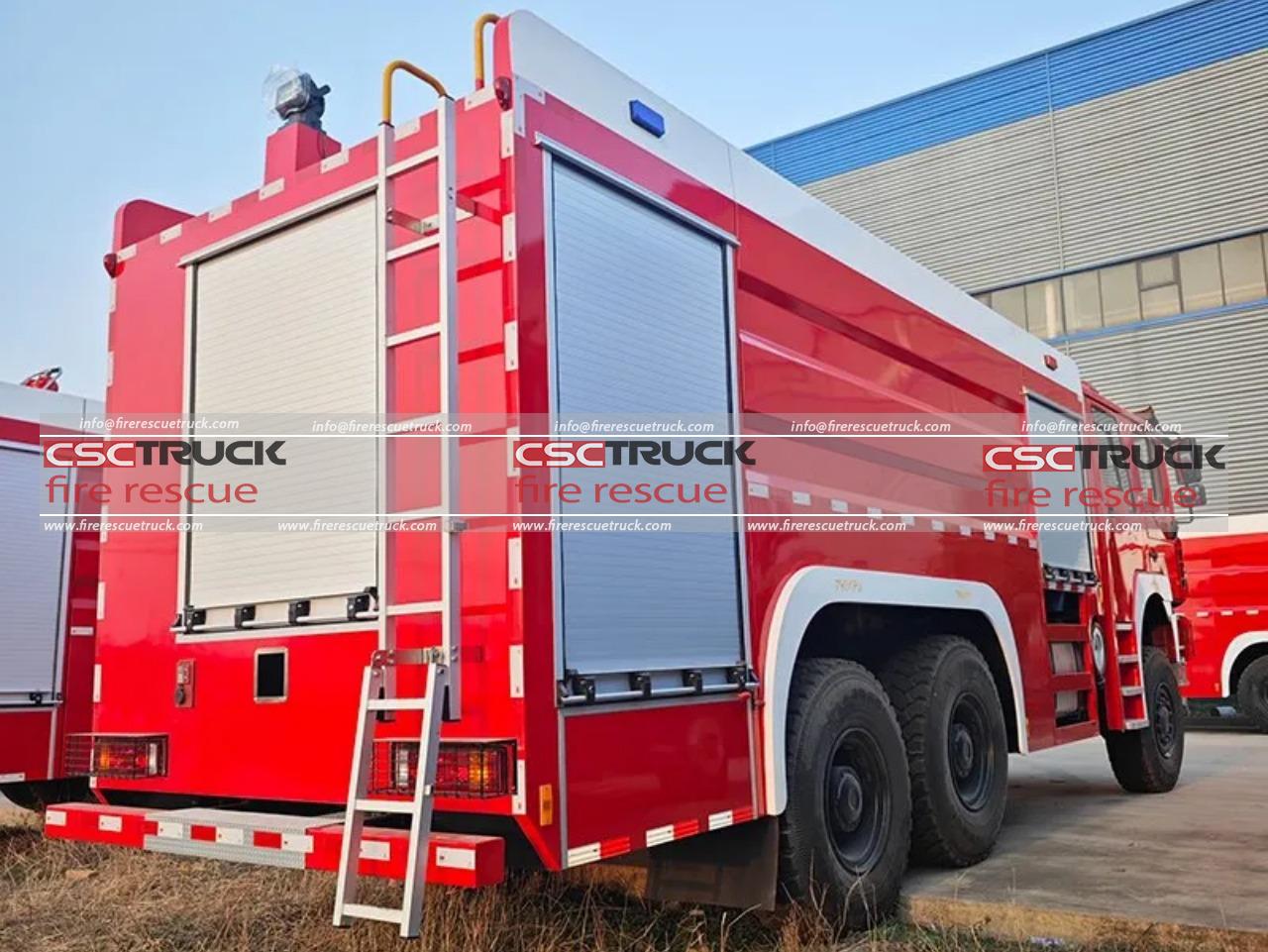
Among the most capable solutions are 6×6 fire trucks, and manufacturers like CSCTRUCK Fire Rescue Truck have developed advanced off-road firefighting platforms designed specifically for extreme mobility and operational reliability.
CSCTRUCK Fire Rescue Truck designs its 4×4 and 6×6 fire rescue vehicles for wildland firefighting, industrial emergencies, airport rescue operations, mining sites, and disaster relief missions, where conventional fire engines struggle to operate effectively.
The key question is: What terrain are 6×6 fire trucks actually best suited for? The answer lies in understanding both their mechanical advantages and the environments they are engineered to conquer.
1. Forests and Wildland Fire Zones
The primary and most important terrain for 6×6 fire trucks is wildland environments such as forests, grasslands, and brush-covered hills.
These areas often feature:
Narrow dirt or gravel tracks
Dense vegetation
Soft soil and leaf litter
Limited or no road infrastructure
A 6×6 drivetrain provides superior traction, allowing the truck to continue moving even when two wheels lose grip. This is critical in wildfire situations where access routes may be blocked, unpaved, or rapidly changing.
CSCTRUCK Fire Rescue Truck wildland fire engines are designed specifically for these conditions, enabling “pump-and-roll” operations where the vehicle moves slowly while simultaneously suppressing fire.
In short, forests are where 6×6 fire trucks prove their true value: Deep access, stability, and sustained firefighting capability.
2. Mountainous and Steep Terrain
Mountain regions are among the most demanding operational environments for firefighting vehicles.
Challenges include:
Steep inclines (often exceeding 30–50% gradients in extreme cases)
Loose rock and unstable surfaces
Sharp turns and narrow switchback roads
Altitude-related engine stress
A 6×6 configuration offers:
Improved weight distribution across three axles
Stronger climbing ability
Reduced risk of tipping on uneven slopes
Better braking control on descents
Because of these advantages, 6×6 fire trucks are widely used for mountain wildfire suppression and high-altitude rescue operations, where stability is just as important as power.
3. Desert and Sandy Environments
Desert terrain introduces a completely different set of challenges:
Deep sand and loose dunes
Extreme heat conditions
Lack of fixed roads
Long distances between water sources
A standard 4×2 or even 4×4 fire truck can easily become immobilized in soft sand. However, a 6×6 drivetrain spreads vehicle weight across more wheels, significantly reducing ground pressure and improving mobility.
This makes 6×6 fire trucks ideal for:
Oilfield emergency response
Remote desert infrastructure protection
Long-range patrol and fire suppression routes
CSCTRUCK Fire Rescue Truck’s off-road platforms are engineered with heavy-duty suspension systems and reinforced drivetrains to maintain reliability in these harsh conditions.
4. Mud, Wetlands, and Flood-Affected Areas
Another key terrain where 6×6 fire trucks excel is muddy, waterlogged, or flood-damaged ground.
These environments typically include:
Soft, saturated soil
Collapsed or damaged roads
Standing water or shallow streams
Unpredictable ground stability
A 6×6 configuration improves traction by ensuring more wheels remain in contact with solid ground at any given time. Combined with high ground clearance, these vehicles can continue operating where conventional engines would become stuck.
This is particularly valuable during:
Flood response operations
Storm aftermath rescue missions
Rural infrastructure emergencies
5. Industrial and Mining Sites
Industrial zones such as mines, refineries, and large construction areas often feature terrain that is far from smooth.
Common conditions include:
Heavy gravel roads
Uneven, artificially created surfaces
Dust, debris, and chemical hazards
Heavy equipment traffic
6×6 fire trucks are frequently deployed in these environments because they can:
Carry larger water and foam payloads
Transport heavy rescue equipment
Maintain stability under full load
Operate alongside large industrial machinery
CSCTRUCK Fire Rescue Truck fire rescue vehicles are specifically engineered for mining and industrial safety operations, combining firefighting capability with rugged mobility systems.
6. Disaster Zones and Remote Emergency Areas
After earthquakes, landslides, hurricanes, or large-scale infrastructure collapse, terrain conditions become unpredictable.
You may encounter:
Collapsed roads and bridges
Rubble fields
Debris-blocked pathways
Mixed terrain (mud, concrete, vegetation)
In these situations, the versatility of a 6×6 fire truck becomes essential. It can:
Cross unstable surfaces
Carry rescue teams and equipment
Operate independently of infrastructure
Support evacuation and medical response
This makes it a critical asset in multi-role disaster relief operations, not just firefighting.
7. Airport and Military Installations (Rough Terrain Extensions)
While airports and military bases are often paved, the surrounding zones may include:
Unpaved emergency access roads
Open fields
Perimeter security zones
Training or simulation environments
6×6 fire trucks are often used here for:
Airport crash rescue support
Rapid response in perimeter zones
High-capacity foam suppression missions
Their stability and speed of deployment make them suitable for large-area emergency coverage.
Key Advantages That Make 6×6 Fire Trucks Terrain Specialists
Across all environments, the same engineering principles define their superiority:
Three driven axles (6×6) → maximum traction
High ground clearance → obstacle crossing ability
Heavy-duty suspension → stability on uneven terrain
Large payload capacity → more water, foam, and rescue tools
Balanced weight distribution → safer operation on slopes
These features combine to make 6×6 fire trucks not just vehicles, but mobile firefighting platforms designed for extreme geography.
Conclusion
A 6×6 fire truck is best suited for terrains where conventional firefighting vehicles fail to operate effectively. These include forests, mountains, deserts, muddy wetlands, industrial zones, and disaster-stricken regions.
With advanced engineering from manufacturers like CSCTRUCK Fire Rescue Truck, modern 6×6 fire engines provide the mobility, strength, and versatility required for today’s complex emergency environments.
In essence, if the terrain is rough, remote, unstable, or unpredictable, the 6×6 fire truck is not just suitable—it is often the most reliable solution available.