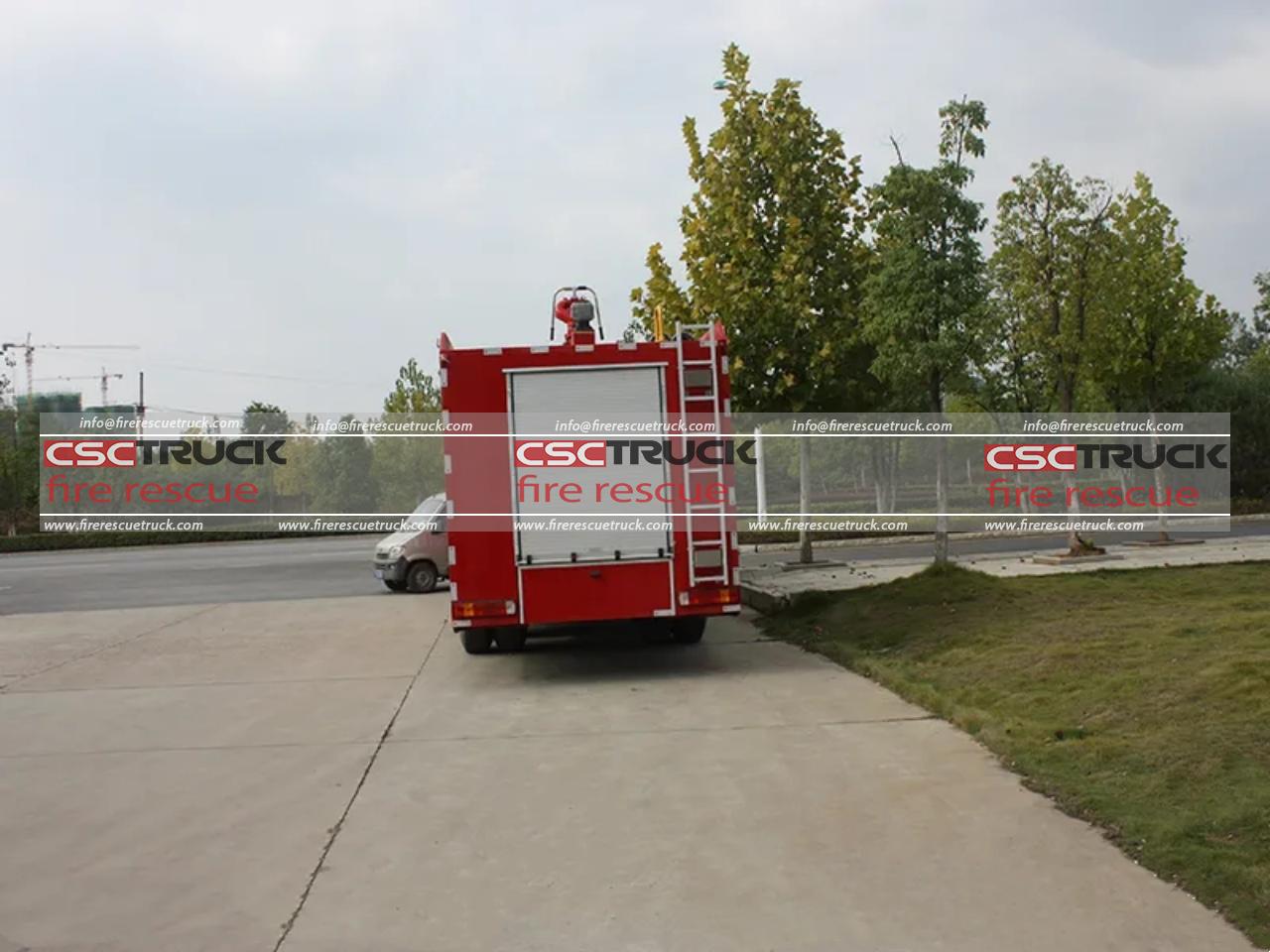
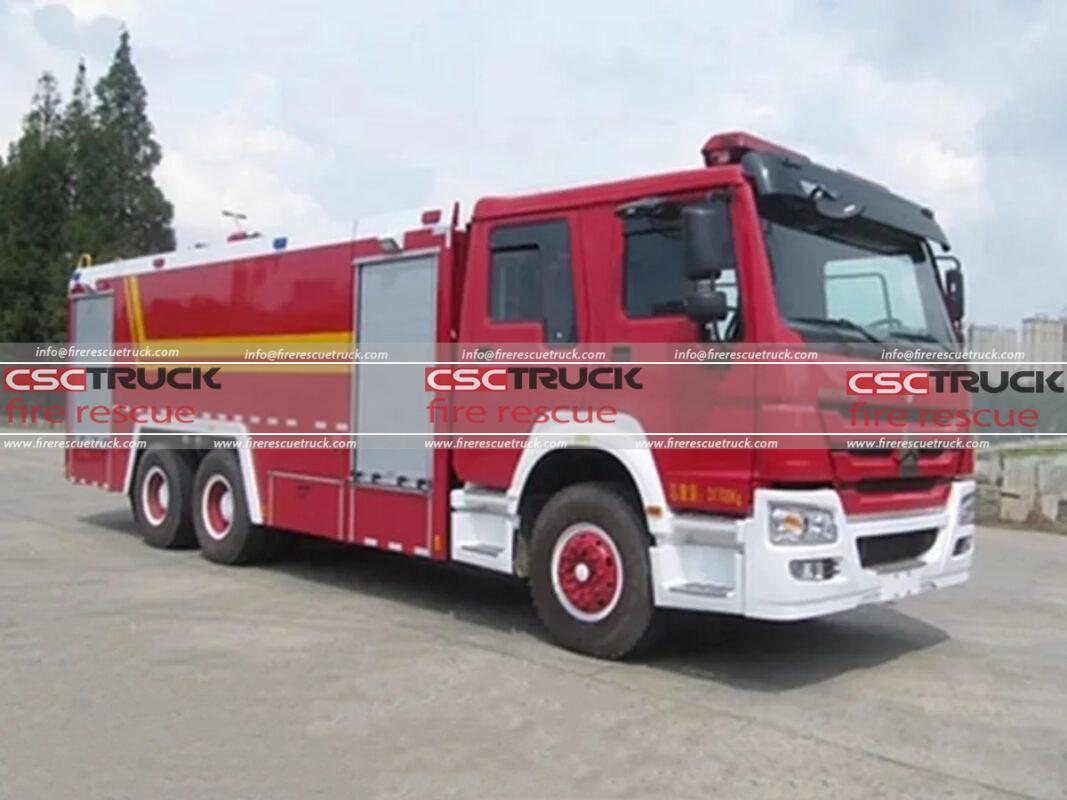
Wildland fires are among the most difficult and dangerous emergencies to control. They spread quickly, often in remote forests, mountainous terrain, deserts, or rural regions where paved roads are limited or completely absent. In these environments, standard urban fire engines are often ineffective due to their limited mobility and access constraints. This is where specialized all-terrain firefighting vehicles—especially 6×6 fire trucks—become essential tools for modern wildfire response.
Among the manufacturers producing advanced off-road firefighting solutions, CSCTRUCK Fire Rescue Truck has become a notable name in the industry. The company designs and builds highly capable emergency response vehicles engineered for extreme conditions, including 4×4 and 6×6 fire trucks built specifically for forest, mining, military, and disaster-relief operations. More details about their lineup can be found at https://www.firerescuetruck.com/.
Understanding the Role of 6×6 Fire Trucks in Wildland Operations
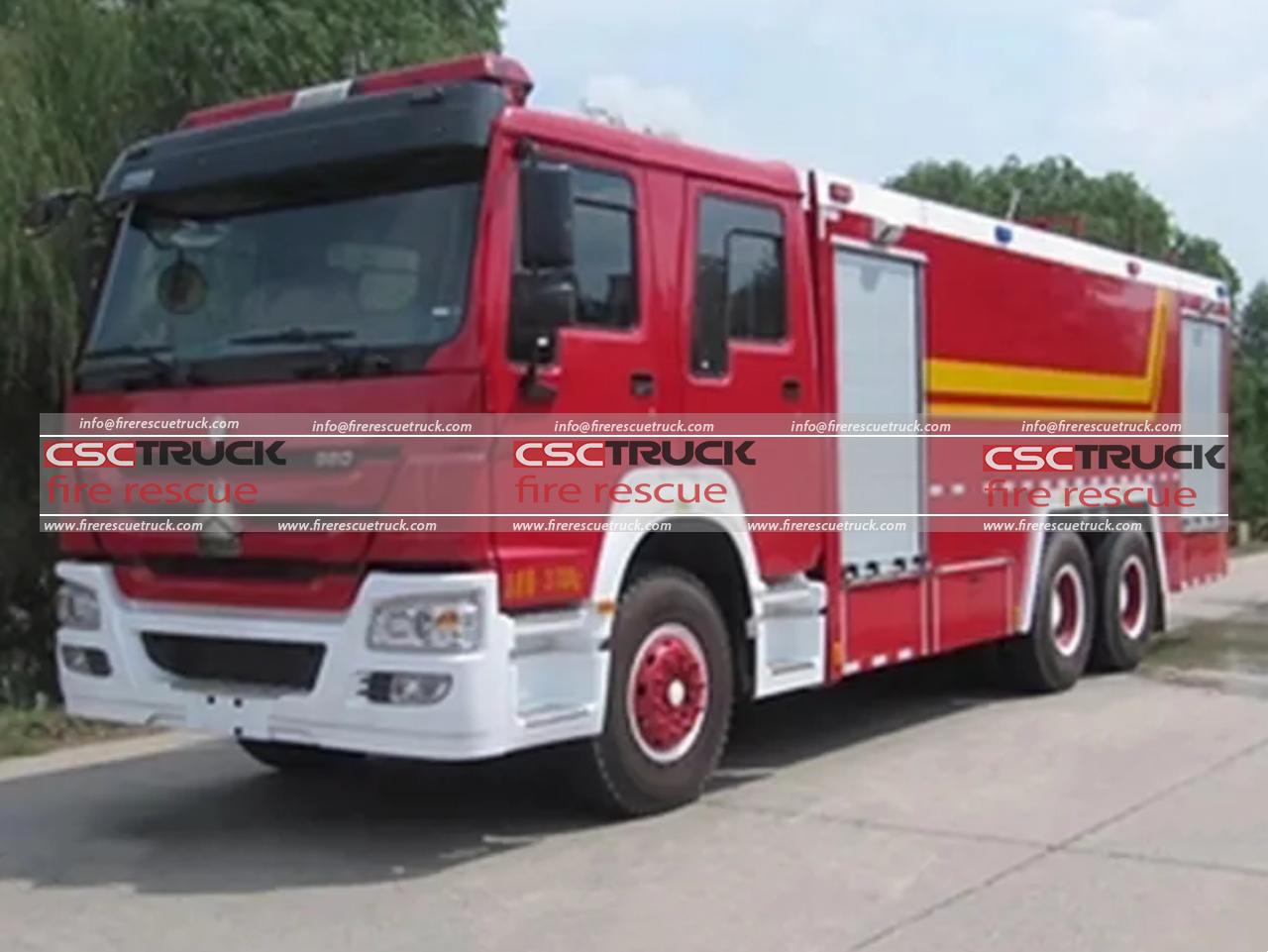
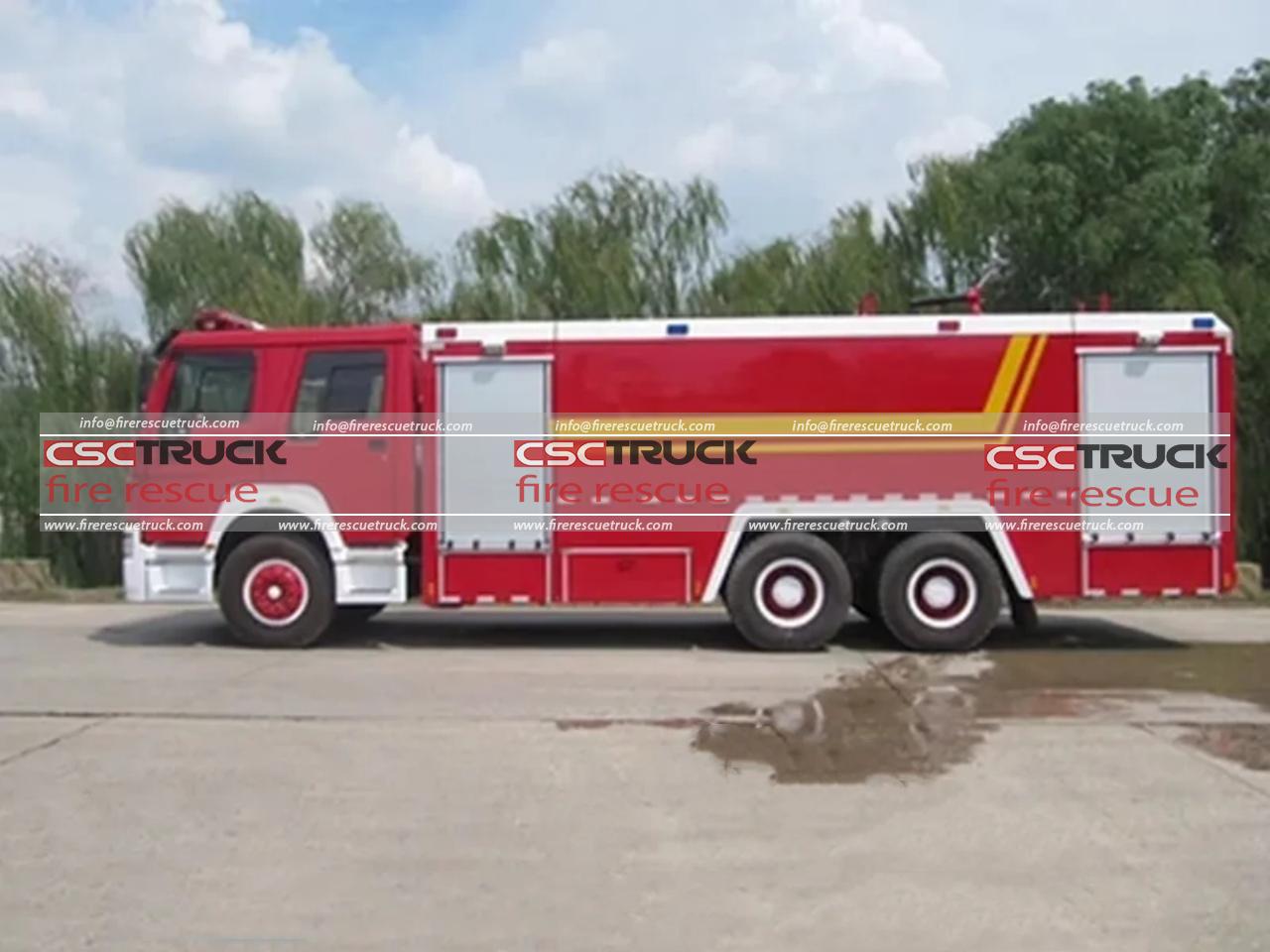
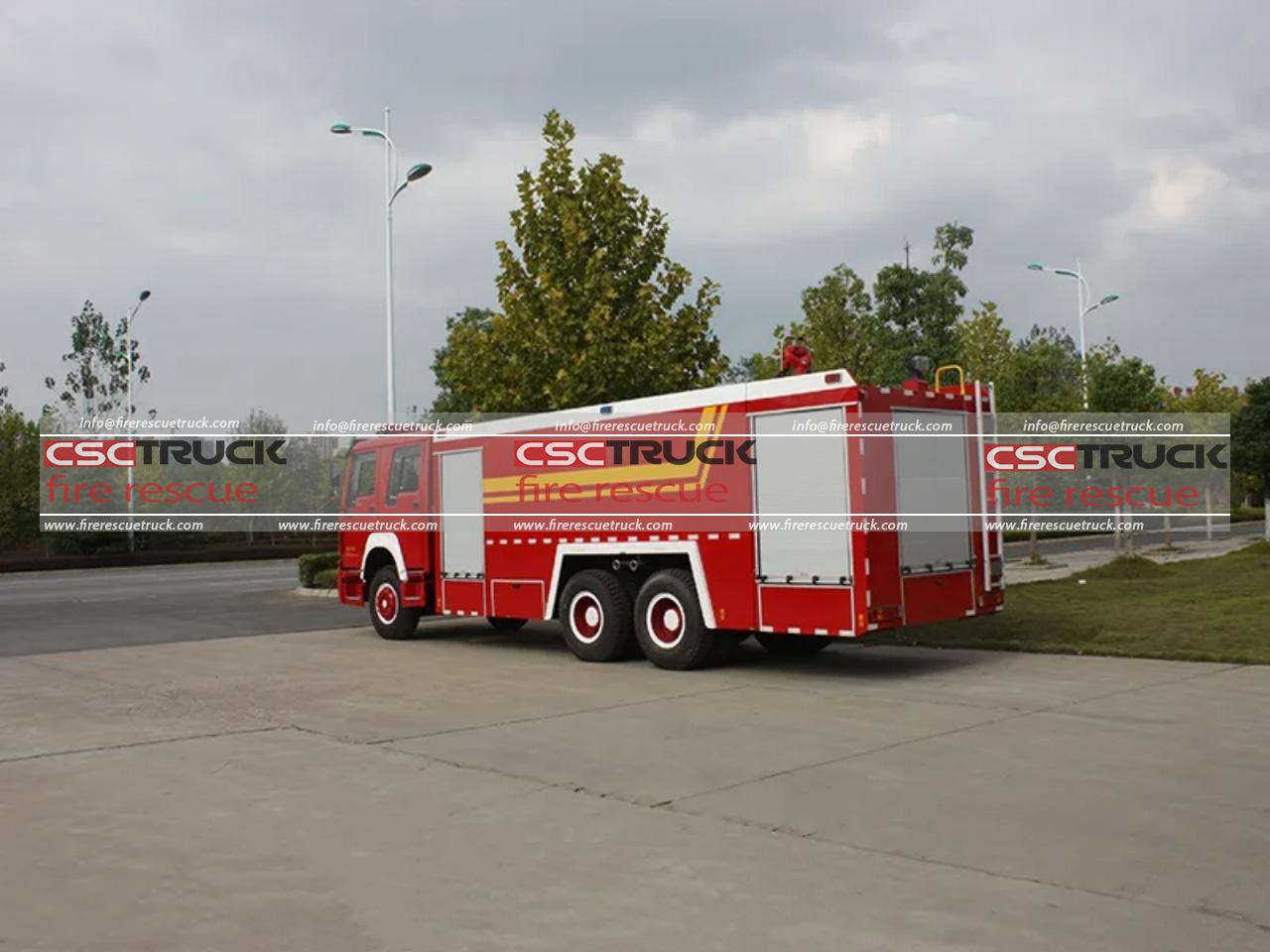
A 6×6 fire truck is a heavy-duty emergency vehicle equipped with 3 axles and power delivered to all 6 wheels. This configuration provides significantly better traction, stability, and load distribution compared to standard 4×2 or 4×4 fire engines.
In wildland firefighting, these advantages translate directly into operational capability. According to industry applications, 6×6 fire trucks are widely used in forests, rugged mountain regions, mining areas, and disaster zones where terrain is unpredictable and often impassable for conventional vehicles.
Wildland fire engines are designed to operate off-road, often carrying water, foam, pumps, and crew into areas where fire lines must be established quickly. Many of them are also capable of “pump-and-roll” operations, allowing firefighters to suppress flames while the vehicle is slowly moving through the fire zone.
Why Wildland Firefighting Demands 6×6 Capability
Wildfire environments are defined by extreme terrain challenges:
- Loose soil and sand
- Steep mountain gradients
- Dense forest trails
- Mud and flood-affected ground
- Rocky, uneven surfaces
A standard fire truck would struggle—or fail—in these conditions. A 6×6 configuration solves many of these issues by distributing power across more wheels, reducing the chance of getting stuck, and improving climbing ability.
Key advantages include:
1. Superior traction and stability
With all six wheels driven, the truck maintains grip even on slippery or uneven surfaces.
2. Higher payload capacity
Wildland missions require water tanks, foam systems, tools, and crew. The extra axle allows heavier equipment without compromising stability.
3. Improved off-road mobility
High ground clearance and reinforced suspension systems allow traversal of forest roads, riverbeds, and broken terrain.
4. Operational flexibility
Many 6×6 wildland fire trucks can support multiple roles: firefighting, rescue, towing, and logistics support.
CSCTRUCK Fire Rescue Truck and Wildland Firefighting Applications
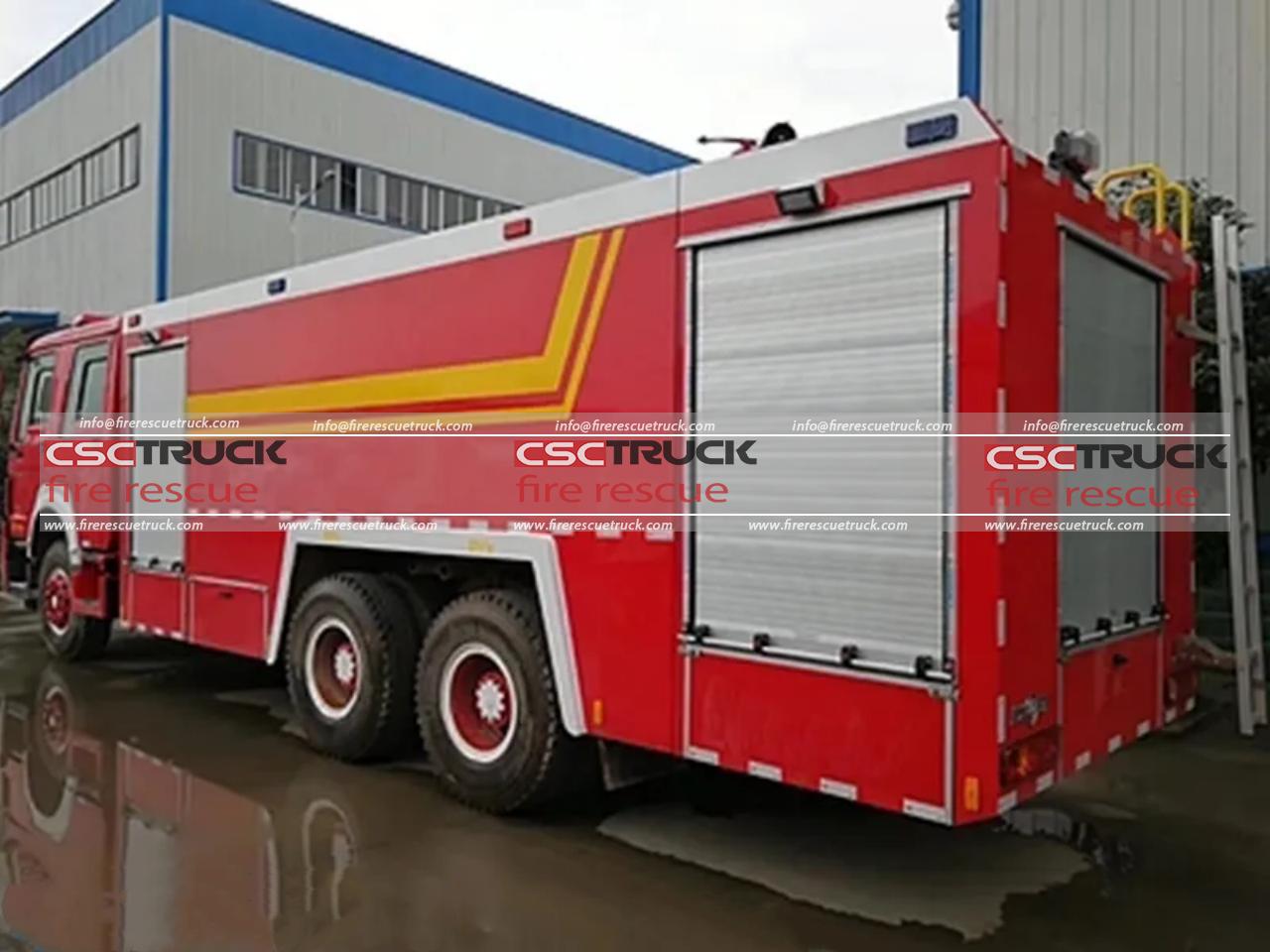
CSCTRUCK Fire Rescue Truck develops specialized emergency vehicles designed for demanding environments such as forests, deserts, mining operations, and military zones. Their 4×4 and 6×6 fire trucks are built to combine firefighting performance with off-road durability.
These vehicles typically include:
- High-capacity water tanks (often 3,000–15,000 liters, depending on configuration)
- Foam proportioning systems for chemical and fuel-based fires
- High-pressure fire pumps
- Roof-mounted water monitors for long-range suppression
- Winches and recovery systems for self-extraction
- Lighting systems for night operations
Such configurations make them suitable for rapid wildfire deployment in remote areas where infrastructure is minimal or nonexistent.
How 6×6 Fire Trucks Perform in Wildland Fire Conditions
1. Rapid Initial Attack
In wildland firefighting, speed is critical. A 6×6 fire truck can reach remote fire lines faster than traditional apparatus due to its ability to traverse rough terrain without relying on established roads.
2. Sustained Fire Suppression
Once on site, the truck provides continuous water or foam delivery. Many models support pump-and-roll capability, enabling firefighters to suppress fire while moving slowly along the fire edge.
3. Access to Remote Zones
Forests, mountains, and wilderness areas often have no road infrastructure. A 6×6 configuration allows crews to reach ignition points before fires grow out of control.
4. Multi-Role Emergency Response
Beyond firefighting, these trucks can assist in:
- Search and rescue operations
- Evacuation support
- Logistics transport
- Disaster recovery missions
Limitations of 6×6 Fire Trucks in Wildland Environments
Despite their strengths, 6×6 fire trucks are not a perfect solution for every wildfire scenario.
1. Size and maneuverability constraints
Dense forests and narrow trails may still limit access compared to lighter wildland units.
2. Water supply limitations
Even large tanks are finite. In remote areas, water resupply logistics remain a major challenge.
3. Cost and maintenance
6×6 fire trucks are more expensive to purchase and maintain due to their complexity.
4. Fuel consumption
Heavy-duty off-road systems consume more fuel, which can be a limiting factor in extended operations.
Comparison with Standard Wildland Fire Engines
Wildland fire engines (such as Type 3 or Type 4 units) are typically smaller and more specialized for quick maneuverability. They are designed for initial attack and tight forest access.
However, 6×6 fire trucks offer:
- Greater payload capacity
- Stronger recovery capability
- Better performance in extreme terrain
- Enhanced multi-purpose functionality
In many modern wildfire response strategies, both types are used together: smaller engines for rapid attack and 6×6 units for sustained suppression and logistical support.
The Future of Wildland Firefighting Vehicles
As wildfires become more frequent and severe due to climate and environmental changes, demand for advanced firefighting technology continues to grow. Future 6×6 fire trucks are expected to integrate:
- Hybrid or electric drivetrain systems for reduced emissions
- Autonomous or semi-autonomous driving assistance
- Advanced thermal imaging for fire detection
- Improved lightweight composite materials
- Enhanced water recycling and efficiency systems
Manufacturers like CSCTRUCK Fire Rescue Truck are part of this evolution, continuously improving off-road fire apparatus to meet the demands of extreme emergency environments.
Conclusion
Yes, a 6×6 fire truck can absolutely be used for wildland firefighting—and in many cases, it is one of the most effective tools available for the job. Its combination of off-road capability, high payload capacity, and multi-functional emergency response systems makes it especially valuable in remote forests, mountainous regions, and disaster zones.
However, it is not a standalone solution. The most effective wildland firefighting strategies combine 6×6 heavy-duty units with smaller, more agile wildland engines to ensure both rapid response and sustained suppression capability.
With companies like CSCTRUCK Fire Rescue Truck advancing all-terrain fire vehicle design, the role of 6×6 fire trucks in wildland firefighting will only continue to expand in the years ahead.