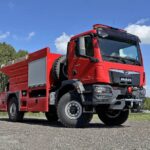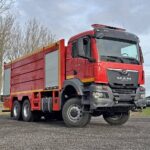

Rural fire departments often face a significant challenge that urban departments rarely encounter: The lack of a reliable fire hydrant network. When a fire breaks out in remote communities, farms, forests, or rural residential areas, firefighters cannot depend on municipal water systems to provide a continuous water supply. In these situations, a Water Tender Fire Truck becomes one of the most important pieces of firefighting equipment available.
A water tender, also known as a tanker in some regions, is specifically designed to transport large volumes of water to fire scenes where hydrants are unavailable or insufficient. For many rural fire departments, water tenders are not simply support vehicles—they are essential frontline apparatus that make effective firefighting possible. Water tenders are widely used to supply water for structural fires, agricultural fires, wildland fires, and emergency incidents in areas lacking hydrant infrastructure.
Introduction to CSCTRUCK Fire Rescue Truck
As a professional manufacturer of firefighting vehicles, CSCTRUCK Fire Rescue Truck offers a wide range of water tenders, fire engines, foam fire trucks, airport crash tenders, and specialized rescue vehicles. The company’s firefighting solutions are designed to meet the needs of municipal, industrial, airport, mining, and rural fire departments worldwide.
CSCTRUCK Fire Rescue Truck water tender fire trucks are available with various tank capacities, chassis configurations, pumping systems, and off-road capabilities. These vehicles are designed to provide reliable water transportation and firefighting support in areas where water infrastructure is limited or nonexistent.

Why Rural Fire Departments Need Water Tenders
Unlike cities and suburban areas, many rural communities do not have fire hydrants installed throughout their response areas. Even where hydrants exist, they may be located miles away from an emergency scene.
Without an alternative water supply solution, firefighters would quickly exhaust the limited water carried by standard fire engines. Most conventional fire engines carry approximately 500 to 1,000 gallons (1,900–3,800 liters) of water, which may only provide a few minutes of firefighting capability during a major incident.
Water tenders solve this problem by transporting significantly larger amounts of water directly to the fireground. Many tenders carry between 1,500 and 4,000 gallons (5,700–15,000 liters) of water, with some custom units carrying even more.
This additional capacity enables firefighters to:
- Maintain continuous water flow.
- Support multiple attack lines.
- Protect nearby structures.
- Reduce fire spread.
- Sustain long-duration firefighting operations.
How Water Tenders Operate in Rural Areas
A water tender serves as a mobile water reservoir. During an emergency, the vehicle transports water from a reliable source to the fire scene.
Common rural water sources include:
- Lakes
- Rivers
- Ponds
- Reservoirs
- Municipal hydrants located in nearby towns
- Dry hydrant systems
Once at the fireground, the tender can discharge water directly to fire engines, feed portable water tanks, or provide water through onboard pumps. Many rural departments establish a “water shuttle operation,” where multiple water tenders continuously transport water between a fill site and the fire scene. This system ensures a nearly uninterrupted water supply despite the absence of hydrants.

Water Shuttle Operations: The Backbone of Rural Firefighting
Water shuttle operations are considered one of the most effective methods for supplying water in rural firefighting.
A typical shuttle operation works as follows:
Step 1: Establish a Fill Site
Firefighters identify a reliable water source, such as:
- A pond
- A lake
- A river
- A hydrant in a neighboring community
Portable pumps or drafting systems are used to fill water tenders rapidly.
Step 2: Transport Water
The loaded tender travels from the fill site to the incident location.
Step 3: Dump Water
Water is discharged into portable folding tanks or directly into attack engines.
Step 4: Repeat
The tender immediately returns to the fill site for another load.
Several tenders may operate simultaneously, creating a continuous cycle that supplies thousands of gallons of water per hour. Rural fire departments across North America rely heavily on this approach during major incidents.
Advantages of Water Tenders for Rural Fire Departments
1. Large Water Capacity
The greatest advantage of a water tender is its ability to carry substantial quantities of water.
Typical capacities include:
| Tender Size | Capacity |
|---|---|
| Small Tender | 1,500–2,000 gallons |
| Medium Tender | 2,500–3,000 gallons |
| Large Tender | 4,000+ gallons |
This large capacity significantly increases firefighting effectiveness in areas without hydrants.
2. Rapid Deployment
Unlike installing permanent water infrastructure, a water tender can be deployed immediately to virtually any location.
This makes it ideal for:
- Farms
- Ranches
- Forested regions
- Construction sites
- Remote industrial facilities
3. Cost-Effective Solution
Building hydrant networks across sparsely populated rural regions is often financially impractical. Water tenders provide a much more economical alternative while maintaining effective fire protection capabilities.
4. Versatility
Modern water tenders can support:
- Structural firefighting
- Wildland firefighting
- Grass fires
- Agricultural fires
- Emergency water supply missions
- Disaster response operations
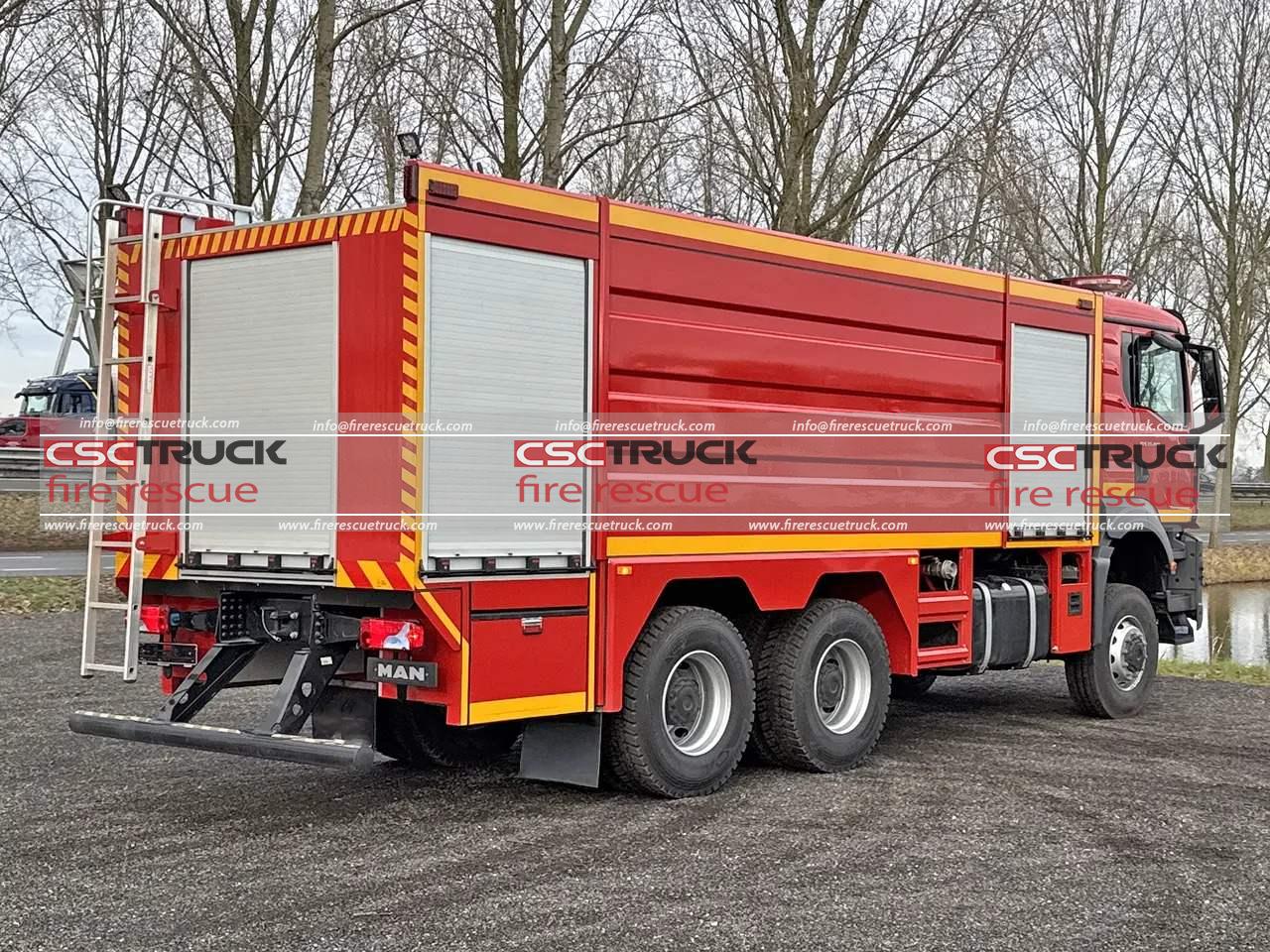
Can Water Tenders Fight Fires Directly?
Many people assume water tenders only transport water. While this is their primary role, many modern units are equipped with pumps, hose reels, and firefighting equipment that allow them to participate directly in fire suppression operations.
Depending on the configuration, a water tender may:
- Supply handlines.
- Operate deck guns.
- Protect exposures.
- Support wildland firefighting.
- Provide initial attack capabilities.
This multifunctional design is especially valuable for volunteer and rural fire departments with limited resources.
Off-Road Capabilities for Rural Response
Many rural emergencies occur on:
- Dirt roads
- Logging roads
- Mountain trails
- Agricultural properties
To address these challenges, manufacturers such as CSCTRUCK Fire Rescue Truck offer water tenders with:
- 4×4 drivetrains
- Heavy-duty suspension systems
- High ground clearance
- All-terrain tires
- Reinforced chassis designs
These features enable firefighters to reach remote incidents where conventional road vehicles may struggle.
Challenges and Considerations
While water tenders are highly beneficial, departments should consider several factors before purchasing one:
Vehicle Weight
A fully loaded tender can weigh tens of thousands of pounds. Roads and bridges within the response area must be capable of supporting the vehicle.
Driver Training
Operating a large water tender requires specialized driver training, particularly on rural roads and uneven terrain.
Water Source Availability
Departments should identify reliable refill locations throughout their coverage area and develop water supply plans in advance.
Maintenance Requirements
Regular inspections of:
- Pumps
- Valves
- Tanks
- Plumbing systems
- Chassis components
are necessary to ensure reliable operation during emergencies.
Conclusion
The answer is a clear yes—Water Tender Fire Trucks are not only suitable for rural fire departments without hydrants, but they are often indispensable. Their ability to transport thousands of gallons of water, support water shuttle operations, and sustain firefighting efforts in remote areas makes them one of the most valuable apparatus in rural emergency response. Without water tenders, many rural departments would struggle to maintain adequate water supplies during major fires.
For departments seeking dependable and high-capacity firefighting vehicles, CSCTRUCK Fire Rescue Truck offers a range of water tender solutions designed specifically for rural, wildland, industrial, and municipal firefighting applications. By combining large-capacity tanks, advanced pumping systems, and rugged chassis options, these vehicles help ensure that firefighters can deliver effective fire suppression even in locations where hydrants do not exist.