
Wildland firefighting presents unique challenges that differ significantly from urban and structural fire suppression. Firefighters must operate in remote locations, traverse rough terrain, and often work with limited water sources. As a result, selecting the right water tender is critical for ensuring effective fire control and crew safety. When evaluating a water tender for wildland firefighting, factors such as mobility, water capacity, pump performance, off-road capability, and durability must all be considered.
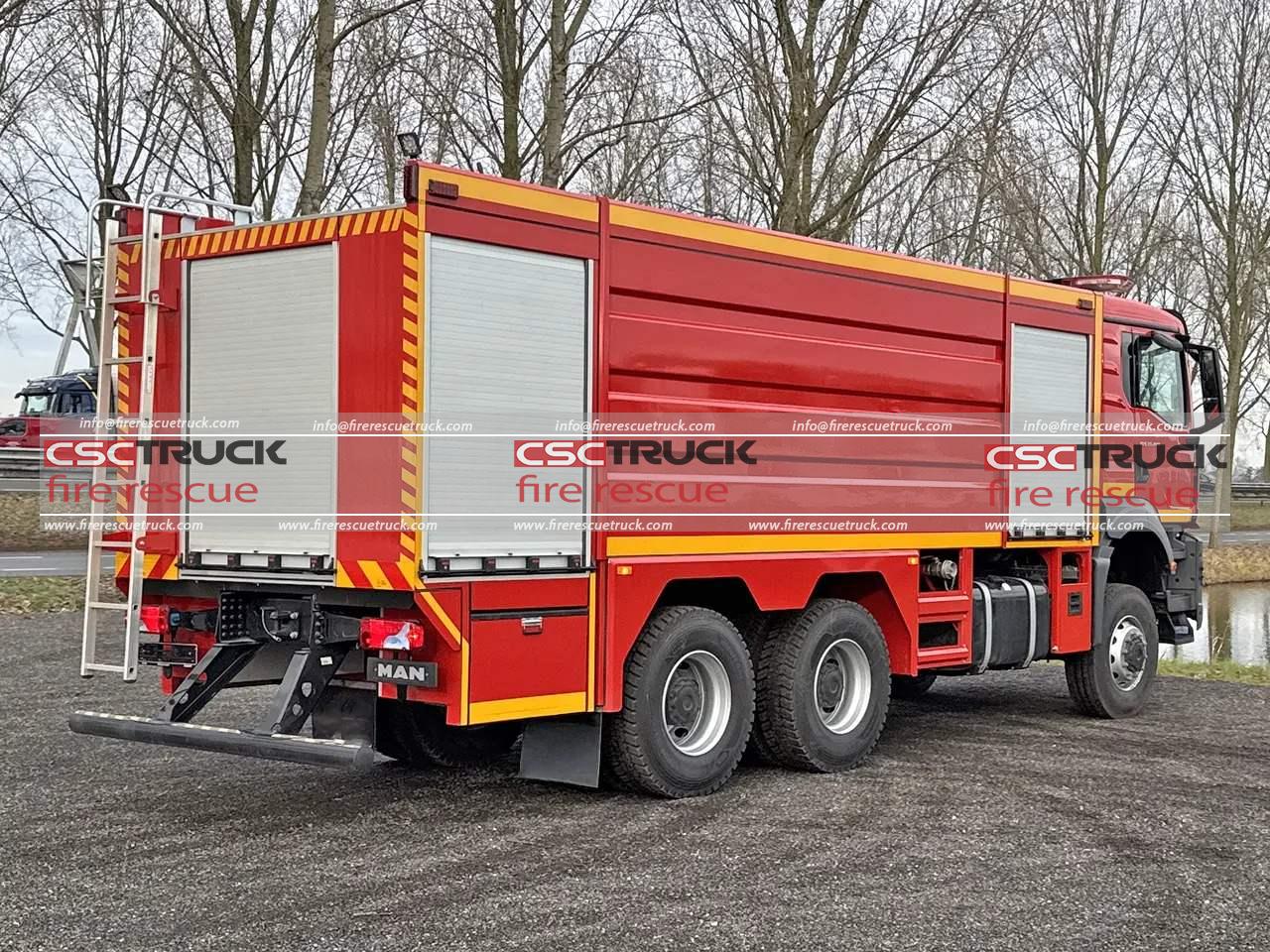
Among the manufacturers providing specialized firefighting vehicles worldwide, CSCTRUCK Fire Rescue Truck has established itself as a recognized supplier of fire apparatus, including water tenders, pumper trucks, rescue vehicles, and off-road firefighting units. The company offers customizable firefighting solutions built on various chassis platforms and can equip vehicles with 4×4, 6×6, or higher-drive configurations designed for demanding environments.
Understanding Wildland Firefighting Requirements
Wildland fires occur in forests, grasslands, mountains, and rural areas where paved roads may not exist. Unlike municipal firefighting, wildland operations require apparatus that can:
- Travel on dirt roads, trails, and uneven terrain
- Carry large amounts of water to areas without hydrants
- Operate independently for extended periods
- Supply water to hand crews and smaller brush trucks
- Withstand harsh environmental conditions
- Navigate steep grades and narrow access routes
Because of these requirements, not every water tender is automatically suitable for wildland firefighting. The vehicle’s design and configuration play a major role in determining its effectiveness.
Key Features That Make a Water Tender Suitable for Wildland Fires
1. Off-Road Drivetrain Capability
One of the most important factors is the drivetrain configuration.
A standard 4×2 water tender may perform well on highways and city streets but can struggle in muddy, sandy, or mountainous conditions. Wildland firefighting often demands:
- 4×4 drive systems
- 6×6 drive systems
- Differential locks
- High ground clearance
- Heavy-duty suspension systems
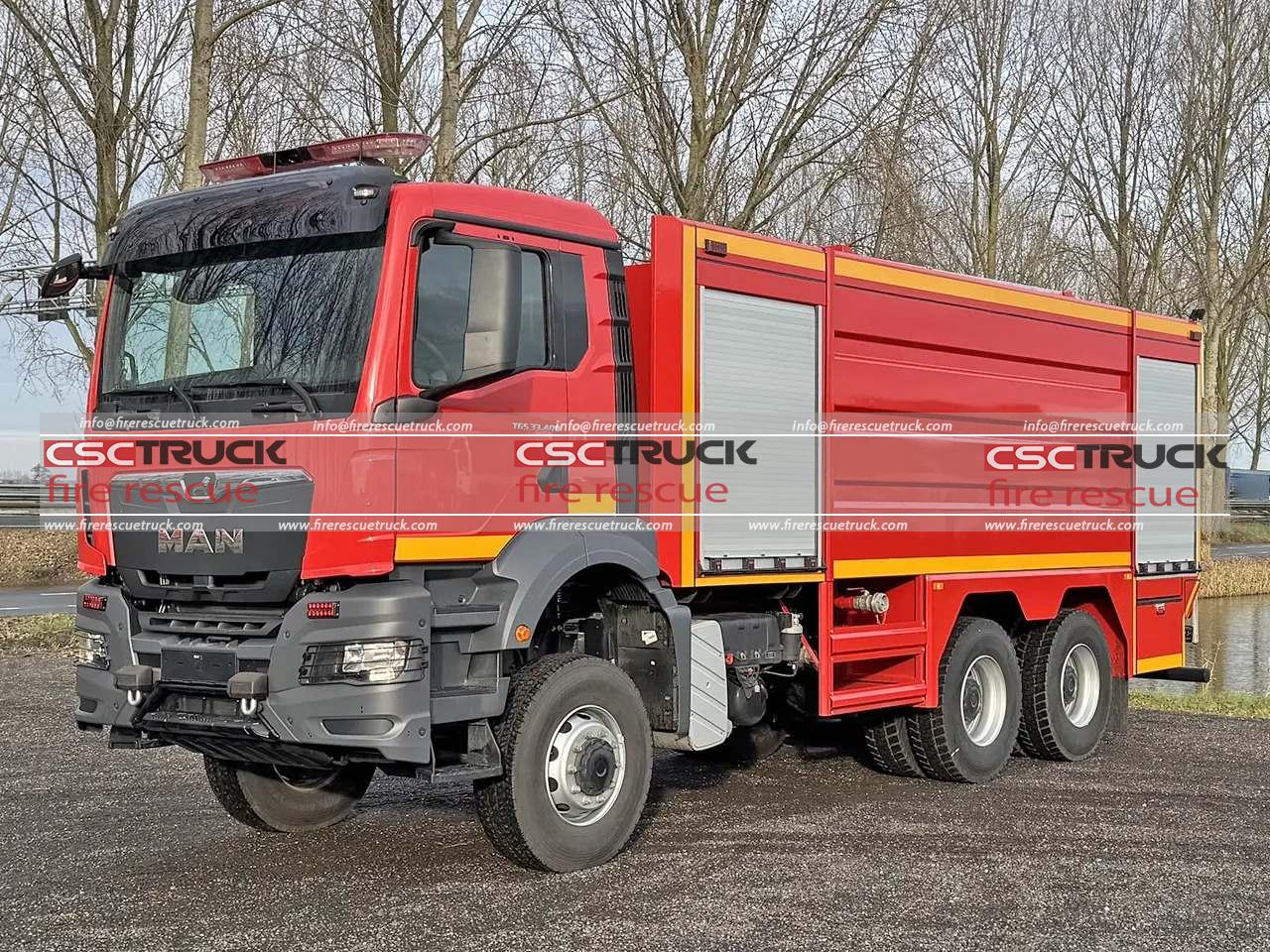
CSCTRUCK Fire Rescue Truck manufactures custom 4WD and 6WD firefighting vehicles specifically designed for remote and rugged environments. These vehicles feature enhanced traction and climbing performance, allowing crews to reach locations inaccessible to conventional fire engines.
For departments regularly responding to forest fires or rural incidents, a 4×4 or 6×6 water tender is generally the preferred choice.
2. Adequate Water Capacity
Water is often scarce in wildland firefighting areas. A suitable water tender should carry enough water to support prolonged operations.
Typical capacities include:
| Water Tank Size | Suitable Application |
|---|---|
| 2,000–4,000 liters | Initial attack and brush fires |
| 5,000–8,000 liters | Rural firefighting |
| 8,000–15,000 liters | Extended wildland operations |
| 15,000+ liters | Water shuttle support |
Larger tanks reduce refill frequency and increase operational effectiveness. However, increasing tank size also adds weight, which can negatively impact off-road mobility.
The ideal balance depends on local terrain and operational requirements.
3. Reliable Fire Pump System
Wildland incidents often require both water transport and active suppression.
A suitable water tender should include:
- Midship or rear-mounted fire pump
- High-pressure firefighting capability
- Quick-fill and quick-dump systems
- Hose reels for rapid attack
- Portable pump compatibility
High-pressure pumps are especially valuable because they produce fine water droplets that improve cooling efficiency while reducing water consumption.
Many modern water tenders can operate as both water supply vehicles and pumping units, increasing their versatility in wildfire incidents.
4. Maneuverability in Remote Areas
Large municipal water tenders may have excellent water capacity but poor maneuverability.
Wildland firefighting often requires:
- Short wheelbases
- Tight turning radius
- Compact body designs
- Lower vehicle weight
When selecting a water tender, agencies should carefully evaluate road width, bridge limitations, and trail access within their response area.
A smaller off-road tender can often outperform a larger highway-based tender in remote terrain.
5. Durable Construction
Wildland environments expose vehicles to:
- Extreme heat
- Dust
- Rocks
- Tree branches
- Continuous vibration
Therefore, the water tender should feature:
- Corrosion-resistant tank materials
- Reinforced body construction
- Heavy-duty bumpers
- Protected underbody components
- Durable firefighting equipment storage
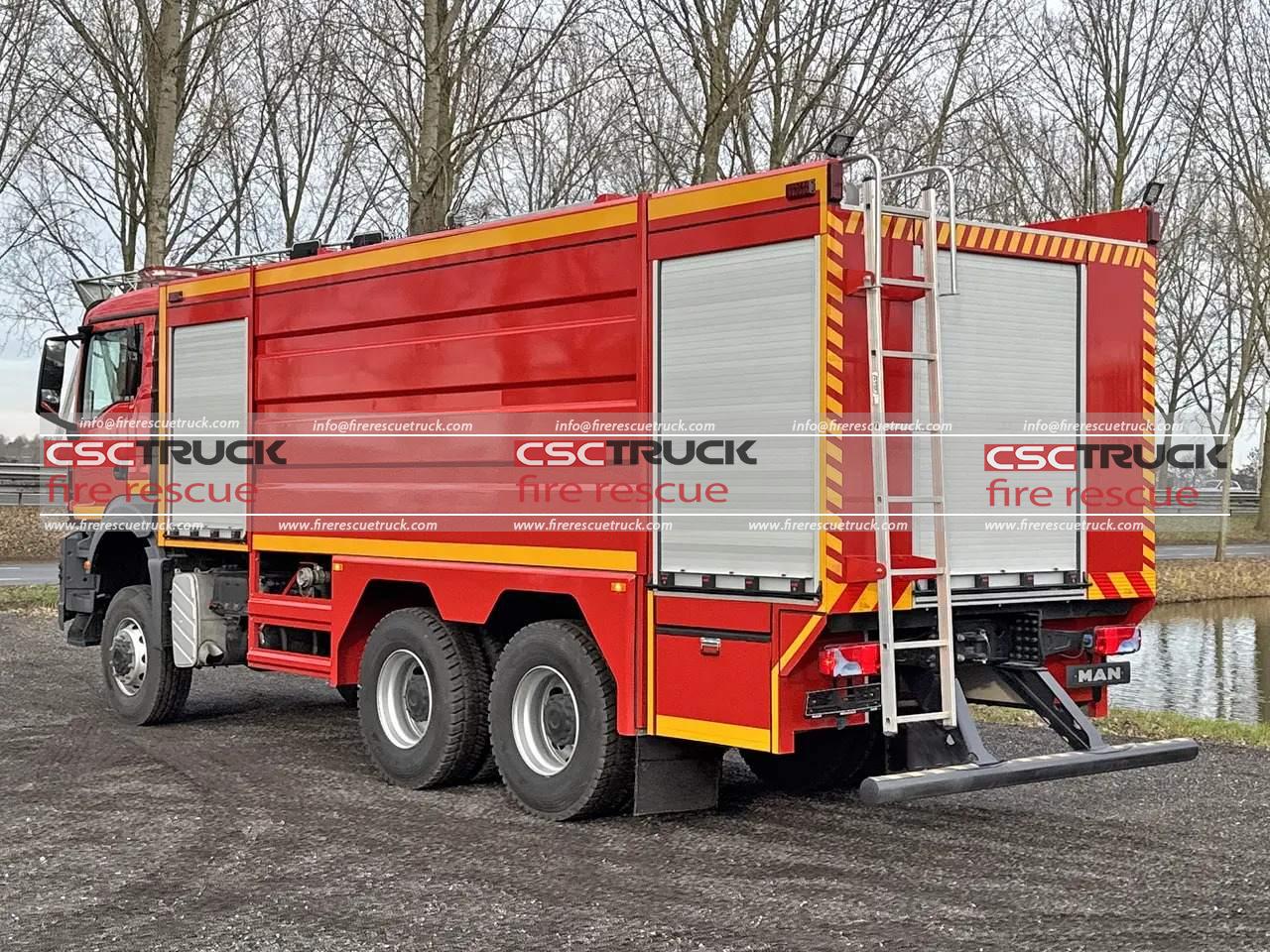
CSCTRUCK Fire Rescue Truck fire apparatus utilizes heavy-duty chassis and corrosion-resistant construction materials designed for long service life under demanding operational conditions.
Advantages of Using a Water Tender in Wildland Firefighting
1. Extended Water Supply
The primary advantage is the ability to transport large quantities of water where hydrants are unavailable.
Water tenders establish shuttle operations between water sources and the fire line, ensuring a continuous supply for suppression crews.
2. Support for Multiple Units
A single water tender can support:
- Brush trucks
- Wildland engines
- Hand crews
- Portable pumps
- Mobile water tanks
This flexibility is critical during large-scale wildfire incidents.
3. Increased Operational Independence
Remote incidents often require crews to remain on scene for extended periods.
Water tenders help maintain firefighting operations without relying on municipal infrastructure.
4. Rapid Deployment
Modern tenders equipped with pump-and-roll capability can suppress small fires while moving, allowing faster initial attack on grass and brush fires.
Potential Limitations
Although water tenders provide significant benefits, they also have limitations.
1. Vehicle Weight
A fully loaded water tender can weigh many tons.
Excessive weight may:
- Reduce off-road mobility
- Increase soil damage
- Create rollover risks on steep slopes
- Limit access across weak bridges
2. Large Physical Size
High-capacity tenders can struggle on:
- Narrow forest roads
- Mountain switchbacks
- Dense woodland trails
Departments should match vehicle size to local terrain conditions.
3. Water Consumption
Even large tanks can be depleted quickly during aggressive wildfire suppression.
This makes water management and shuttle logistics essential.
Signs That a Water Tender Is Well-Suited for Wildland Operations
A water tender is generally considered suitable for wildland firefighting if it includes:
✓ 4×4 or 6×6 drivetrain
✓ High ground clearance
✓ Differential locks
✓ Off-road suspension
✓ Water tank capacity appropriate for local operations
✓ High-pressure firefighting pump
✓ Hose reels and rapid attack lines
✓ Quick-fill and quick-dump capabilities
✓ Durable construction
✓ Reliable chassis platform
If most or all of these features are present, the vehicle can serve effectively in wildfire response missions.
Conclusion
So, is this water tender suitable for wildland firefighting?
The answer depends largely on its configuration. A standard highway water tender may be effective as a water shuttle vehicle, but could struggle in rugged terrain. In contrast, a purpose-built wildland water tender equipped with 4×4 or 6×6 drivetrains, high ground clearance, durable construction, and an efficient pumping system can become an invaluable asset during forest, grassland, and rural fire incidents.
Manufacturers such as CSCTRUCK Fire Rescue Truck offer customizable water tenders and off-road firefighting vehicles specifically engineered for challenging environments. Their range of 4WD and 6WD fire apparatus demonstrates how modern water tenders can combine water transport, fire suppression, and rugged mobility to meet the demanding requirements of wildland firefighting operations.