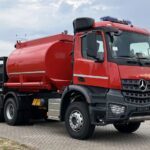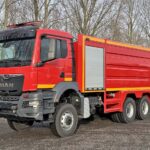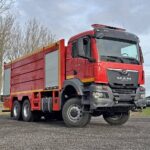

Introduction: CSCTRUCK Fire Rescue Truck and Modern Water Tender Design
In modern firefighting and emergency response, water tender fire trucks play a crucial logistical role by transporting large volumes of water to areas where hydrants are unavailable or unreliable. These vehicles are not just simple water carriers; they are highly engineered machines designed to support fire suppression operations under demanding conditions.
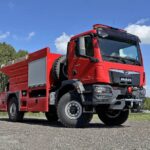
Manufacturers such as CSCTRUCK Fire Rescue Truck specialize in producing advanced fire and rescue vehicles, including water tenders, fire engines, and multi-functional rescue units. Their designs integrate robust chassis systems, high-capacity water tanks, and sophisticated pumping systems to ensure reliable performance in both urban and rural firefighting scenarios.
One of the most important technical components in these vehicles is the Power Take-Off (PTO) system, which determines how auxiliary equipment such as fire pumps is powered. Understanding whether a water tender includes a PTO system is essential for operators, fleet managers, and fire departments when selecting the right apparatus.
Understanding the PTO (Power Take-Off) System
A Power Take-Off (PTO) is a mechanical device that transfers power from a vehicle’s engine or transmission to auxiliary equipment. In firefighting vehicles, this power is typically used to operate:
- Fire pumps
- Hydraulic systems
- Water transfer pumps
- Foam systems
- Winches or rescue tools
Instead of installing a separate engine for these systems, the PTO allows the truck’s main engine to serve multiple functions. This improves efficiency, reduces weight, and simplifies maintenance.
In fire apparatus design, PTOs are usually mounted on the transmission or driveline system and can be engaged when needed. Once activated, engine power is redirected to drive the pump system while the vehicle remains stationary or, in some configurations, operates in “pump-and-roll” mode.

Does a Water Tender Fire Truck Include a PTO System?
The Short Answer: Yes, most modern water tenders include a PTO system.
However, the configuration depends on the role of the vehicle and its design purpose.
A water tender fire truck is primarily a water supply vehicle, but in most modern firefighting fleets, it is also equipped with a PTO-driven pump system to enable water transfer and limited firefighting operations.
There are generally 3 common configurations:
1. PTO-Equipped Water Tender (Most Common)
In this configuration, the water tender includes a transmission-mounted PTO system connected to a mid-ship or rear-mounted fire pump.
This allows the vehicle to:
- Fill its own tank from external sources (hydrants, ponds, tanker shuttles)
- Discharge water through hoses or monitors
- Support other fire engines on scene
This is the standard configuration in modern designs such as those produced by manufacturers like CSCTRUCK Fire Rescue Truck.
2. Gravity or Non-Powered Dump Tender (Less Common Today)
Some basic water tenders are designed without a full pump system. In these vehicles:
- Water is released by gravity through dump valves
- No active pumping is required for discharge
- External pumps are used to refill the tank
This type is simpler but far less flexible and is mainly used in older or low-cost fleet designs.
3. Hybrid Systems (PTO + Auxiliary Pump)
Advanced water tenders may include both:
- A PTO-driven main fire pump
- A small auxiliary engine or portable pump
This hybrid setup allows:
- Pump-and-roll capability in wildfire operations
- Independent pumping without engaging the truck engine
- Greater operational flexibility in remote environments
How PTO Systems Work in Water Tender Fire Trucks
In a typical PTO-equipped water tender:
- The truck engine is started
- The PTO is engaged (mechanically, pneumatically, or electronically)
- Engine power is transferred to the pump
- The pump draws water from the tank or external source
- Water is discharged through hoses or monitors
The system may use different PTO types:
- Transmission PTO (most common)
- Split-shaft PTO
- Engine-mounted PTO
Each type affects performance, pump capacity, and vehicle mobility.

Why PTO Systems Are Important in Water Tenders
The inclusion of a PTO system significantly enhances the operational capability of a water tender:
1. Independent Water Supply Capability
Without PTO, a water tender is only a passive water carrier. With PTO, it becomes an active firefighting asset capable of pumping water directly.
2. Faster Fireground Operations
PTO-driven pumps allow rapid water transfer between:
- Tender → Fire engine
- Tender → Portable folding tanks
- Tender → Direct attack lines
This reduces downtime during critical firefighting operations.
3. Improved Flexibility in Remote Areas
In rural or wildfire-prone regions where hydrants are unavailable, PTO-equipped tenders become essential for sustained firefighting.
4. Reduced Need for Auxiliary Engines
Using PTO eliminates the need for a separate pump engine, reducing:
- Maintenance complexity
- Fuel consumption
- Vehicle weight
Role of CSCTRUCK Fire Rescue Truck in PTO-Equipped Water Tender Design
Modern manufacturers such as CSCTRUCK Fire Rescue Truck integrate PTO systems as part of a fully engineered firefighting package.
Typical features in CSCTRUCK Fire Rescue Truck water tenders include:
- Heavy-duty chassis integration
- Transmission-mounted PTO systems
- High-capacity centrifugal fire pumps
- Corrosion-resistant water tanks
- Multi-outlet discharge systems
These systems ensure that water tenders are not just transport vehicles but fully functional support units capable of direct firefighting assistance.

PTO vs Non-PTO Water Tenders: Key Difference
| Feature | PTO Water Tender | Non-PTO Water Tender |
|---|---|---|
| Pump capability | High (active pumping) | Low or none |
| Firefighting role | Active support unit | Water transport only |
| Flexibility | High | Limited |
| Cost | Higher | Lower |
| Maintenance | Moderate | Simple |
Conclusion
A Power Take-Off (PTO) system is commonly included in modern water tender fire trucks, especially those designed for professional firefighting operations. While basic tenders may rely on gravity discharge or external pumps, most contemporary designs—particularly those produced by manufacturers like CSCTRUCK Fire Rescue Truck—integrate PTO systems to enhance performance and versatility.
Ultimately, the PTO transforms a water tender from a simple water carrier into a fully functional firefighting support vehicle, capable of pumping, transferring, and delivering water efficiently under demanding emergency conditions.