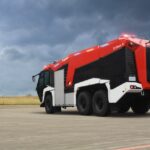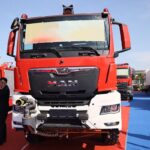

Airport fire trucks—also known as Aircraft Rescue and Firefighting (ARFF) vehicles—represent some of the most powerful, technologically advanced emergency-response units in the world. Designed specifically for aviation environments, these specialized trucks combine high-speed mobility, exceptional firefighting capability, and advanced rescue systems to meet international aviation safety standards. As global air traffic continues to expand, understanding the types, functions, and applications of airport fire trucks has become increasingly important for airport planners, emergency responders, and aviation authorities.
This article provides an in-depth analysis of ARFF vehicle classifications, operational functions, and the variations in use across airports worldwide.
1. Types of Airport Fire Trucks
Airport fire trucks differ significantly from municipal firefighting vehicles due to their unique role in aircraft incidents. Generally, ARFF vehicles fall into several major types, determined by design, capacity, and operational purpose.
1.1 Major Foam Tenders (MFT)
Major Foam Tenders—often referred to as “crash tenders”—are the backbone of airport firefighting. They are large, high-capacity vehicles equipped with:
- High-performance turrets (roof and bumper)
- Thousands of liters of water, foam concentrate, and dry powder
- Powerful engines enabling rapid acceleration (0–80 km/h in seconds)
- Off-road capability for airfield terrain
Manufacturers such as Rosenbauer (Panther series), Oshkosh (Striker series), and Angloco dominate the global market.
These trucks respond first to aircraft emergencies, delivering large quantities of extinguishing agents within the critical first minute.
1.2 Rapid Intervention Vehicles (RIV)
Rapid Intervention Vehicles are smaller, faster ARFF units used to reach an incident before major tenders arrive. Key features include:
- High-speed maneuverability
- Light firefighting systems (compressed air foam, dry chemical)
- Compact size for smaller airports or narrow taxiways
RIVs play a vital role in providing immediate suppression during the early stages of a fire.
1.3 Water Tankers / Support Vehicles
Water tankers supply additional water and foam when large-scale operations require extended suppression capabilities. These units are especially common in:
- Major international airports with high fire category levels
- Remote regions where water access is limited
- Countries with older or cost-sensitive firefighting fleets
Although not frontline ARFF units, they ensure continuous extinguishing-agent availability.
1.4 Command & Control Vehicles
These specialized units support coordination during complex emergencies. Features often include:
- Mobile communication systems
- Incident command software
- Real-time monitoring and thermal imaging
Large airports operating under ICAO Categories 9 and 10 frequently use command units for multi-agency response.
1.5 Rescue Stairs and Evacuation Vehicles
Designed to assist in non-fire emergencies, rescue stairs or evacuation trucks help firefighters access aircraft cabins quickly:
- Hydraulic lifting platforms
- Integrated firefighting nozzles
- Medical evacuation capability
They are essential for wide-body aircraft like the Airbus A380.

2. Core Functions of Airport Fire Trucks
Airport fire trucks are engineered to meet rigorous performance criteria established by ICAO, FAA, and EASA. Their functions extend far beyond extinguishing fires.
2.1 Rapid Response
A primary requirement for ARFF units is speed. Regulations typically mandate:
- Response time of 2–3 minutes from the station to any runway point
- Ability to operate on paved and unpaved surfaces
- High visibility and lighting systems for low-visibility conditions
Their acceleration, stability, and braking systems are optimized for airfield dynamics.
2.2 Fire Suppression
Airport fires differ from urban fires due to fuel type and volume. ARFF trucks handle:
- High-intensity jet fuel fires
- Fuel pool fires under aircraft wings
- Cabin fires requiring rapid cooling
Extinguishing capabilities typically include:
- Water/Foam systems: For fuel-surface suppression
- Dry chemical agents: Quick knockdown of high-temperature flames
- Halon replacements: For cabin/engine fires
- Clean-agent systems: Safe for electronics and aircraft interiors
2.3 Aircraft Rescue Operations
Beyond fire control, ARFF teams conduct specialized rescue operations such as:
- Cutting the aircraft fuselage using hydraulic tools
- Removing passengers through emergency exits or broken structures
- Stabilizing aircraft after hard landings
- Managing evacuation on uneven surfaces
Many trucks carry onboard tools, including spreaders, saws, and medical equipment.
2.4 Environmental Protection
Spills of jet fuel or hazardous materials pose environmental and safety risks. ARFF vehicles contribute through:
- Foam application to prevent ignition
- Containment systems for fuel runoff
- Support for hazmat response teams
2.5 Airport Standby & Operational Support
ARFF trucks are often deployed for non-emergency functions:
- Aircraft requiring a standby during landing
- Fuel system testing operations
- Training and fire drill support
These functions ensure readiness for real-world incidents.
3. Global Applications of Airport Fire Trucks
Airport fire trucks are used across the world, but applications vary significantly based on regional aviation regulations, airport size, climate, and risk profiles.
3.1 North America
The United States and Canada operate some of the most technologically advanced ARFF fleets due to strict FAA requirements. Features commonly used include:
- High agent capacity (foam + dry chemical)
- Advanced thermal imaging systems
- Next-generation electric ARFF prototypes (in development)
Large airports like LAX, DFW, and Toronto Pearson deploy top-tier Striker and Rosenbauer units.
3.2 Europe
European airports prioritize sustainability and technological innovation. Highlights include:
- Electric and hybrid ARFF vehicles (e.g., Rosenbauer Panther Electric)
- Thermal cameras integrated with command centers
- High environmental compliance standards
Major hubs such as Frankfurt, Heathrow, and Amsterdam Schiphol lead in fleet modernization.
3.3 Middle East
Middle Eastern airports—Dubai, Doha, Abu Dhabi—operate some of the world’s most advanced fleets due to high passenger volume and extreme climate challenges.
Key trends include:
- High-capacity foam tenders for A380 operations
- Advanced cooling systems for desert heat
- Specialized vehicles for wide-body aircraft
3.4 Asia-Pacific
The Asia-Pacific region shows rapid growth in ARFF vehicle investments driven by airport expansion. Countries like China, Singapore, India, and Australia emphasize:
- High-speed, all-terrain crash tenders
- Extensive training centers
- Increased adoption of ICAO Category 10 requirements
3.5 Africa & Latin America
Many airports operate mixed fleets of modern and older units due to budget limitations. However, major international airports—Johannesburg, Nairobi, São Paulo—are upgrading fleets to comply with ICAO guidelines.

4. Future Trends in Airport Fire Trucks
As aviation evolves, ARFF technology is also advancing. Key future developments include:
4.1 Electrification of ARFF Vehicles
Electric airport fire trucks reduce emissions and improve maintenance efficiency. Several prototypes and early commercial units are already in service.
4.2 Artificial Intelligence & Automation
AI-assisted features may include:
- Autonomous navigation on airfields
- Predictive maintenance monitoring
- Real-time hazard analysis
4.3 Enhanced Foam Alternatives
Eco-friendly firefighting foams without PFAS are becoming standard due to global environmental regulations.
4.4 Advanced Simulation Training
VR-based ARFF training is rapidly expanding, improving firefighter preparedness and reducing training fuel usage.
Conclusion
Airport fire trucks are critical to global aviation safety, combining speed, firefighting power, and rescue technology in highly specialized forms. From major foam tenders to rapid intervention vehicles, ARFF fleets reflect the unique safety requirements of airports across different regions. As air travel increases and environmental standards tighten, the future of ARFF vehicles will focus on advanced technologies, sustainability, and improved operational efficiency.
By understanding the types, functions, and global applications of airport fire trucks, aviation professionals can better assess safety capabilities and ensure compliance with changing international standards.