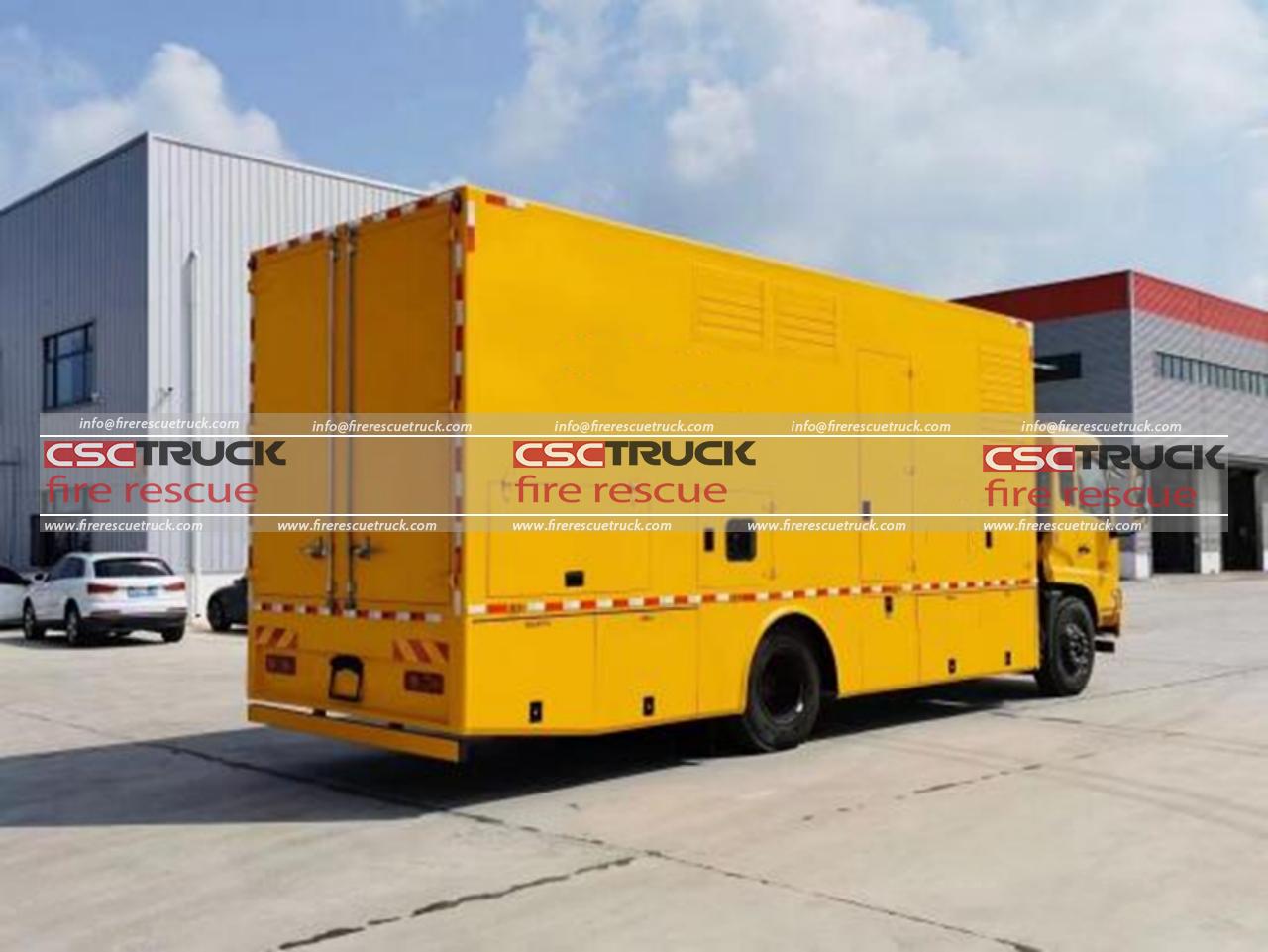

In the wake of natural disasters, large-scale emergencies, and critical infrastructure failures, maintaining a reliable source of electrical power becomes a matter of life and death. Hospitals, emergency command centers, communication systems, and rescue operations all depend on electricity to function effectively. When the main power grid collapses due to earthquakes, floods, hurricanes, or fires, an emergency power supply vehicle steps in as a vital solution. This specialized mobile power source ensures continuous power generation in remote or disaster-stricken areas, enabling uninterrupted emergency response and supporting recovery operations.
1. Introduction to Emergency Power Supply Vehicles
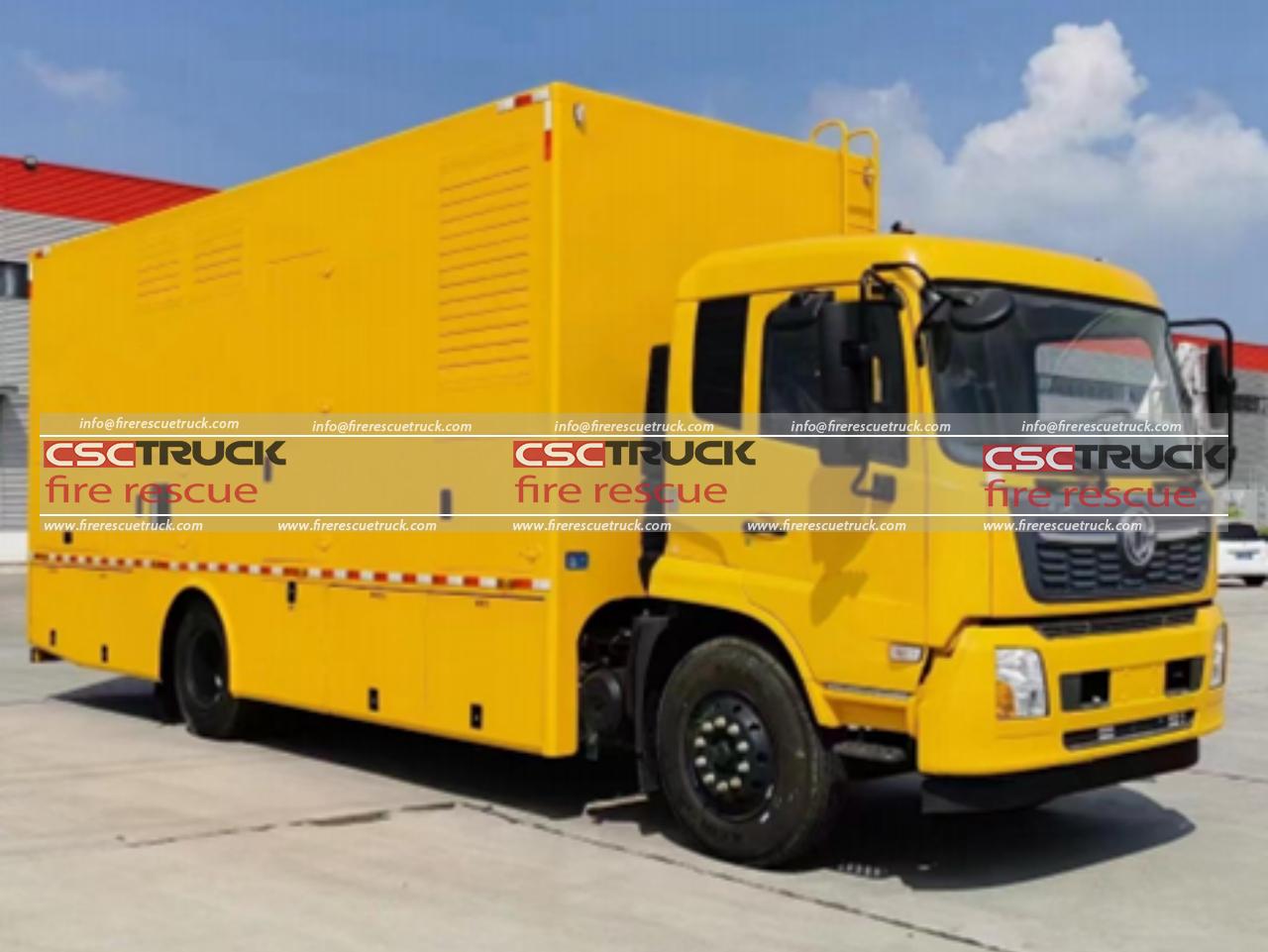
An emergency power supply vehicle, also known as a mobile power supply vehicle, is a self-contained power generation and distribution system mounted on a truck chassis or trailer platform. Its primary purpose is to deliver temporary or supplementary power to critical areas where the electrical grid has failed or is inaccessible. These vehicles are designed for rapid deployment, capable of traveling over rugged terrain, and equipped with robust electrical systems to provide stable, high-capacity power in demanding environments.
Such vehicles are commonly deployed by emergency management agencies, fire departments, military units, and utility companies during disaster relief efforts. They play an indispensable role in sustaining life-saving operations, running medical equipment, powering communication networks, and ensuring lighting and environmental control in emergency shelters.
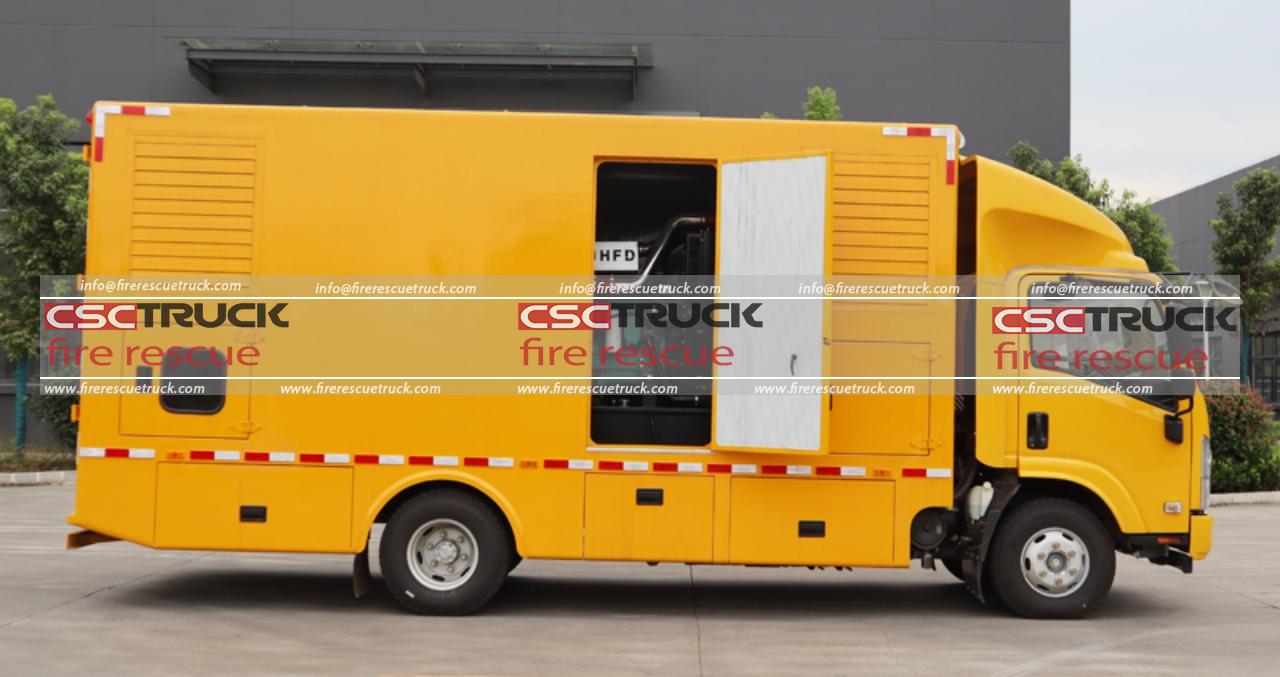
2. Design and Configuration
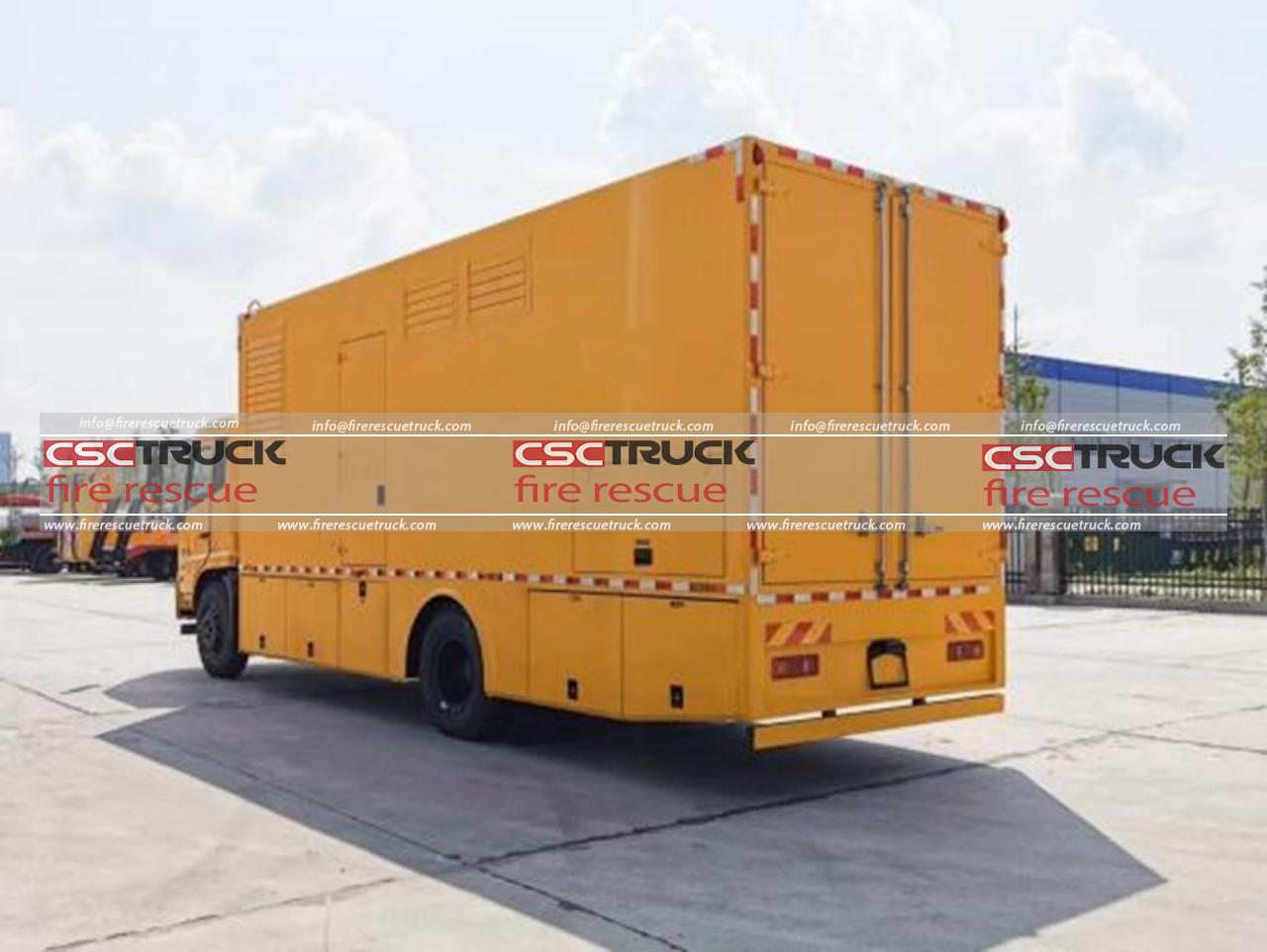
The design of an emergency power supply vehicle emphasizes mobility, reliability, and versatility. Built on heavy-duty truck chassis such as Mercedes-Benz, MAN, or HOWO platforms, these vehicles feature reinforced suspension systems and off-road capabilities to reach difficult terrain.
The main components typically include:
- High-Capacity Generator Units:
Diesel or hybrid-powered generators are the core of the vehicle, capable of producing between 50 kW to 1,000 kW depending on operational requirements. These generators are often soundproofed and vibration-damped to ensure quiet and stable operation. - Power Distribution Panels:
The vehicle houses a series of distribution panels, transformers, and circuit protection systems. These panels allow operators to control voltage levels, distribute electricity to different load points, and manage power safely across various equipment. - Fuel System:
Large-capacity fuel tanks are integrated for extended operation, allowing a continuous power supply for 24–72 hours without refueling. Some systems are designed for easy connection to external fuel tanks to support long-term missions. - Cooling and Exhaust Systems:
Efficient cooling units maintain generator temperature under heavy loads, while exhaust systems are equipped with noise reduction and emission control devices to meet environmental standards. - Control Room and Monitoring Systems:
The operator’s cabin or onboard control room includes digital monitoring interfaces for tracking voltage, current, frequency, and fuel consumption. Some modern vehicles integrate smart control systems with remote monitoring capabilities for enhanced safety and efficiency. - Auxiliary Equipment:
Many vehicles include auxiliary lighting, cable reels, grounding systems, and load transfer switches to ensure quick setup and reliable operation in any situation.
3. Operational Capabilities
The strength of an emergency power supply vehicle lies in its ability to provide instant and flexible power support. Depending on the configuration, these vehicles can supply power for:
- Emergency command centers and communication systems
- Hospitals and field medical stations
- Evacuation shelters and relief camps
- Water purification and pumping stations
- Critical industrial or transportation facilities
These vehicles can operate independently or in parallel with other units to create a mobile power network. Some models support synchronization with the local grid, enabling a smooth transition when the normal electricity supply is restored.
The output can be customized to supply AC power at 220V, 380V, or 480V, and in certain models, DC output for specific rescue equipment or lighting systems. Advanced systems incorporate an uninterruptible power supply (UPS) and battery storage modules to maintain continuity during generator startup or load transfer.
4. Role in Disaster and Rescue Operations
During large-scale disasters, power outages are among the most immediate and crippling challenges. In these critical moments, the emergency power supply vehicle becomes the backbone of emergency infrastructure.
- After Earthquakes:
When electrical grids collapse, these vehicles power command posts, communication equipment, and lighting systems, allowing rescuers to operate efficiently even in nighttime conditions. - During Floods or Hurricanes:
The vehicles can be deployed to power pumping stations, temporary hospitals, and emergency shelters. Their waterproof and insulated design ensures safe operation even in wet or humid environments. - In Wildfire Zones:
Power supply vehicles provide electricity for firefighting equipment, lighting, and communications, enabling coordination and safety for ground crews. - At Large Public Events or Emergency Evacuations:
Beyond disaster relief, mobile power supply units are used in planned emergency preparedness scenarios—such as major outdoor events or temporary command posts—to ensure constant electrical availability.
5. Technical Features and Innovations
Modern emergency power supply vehicles incorporate several innovations to enhance performance and environmental compatibility:
- Hybrid Power Systems:
Integration of diesel generators with battery storage or solar arrays reduces fuel consumption and emissions while allowing quiet, 0-emission operation in sensitive areas. - Smart Power Management:
Advanced control systems automatically adjust output based on load demand and can integrate with satellite or 4G/5G networks for remote monitoring and diagnostics. - Modular Design:
Some vehicles feature modular generator units, enabling rapid replacement or scaling of power output depending on mission requirements. - Noise and Emission Control:
Enclosures are soundproofed, and exhaust systems feature particulate filters and catalytic converters to meet stringent environmental regulations. - Automatic Load Transfer and Synchronization:
These systems ensure seamless transition between grid power and generator power, minimizing interruptions during critical operations.

6. Advantages of Mobile Power Supply Vehicles
The deployment of emergency power supply vehicles offers numerous operational benefits:
- Rapid Deployment:
Ready-to-use units can be mobilized within minutes and transported directly to affected areas. - High Mobility:
Off-road capability and compact design allow operation in both urban and remote environments. - Scalability:
Multiple units can work in parallel to power larger facilities or expand coverage zones. - Reliability:
Industrial-grade components ensure stable and continuous power generation under heavy load conditions. - Versatility:
Suitable for a wide range of applications—from emergency relief to industrial backup power and event support. - Safety:
Equipped with grounding, overload protection, and automatic shutdown features to prevent accidents.
7. Future Trends and Development
The future of mobile power supply vehicles is moving toward greener, smarter, and more autonomous systems. The integration of renewable energy sources, such as foldable solar panels and hydrogen fuel cells, is becoming increasingly common. These technologies promise longer operation times, lower environmental impact, and reduced dependency on fossil fuels.
Artificial intelligence (AI)-based power management systems will enhance efficiency by predicting load requirements and optimizing fuel usage. Additionally, electric truck platforms are being explored to further reduce emissions and improve sustainability in disaster response operations.
8. Conclusion
The emergency power supply vehicle stands as a cornerstone of modern emergency response systems. Its ability to deliver reliable, mobile, and adaptable electrical power under the most adverse conditions makes it an essential asset in disaster management and humanitarian operations. From powering field hospitals to maintaining communication networks, these vehicles bridge the gap between chaos and control, enabling emergency teams to save lives and restore order.
As technology evolves, the next generation of mobile power supply vehicles will become even more efficient, eco-friendly, and intelligent—ensuring that whenever disaster strikes, power and hope will never be out of reach.