
Airports present a unique firefighting challenge: Large volumes of jet fuel, fast-moving aircraft, dense passenger loads, and complex infrastructure. To meet those demands, airport fire services use a specialized fleet commonly called Aircraft Rescue and Firefighting (ARFF) vehicles. These vehicles are purpose-built for speed, agent delivery, personnel rescue, and operations on varied surfaces (pavement, grass, snow). This article surveys the primary types of airport fire trucks, explains their core functions, and highlights how international practice shapes their use.
The ARFF Vehicle Family — Overview
Airport firefighting apparatus differs from municipal engines in three important ways: Priority on rapid response, very high-capacity agent delivery (water, foam, dry chemical), and specialized tools for aircraft access and rescue. Vehicles range from big foam/water tenders to nimble rapid intervention vehicles (RIVs). While exact fleets vary by airport size, regulations such as ICAO and national civil aviation authorities set required capabilities tied to the airport’s ARFF category.
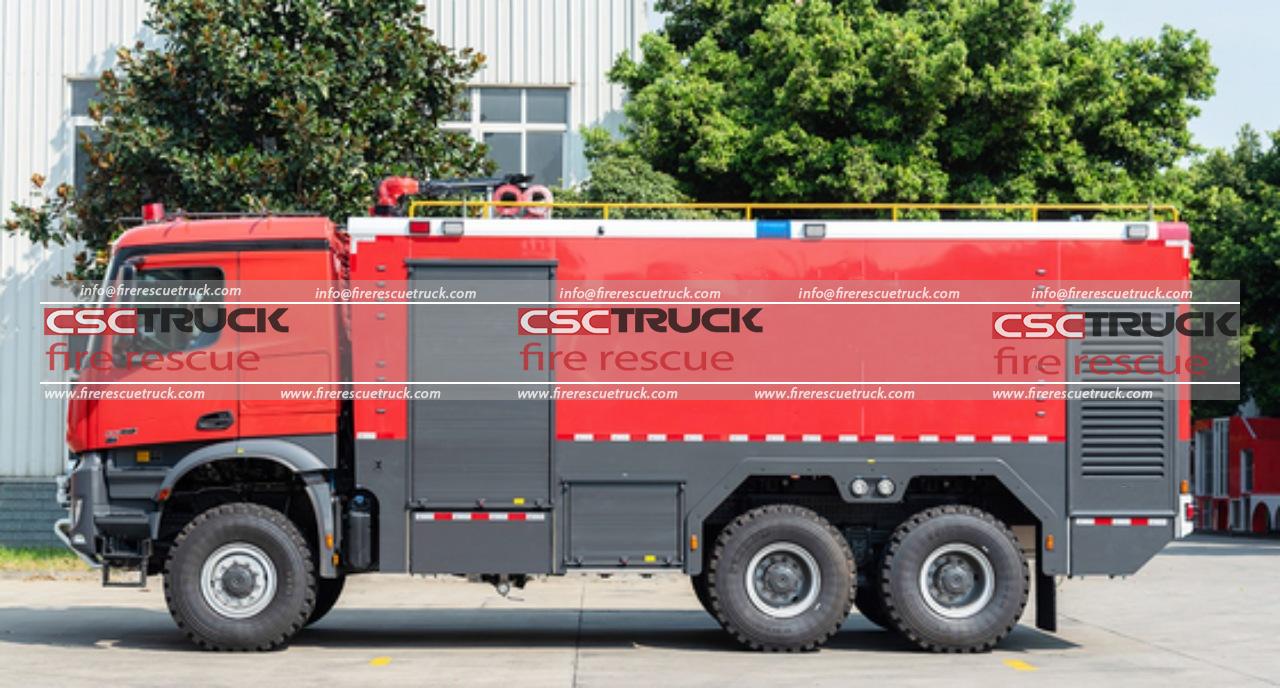
1. Crash Tenders / High-Capacity Foam Tenders
Primary role: Deliver large volumes of water, foam, and extinguishing agents quickly to a burning aircraft.
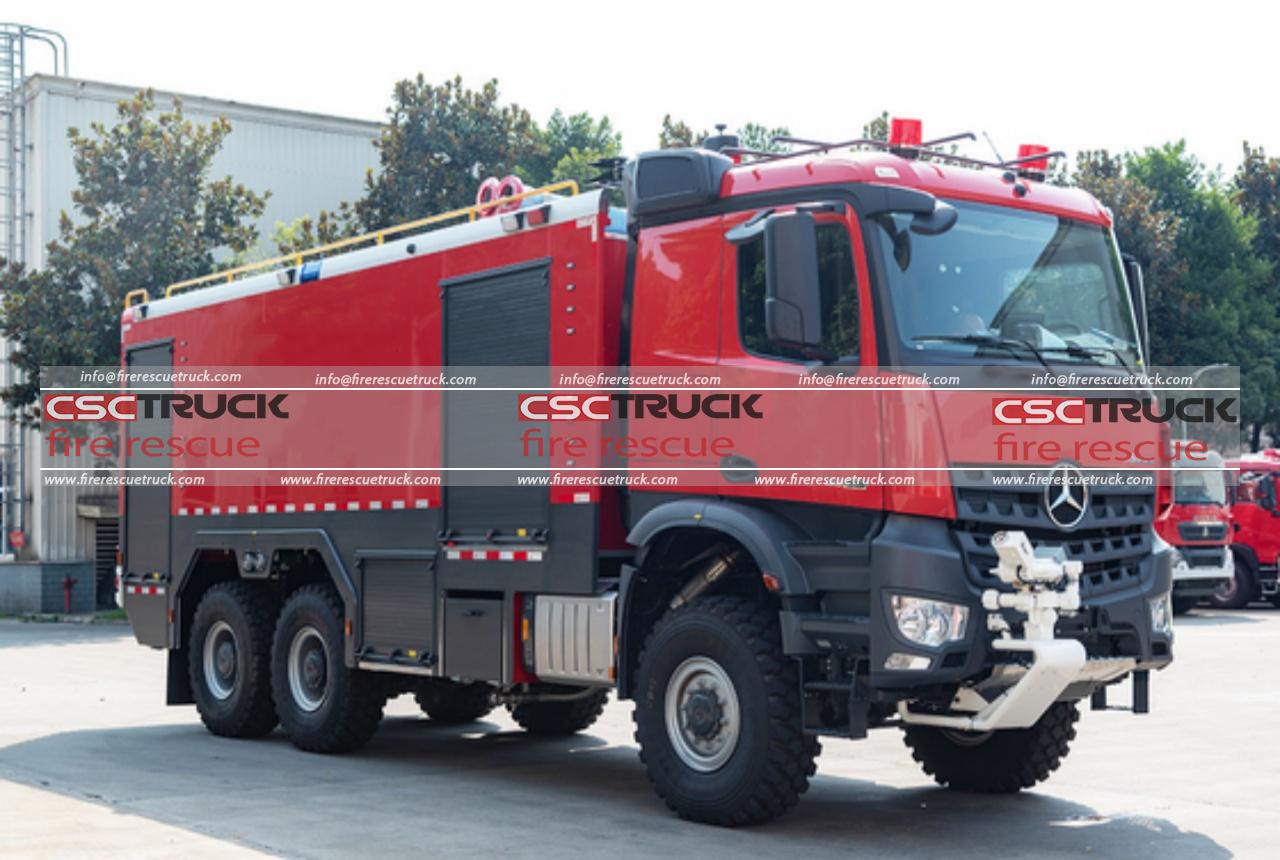
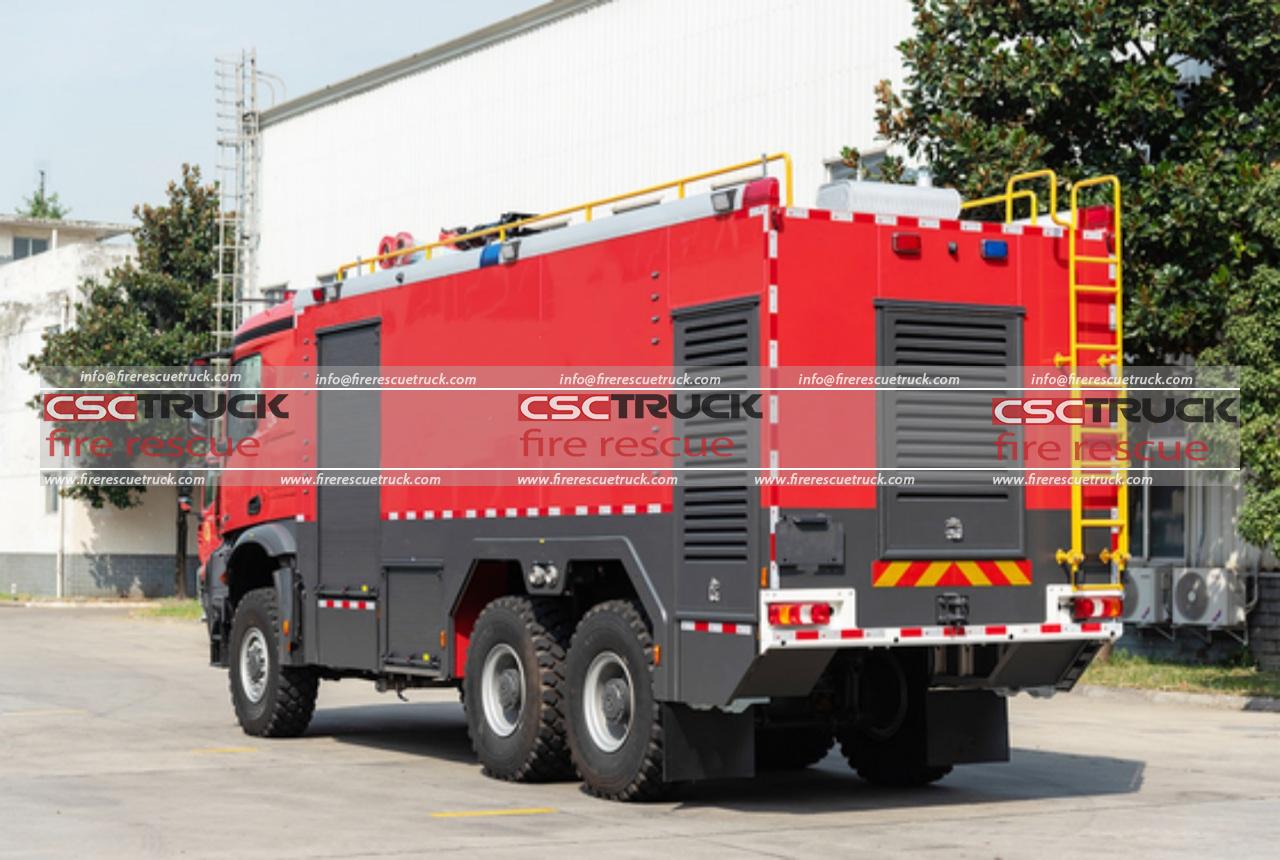
Crash tenders are the signature airport fire truck: High-horsepower chassis, large tanks for water and foam concentrate (often several thousand liters), and powerful pumps and monitors (turrets) mounted on top and front. They deliver foam blankets to suppress burning jet fuel, cool structural elements, and protect rescue teams. Monitors are often remote-controlled from inside the cab to allow nozzle aiming without exposing the crew.
Key capabilities
- High-speed response on runways and rapid transit routes.
- Large onboard tanks for water and foam concentrate.
- High flow rates (tens of thousands of liters per minute combined across pumps/monitors).
- Off-road chassis and high ground clearance for grassy areas or rough terrain.
International context: In major international hubs, multiple crash tenders are positioned to meet required response times for all runway and movement areas; in smaller fields, a single tender may be supplemented by mutual aid.
2. High Reach Extendable Turret (HRET) Vehicles / Aerial Platform Tenders
Primary role: Reach elevated parts of large aircraft (tails, upper fuselage) for rescue, firefighting, and ventilation.
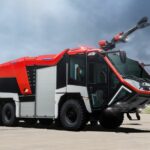
HRETS combine a foam/water supply with a telescoping boom and turret. The protected boom allows firefighters to apply extinguishing agents into upper sections of an airframe and to create access for rescue ladders or cutting tools. HRETs are invaluable for widebody aircraft incidents where the tail or upper fuselage is involved.
Key capabilities
- Telescoping arm with articulated nozzle and operator basket.
- Ability to apply agents at height and deliver rescue personnel.
- Often used to stabilize an aircraft or create protected access points.
3. Rapid Intervention Vehicles (RIVs) and First Response Vehicles
Primary role: Arrive first, begin life-saving tasks, and mark the incident while larger units follow.
RIVs are smaller, faster, and more maneuverable than full-size tenders. Their function is to get to the scene within seconds to perform initial rescue, apply spot suppression, extract injured passengers, and coordinate with air traffic control. They typically carry essential medical gear, extrication tools, limited foam/water, and portable monitors.
Key capabilities
- Extremely fast acceleration and response times.
- Compact enough for taxiways and narrow access roads.
- Equipment for immediate rescue and triage.
4. Multi-Purpose Rescue Vehicles
Primary role: Combine firefighting with heavy rescue, medical support, and access tools.
These trucks are built to perform many tasks: Carry cutting tools, hydraulic rescue equipment (the “jaws of life”), stair units, and extrication gear. They may also include breathing air support systems and medical equipment, acting as a mobile rescue hub during complex incidents.
Key capabilities
- Integrated rescue and firefighting equipment.
- Scene lighting, power generation, and air supply systems.
- Configurations tailored for cargo fires, passenger rescue, and structural support.
5. ARFF Support and Logistics Vehicles
Primary role: Sustain operations over extended incidents.
Support vehicles include breathing air replenishment trucks (SCBA support), foam resupply units, command vehicles, and ambulances. During prolonged incidents, foam and air reserves are consumed rapidly, so logistic vehicles keep suppression continuous while command vehicles coordinate multi-agency responses.
6. Specialized Units: Dry Chemical and Clean-Agent Trucks
Primary role: Fight specific fire types where foam or water is less effective.
Some airports maintain vehicles that carry dry chemical powder or clean agents for use on particular classes of fires or in areas with sensitive infrastructure. These are used selectively, complementing water and foam responses.
Functions Explained — Beyond “Putting Out Fires.”
While extinguishing flames is the most visible task, ARFF vehicles and their crews perform multiple critical functions:
- Rapid life-saving rescue: Doors, seats, and access panels on modern aircraft can be difficult to open during a fire; ARFF crews use hydraulic tools, ladders, and HRETs to rescue passengers quickly.
- Fuel fire suppression and vapor control: Jet fuel fires generate intense heat and vapors. Foam agents create a vapor-suppressing blanket that stops fuel from burning and prevents re-ignition.
- Cooling and exposure protection: Large-flow monitors cool adjacent structures and prevent fire spread to aeronautical facilities.
- Scene control and incident command: ARFF vehicles carry communications and lighting systems to manage passenger movement, coordinate with airport operations, and control the incident perimeter.
- Hazardous materials response: Many aircraft incidents involve hazardous cargo; ARFF units work alongside hazmat teams to mitigate chemical, biological, or flammable risks.
- Salvage and stabilization: Post-extinguishment tasks include stabilizing aircraft, battery isolation, and preparing wreckage for investigation.
International Variation and Standards
Airports worldwide organize ARFF capability according to size, traffic mix, and regulations. ICAO categories (based on aircraft length and maximum fuselage width in use) determine minimum required firefighting assets and response times — higher-category airports must provide greater quantities of agents and faster coverage. National authorities may overlay stricter rules: For example, some countries require additional rescue teams or specific agent mixes for widebody traffic.
Resource allocation also reflects geography and climate: remote Arctic airports need winterized apparatus and de-icing compatibility, while tropical hubs prioritize corrosion protection and high-capacity cooling.
Trends and Future Directions
Globally, ARFF is evolving with technology:
- Foam alternatives and environmental controls: Environmental concerns over legacy fluorinated foams are driving the adoption of fluorine-free foams and alternative suppression techniques.
- Telematics and remote monitors: Many modern tenders use remote-controlled monitors, computerized pump management, and fleet telematics for faster, safer operation.
- Hybrid and electric drivetrains: As airports decarbonize, manufacturers are trialing hybrid or electric auxiliary systems to reduce idling emissions.
- Integration with drones and sensors: Drones provide aerial reconnaissance, while thermal imaging and gas detectors assist rapid decision-making.
Conclusion
Airport fire trucks are highly specialized tools matched to the complex hazard of aircraft incidents: High-speed crash tenders, HRETs for elevated access, nimble RIVs for immediate rescue, and multifunction support vehicles together create a layered response capability. International standards tie required capabilities to airport size and aircraft types, but real-world practice adapts to climate, traffic, and local regulations. As technology and environmental standards progress, ARFF fleets continue to evolve — but their core mission remains unchanged: Protect lives, stabilize aircraft emergencies, and keep aviation operations safe.