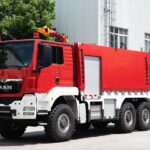

Introduction: CSCTRUCK Fire Rescue Truck and Modern 6×6 Design
Modern fire and rescue operations increasingly rely on specialized heavy-duty vehicles such as 6×6 fire trucks, designed for extreme terrain, high payload capacity, and rapid emergency response. Manufacturers like CSCTRUCK Fire Rescue Truck develop advanced fire apparatus engineered for demanding conditions, including off-road environments, mountainous regions, industrial zones, and disaster areas.
Many of these trucks are built on robust 6×6 all-wheel-drive chassis, combining strong off-road mobility with highway capability. This raises a common question: Are 6×6 fire trucks road legal?
The answer is not simple—it depends on vehicle classification, country regulations, axle weight limits, and intended use. In general, 6×6 fire trucks can be road legal, but with strict conditions.
What Makes a 6×6 Fire Truck Different?
A 6×6 fire truck typically features:
- Three axles, all powered
- High gross vehicle weight (GVW) often exceeding 20–40 tons
- Reinforced suspension for water tanks, foam systems, and rescue equipment
- Off-road traction for rough terrain such as forests, deserts, or disaster zones
Compared with standard 4×2 or 4×4 fire engines, 6×6 models are significantly heavier and wider, which directly impacts road legality.

Are 6×6 Fire Trucks Road Legal?
1. Yes—But Classified as Heavy Emergency Vehicles
In most countries, 6×6 fire trucks are considered authorized emergency vehicles, meaning they are legally allowed to operate on public roads.
For example, in many U.S. states, fire engines and fire trucks are exempt from certain weight and size restrictions when operating in official duties. Regulations often allow them to exceed normal axle weight limits or width restrictions when responding to emergencies or returning from calls.
2. Road Legality Depends on Registration Type
A 6×6 fire truck may fall under different legal categories:
- Municipal fire department vehicle
- Volunteer fire service apparatus
- Private industrial firefighting unit
- Airport rescue firefighting (ARFF) vehicle
If properly registered as a firefighting apparatus, it is usually permitted to use highways and public roads.
However, privately owned 6×6 vehicles not used for firefighting may not qualify for the same exemptions.
Legal Restrictions That Still Apply
Even though 6×6 fire trucks are often road legal, they must still comply with many regulations:
1. Weight Limits (or Exemptions)
Most standard trucks must follow strict axle and gross weight limits. Fire trucks may exceed them, but usually only under special exemptions or permits.
2. Width and Length Restrictions
Fire apparatus can be wider and longer than normal vehicles, but they still have upper limits depending on jurisdiction.
For example:
- Maximum widths around 2.5–3.0 meters in many regions
- Maximum lengths are typically around 10–15 meters for single-unit fire apparatus in regulated systems
3. Route Limitations
Some 6×6 fire trucks may be restricted to:
- Roads capable of supporting heavy axle loads
- Emergency response routes
- Urban access roads designed for large emergency vehicles
Narrow streets, bridges with load limits, or older infrastructure may restrict access.
4. Special Operating Conditions
Even when road legal, many 6×6 fire trucks operate under rules such as:
- Only for emergency response or training
- Speed limitations when fully loaded
- Mandatory warning lights and sirens during active response

Regional Differences in Road Legality
United States
- Generally road legal as emergency vehicles
- Exempt from many size/weight restrictions when operated by fire departments
- Must still comply with safety and registration requirements
Europe
- More restrictive road dimensions due to narrow urban roads
- Heavily regulated axle weight and vehicle width limits
- Some 6×6 trucks require special approvals or limited operational zones
Asia, the Middle East, and Australia
- Many regions actively use 6×6 fire trucks for mining, oil fields, and desert rescue
- Road legality is typically granted through special-purpose registration
Why Fire Departments Still Use 6×6 Fire Trucks
Even with regulatory complexity, fire services choose 6×6 configurations because:
1. Superior Off-Road Capability
Essential for:
- Forest fires
- Earthquake zones
- Flooded or muddy terrain
- Remote industrial areas
2. High Payload Capacity
Supports:
- Large water tanks (10,000–20,000+ liters)
- Foam systems
- Heavy rescue equipment
3. Operational Reliability
3-axle drive improves:
- Stability under full load
- Traction in extreme environments
- Safety in uneven terrain

Do 6×6 Fire Trucks Need Special Permits?
In many jurisdictions:
- Emergency use: No special permit needed
- Training or non-emergency movement: Sometimes requires route approval
- Oversized configurations: May require transportation permits in non-emergency conditions
This is especially common in regions with strict road infrastructure management.
Limitations of Road Use
Even when fully legal, 6×6 fire trucks face practical limitations:
- Higher fuel consumption
- Slower acceleration and braking
- Difficulty in congested urban centers
- Limited parking or staging space
- Bridge and tunnel restrictions in some areas
Because of this, many fire departments use them in combination with smaller urban fire engines.

Conclusion
So, are 6×6 fire trucks road legal?
Yes—but with conditions.
6×6 fire trucks like those developed by CSCTRUCK Fire Rescue Truck are generally road legal when:
- Properly registered as emergency or firefighting vehicles
- Used within regulatory and operational limits
- Complying with axle, weight, and safety standards
- Operating under fire service or authorized industrial use
However, they are not treated like ordinary passenger or commercial trucks. Instead, they fall into a special category of regulated emergency vehicles, often granted exemptions due to their critical role in firefighting and rescue operations.
In short, 6×6 fire trucks are not only road legal in most regions—they are essential, highly regulated tools designed to ensure emergency response capability in the most challenging environments.