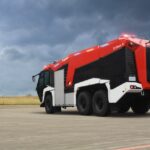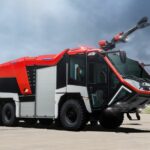

Airport fire trucks—officially known as Aircraft Rescue and Firefighting (ARFF) vehicles—are built to meet strict national and international regulations. Yet the design, equipment, and operational philosophy of these vehicles differ widely from country to country. These differences stem from varying regulatory standards, airport sizes, climatic conditions, regional firefighting strategies, technological preferences, and even national manufacturing bases.
This country-by-country analysis explores how airports across the world specify, deploy, and operate ARFF trucks. By examining standards, typical vehicle types, and real-world use cases, we gain insight into how nations approach the crucial task of airport fire safety.
1. United States: NFPA-Driven High-Capacity Response
The United States operates under NFPA 414 and FAA Part 139, which define detailed ARFF performance requirements, including acceleration, agent capacity, and discharge rates. These standards drive U.S. airports to adopt large, high-volume ARFF trucks capable of rapid response within 3 minutes to any point on the airfield.
Common Types
- Oshkosh Striker 1500/3000/4500
- Rosenbauer Panther (select airports)
- E-ONE Titan Force
U.S. designs emphasize:
- High water and foam tank capacities (3,000–12,000 liters)
- Rapid acceleration from powerful diesel engines
- Roof and bumper turrets capable of high-flow foam streams
- Dry chemical and Halotron systems for fuel fires
Use Cases
Large hubs such as LAX, JFK, ATL, and DFW operate fleets designed for:
- Response to large aircraft incidents (e.g., A380 or B777 events)
- Runway excursions and fuel spills
- Major terminal-area fire suppression
- High-speed operations over wide airfields

2. Canada: ARFF Optimized for Harsh Environments
Canadian airports follow similar standards to the U.S., but harsh winter conditions heavily influence vehicle design.
Common Types
- Rosenbauer Panther
- Oshkosh Striker
- Carco/Pierce custom ARFF units
Canadian ARFF trucks typically include:
- Robust heating systems to prevent water tank freezing
- Specialized cold-weather insulation
- All-wheel drive tuned for snow and ice conditions
Use Cases
At major airports like Toronto Pearson, Vancouver, and Calgary, ARFF vehicles must:
- Maintain rapid response during snowstorms
- Handle incidents on icy runways
- Respond to wildlife strikes, which are more common in northern airfields
3. United Kingdom: Civil Aviation Authority (CAA) Standards and Modular Fleets
The UK adheres to CAA CAP 168, which lays out ARFF requirements, often aligning with ICAO but with added emphasis on local operational doctrine.
Common Types
- Rosenbauer Panther 6×6 and 8×6
- Angloco rapid intervention vehicles
- Carmichael Cobra ex-military adaptations (in smaller airports)
UK ARFF operations emphasize:
- Tactical foam application with remote-controlled turrets
- Specialist rescue tools for fuselage access
- Personnel-intensive response strategies with multiple vehicles per incident
Use Cases
Airports like Heathrow, Gatwick, and Manchester maintain multi-vehicle fleets for:
- Incidents involving high passenger-density wide-body aircraft
- Terminal fires or fuel farm incidents
- Rapid deployment of firefighting teams trained in aviation casualty care

4. Germany: Engineering Precision and DIN Standards
Germany implements DIN 14502 and follows ICAO guidance, resulting in some of the most technologically advanced ARFF trucks in the world.
Common Types
- Rosenbauer Panther (Austrian but dominant in German airports)
- Ziegler Z-Class
- Magirus DRV series
These vehicles often feature:
- High-performance engines allowing top speeds of 120 km/h
- Precision mixing systems for foam proportioning
- Optional high-reach extendable turrets (HRET) like the Rosenbauer Stinger
Use Cases
At major hubs like Frankfurt and Munich, ARFF units address:
- Complex multi-runway layouts require long-distance mobility
- A high volume of international traffic and wide-body jets
- Frequent fire prevention inspections and false alarm responses
5. China: Rapid Growth and Diversified ARFF Manufacturing
China’s airport expansion has driven substantial ARFF development aligned with CAAC and ICAO standards. Many newer airports adopt advanced foreign designs, while domestic manufacturers deliver cost-effective alternatives.
Common Types
- Rosenbauer Panther (imported or locally assembled)
- Zoomlion ARFF vehicles
- XCMG and Morita-based ARFF units
China’s ARFF strategies prioritize:
- Large agent capacities for high-traffic mega-airports
- Domestic production for regional airports to reduce procurement costs
- Increasing adoption of HRET systems for improved firefighting reach
Use Cases
Mega-airports like Beijing Daxing, Shanghai Pudong, and Guangzhou Baiyun deploy multiple 6×6 or 8×8 ARFF units for:
- Oversized aircraft such as A380s and B747-8s
- Complex terminal zones with large apron areas
- Industrial incidents in airport cargo and logistics zones

6. Japan: Precision, Compactness, and Earthquake-Resilient Design
Japan follows JCAB standards, often adapting ICAO recommendations but with unique engineering priorities.
Common Types
- Morita Panther derivative
- Hino and Isuzu ARFF vehicles
- Rosenbauer in larger airports
Japanese ARFF trucks emphasize:
- Compact, maneuverable designs for limited-space airports
- Earthquake-resilient systems and enhanced rollover stability
- Foam agents engineered for non-fluorinated environmental compliance
Use Cases
Airports such as Haneda, Narita, and Kansai rely on ARFF vehicles for:
- High-density international traffic
- Disaster response, including earthquake-related incidents
- Support for integrated airport emergency medical teams
7. Middle Eastern Countries: High-Performance, Desert-Ready ARFF Fleets
Airports in the UAE, Qatar, and Saudi Arabia operate some of the world’s most advanced ARFF fleets, designed for extreme heat and large long-haul aircraft.
Common Types
- Rosenbauer Panther 8×8
- Oshkosh Striker 6×6 and 8×8
- NAFFCO custom-built ARFF units
Middle Eastern ARFF vehicles feature:
- Heat-resistant tires and cooling systems
- Extra-large water/foam tanks for large fuselage fires
- Advanced HRET systems for upper-deck aircraft access (A380)
Use Cases
At hubs like Dubai, Abu Dhabi, and Doha, ARFF operations focus on:
- Very large aircraft firefighting
- Long taxiway distances require high top speeds
- Sand-resistant components for off-pavement access

8. Australia: ICAO-Driven but Adapted for Remote Regions
Australia follows ICAO requirements but must accommodate isolated airports and long airfield distances.
Common Types
- Rosenbauer Panther 6×6
- Oshkosh Striker (selected airports)
- Local, smaller ARFF units for rural airports
Special features include:
- Long-range communication equipment for remote aerodromes
- Enhanced off-road mobility for rugged runways
- High UV and heat protection for cab interiors
Use Cases
Major airports like Sydney, Melbourne, and Brisbane, and remote Outback airports:
- Regional aircraft incidents
- Remote location challenges
- Wildlife strike responses, especially in northern territories
Conclusion
Airport fire trucks worldwide share a common purpose—rapid, effective response to aviation emergencies—but each nation tailors its ARFF fleet to local conditions, regulations, manufacturers, and operational philosophies. From the highly standardized NFPA-driven fleets in the U.S. to Germany’s precision-engineered ARFF units, Japan’s compact earthquake-ready trucks, and the Middle East’s desert-optimized 8×8 giants, the global ARFF landscape shows how deeply local needs shape these critical emergency response vehicles.