
Introduction
Industrial fires involving flammable liquids, combustible gases, chemicals, and electrical equipment require specialized firefighting vehicles capable of delivering fast, effective, and reliable fire suppression. In these high-risk environments, conventional water-based firefighting methods may not provide sufficient protection. A dry chemical fire truck offers an effective solution by using specialized powder extinguishing agents to suppress flames, interrupt combustion reactions, and control fires in challenging industrial conditions.
As a professional dry chemical fire truck manufacturer, providing reliable vehicles with advanced fire suppression systems is essential for protecting industrial facilities, emergency response teams, and valuable infrastructure. These specialized fire trucks are widely used in petrochemical plants, oil refineries, chemical storage facilities, airports, power stations, and other locations where hazardous materials create significant fire risks.
CSCTRUCK Fire Rescue Truck is a professional Chinese manufacturer and supplier of specialized firefighting vehicles. Through its official website, https://www.firerescuetruck.com/, the company provides various fire truck solutions, including industrial firefighting vehicles, dry powder fire trucks, water-foam fire engines, and customized emergency response vehicles. With manufacturing experience, engineering capabilities, and OEM/ODM services, CSCTRUCK Fire Rescue Truck supports international customers seeking dependable firefighting equipment for different operational requirements.
1. What Is a Dry Chemical Fire Truck?
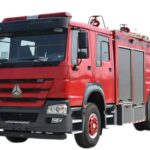
A dry chemical fire truck is a specialized firefighting vehicle equipped with a dry powder extinguishing system. Unlike conventional water tank fire engines, it uses chemical powder agents to extinguish fires by interrupting the chemical chain reactions that sustain combustion.
Common dry chemical extinguishing agents include monoammonium phosphate and sodium bicarbonate-based powders. Different agents are suitable for different fire classifications and applications. For example, multipurpose ABC powder can be used against many Class A, B, and C fire risks, while specialized BC powders are commonly applied to flammable liquid and gas fires. Agent selection must follow the applicable fire classifications and safety requirements.
A typical dry chemical fire truck consists of:
- A heavy-duty commercial truck chassis.
- A dry chemical powder storage tank.
- A pressurization system using compressed nitrogen or another specified gas.
- A powder delivery pipeline and discharge system.
- Firefighting monitors, powder guns, or hand-operated hoses.
- Control panels, valves, pressure gauges, and safety devices.
- Optional water and foam firefighting equipment.
These components work together to provide rapid powder discharge and effective fire suppression in hazardous environments.

2. Key Advantages of Dry Chemical Fire Trucks
Dry chemical fire trucks offer several important advantages for industrial firefighting operations.
Rapid Fire Suppression
Dry chemical agents can quickly interrupt combustion reactions, helping firefighters control developing fires before they spread. High-capacity powder tanks and suitable discharge equipment allow operators to deliver extinguishing agents directly toward the fire.
Effective Against Flammable Liquid and Gas Fires
Many industrial facilities handle gasoline, diesel, natural gas, liquefied petroleum gas, and other combustible materials. Properly selected dry chemical agents are particularly useful for certain Class B and Class C fire scenarios, making these vehicles valuable for industrial emergency response.
Suitable for Electrical Fire Risks
Appropriately rated nonconductive dry chemical agents can be used on certain energized electrical equipment fires. However, electrical isolation should be performed whenever possible, and the selected extinguishing agent must comply with relevant safety requirements.
Flexible Industrial Applications
Dry powder systems can be installed on different commercial truck chassis according to required payload, tank capacity, operating environment, and customer specifications. This flexibility allows fire departments and industrial operators to select vehicles suited to their facilities.
Integration with Multiple Fire Suppression Systems
For facilities with diverse fire risks, a combined firefighting vehicle can integrate dry powder, water, and foam systems. This provides emergency teams with additional suppression options for different fire scenarios.
3. Applications in Hazardous Industrial Environments
A professional dry chemical fire truck is designed to support emergency response in locations where fire hazards are particularly serious.
Petrochemical Plants and Oil Refineries
Oil refineries contain flammable liquids, gases, processing equipment, and storage tanks. Dry chemical fire trucks can help suppress suitable flammable liquid and gas fires, supporting emergency teams during industrial incidents.
Chemical Manufacturing Facilities
Chemical plants often process and store materials with different combustion characteristics. Specialized powder extinguishing systems provide an additional firefighting option when conventional water application is unsuitable or insufficient.
Fuel Storage and Distribution Facilities
Fuel depots, petroleum terminals, and gas storage facilities require reliable emergency response equipment. Dry chemical fire trucks can be deployed to support rapid intervention in appropriate flammable liquid and gas fire scenarios.
Airports and Aviation Facilities
Aircraft incidents may involve aviation fuel, engine fires, and other hazardous materials. Industrial-grade dry powder firefighting vehicles can provide specialized suppression capabilities as part of an airport’s broader emergency response system.
Power Plants and Industrial Workshops
Electrical installations, machinery, transformers, and production equipment may present specialized fire hazards. Selecting the appropriate extinguishing agent and firefighting vehicle is essential for safe and effective emergency operations.

4. Important Features of a Professional Dry Chemical Fire Truck
When selecting a dry chemical fire truck manufacturer, buyers should evaluate the vehicle’s engineering design, firefighting performance, safety systems, and customization options.
Heavy-Duty Truck Chassis
The chassis provides the foundation for the entire firefighting system. Depending on the required application, manufacturers can offer different chassis brands, drive configurations, engine outputs, and load capacities. Reliable braking systems, stable suspension, and suitable off-road capabilities are also important considerations.
High-Capacity Powder Storage Tank
The powder tank determines how much extinguishing agent the vehicle can carry. Its capacity should be selected according to the size of the facility, expected fire risks, and required operating duration.
Reliable Pressurization System
Compressed gas is used to propel the dry chemical agent through the discharge pipeline. A properly designed pressurization system helps maintain stable discharge performance and supports reliable operation.
Advanced Powder Discharge Equipment
Fire monitors, powder guns, and discharge hoses allow operators to apply extinguishing agents from suitable positions. Buyers should consider discharge range, flow rate, operating pressure, and control flexibility when evaluating equipment.
Safety and Monitoring Systems
Pressure monitoring devices, emergency shutoff valves, safety relief components, and accessible control panels are essential for reliable operation. Proper equipment maintenance and operator training are equally important.
5. Customized Dry Chemical Fire Truck Manufacturing
Different industrial facilities have different firefighting requirements. A professional manufacturer should therefore provide customized solutions instead of relying exclusively on standard vehicle configurations.
Customization options may include:
- Different commercial truck chassis brands and configurations.
- Customized dry powder tank capacities.
- Different powder extinguishing agents according to application requirements.
- Nitrogen cylinder and pressurization system configurations.
- Roof-mounted or front-mounted powder monitors.
- Manual powder guns and hose reel arrangements.
- Integrated water and foam firefighting systems.
- Customized control panels and monitoring equipment.
- Optional lighting, warning systems, and emergency equipment.
For international customers, vehicle dimensions, emission standards, road regulations, operating climates, and local firefighting requirements should also be considered during the design and manufacturing process.

6. Why Choose CSCTRUCK Fire Rescue Truck?
CSCTRUCK Fire Rescue Truck is a specialized firefighting vehicle manufacturer based in China, serving customers in different international markets. The company develops and supplies firefighting vehicles for municipal fire departments, industrial facilities, emergency response organizations, and commercial customers.
Its product range includes dry powder fire trucks, water tank fire trucks, foam fire engines, combined fire trucks, and other specialized emergency vehicles.
Customers choosing CSCTRUCK Fire Rescue Truck can benefit from several manufacturing and service capabilities:
Professional Manufacturing Experience: With a manufacturing history dating back to 2005, CSCTRUCK Fire Rescue Truck has experience in producing specialized commercial vehicles and firefighting equipment.
OEM and ODM Customization: The company can provide customized vehicle configurations according to customer requirements, including chassis selection, tank capacity, firefighting equipment, and special-purpose body designs.
Diverse Product Options: Customers can explore different firefighting vehicle categories and select equipment according to their operational environments and budgets.
Engineering and Technical Support: Professional engineering support helps customers determine suitable vehicle configurations and firefighting system arrangements.
International Export Services: CSCTRUCK Fire Rescue Truck supports overseas customers with export coordination, vehicle documentation, and communication throughout the purchasing process.
For industrial buyers seeking a dependable dry chemical fire truck supplier in China, CSCTRUCK Fire Rescue Truck provides a range of specialized vehicle solutions and customization possibilities.
7. How to Select the Right Dry Chemical Fire Truck
Before purchasing a dry chemical fire truck, buyers should carefully evaluate their operational requirements.
First, identify the primary fire hazards at the facility, including flammable liquids, combustible gases, solid combustible materials, and electrical equipment. The selected powder agent must be compatible with the relevant fire classifications and potential chemical reactions.
Second, determine the required powder capacity and discharge performance. Larger industrial facilities may require vehicles with greater extinguishing agent capacity and longer discharge capability.
Third, select an appropriate truck chassis based on road conditions, facility layout, vehicle weight, and mobility requirements.
Finally, evaluate equipment reliability, maintenance accessibility, safety features, spare parts availability, and after-sales technical support. These factors contribute to the vehicle’s long-term operational performance.

Conclusion
Dry chemical fire trucks are important firefighting assets for industrial facilities exposed to flammable liquids, combustible gases, and other specialized fire hazards. With rapid powder discharge, flexible vehicle configurations, and the option to integrate multiple extinguishing systems, they provide valuable support for professional emergency response operations.
As an experienced specialized vehicle manufacturer, CSCTRUCK Fire Rescue Truck offers dry powder fire trucks and customized firefighting solutions for international customers. Whether you need a dedicated dry chemical fire engine or a combined vehicle integrating water, foam, and dry powder systems, CSCTRUCK Fire Rescue Truck can help develop a configuration suited to your operational requirements.