
In large-scale fire incidents, such as those occurring at petrochemical plants, refineries, airports, storage terminals, or high-rise buildings, firefighting operations demand both high-capacity extinguishing systems and extended reach capabilities. The foam tower fire truck represents one of the most advanced pieces of firefighting equipment, specifically designed to handle large fire emergencies with exceptional power, flexibility, and safety. By combining a telescopic foam tower with a high-performance foam-water system, this specialized vehicle ensures precise and effective fire suppression, even in areas that are difficult or dangerous to access.
1. Introduction to Foam Tower Fire Trucks
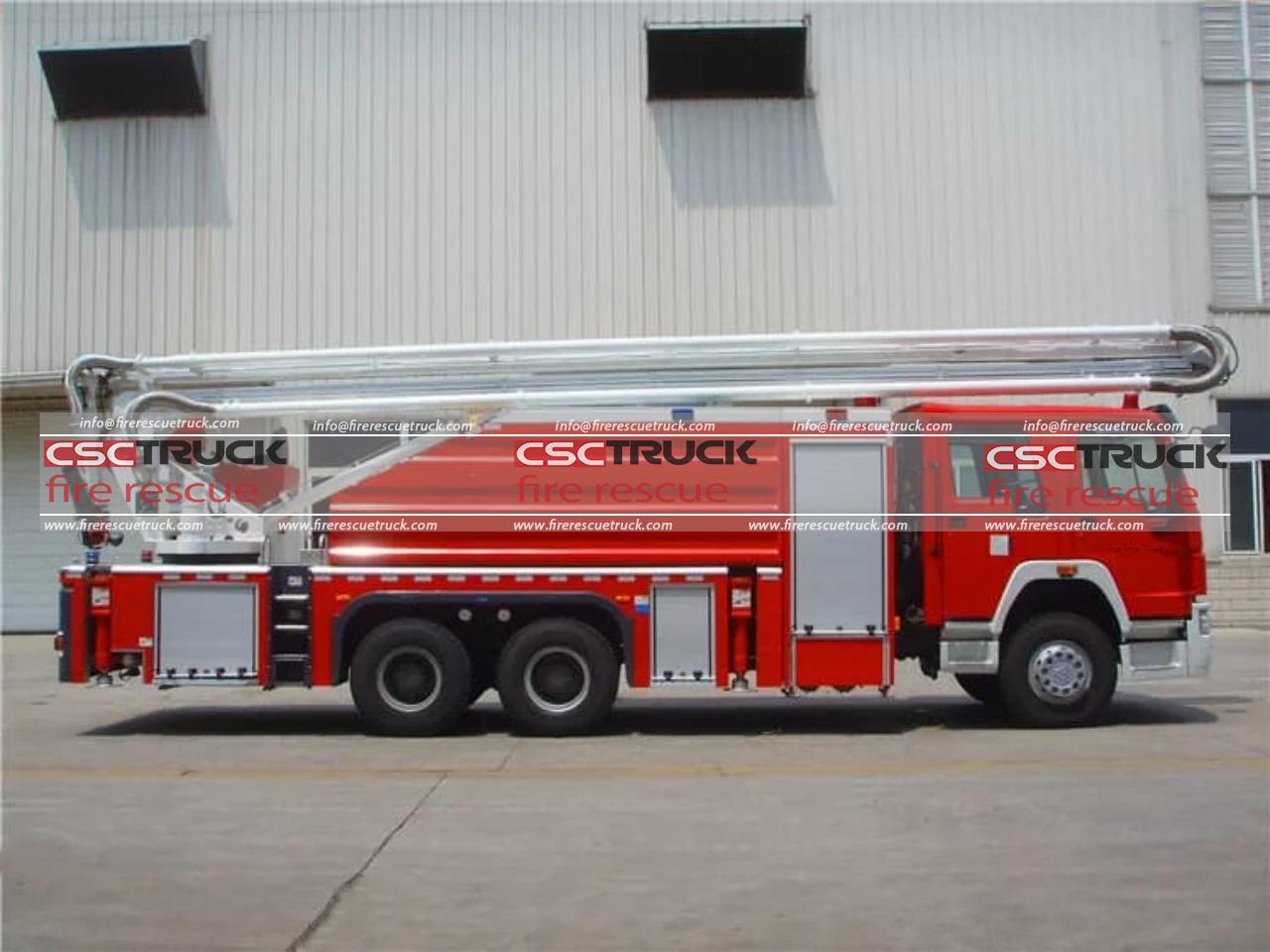
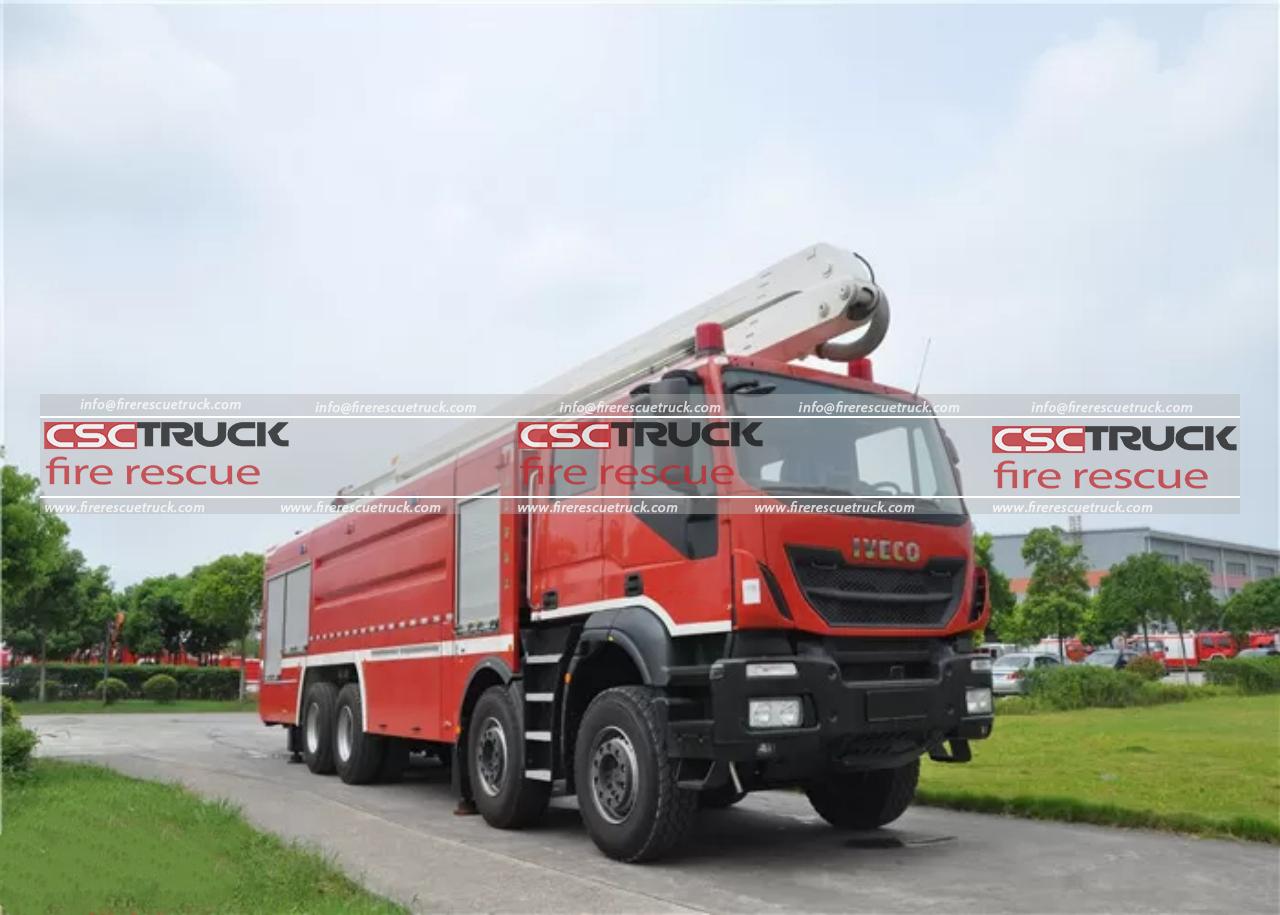
A foam tower fire truck is a heavy-duty firefighting vehicle equipped with an extendable tower or boom capable of delivering foam or water at elevated heights and long distances. Unlike standard fire trucks that rely solely on ground-level nozzles or short-range turrets, the foam tower system allows the operator to direct extinguishing agents deep into the core of a fire — whether it is atop a storage tank, inside an industrial facility, or along the roof of an aircraft hangar.
The main advantage of the foam tower design lies in its ability to reach high or remote fire sources without endangering firefighters. The truck features powerful foam proportioning systems, large-capacity tanks, and high-pressure pumps that enable the production and delivery of foam over extended distances. These features make the foam tower truck an essential tool in industrial, oilfield, and airport firefighting operations.
2. Structure and Design Overview
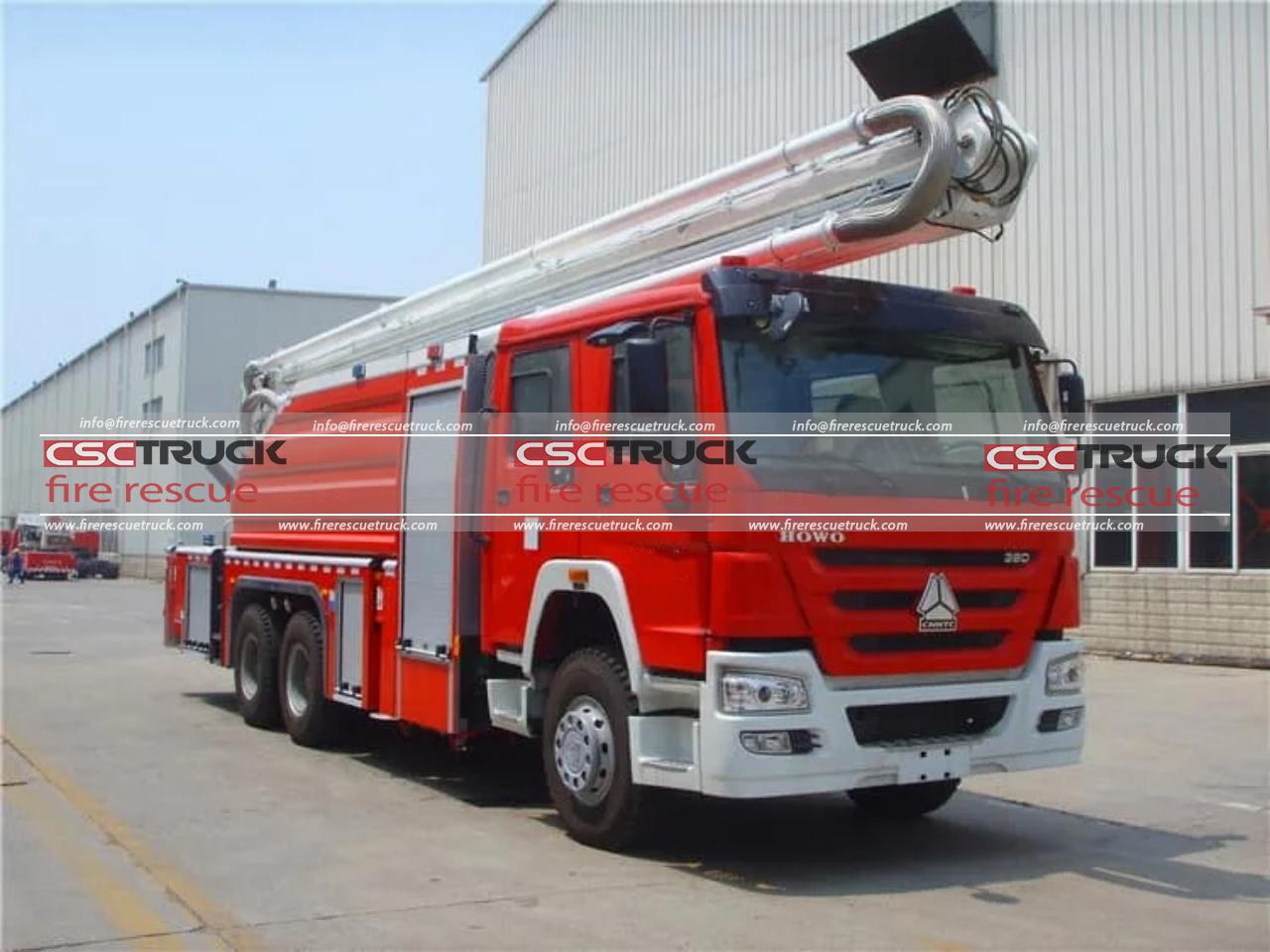
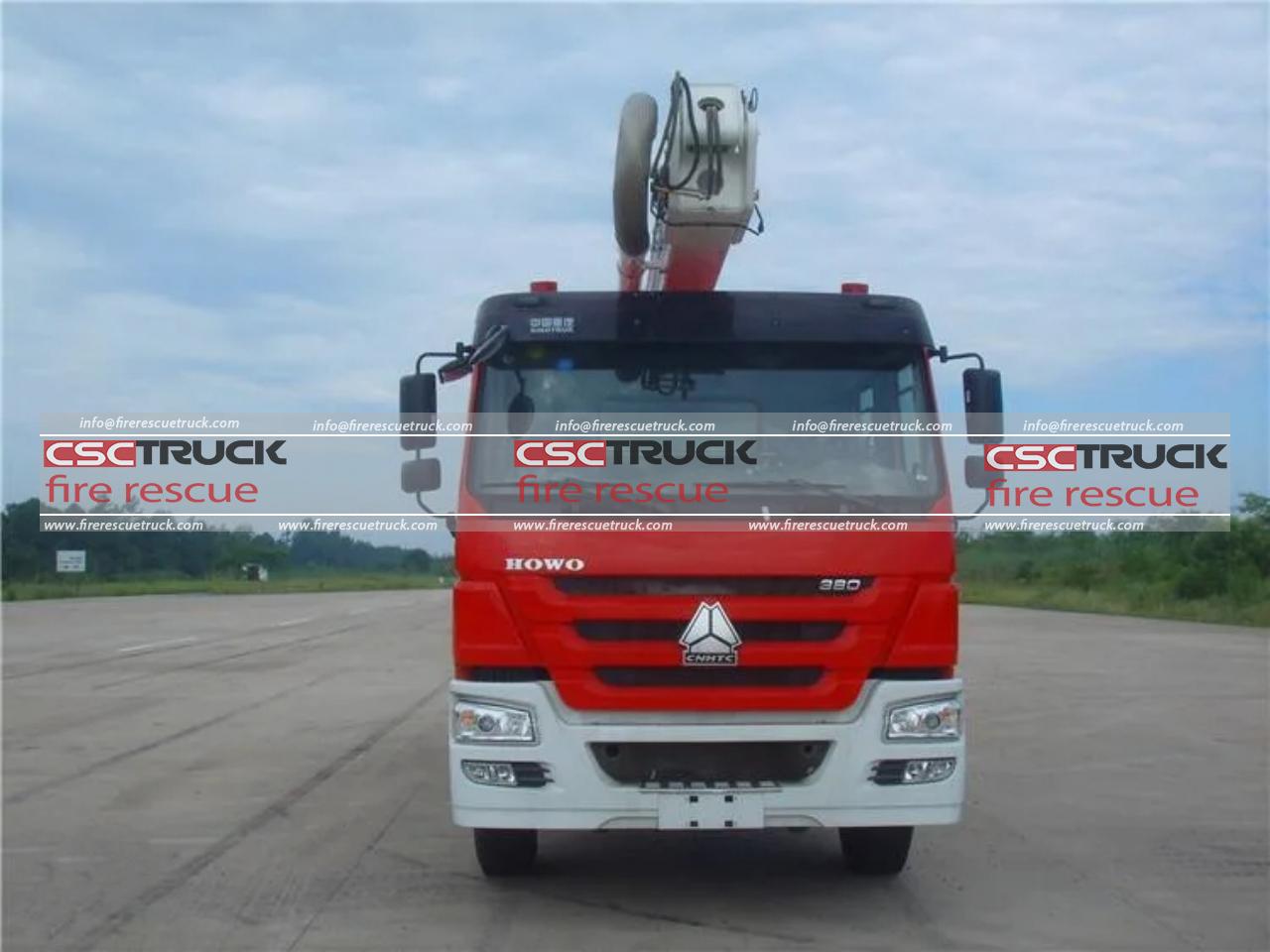
The foam tower fire truck is built on a robust heavy-duty commercial or custom firefighting chassis, such as those from MAN, Mercedes-Benz, Scania, or HOWO. The vehicle’s design prioritizes stability, durability, and high load-bearing capability, as the mounted foam tower and tanks significantly increase the overall weight and center of gravity.
Key structural components include:
- Chassis and Drive System: Typically configured as a 6×4 or 8×4 drive to ensure maximum traction and stability during operation. The chassis features heavy-duty suspension and braking systems for safe maneuvering on uneven terrain.
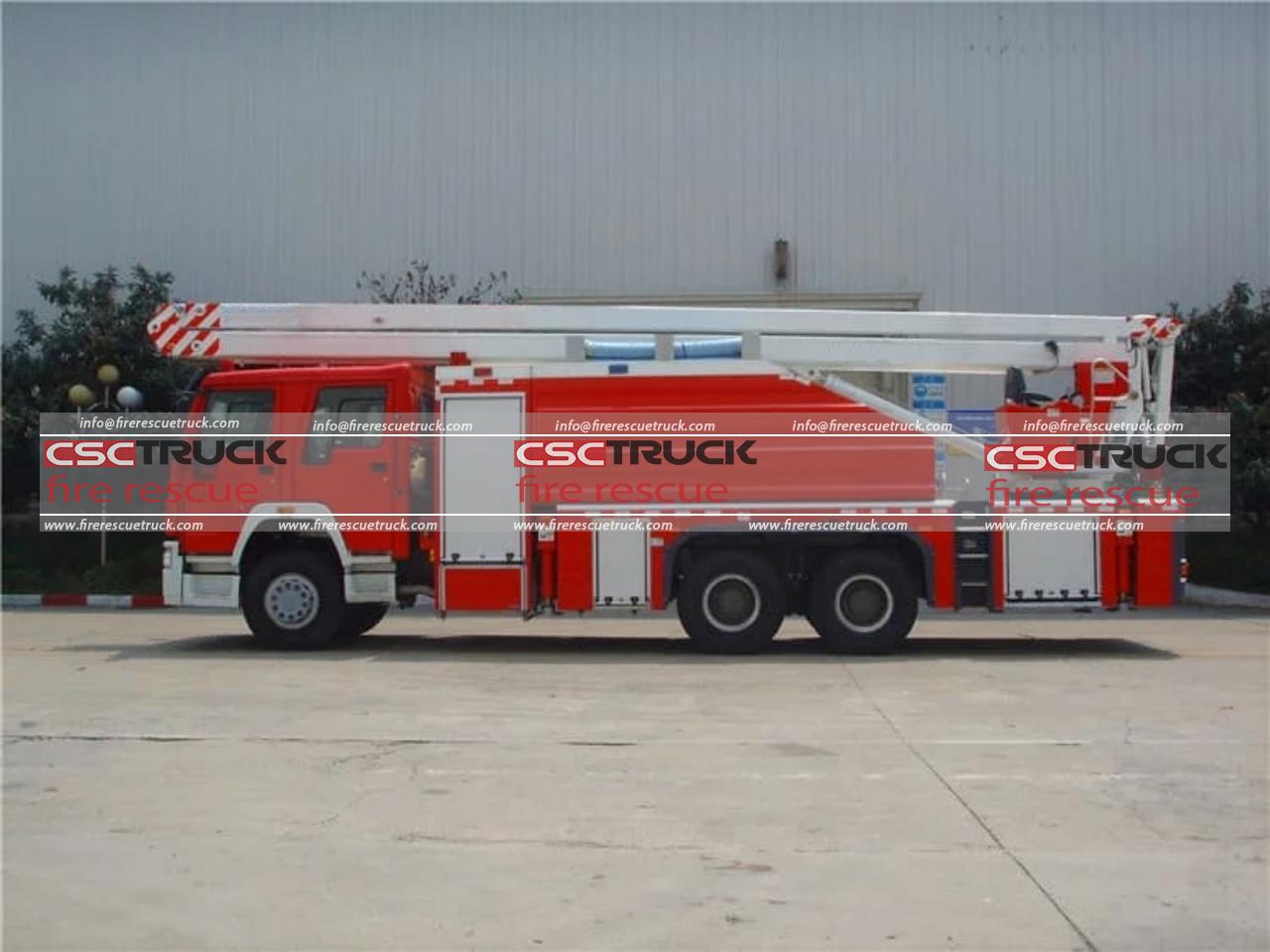
- Foam Tower Assembly: The core feature of the truck, the foam tower consists of a multi-section hydraulic telescopic boom capable of extending vertically and horizontally. Depending on the model, the tower height ranges from 20 to 55 meters. At the tip of the tower is a high-capacity foam/water monitor capable of delivering thousands of liters per minute.
- Tank System: The vehicle is equipped with large foam and water tanks—often ranging between 8,000–12,000 liters for water and 1,000–2,000 liters for foam concentrate—ensuring long operational duration without frequent refilling.
- Pump and Proportioning System: A high-performance fire pump, often rated between 60 to 120 L/s, works in conjunction with an automatic foam proportioning system to maintain precise foam mixture ratios, optimizing extinguishing efficiency.
3. Operating Principle and Firefighting Capability
The foam tower fire truck operates by pumping water and foam concentrate through its integrated system to produce a high-expansion firefighting foam. The foam is then expelled through the tower-mounted monitor, which can be remotely controlled from a safe distance inside the cabin or through a wireless control panel.
The telescopic tower allows operators to project foam over tall structures, into confined spaces, or onto the surface of burning liquids. This extended reach capability is crucial for extinguishing fires in environments such as:
- Petrochemical Storage Tanks: Foam can be applied directly onto the surface of flammable liquids to suppress vapors and smother the fire.
- Aircraft Hangars and Airports: Large-area foam coverage ensures rapid suppression of aviation fuel fires.
- High-Rise Buildings and Industrial Facilities: The tower’s adjustable angle allows targeted application at multiple heights and angles.
Some advanced models feature dual-agent systems, allowing simultaneous use of water and foam, or even dry powder for specialized firefighting scenarios involving flammable gases or chemicals.
4. Safety and Control Systems
Safety is a primary consideration in the design of foam tower fire trucks. These vehicles integrate a range of safety mechanisms and control systems to protect both operators and equipment during high-stress firefighting operations.
- Hydraulic Stabilization System: Deployable outriggers provide a stable base when the tower is extended, preventing tipping or vibration.
- Remote Operation and Monitoring: The foam tower and monitor can be fully controlled via remote console, allowing firefighters to maintain a safe distance from hazardous zones.
- Automatic Leveling and Positioning: Sensors ensure the vehicle remains stable even on uneven ground, and the boom maintains correct alignment throughout operation.
- Camera and Lighting Systems: High-definition cameras and LED floodlights mounted on the boom provide real-time visibility during nighttime or smoke-obscured operations.
- Emergency Retraction and Locking Systems: Hydraulic safety locks and fail-safe mechanisms ensure the tower can be safely retracted in the event of system failure.
5. Advantages of Foam Tower Fire Trucks
The foam tower fire truck offers multiple advantages over conventional fire trucks, especially when tackling large, high-intensity fires.
- Extended Reach Capability: The telescopic tower allows foam delivery to elevated or hard-to-reach areas, improving effectiveness in industrial and high-rise firefighting.
- High Flow Rate and Pressure: Equipped with powerful pumps and monitors, it delivers a large volume of extinguishing agents rapidly, significantly reducing fire suppression time.
- Enhanced Firefighter Safety: Remote operation and long-range discharge eliminate the need for personnel to approach hazardous fire zones.
- Versatile Firefighting Agents: The vehicle supports water, foam, or mixed agent discharge, suitable for Class A, B, and C fires.
- Rapid Deployment and Operation: Hydraulic systems enable quick setup, making the truck ready for action within minutes of arrival at the scene.
6. Applications in Large Fire Emergencies
Foam tower fire trucks are vital assets in firefighting fleets for facilities where large-scale or high-risk fires may occur. Common applications include:
- Oil Refineries and Chemical Plants: For extinguishing oil tank and chemical storage fires where traditional water streams are ineffective.
- Airports: For aircraft and hangar fires that require large foam blanket coverage and elevated reach.
- Power Plants and Industrial Complexes: Where high-temperature or high-voltage fires pose unique risks.
- Ports and Storage Terminals: To control fires in cargo storage or shipping areas where fuel and chemicals are stored in bulk.
- Urban and High-Rise Environments: When paired with standard fire trucks, foam tower trucks provide critical support for reaching upper floors during structure fires.
7. Modern Innovations and Developments
Recent advancements in fire truck engineering have introduced several innovations that further enhance the performance of foam tower fire trucks:
- Intelligent Control Systems: Integration of digital monitoring and automated foam proportioning ensures precision and operational efficiency.
- Eco-Friendly Foam Concentrates: Modern trucks utilize environmentally safe, fluorine-free foams that minimize their ecological impact.
- Lightweight Materials: High-strength aluminum alloy and composite materials reduce overall weight while maintaining structural integrity.
- Hybrid and Electric Drive Options: Some manufacturers are developing low-emission models to align with environmental standards.
- Advanced Communication Systems: Integration with command centers for real-time status updates and remote coordination.
8. Conclusion
The foam tower fire truck represents the pinnacle of modern firefighting technology—combining high-capacity foam systems, extended-reach delivery, and advanced control features to tackle the world’s most challenging fire emergencies. Its design emphasizes power, precision, and safety, making it indispensable for industrial sites, airports, refineries, and large urban firefighting departments.
By integrating robust mechanical systems with intelligent controls and eco-friendly foam solutions, the extended-reach foam tower fire truck not only improves operational efficiency but also significantly enhances firefighter safety and fire suppression effectiveness. As urban and industrial infrastructures continue to expand, these vehicles will play an increasingly vital role in ensuring comprehensive and reliable fire protection across all critical sectors.