Water tender fire trucks play a critical role in modern firefighting operations, especially in rural communities, industrial facilities, mining sites, airports, forests, and remote areas where hydrants are limited or unavailable. Their primary purpose is to transport large volumes of water to the fire scene and provide a reliable water supply for firefighting units. One of the most common questions buyers ask is: What water tender fire truck tank capacities are available?
The answer depends on the intended application, operational environment, chassis size, legal road weight limits, and firefighting requirements. Today, manufacturers offer water tender fire trucks with capacities ranging from compact 2,000-liter units to high-capacity tankers exceeding 20,000 liters. Understanding these options can help fire departments and industrial operators choose the most suitable vehicle for their needs.
CSCTRUCK Fire Rescue Truck: A Trusted Water Tender Manufacturer
CSCTRUCK Fire Rescue Truck is a specialized manufacturer of firefighting and rescue vehicles serving customers worldwide through its FireRescueTruck platform. The company offers a wide range of fire apparatus, including water tender fire trucks, pumper trucks, foam fire trucks, airport rescue vehicles, rescue trucks, and customized emergency response units. CSCTRUCK Fire Rescue Truck provides various chassis options such as ISUZU, HOWO, FOTON, FAW, IVECO, Mercedes-Benz, MAN, and other internationally recognized brands, allowing customers to tailor their vehicles to local operating conditions and regulations. The company also supports customized tank capacities, pump systems, compartment layouts, and firefighting equipment configurations.
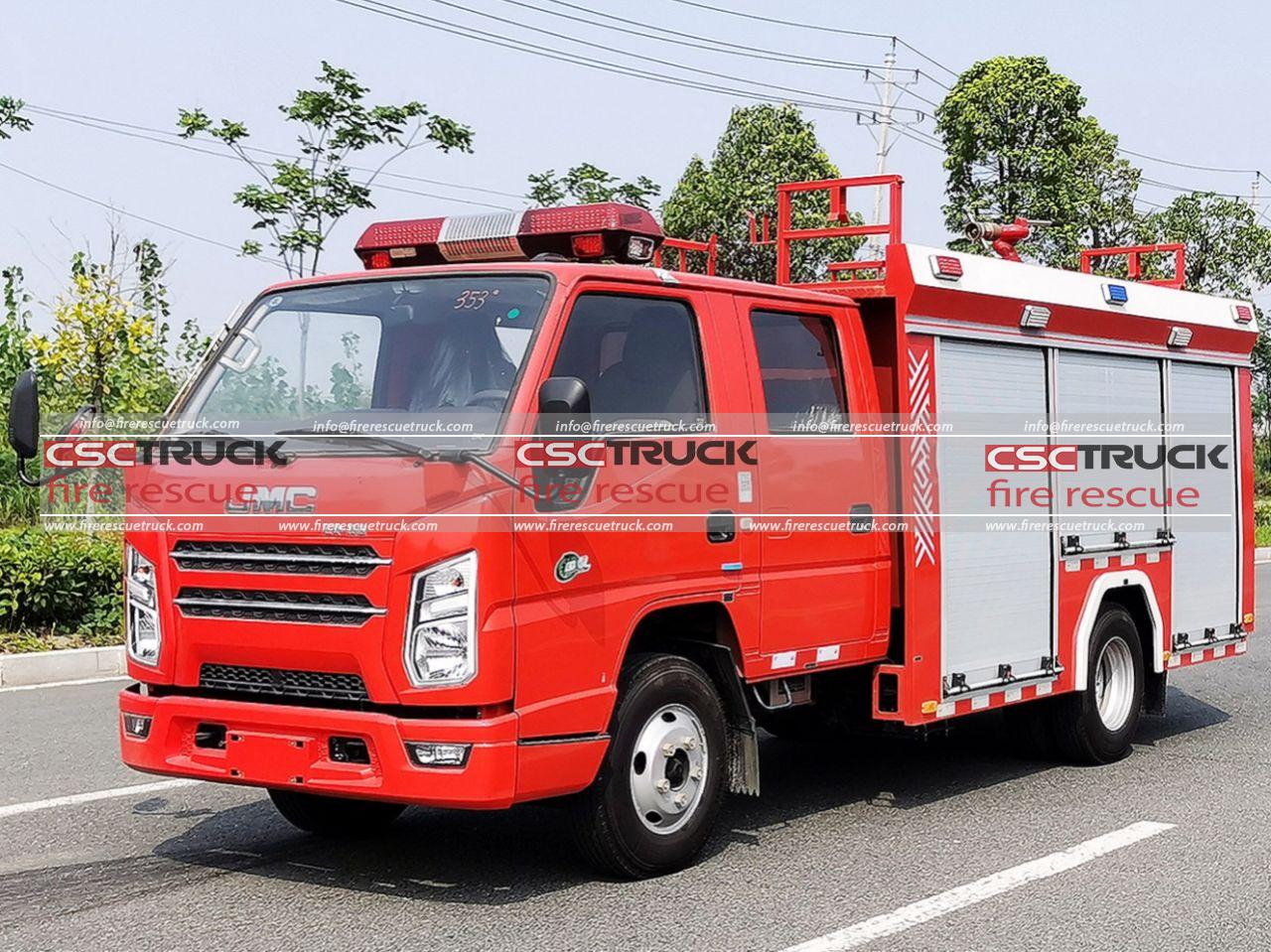
Small Water Tender Fire Trucks (2,000–4,000 Liters)
Small-capacity water tenders are designed for rapid response and operations in urban areas, narrow roads, residential communities, industrial parks, and locations where maneuverability is essential.
Typical capacities include:
- 2,000 liters
- 2,500 liters
- 3,000 liters
- 4,000 liters
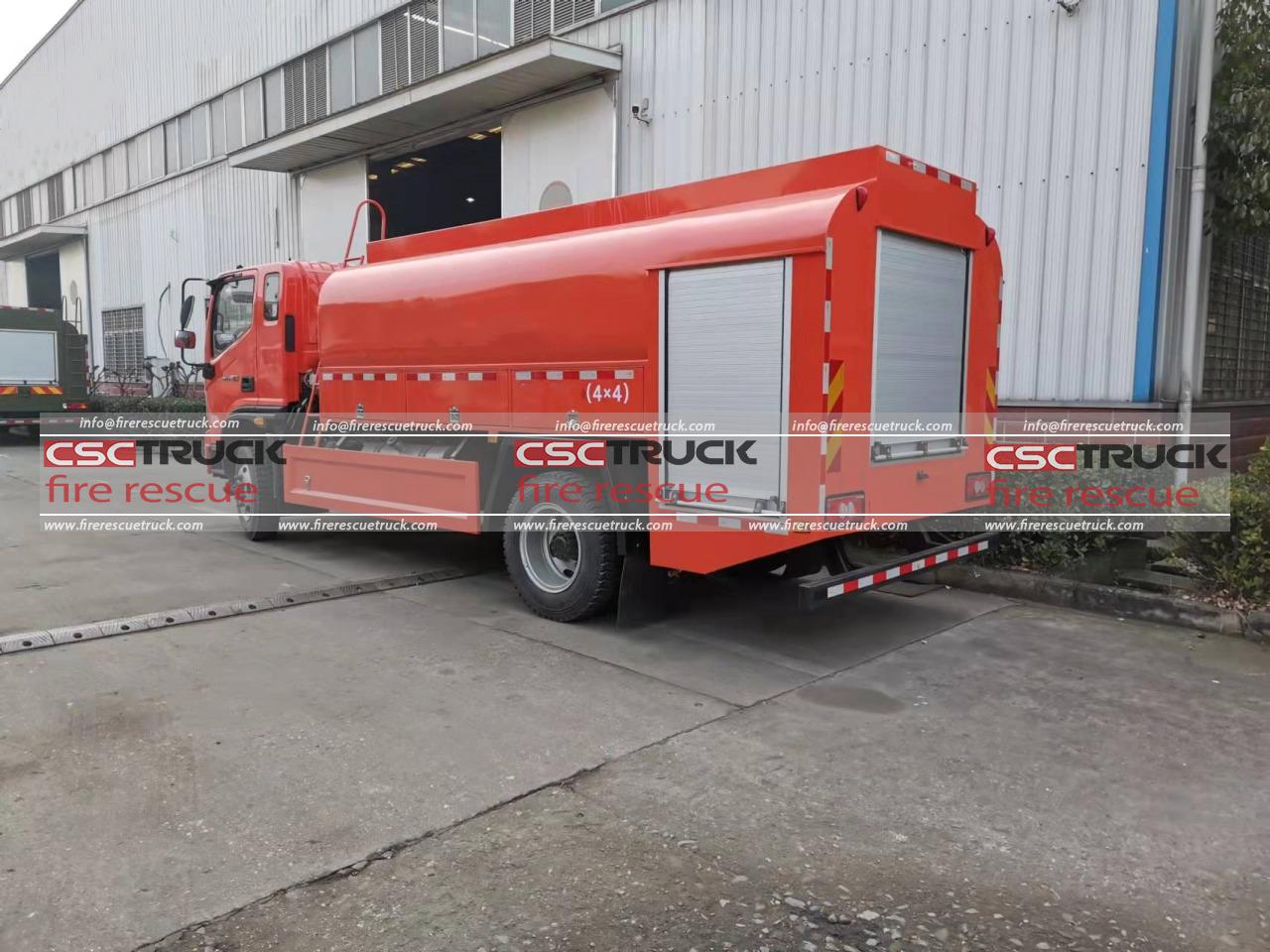
For example, CSCTRUCK Fire Rescue Truck offers compact water tender models with approximately 2.5–3 cubic meters (2,500–3,000 liters) of water capacity, built on light-duty chassis platforms. These vehicles are easy to operate, have lower operating costs, and can quickly reach fire scenes where larger apparatus may face access challenges.
Advantages
- Excellent maneuverability
- Lower acquisition and maintenance costs
- Suitable for municipal fire stations
- Fast emergency response
- Ideal for urban and suburban environments
Applications
- Residential firefighting
- School campuses
- Commercial facilities
- Small industrial zones
- Community volunteer fire departments
Medium Water Tender Fire Trucks (5,000–8,000 Liters)
Medium-capacity water tenders are among the most popular choices worldwide because they balance water-carrying capability with vehicle mobility.
Common capacities include:
- 5,000 liters
- 6,000 liters
- 7,000 liters
- 8,000 liters
A typical example is the 6,000-liter ISUZU water tender fire truck offered by CSCTRUCK Fire Rescue Truck. Equipped with a professional fire pump and water monitor, it provides sufficient onboard water for initial attack operations while maintaining excellent road performance. Similarly, 8,000-liter 4×4 water tenders are available for off-road and rural firefighting applications.
Advantages
- Balanced payload and mobility
- Suitable for both urban and rural operations
- Effective water shuttle capability
- Lower road restrictions compared to larger tankers
Applications
- Municipal fire departments
- Industrial plants
- Logistics parks
- Oil and gas facilities
- Rural communities
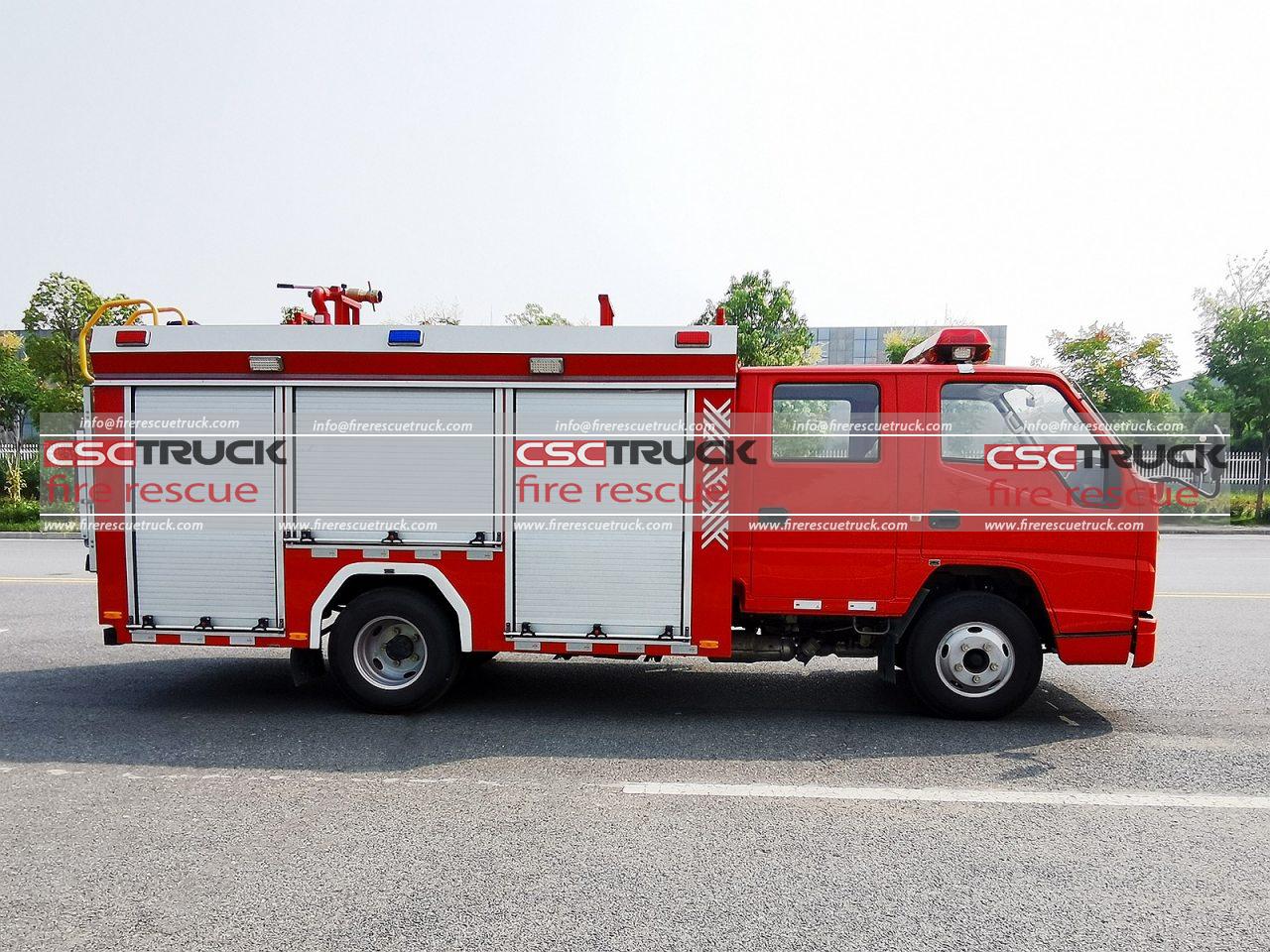
Large Water Tender Fire Trucks (10,000–15,000 Liters)
When firefighting operations require extended water supply support, larger-capacity water tenders become necessary. These trucks are commonly built on heavy-duty chassis with reinforced suspensions and larger axles.
Popular capacities include:
- 10,000 liters
- 12,000 liters
- 13,000 liters
- 15,000 liters
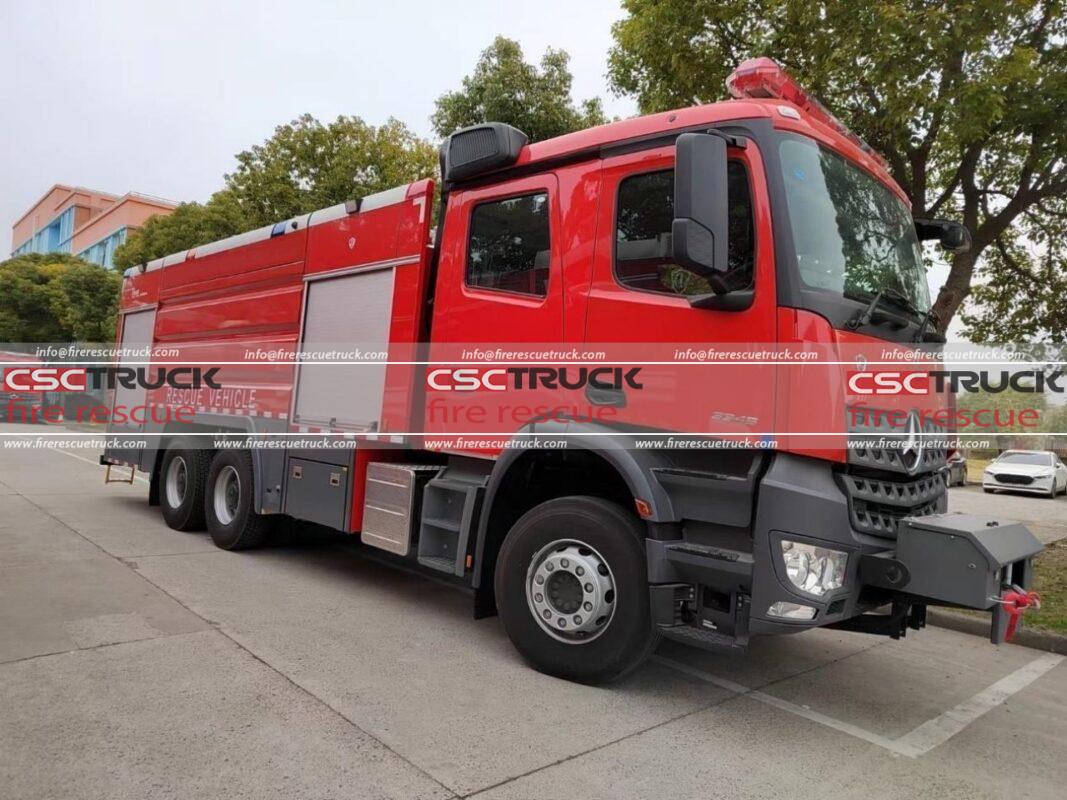
A 10,000-liter water tender built on a Mercedes-Benz chassis represents a typical example of this category. Such vehicles can sustain prolonged firefighting operations and support multiple fire engines simultaneously.
Advantages
- Extended firefighting duration
- Reduced refill frequency
- Strong support for water shuttle operations
- Ideal for large incidents
Applications
- Petrochemical facilities
- Airports
- Seaports
- Power plants
- Large warehouses
- Municipal emergency response fleets
Extra-Large Water Tender Fire Trucks (16,000–20,000+ Liters)
For major industrial operations and remote firefighting scenarios, extra-large water tenders offer the highest onboard water capacities available.
Typical capacities include:
- 16,000 liters
- 18,000 liters
- 20,000 liters
- Customized capacities exceeding 20,000 liters
Some manufacturers, including CSCTRUCK Fire Rescue Truck, provide water tanker fire trucks with capacities ranging up to 20,000 liters, depending on chassis configuration and customer requirements. These units often serve as mobile water reservoirs capable of supplying multiple fire apparatus over extended periods.
Advantages
- Massive water reserves
- Excellent for remote operations
- Reduced dependency on hydrants
- Enhanced incident endurance
Applications
- Mining operations
- Forestry firefighting
- Oil refineries
- Chemical plants
- Military installations
- Disaster response operations
Factors Affecting Tank Capacity Selection
Choosing the right water tank capacity requires careful evaluation of several operational factors.
1. Water Source Availability
Areas with reliable hydrant networks may require smaller water tenders, while remote regions often need larger capacities.
2. Road and Bridge Restrictions
Larger water tanks increase vehicle weight. Local road regulations may limit the maximum allowable gross vehicle weight.
3. Response Distance
Departments serving remote communities typically benefit from larger water reserves to reduce refill trips.
4. Terrain Conditions
Off-road firefighting often favors medium-capacity 4×4 water tenders that provide a balance between mobility and water-carrying capability.
5. Fire Risk Profile
Industrial facilities, airports, and petrochemical sites generally require larger-capacity tenders to support high-risk firefighting scenarios.
Water Tender Tank Materials
Besides capacity, buyers should also consider tank construction materials. Common options include:
- Carbon steel
- Stainless steel
- Polypropylene (PP) composite tanks
Each material offers different advantages in terms of corrosion resistance, durability, weight, and maintenance requirements. Many modern water tender fire trucks utilize stainless steel or PP composite tanks for improved service life.
Conclusion
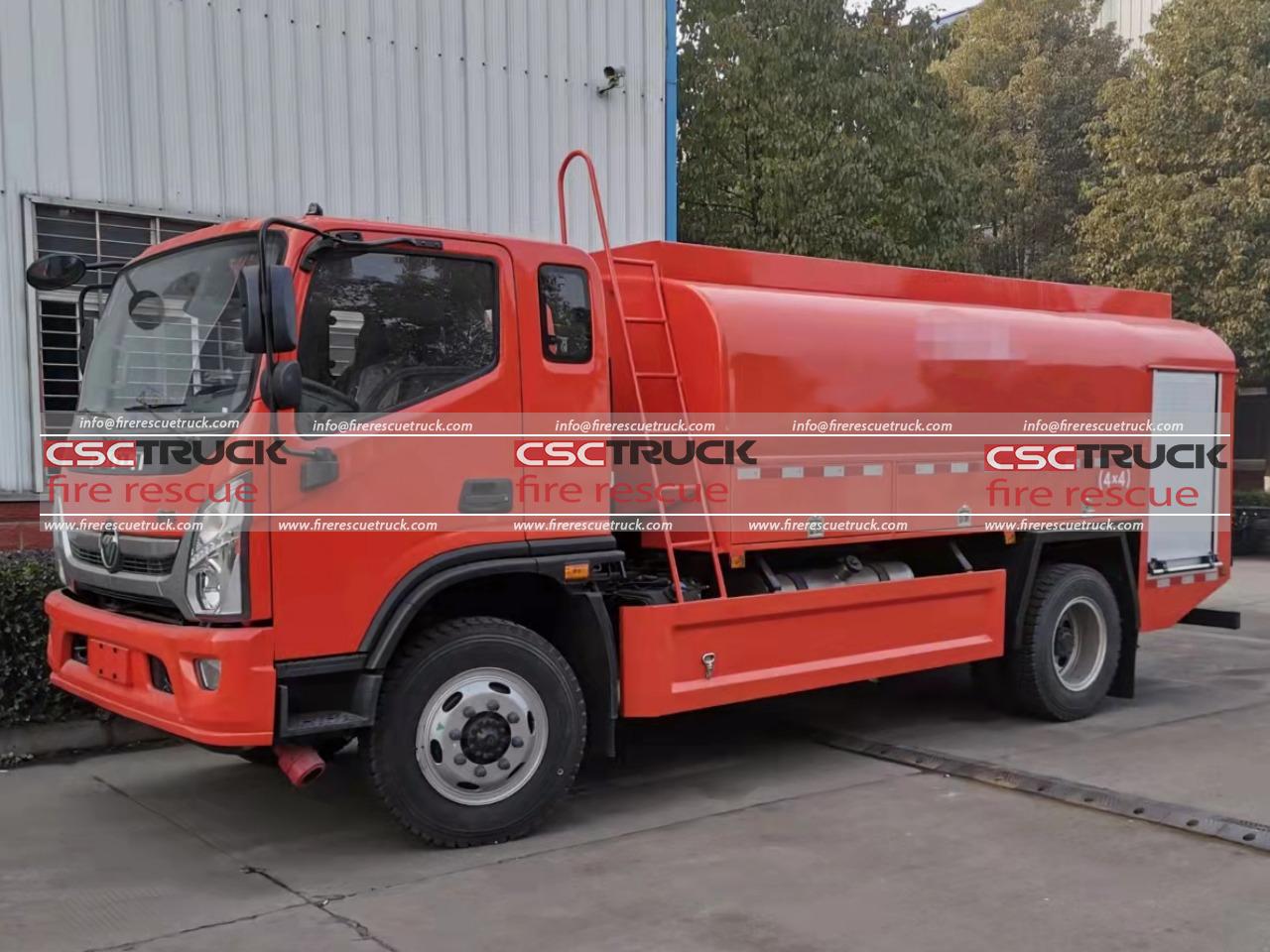
Water tender fire truck tank capacities are available in a wide range of configurations, typically from 2,000 liters to over 20,000 liters. Small-capacity units provide rapid response and urban maneuverability, medium-capacity models offer excellent versatility, while large and extra-large tankers deliver extended water supply for major incidents and remote operations.
When selecting a water tender, fire departments and industrial users should evaluate water supply requirements, terrain conditions, response distances, legal weight limits, and operational objectives. With customizable solutions ranging from compact 2.5 CBM units to heavy-duty 20,000-liter tankers, CSCTRUCK Fire Rescue Truck provides flexible options to meet virtually any firefighting mission, ensuring dependable water delivery when it matters most.