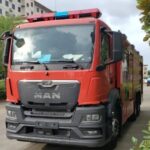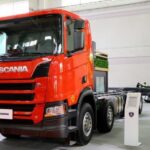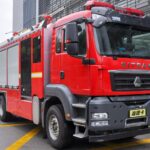

A well-designed 6×6 fire truck is an essential firefighting vehicle for tackling emergencies in remote forests, mountainous terrain, military bases, oil fields, mining sites, and disaster-stricken regions. Unlike conventional 4×2 or 4×4 fire engines, a 6×6 fire truck delivers exceptional traction, greater payload capacity, and superior off-road performance, allowing firefighters to reach locations where standard fire apparatus cannot operate effectively.
As a leading manufacturer of specialized emergency vehicles, CSCTRUCK Fire Rescue Truck designs and manufactures advanced 6×6 fire trucks for municipal fire departments, industrial facilities, airports, military organizations, and emergency rescue agencies worldwide. Built on renowned heavy-duty chassis such as Mercedes-Benz, MAN, Sinotruk HOWO, Dongfeng, and other global brands, CSCTRUCK Fire Rescue Truck 6×6 fire trucks combine powerful engines, intelligent firefighting systems, high-capacity water tanks, foam systems, and all-terrain mobility to maximize firefighting efficiency under the toughest conditions.
How Does a 6×6 Fire Truck Work?
A 6×6 fire truck operates by distributing engine power to all 6 wheels through a sophisticated drivetrain while simultaneously supporting advanced firefighting equipment such as pumps, water tanks, foam systems, monitors, and rescue tools. This combination enables firefighters to transport large amounts of water and equipment into difficult environments while maintaining excellent stability and mobility.
Let’s explore how every major system works together.
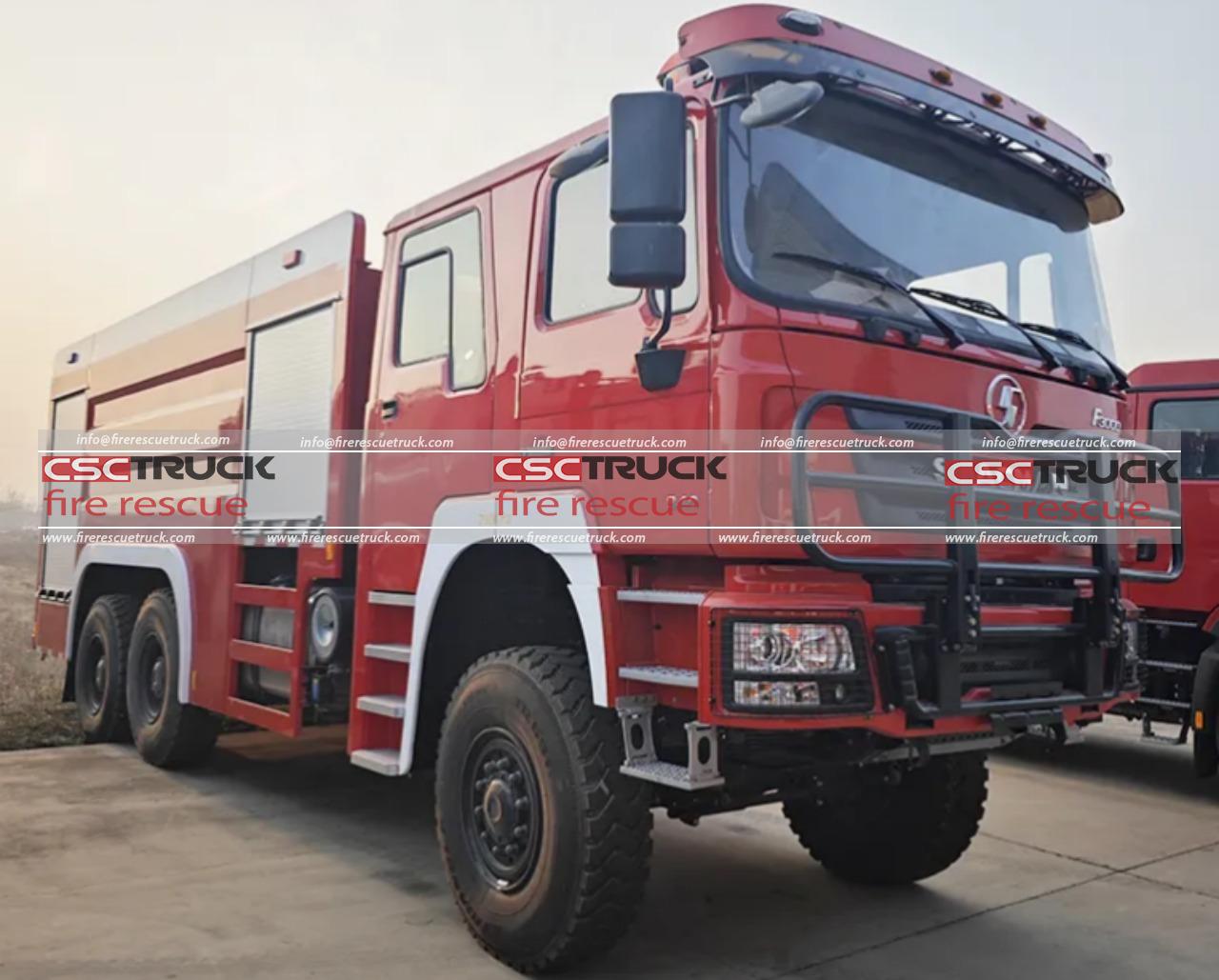
1. The 6×6 Drivetrain Powers All Wheels
The defining feature of a 6×6 fire truck is its drivetrain.
Unlike conventional trucks:
- 4×2 drives only one rear axle.
- 4×4 drives both front and rear axles.
- 6×6 drives the front axle and both rear axles simultaneously.
Power flows through several components:
- Diesel engine
- Heavy-duty transmission
- Transfer case
- Front differential
- Rear differentials
- Drive shafts
- 6 powered wheels
The transfer case divides engine torque between the front and rear axles, ensuring that all wheels receive power even when driving over mud, sand, snow, rocks, or steep slopes.
This significantly improves traction during emergency response.
2. Differential Locks Improve Traction
A standard differential allows wheels to rotate at different speeds while turning.
However, on slippery terrain, one wheel may spin freely while the others lose power.
To solve this problem, many 6×6 fire trucks feature:
- Front differential lock
- Rear differential lock
- Center differential lock
- Cross-axle lock
When activated, these locks force multiple wheels to rotate together, preventing wheel slip.
For example:
If one wheel becomes stuck in deep mud, the locked differential transfers torque to the wheels with better grip, allowing the truck to continue moving.
This is essential during:
- Wildland firefighting
- Flood rescue
- Mountain rescue
- Desert operations
- Forest access roads
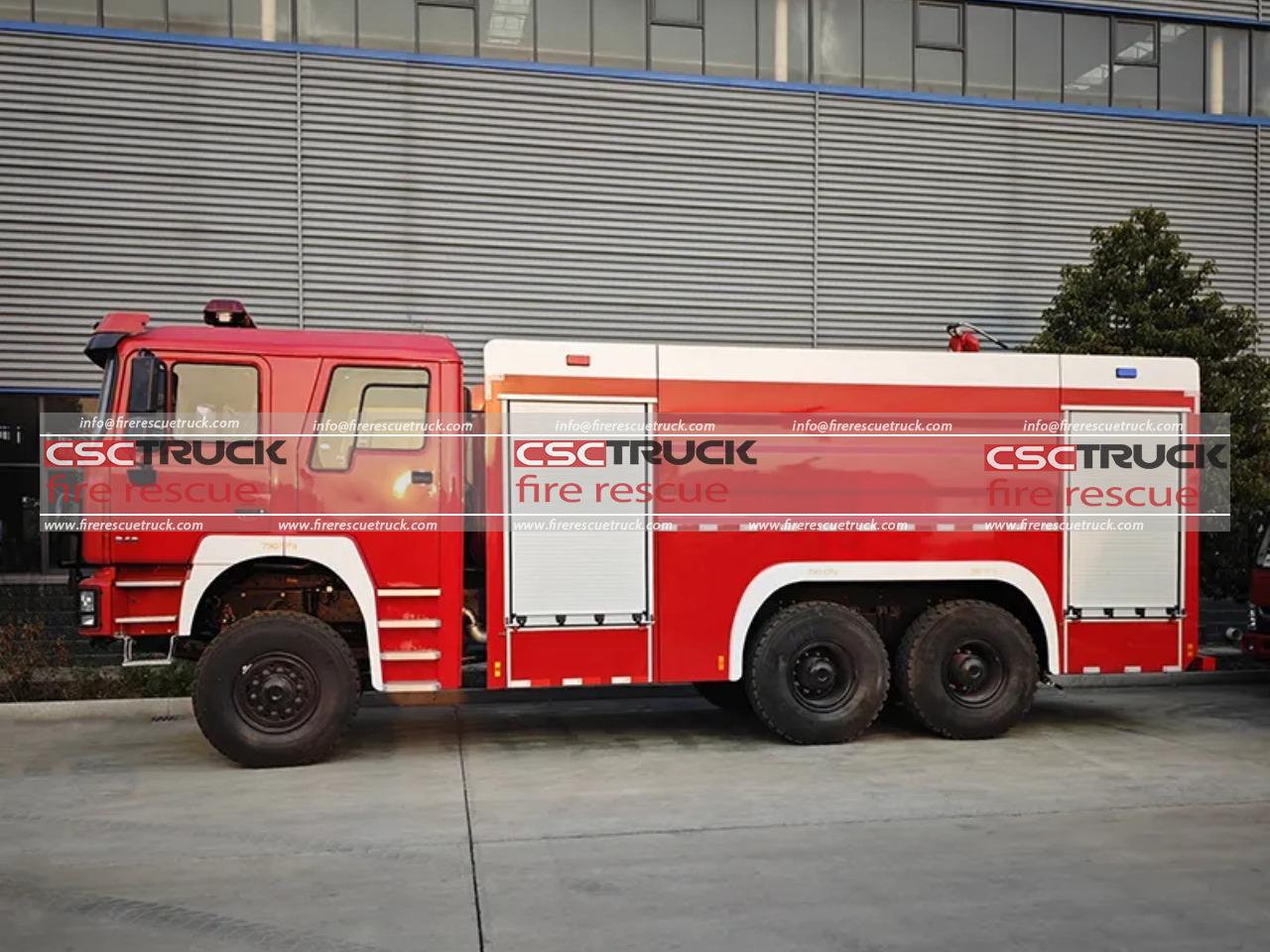
3. Heavy-Duty Suspension Maintains Stability
A fully loaded 6×6 fire truck may weigh:
- 18–35 tons or more
It may carry:
- Thousands of liters of water
- Foam concentrate
- Rescue tools
- Firefighters
- Pumps
- Ladders
To support this weight over rough terrain, the truck uses reinforced suspension systems such as:
- Leaf springs
- Multi-link suspension
- Air suspension
- Walking beam suspension
The suspension absorbs impacts from:
- Rocks
- Uneven roads
- Tree roots
- Deep ruts
- Washouts
This protects both the crew and onboard equipment.
4. Large Water Tank Stores Firefighting Water
One of the primary functions of a 6×6 fire truck is transporting water.
Depending on the application, tank capacity may range from:
- 3,000 liters
- 5,000 liters
- 8,000 liters
- 10,000 liters
- 15,000 liters
The tank is carefully designed with internal baffles.
These partitions reduce water movement while driving.
Without baffles, shifting water could:
- Reduce vehicle stability
- Increase braking distance
- Affect steering
The tank includes:
- Fill ports
- Overflow outlets
- Drain valves
- Level indicators

5. Fire Pump Generates High Water Pressure
The fire pump is the heart of the firefighting system.
It draws water from:
- The onboard tank
- Fire hydrants
- Rivers
- Lakes
- Portable tanks
- Water shuttle operations
The centrifugal pump increases water pressure before sending it through discharge outlets.
Typical pump capacities include:
- 1,000 L/min
- 2,000 L/min
- 3,000 L/min
- 4,000 L/min
- 6,000 L/min
Pump operation is usually controlled through an electronic control panel or manual valves.
6. Foam System Enhances Fire Suppression
Many 6×6 fire trucks include foam firefighting systems.
These systems inject foam concentrate into the water stream.
The resulting foam:
- Smothers fuel fires
- Prevents re-ignition
- Cool burning surfaces
- Covers hazardous liquid spills
Foam systems are especially useful for:
- Oil depots
- Chemical plants
- Airports
- Fuel storage facilities
- Industrial fires
Foam proportioning may be automatic or manually adjustable, depending on the truck configuration.
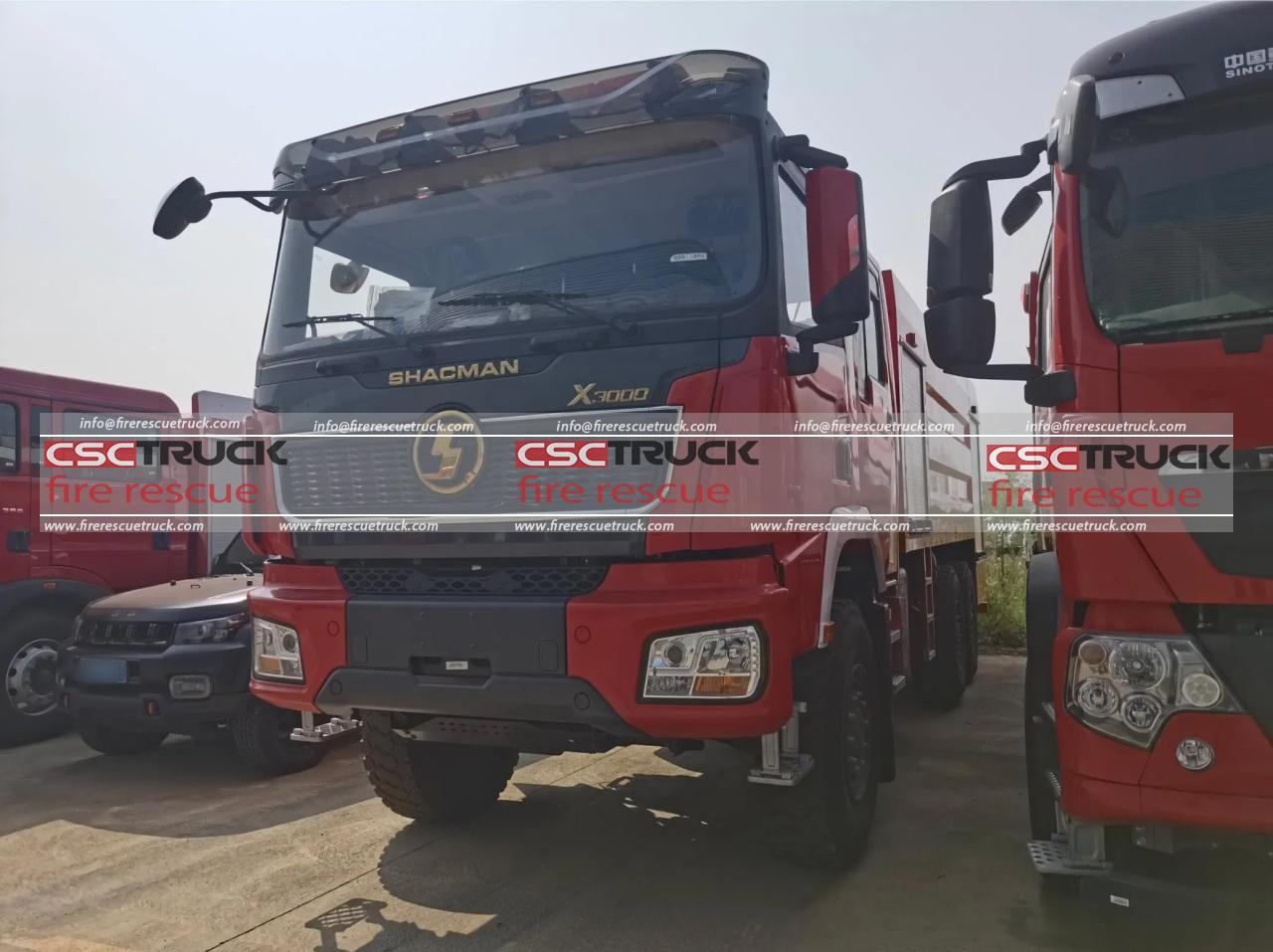
7. Water Monitor Delivers Long-Range Fire Streams
Most large 6×6 fire trucks are equipped with a roof-mounted water monitor.
The monitor works like a giant remote-controlled nozzle.
It can deliver water or foam over long distances.
Typical performance includes:
- Flow rates of 2,000–6,000 L/min
- Horizontal rotation
- Vertical elevation adjustment
- Manual or electric control
This allows firefighters to attack large fires without putting themselves in danger.
8. Power Take-Off (PTO) Drives the Pump
The fire pump does not usually have its own engine.
Instead, it is powered by the truck’s engine using a Power Take-Off (PTO).
Here’s how it works:
- The truck stops at the scene of the fire.
- The operator engages the PTO.
- Engine power is diverted to the fire pump.
- The pump begins moving water.
This system allows efficient use of the vehicle’s engine while reducing equipment complexity.
Some industrial models may include auxiliary engines for independent pump operation.
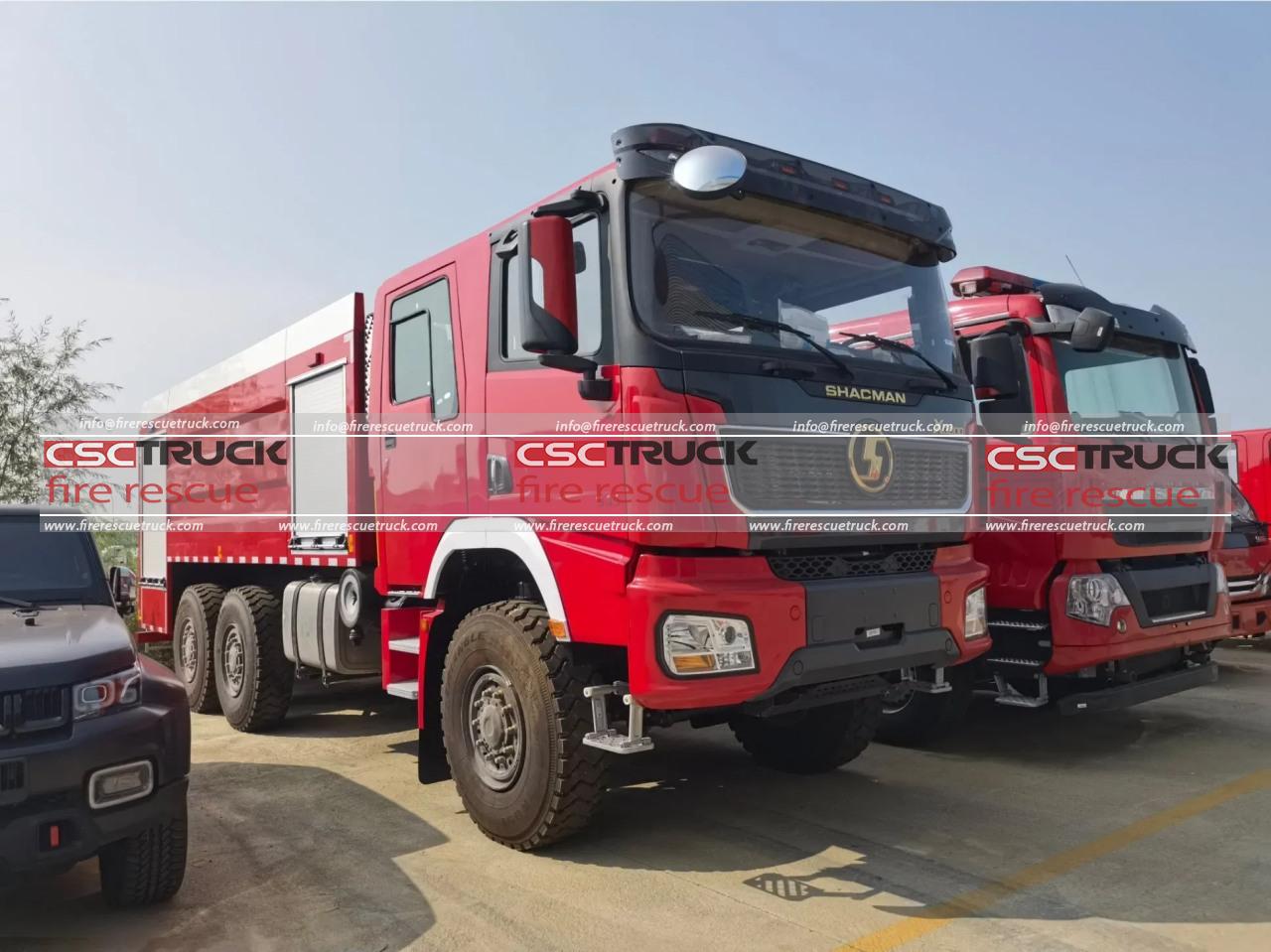
9. Hose System Delivers Water to Firefighters
Water exits the truck through multiple discharge ports.
Firefighters connect hoses according to the incident requirements.
Common hose types include:
- Attack hoses
- Supply hoses
- Booster reels
- High-pressure reels
Nozzles can produce:
- Straight streams
- Fog patterns
- Adjustable spray
- Foam streams
Operators regulate pressure using pump controls to ensure optimal firefighting performance.
10. Advanced Electronics Monitor Vehicle Performance
Modern 6×6 fire trucks feature sophisticated electronic systems.
These may include:
- Digital pump displays
- Tank level sensors
- Engine diagnostics
- Tire pressure monitoring
- Differential lock indicators
- GPS navigation
- Reverse cameras
- LED emergency lighting
- Remote monitor controls
These technologies improve operational safety and simplify vehicle management during emergencies.
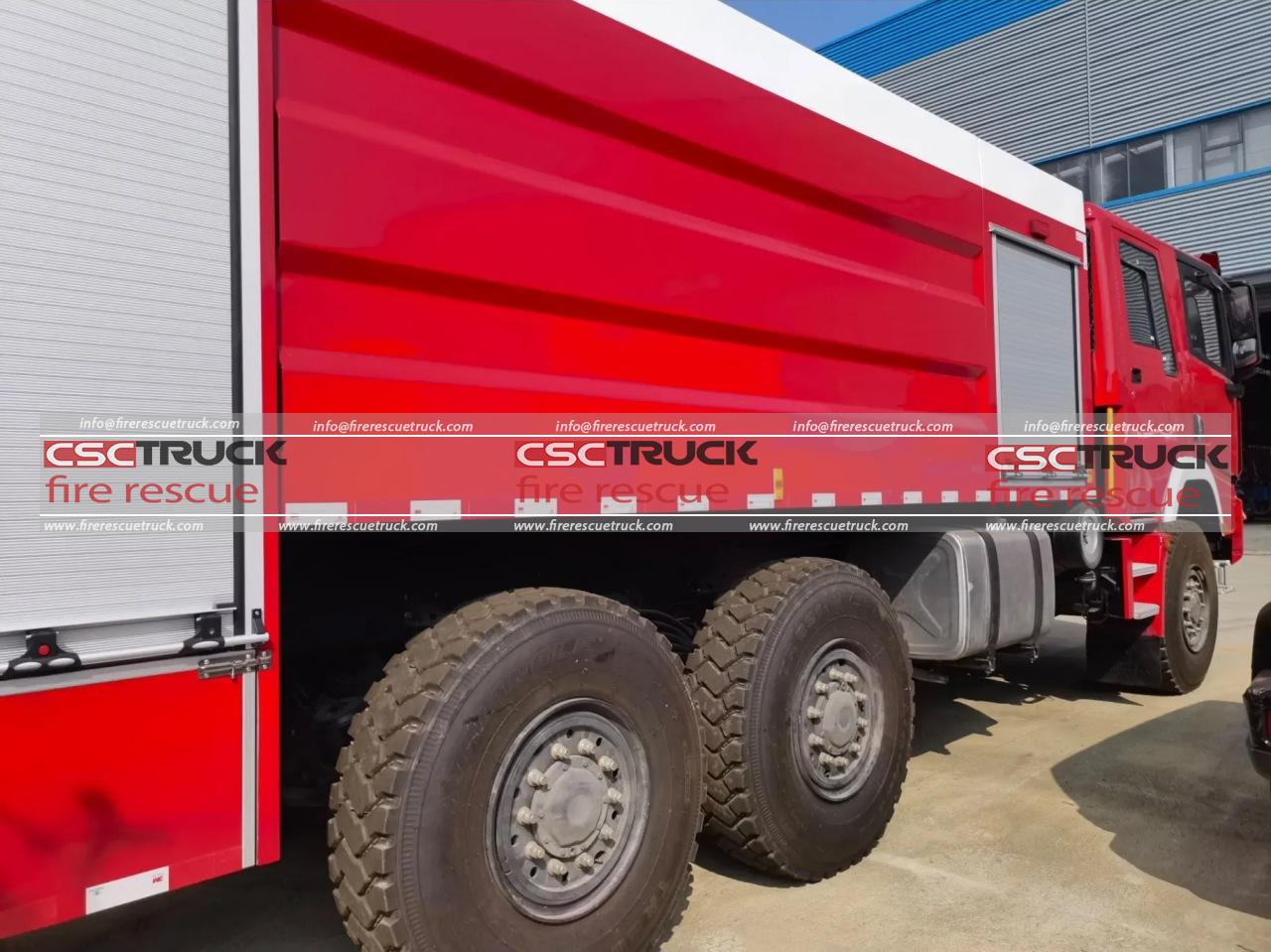
11. Off-Road Features Expand Operational Capability
A 6×6 fire truck is engineered for environments where standard fire engines cannot travel.
Special off-road features often include:
- High ground clearance
- Large off-road tires
- Central tire inflation systems (CTIS)
- Skid plates
- Snorkel air intake
- Winches
- Heavy-duty bumpers
- Approach and departure angles designed for rough terrain
These capabilities enable emergency response during:
- Forest fires
- Flood disasters
- Earthquakes
- Mining accidents
- Pipeline emergencies
- Military rescue missions
12. Crew Safety Systems Protect Firefighters
Safety is a key aspect of how a 6×6 fire truck works.
Modern trucks incorporate:
- Reinforced crew cabs
- Roll-over protection
- ABS braking
- Electronic stability control
- Seatbelt systems
- Air conditioning
- Communication radios
- Emergency lighting
- High-visibility warning systems
Some models also feature thermal imaging equipment and integrated breathing apparatus storage for rapid deployment.

Typical Operational Sequence
During a firefighting mission, a 6×6 fire truck generally operates in the following sequence:
- The crew responds to the emergency using the six-wheel-drive system for maximum mobility.
- Upon arrival, the driver positions the vehicle safely near the incident.
- The Power Take-Off engages the fire pump.
- Water is supplied from the onboard tank or an external source.
- If needed, foam concentrate is mixed into the water.
- Water or foam is discharged through hoses or the roof monitor.
- Firefighters continuously monitor pump pressure, tank levels, and vehicle systems throughout the operation.
Conclusion
A 6×6 fire truck works by combining an all-wheel-drive powertrain with high-capacity firefighting equipment to deliver exceptional performance in the most demanding environments. Its 6 driven wheels provide outstanding traction across mud, snow, sand, and rugged terrain, while advanced pumps, large water and foam tanks, monitors, and electronic controls enable effective fire suppression and rescue operations. Whether responding to wildfires, industrial incidents, or remote emergencies, these vehicles ensure that firefighters can reach the scene quickly and operate efficiently.
Manufacturers such as CSCTRUCK Fire Rescue Truck continue to enhance the capabilities of 6×6 fire trucks through innovative engineering, durable construction, and customizable configurations. By integrating reliable chassis, powerful drivetrains, advanced firefighting technology, and comprehensive safety features, CSCTRUCK Fire Rescue Truck delivers dependable all-terrain fire rescue solutions that meet the evolving needs of emergency services around the world.