
Firefighting often requires emergency vehicles to reach locations where ordinary fire engines cannot operate efficiently. From remote forests and rugged mountain roads to mining sites, oil fields, military bases, and disaster zones, firefighters need specialized equipment capable of traversing difficult terrain while carrying sufficient firefighting resources. This is where the 6×6 fire truck becomes an essential asset.
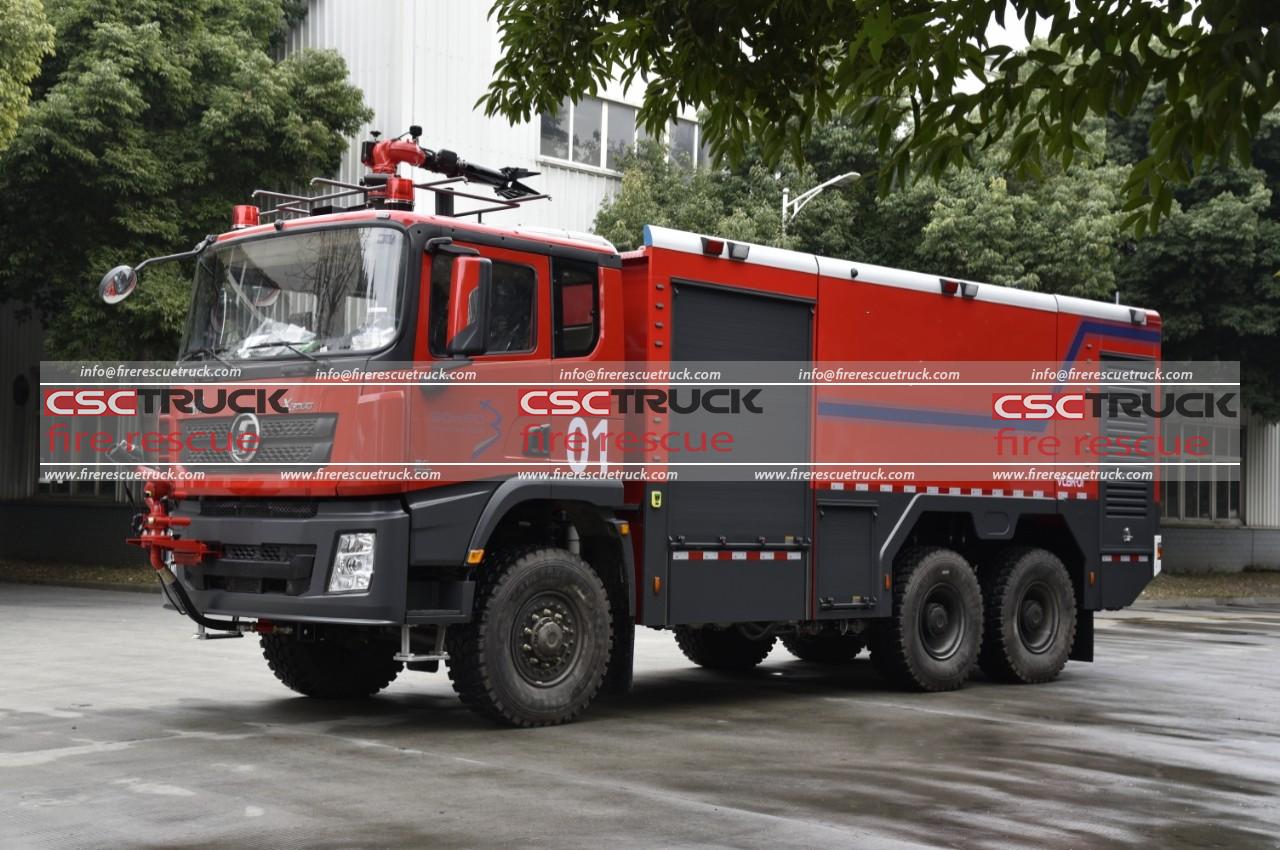
As a professional manufacturer of emergency response vehicles, CSCTRUCK Fire Rescue Truck offers a comprehensive range of fire trucks designed for municipal, industrial, airport, forestry, and special rescue applications. Built on reliable heavy-duty chassis from leading manufacturers, CSCTRUCK Fire Rescue Truck fire trucks combine advanced firefighting systems with durable engineering to provide dependable performance under the toughest operating conditions. Their customizable 6×6 fire trucks are engineered to deliver superior mobility, high water capacity, and reliable firefighting performance in extreme environments.
What Does “6×6” Mean?
The term 6×6 refers to the truck’s drivetrain configuration.
- The first number (6) represents the total number of wheel positions.
- The second number (6) indicates that all 6 wheels receive engine power.
Unlike conventional 4×2 or 6×4 fire trucks, a 6×6 fire truck distributes power to every axle, providing exceptional traction and stability on loose or uneven surfaces.
This drivetrain allows the vehicle to maintain mobility over:
- Mud
- Sand
- Snow
- Rocky terrain
- Steep mountain roads
- Flooded areas
- Forest trails
The all-wheel-drive system significantly improves the truck’s ability to reach emergency scenes where paved roads are unavailable.

Main Features of a 6×6 Fire Truck
1. All-Wheel Drive Capability
The defining feature is permanent or selectable all-wheel drive.
Power is delivered to the front axle and both rear axles through transfer cases and locking differentials. This minimizes wheel slip and maximizes traction even under challenging conditions.
2. High Ground Clearance
Most 6×6 fire trucks feature elevated suspension systems and increased ground clearance.
Benefits include:
- Crossing large rocks
- Driving through deep ruts
- Passing over fallen branches
- Operating in floodwater
- Climbing rough terrain
High clearance also protects the vehicle’s underbody from damage.
3. Heavy Payload Capacity
Because of the additional axle, 6×6 fire trucks can safely transport significantly larger loads than smaller fire engines.
Typical payload includes:
- Water tanks
- Foam tanks
- Fire pumps
- Hose reels
- Rescue equipment
- Medical supplies
- Portable generators
- Hydraulic rescue tools
Some models carry over 10,000 liters (2,640 gallons) of water.
4. Powerful Diesel Engine
Heavy-duty diesel engines ranging from 300 to over 600 horsepower provide the torque necessary for off-road operations while transporting fully loaded firefighting equipment.
Modern engines also meet strict emissions standards while maintaining fuel efficiency.
5. Heavy-Duty Suspension
Advanced suspension systems absorb impacts encountered on rough terrain.
Many models use:
- Leaf spring suspension
- Parabolic springs
- Air suspension
- Reinforced shock absorbers
These systems improve stability while protecting onboard firefighting equipment.
Firefighting Equipment on a 6×6 Fire Truck
A 6×6 fire truck is far more than an off-road vehicle. It is equipped with sophisticated firefighting systems.
Typical equipment includes:
Water Tank
Capacity generally ranges from:
- 3,000 liters
- 5,000 liters
- 8,000 liters
- 10,000 liters
- 12,000 liters or more
Larger tanks reduce refill frequency during extended firefighting operations.
Foam Tank
Many industrial and airport models include foam tanks ranging from 300 to 2,000 liters for combating flammable liquid fires.
Fire Pump
High-performance centrifugal pumps commonly deliver:
- 2,000 L/min
- 3,000 L/min
- 4,000 L/min
- 6,000 L/min
Some specialized units provide even higher flow rates.
Water Cannon
Roof-mounted monitors can discharge water or foam over long distances.
Typical specifications include:
- Flow rates up to 6,000 L/min
- Horizontal rotation
- Vertical elevation adjustment
- Remote control operation
Hose Storage
Integrated compartments store:
- Attack hoses
- Supply hoses
- Suction hoses
- Hose adapters
- Nozzles
Everything remains organized and quickly accessible.

Where Are 6×6 Fire Trucks Used?
Their outstanding mobility makes them ideal for numerous specialized applications.
Forest Firefighting
Wildland fires often occur in remote areas without paved roads.
A 6×6 fire truck can navigate forest tracks while carrying large volumes of water and firefighting equipment.
Mining Operations
Open-pit and underground mines require reliable fire protection despite challenging terrain.
These trucks protect:
- Heavy machinery
- Fuel storage
- Maintenance facilities
- Conveyor systems
Oil and Gas Industry
Oil fields frequently have unpaved access roads.
A 6×6 fire truck provides rapid response for:
- Fuel fires
- Equipment fires
- Tank farm protection
- Emergency rescue
Military Bases
Military installations often operate in rough environments where standard fire engines cannot travel effectively.
Airports
Some airport rescue vehicles incorporate 6×6 drivetrains for rapid acceleration and off-runway capability.
Disaster Relief
Following earthquakes, floods, landslides, or hurricanes, damaged infrastructure may prevent conventional emergency vehicles from reaching affected communities.
A 6×6 fire truck can transport water, rescue equipment, and emergency personnel into disaster zones.
Advantages of a 6×6 Fire Truck
Excellent Off-Road Mobility
The greatest advantage is the ability to reach incidents inaccessible to standard fire engines.
Greater Water Capacity
The larger chassis accommodates bigger water and foam tanks, extending firefighting duration before refilling.
Improved Stability
Three powered axles improve vehicle balance, especially on steep slopes and uneven terrain.
Enhanced Safety
Better traction reduces the risk of becoming stuck during emergency operations.
Multi-Purpose Capability
Many units can perform:
- Fire suppression
- Technical rescue
- Hazardous materials response
- Water transport
- Disaster relief
- Emergency logistics

Limitations of a 6×6 Fire Truck
Despite their impressive capabilities, these vehicles also have some limitations.
Higher Purchase Cost
The sophisticated drivetrain, suspension, and larger chassis increase manufacturing costs.
Increased Maintenance
Additional axles, differentials, and drivetrain components require regular inspection and maintenance.
Larger Turning Radius
The extended wheelbase makes maneuvering in narrow city streets more challenging than compact urban fire engines.
Higher Fuel Consumption
Greater vehicle weight and all-wheel-drive systems typically result in higher fuel usage.
How Does a 6×6 Fire Truck Compare with Other Fire Trucks?
| Feature | 4×2 Fire Truck | 6×4 Fire Truck | 6×6 Fire Truck |
|---|---|---|---|
| Driven Wheels | 2 | 4 | 6 |
| Off-Road Ability | Low | Moderate | Excellent |
| Water Capacity | Small to Medium | Medium to Large | Large |
| Rough Terrain | Poor | Good | Outstanding |
| Payload | Moderate | High | Very High |
| Typical Applications | Urban | Municipal & Industrial | Forestry, Mining, Military, Disaster Response |
Choosing the Right 6×6 Fire Truck
When selecting a 6×6 fire truck, buyers should evaluate:
- Required water tank capacity
- Pump performance
- Foam firefighting requirements
- Terrain conditions
- Crew size
- Rescue equipment needs
- Local climate
- Maintenance support
- Compliance with applicable firefighting standards
Manufacturers like CSCTRUCK Fire Rescue Truck offer extensive customization to meet the operational requirements of different industries and fire departments.
Conclusion
A 6×6 fire truck is a heavy-duty all-wheel-drive firefighting vehicle specifically designed to operate in environments where standard fire engines cannot. Its exceptional traction, large water capacity, powerful pumping systems, and rugged construction make it indispensable for forest firefighting, industrial protection, military installations, mining operations, airports, and disaster response.
Although these vehicles require a larger investment and more maintenance than conventional fire trucks, their ability to access remote locations and transport substantial firefighting resources often makes them the most effective solution for challenging emergencies. For organizations operating in demanding environments, a well-designed 6×6 fire truck provides unmatched reliability, versatility, and operational readiness when every second counts.