
Introduction to CSCTRUCK Fire Rescue Truck
A 6×6 fire truck represents one of the most capable platforms in modern firefighting and emergency response. Designed for extreme environments such as airports, forests, industrial zones, oil fields, mountains, and disaster areas, these vehicles require far more than a standard commercial truck engine. They need powerful diesel engines that can deliver high horsepower, massive torque, reliable operation, and excellent off-road performance while carrying thousands of liters of water, foam, rescue equipment, and firefighting systems.
CSCTRUCK Fire Rescue Truck specializes in manufacturing advanced fire and rescue vehicles, including 4×4, 6×6, and other heavy-duty firefighting platforms. Its product range covers airport rescue fire trucks, foam fire trucks, water fire trucks, rescue vehicles, aerial ladder trucks, and specialized emergency response equipment. CSCTRUCK Fire Rescue Truck 6×6 fire trucks are designed with high mobility, powerful chassis systems, and advanced firefighting technology to handle challenging rescue missions worldwide.
But what engine actually powers a 6×6 fire truck? The answer depends on the truck’s mission, chassis manufacturer, and required performance level. Most 6×6 fire trucks utilize high-output diesel engines from reputable manufacturers such as Scania, MAN, Mercedes-Benz, Volvo, Cummins, or other leading heavy-duty engine suppliers.
Why Does a 6×6 Fire Truck Need a Powerful Engine?
A 6×6 fire truck is significantly heavier and more complex than a normal fire engine. It typically includes:
- Large-capacity water and foam tanks
- High-pressure fire pumps
- Roof-mounted water monitors
- Rescue equipment
- Crew compartments
- Reinforced chassis systems
- Off-road suspension components
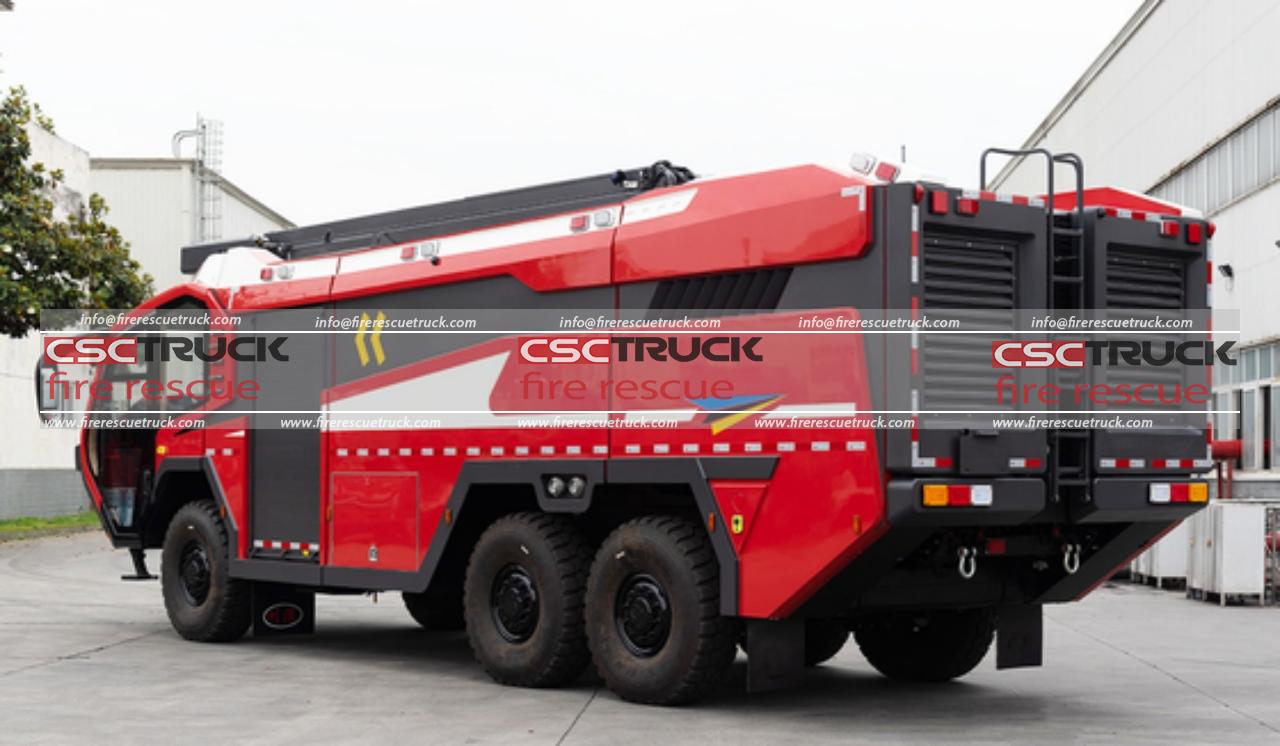
A fully equipped 6×6 airport rescue fire truck, for example, may weigh more than 30 tons when fully loaded. It must still accelerate quickly, climb steep slopes, travel across mud or sand, and arrive at emergencies as fast as possible.
The engine must provide:
1. High Horsepower
Horsepower determines how quickly the vehicle can reach operating speed. Heavy rescue and airport fire trucks often require engines producing 400–800 horsepower.
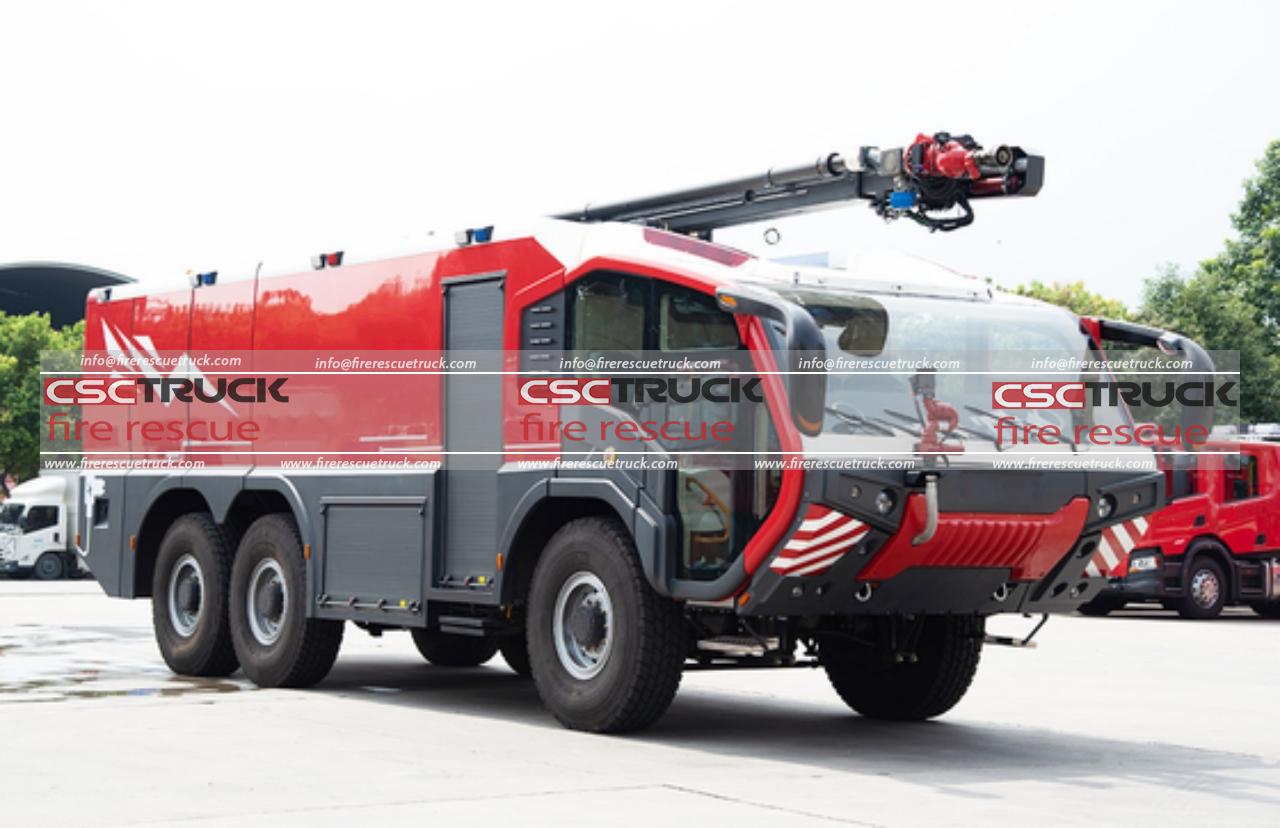
For example, some high-performance CSCTRUCK Fire Rescue Truck 6×6 ARFF fire trucks utilize engines that produce around 770 horsepower, enabling rapid acceleration while carrying large firefighting payloads.
2. Strong Torque Output
Torque is especially important for off-road firefighting. A 6×6 truck must overcome:
- Steep terrain
- Loose soil
- Snow and mud
- Heavy loads
- Poor road conditions
A high-torque diesel engine allows the truck to move steadily without losing traction.
3. Continuous Operation Capability
Firefighting vehicles often operate under extreme conditions. Engines must withstand:
- Long periods of idling
- High temperatures
- Dusty environments
- Heavy pumping operations
Reliability is a critical factor because emergency vehicles cannot afford engine failure during a mission.
Common Engines Used in 6×6 Fire Trucks
1. Scania Engines
Scania is one of the most common engine choices for premium firefighting vehicles. Swedish Scania engines are known for durability, high torque output, and efficiency.
Many airport rescue fire trucks use Scania V8 diesel engines because they provide excellent power-to-weight ratios.
A typical Scania engine used in heavy firefighting applications may feature:
- V8 configuration
- 500–770 horsepower range
- High torque at low RPM
- Advanced fuel injection technology
- Strong cooling performance
CSCTRUCK Fire Rescue Truck’s high-performance 6×6 ARFF fire truck examples include Scania-powered platforms designed for rapid airport emergency response.
2. MAN Engines
MAN engines are another popular option for heavy rescue vehicles. They are widely used in European and international truck markets.
Advantages include:
- Excellent reliability
- Strong low-speed torque
- Good fuel efficiency
- Long service life
MAN-powered 6×6 fire trucks are often selected for municipal firefighting, industrial firefighting, and special rescue applications.
3. Mercedes-Benz Engines
Mercedes-Benz heavy-duty engines are commonly installed in fire trucks based on Arocs and Actros chassis.
Benefits include:
- Advanced electronic engine management
- High durability
- Strong performance under heavy loads
- Compatibility with automatic transmissions
Mercedes-Benz 6×6 fire trucks are often used for airport firefighting, military applications, and extreme terrain operations.
4. Volvo Engines
Volvo engines are known for safety, durability, and advanced engineering.
They are often used in:
- Rescue trucks
- Airport fire trucks
- Heavy-duty firefighting vehicles
Volvo engines provide strong torque delivery and excellent reliability in demanding environments.
Engine Power Requirements for Different 6×6 Fire Trucks
Not every 6×6 fire truck requires the same engine power.
Medium-Duty 6×6 Fire Trucks
Typical applications:
- Forest firefighting
- Rural firefighting
- Industrial rescue
Engine range:
- 300–500 horsepower
These vehicles prioritize mobility and efficiency.
Heavy Rescue 6×6 Fire Trucks
Applications:
- Earthquake rescue
- Urban disaster response
- Industrial emergencies
Engine range:
- 400–600 horsepower
They require extra power because they carry large amounts of rescue equipment.
CSCTRUCK Fire Rescue Truck’s 6×6 combination rescue fire truck is designed as a multifunctional rescue platform with heavy equipment capability, including rescue tools and modular systems.
Airport Rescue Fire Fighting (ARFF) Trucks
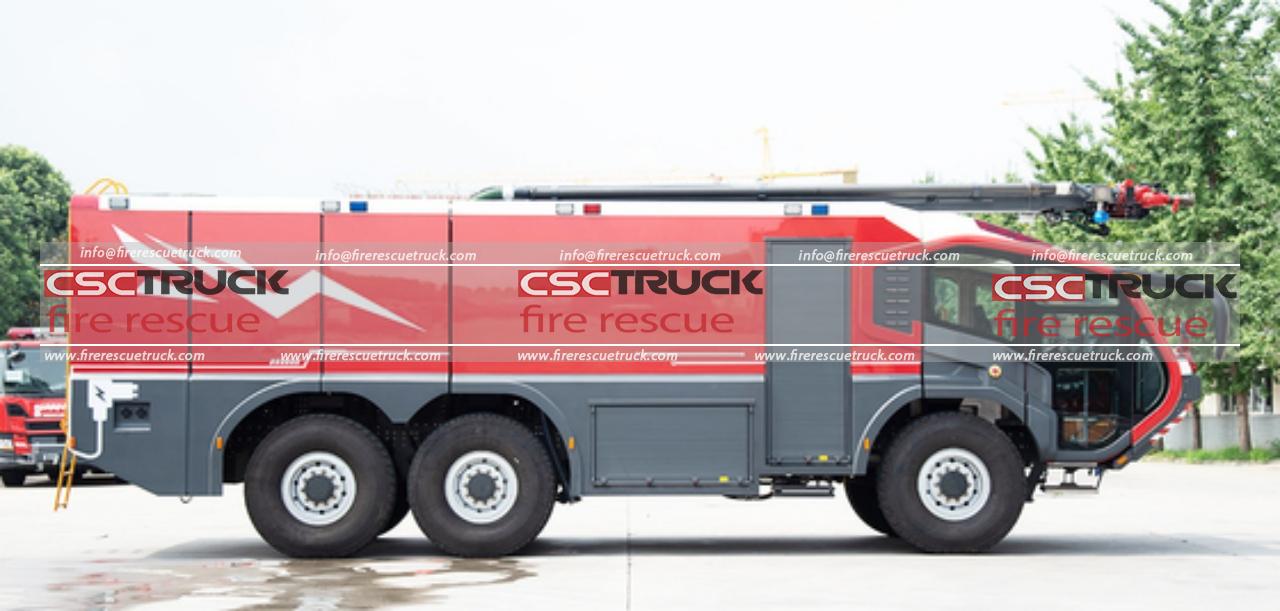
ARFF vehicles represent the highest-performance category.
Typical requirements:
- 600–800+ horsepower
- High acceleration
- Large water and foam capacity
- High-speed response capability
Airport fire trucks must quickly reach aircraft incidents while carrying large firefighting systems.
How the Engine Works Together with the 6×6 Drivetrain
A powerful engine alone is not enough. A 6×6 fire truck also depends on its drivetrain system.
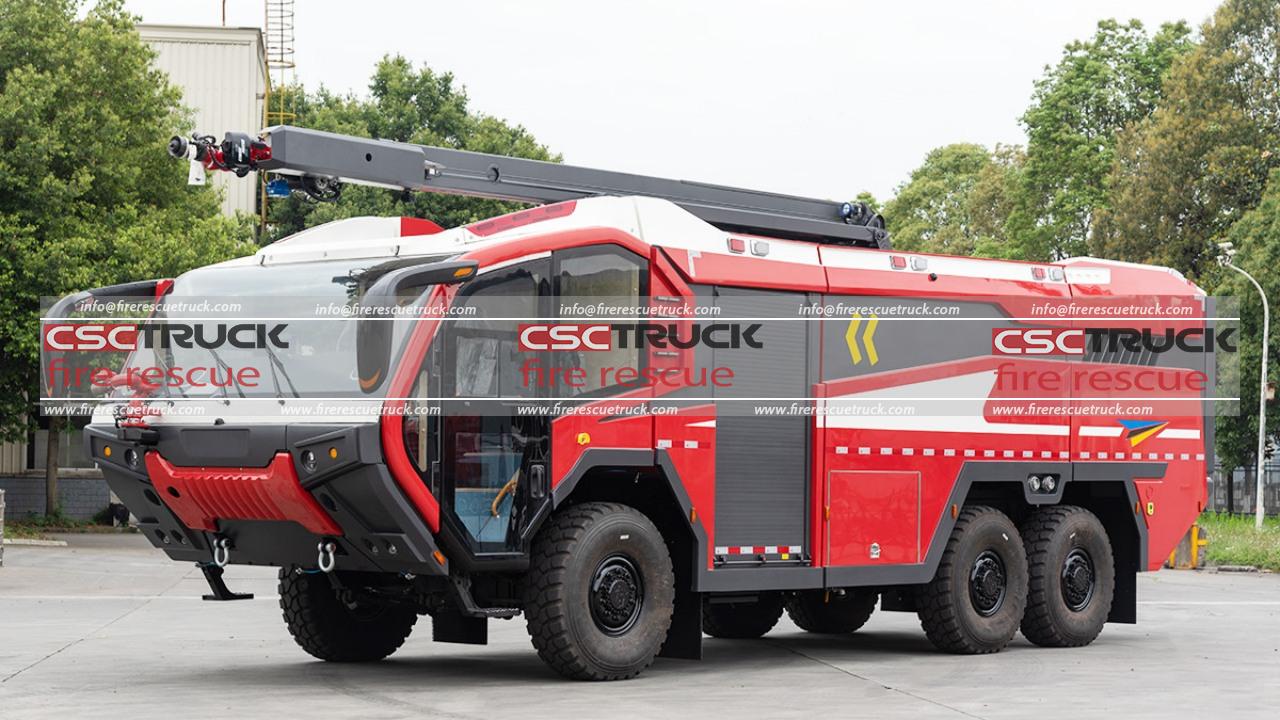
The 6×6 configuration means:
- 3 axles
- 6 driven wheels
- Maximum traction
The engine transfers power through:
- Transmission system
- Transfer case
- Drive shafts
- Three powered axles
This design improves:
- Off-road capability
- Stability
- Load distribution
- Hill-climbing ability
Many CSCTRUCK Fire Rescue Truck 6×6 fire trucks are designed specifically for difficult environments where conventional fire engines cannot operate.
Engine Power and Fire Pump Performance
The engine does more than move the truck. It also supports firefighting operations.
A 6×6 fire truck engine may provide power for:
- Water pumps
- Foam systems
- Hydraulic rescue equipment
- Lighting systems
- Electrical generators
For example, a high-performance ARFF truck may use hundreds of horsepower not only for driving but also for operating large-capacity firefighting equipment.
A well-matched engine and pump system ensures:
- Faster water discharge
- Higher monitor pressure
- Longer operating time
- Better emergency response efficiency
Factors That Determine Engine Selection
Manufacturers choose engines based on several factors:
Vehicle Weight
A larger truck with more water capacity requires more horsepower.
Operating Environment
Mountain, desert, airport, and industrial applications may require different engine specifications.
Emission Regulations
Modern fire trucks must comply with emission standards such as:
- Euro V
- Euro VI
Maintenance Availability
Global customers often prefer engines with established service networks.
Mission Requirements
A municipal fire engine may not need a 700-horsepower engine, while an airport rescue truck may require maximum performance.
Conclusion
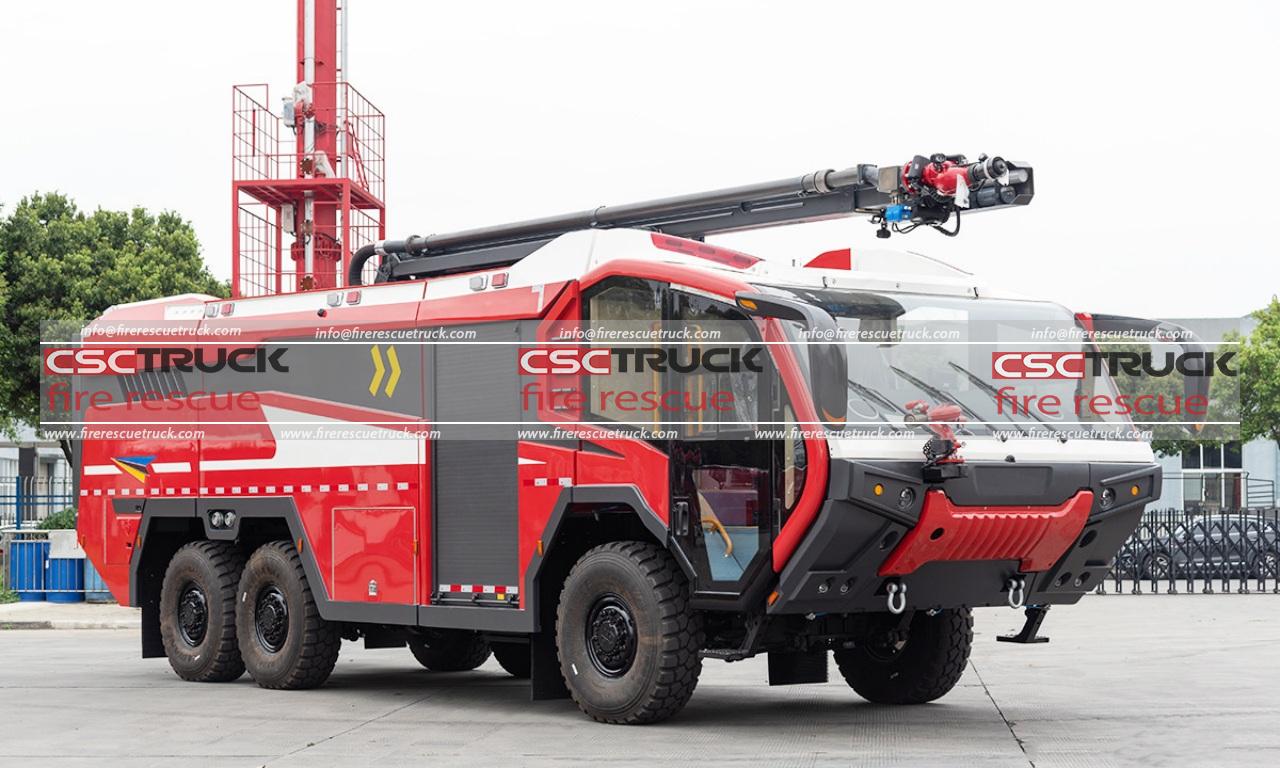
The engine powering a 6×6 fire truck is typically a high-performance heavy-duty diesel engine designed for extreme firefighting conditions. Depending on the application, these vehicles may use Scania, MAN, Mercedes-Benz, Volvo, Cummins, or other industrial-grade engines producing approximately 300 to more than 770 horsepower.
For advanced emergency vehicles like those produced by CSCTRUCK Fire Rescue Truck, engine selection is carefully matched with chassis design, firefighting systems, and operational requirements. A powerful engine combined with a 6×6 drivetrain allows these fire trucks to reach dangerous locations quickly, carry heavy firefighting equipment, and perform reliably when lives and property are at risk.
A 6×6 fire truck is not simply a large vehicle—it is a highly engineered emergency machine where engine power, traction, and firefighting capability work together to deliver maximum response performance.