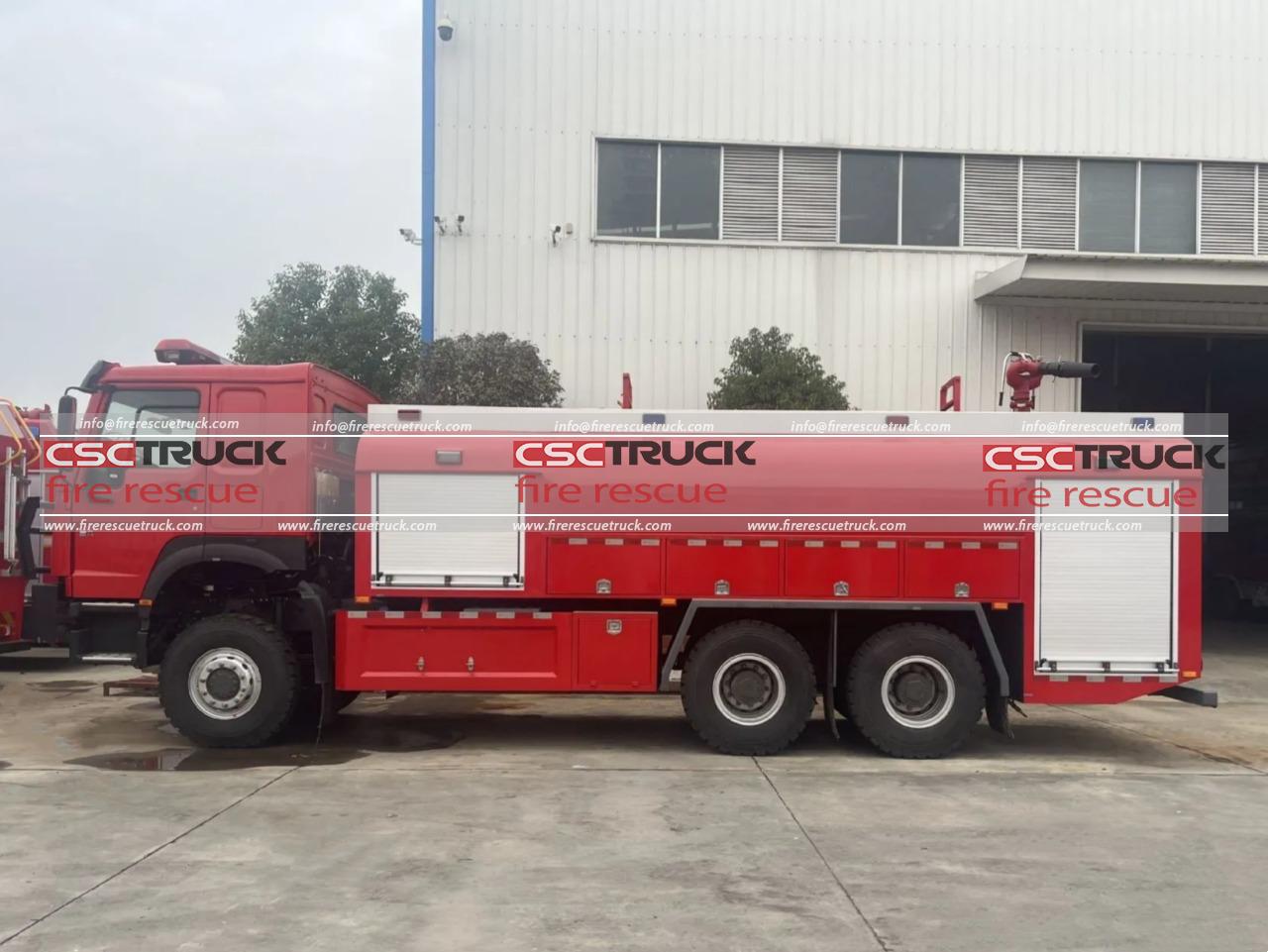
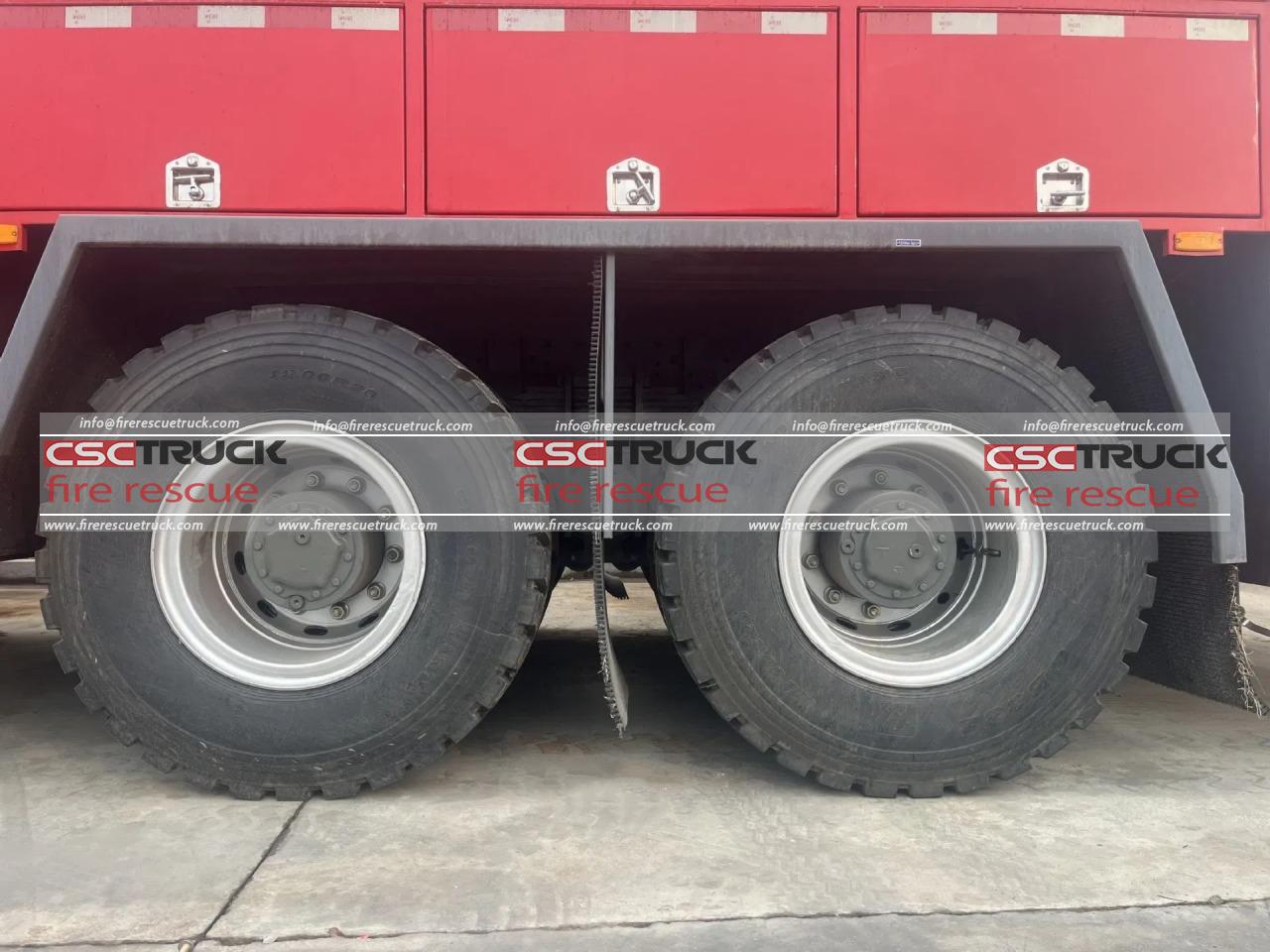
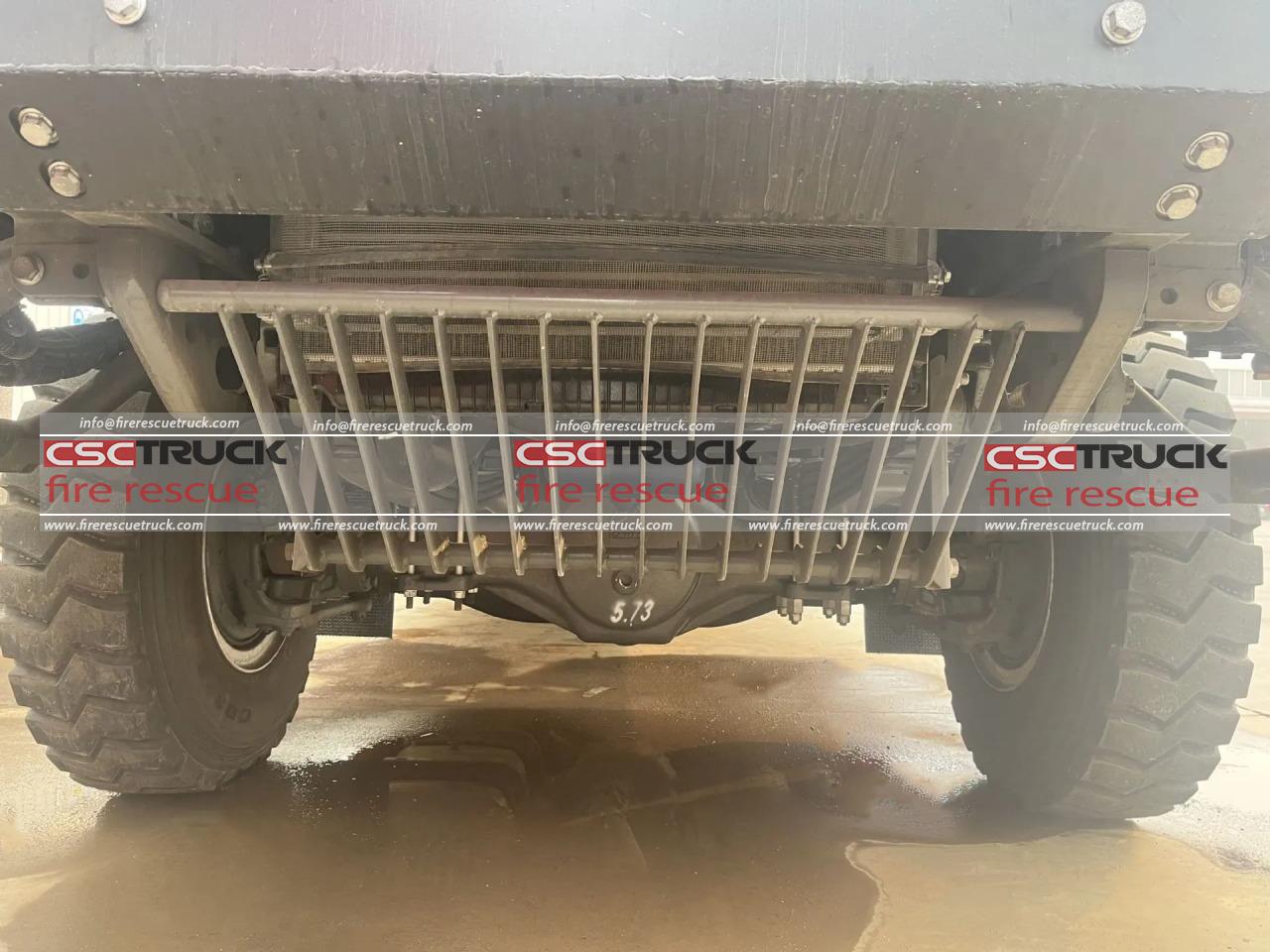
A 6×6 fire truck is designed to operate in some of the world’s most demanding environments, including airports, forests, mining sites, oil fields, military bases, and disaster zones. Unlike standard municipal fire engines, these heavy-duty vehicles require specialized tires capable of supporting massive vehicle weights while delivering exceptional traction on rough terrain. Tire size is therefore one of the most important specifications affecting a 6×6 fire truck’s mobility, safety, payload capacity, and operational performance.
As a leading manufacturer of specialized firefighting vehicles, CSCTRUCK Fire Rescue Truck offers a wide range of 4×4, 6×6, and 8×8 fire trucks built for extreme applications. The company’s off-road rescue vehicles feature powerful drivetrains, high-capacity firefighting systems, and rugged chassis from globally recognized manufacturers such as Scania, MAN, Mercedes-Benz, SINOTRUK, and SHACMAN. Their 6×6 rescue trucks are engineered for maximum mobility while carrying large water tanks, foam systems, rescue equipment, and crews into difficult-to-reach emergency scenes.
Why Tire Size Matters
The tires on a 6×6 fire truck perform much more than simply supporting the vehicle. They are responsible for:
Carrying extremely heavy loads
Maintaining traction on mud, sand, gravel, snow, and rocky terrain
Absorbing impacts from uneven surfaces
Improving vehicle stability
Reducing ground pressure
Enhancing braking performance
Increasing off-road mobility
Since many 6×6 fire trucks weigh between 20 and 45 tonnes when fully loaded, ordinary commercial truck tires are insufficient. Manufacturers select oversized heavy-duty tires specifically designed for emergency and off-road service.
Common Tire Sizes Used on 6×6 Fire Trucks
There is no single tire size used across every 6×6 fire truck. Instead, the choice depends on vehicle weight, chassis manufacturer, intended application, and terrain.
Some of the most common tire sizes include:
1. 14.00R20
One of the most widely used tire sizes for off-road fire trucks.
Typical applications include:
Forest fire trucks
Military fire trucks
Industrial fire engines
Rescue trucks
Advantages include:
Excellent traction
High load capacity
Good puncture resistance
Suitable for rugged terrain
The large sidewalls also improve ride comfort over uneven ground.
2. 16.00R20
This tire is commonly installed on heavy airport rescue and firefighting (ARFF) vehicles.
Benefits include:
Higher load rating
Larger footprint
Better flotation on soft terrain
Improved stability
These tires can safely support vehicles carrying over 15,000 liters of extinguishing agents.
3. 395/85R20
Many European-built off-road fire trucks use this metric tire size.
It offers:
Excellent steering precision
Lower rolling resistance
Strong off-road capability
Compatibility with military chassis
Manufacturers, including Mercedes-Benz and MAN, frequently use this specification.
4. 24R21
Large industrial and airport crash tenders sometimes utilize 24R21 radial tires.
These provide:
High-speed capability
Superior heat resistance
Exceptional carrying capacity
Long service life
They are particularly suitable for ARFF vehicles that must accelerate rapidly on airport runways.
Tire Selection Based on Fire Truck Type
Different firefighting missions require different tire configurations.
They typically use aggressive off-road tread patterns with 14.00R20 or 395/85R20 tires for maximum traction.
Airport Rescue Fire Trucks
Airport rescue vehicles prioritize:
High-speed response
Heavy payload
Excellent braking
Stable handling
Larger radial tires, such as 16.00R20 or 24R21, are often preferred because they deliver high-speed stability while carrying thousands of liters of water and foam.
Mining Fire Trucks
Mining sites expose tires to:
Sharp rocks
Extreme loads
Heat
Abrasion
Heavy-duty reinforced tires with thicker sidewalls help reduce punctures and extend service life.
Military Fire Trucks
Military applications demand:
Cross-country mobility
Low maintenance
High durability
Wide all-terrain tires improve mobility across sand, snow, and rough landscapes.
How Tire Size Affects Vehicle Performance
Ground Clearance
Larger tires increase ground clearance.
Benefits include:
Easier obstacle crossing
Better approach angles
Reduced risk of underbody damage
This is especially valuable when driving over fallen trees, rocks, or flood debris.
Load Capacity
Each tire has a maximum load rating.
A fully equipped 6×6 fire truck may carry:
Water tank
Foam tank
Fire pump
Rescue tools
Crew members
Medical equipment
Hydraulic rescue tools
Oversized tires distribute this enormous weight safely across all three axles.
Traction
Larger tires generally provide:
Bigger contact patch
Better grip
Improved climbing ability
Reduced wheel slip
This allows firefighters to reach remote emergencies even during severe weather.
Ride Comfort
The taller sidewalls of large off-road tires absorb impacts from uneven terrain, reducing vibration and improving crew comfort during long deployments.
Tire Construction
Modern 6×6 fire trucks almost always use radial tires.
Compared with older bias-ply designs, radial tires offer:
Longer tread life
Better fuel efficiency
Lower rolling resistance
Improved road handling
Reduced heat buildup
Many manufacturers also specify tubeless radial tires, which offer easier maintenance and reduced downtime.
Tire Pressure Considerations
Proper tire inflation is essential.
Underinflated tires may result in:
Excessive heat
Increased wear
Reduced fuel economy
Poor steering
Overinflated tires may cause:
Reduced traction
Harsher ride
Uneven tread wear
Some modern fire trucks include automatic tire inflation systems that allow drivers to adjust tire pressure depending on terrain.
For example:
Lower pressure for sand
Lower pressure for snow
Higher pressure for highways
Standard pressure for urban roads
This improves mobility while protecting the tires.
Tire Maintenance
Regular inspections help maximize tire life and vehicle safety.
Fire departments typically inspect:
Tread depth
Sidewall damage
Cuts
Embedded objects
Air pressure
Valve condition
Wheel alignment
Because emergency vehicles must respond immediately, preventive tire maintenance is a critical part of fleet management.
Choosing the Right Tire Size
When specifying a new 6×6 fire truck, buyers should consider:
Vehicle gross weight
Water tank capacity
Foam tank capacity
Terrain
Climate
Maximum travel speed
Local road regulations
Maintenance availability
Selecting the proper tire size ensures the truck can safely carry its payload while maintaining excellent mobility under all operating conditions.
Conclusion
A 6×6 fire truck typically uses large heavy-duty tires such as 14.00R20, 16.00R20, 395/85R20, or 24R21, depending on its chassis, mission profile, and operating environment. These oversized tires provide the load capacity, traction, durability, and stability required for firefighting in forests, airports, industrial facilities, mining operations, and disaster zones.
Manufacturers like CSCTRUCK Fire Rescue Truck carefully match tire specifications with each vehicle’s weight, suspension, drivetrain, and intended application to ensure maximum safety and performance. Whether the truck is designed for rapid airport response, rugged off-road rescue, or industrial firefighting, selecting the correct tire size is essential for reliable emergency operations and long-term durability. With the right tires, a 6×6 fire truck can confidently navigate challenging terrain while delivering firefighters and life-saving equipment wherever they are needed most.