
Introduction to ARFF Snozzle Trucks
Airport Rescue and Firefighting (ARFF) operations require specialized vehicles capable of responding quickly to aircraft fires, fuel spills, and other aviation emergencies. Among the most advanced firefighting solutions is the ARFF Snozzle truck, an airport fire truck equipped with a high-reach piercing nozzle designed to penetrate an aircraft’s fuselage and deliver firefighting agents directly into enclosed spaces.
Unlike conventional fire trucks that primarily discharge water or foam onto the exterior of a burning aircraft, Snozzle-equipped vehicles can apply extinguishing agents inside the fuselage, cargo compartment, or other difficult-to-access areas. This capability can improve firefighting efficiency, reduce the need for immediate interior entry, and support safer emergency response operations.
CSCTRUCK Fire Rescue Truck is a specialized manufacturer and supplier of fire rescue vehicles for different emergency response requirements. Its product range covers various firefighting and rescue applications, including airport firefighting solutions. For airports, aviation authorities, and emergency service operators, understanding the features, benefits, and applications of ARFF Snozzle trucks is essential when evaluating advanced aircraft firefighting equipment.
1. What Is an ARFF Snozzle Truck?
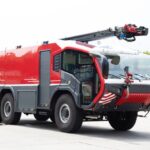
An ARFF Snozzle truck is a specialized airport firefighting vehicle fitted with a high-reach extendable turret or boom that carries a piercing nozzle. The nozzle is designed to penetrate selected aircraft structures and deliver water, foam solution, or other compatible extinguishing agents into concealed fire zones.
The term “Snozzle” is commonly associated with piercing-nozzle firefighting systems used in aircraft rescue and firefighting. These systems are particularly valuable when a fire develops inside an aircraft fuselage, cargo hold, or other enclosed compartment that is difficult to reach using conventional exterior firefighting methods.
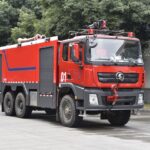
A typical ARFF Snozzle truck combines a high-performance vehicle chassis, a firefighting agent storage system, powerful pumps, a turret, and an extendable boom. Depending on the configuration, it may also include thermal imaging equipment, cameras, remote controls, and integrated monitoring systems.
The exact capabilities vary by manufacturer and model. Buyers should therefore verify boom reach, piercing capability, agent compatibility, and compliance with applicable airport firefighting standards before purchasing.

2. Key Features of an ARFF Snozzle Truck
2.1 High-Reach Extendable Boom
The extendable boom is one of the most important components of a Snozzle truck. It allows firefighters to position the piercing nozzle at elevated or otherwise difficult-to-access areas of an aircraft.
The boom must provide sufficient reach, stability, and maneuverability to operate around aircraft of different sizes. Its design should also allow operators to position the nozzle accurately while maintaining a safe distance from the incident wherever possible.
2.2 Aircraft Piercing Nozzle
The piercing nozzle is the defining feature of an ARFF Snozzle system. It is engineered to penetrate designated aircraft structures and introduce extinguishing agents directly into an enclosed fire area.
After penetration, the nozzle can distribute compatible firefighting agents within the affected compartment. This approach can help suppress hidden flames and reduce the spread of fire in spaces that cannot be effectively reached from outside.
Piercing must be performed only at suitable locations and according to aircraft-specific procedures. Structural reinforcement, electrical systems, fuel lines, and other sensitive components must be considered before operation.
2.3 High-Capacity Water and Foam Systems
Aircraft fires can involve large quantities of fuel and substantial heat release. ARFF Snozzle trucks therefore require firefighting systems capable of supplying the necessary agent flow and pressure.
Depending on the vehicle design, the system may include:
- Large-capacity water tanks.
- Foam concentrate tanks and proportioning equipment.
- High-performance firefighting pumps.
- Roof-mounted or bumper-mounted turrets.
- Hose connections for supplementary firefighting operations.
Water and foam capabilities should be matched to the airport’s aircraft mix, emergency response requirements, and applicable regulatory standards.
2.4 Remote-Controlled Operation
Many advanced Snozzle systems provide remote turret and boom controls. Operators can adjust the boom position, nozzle direction, and agent discharge from a protected operating position.
Remote operation may reduce the need to approach hazardous areas during the initial stages of an incident. Cameras and thermal imaging systems can further improve visibility when smoke, darkness, or restricted access makes visual assessment difficult.
2.5 High-Mobility ARFF Chassis
An airport fire truck must reach an aircraft incident quickly, including on runways, taxiways, and airport service roads. Depending on the model, an ARFF Snozzle truck may use a 4×4, 6×6, or other heavy-duty chassis configuration.
Important vehicle characteristics include engine power, acceleration, braking performance, suspension, ground clearance, and drivetrain reliability. The chassis must also support the weight of the water, foam concentrate, boom, and associated equipment without compromising stability.
3. Major Benefits of ARFF Snozzle Trucks
3.1 Faster Fire Suppression in Enclosed Compartments
One of the primary advantages of a Snozzle system is its ability to introduce extinguishing agents directly into an enclosed space. Conventional exterior discharge may struggle to reach a concealed fire behind aircraft panels or within cargo compartments.
By creating a controlled access point, the piercing nozzle can help deliver agents closer to the fire source. This can complement exterior foam application and other established aircraft firefighting tactics.
3.2 Improved Firefighter Safety
Aircraft incidents can expose firefighters to intense heat, toxic smoke, fuel hazards, and structural instability. A remote-operated piercing system can help reduce the need for personnel to approach certain hazardous areas during initial suppression.
However, a Snozzle truck does not eliminate the need for trained firefighters, protective equipment, rescue operations, or interior intervention when conditions require them.
3.3 Better Access to Difficult Fire Zones
Aircraft structures contain enclosed spaces and compartments that are not always accessible through conventional doors or service openings. A high-reach boom can help operators position the nozzle at selected locations that would otherwise be difficult to reach.
This capability is particularly useful when the aircraft’s position, damage, or fire conditions restrict access.
3.4 More Flexible Firefighting Operations
Nozzle-equipped vehicles can support multiple firefighting methods, depending on their design. They may combine piercing-nozzle discharge with conventional turrets, exterior foam application, and supplementary rescue equipment.
This flexibility allows airport emergency teams to select appropriate tactics for different aircraft types and incident conditions.
3.5 Support for Modern Airport Emergency Preparedness
As airports handle a wide variety of commercial aircraft, cargo aircraft, and other aviation operations, emergency response planning must account for complex fire scenarios.
An ARFF Snozzle truck can strengthen an airport’s firefighting capabilities when integrated into a broader response system that includes trained personnel, rescue vehicles, communications equipment, and established incident procedures.

4. Main Applications of ARFF Snozzle Trucks
4.1 Aircraft Fuselage Fires
A Snozzle system can be used when a fire develops within an aircraft’s fuselage or another enclosed section. The boom positions the piercing nozzle at an appropriate location, allowing extinguishing agents to be delivered into the affected space.
This application may be particularly valuable when fire spread is concealed behind structural panels.
4.2 Cargo Compartment Fires
Cargo aircraft and passenger aircraft carrying cargo may experience fires involving goods, packaging materials, batteries, or other hazardous contents.
A piercing system can provide an additional means of agent delivery into suitable enclosed compartments. The effectiveness of the response depends on the cargo involved, compartment construction, fire development, and the agent selected.
4.3 Aircraft Cabin Emergencies
When an aircraft cabin experiences a serious fire, responders must balance suppression, evacuation, and passenger rescue. A Snozzle truck may help apply extinguishing agents into selected cabin areas while other crews establish rescue routes and support evacuation.
The piercing approach must be coordinated with aircraft occupancy, evacuation routes, and incident command procedures.
4.4 Large-Aircraft and Cargo-Airport Operations
International airports and cargo hubs may handle wide-body passenger aircraft, freighters, and other large aircraft that present demanding rescue and firefighting challenges.
A Snozzle-equipped ARFF vehicle can provide additional reach and access capabilities for these environments. Airport operators should assess whether the system’s boom geometry, agent capacity, chassis performance, and operating envelope match the aircraft types they serve.
4.5 Specialized Aviation Facilities
Military airfields, aircraft maintenance facilities, aircraft manufacturing sites, and other aviation-related installations may also evaluate piercing-nozzle firefighting systems.
The suitability of a Snozzle truck for these locations depends on the aircraft involved, facility layout, emergency response requirements, and relevant safety regulations.
5. How to Choose the Right ARFF Snozzle Truck
Selecting an ARFF Snozzle truck requires more than comparing vehicle prices or tank capacities. Buyers should evaluate the entire firefighting system and its compatibility with local operational requirements.
First, assess aircraft compatibility. Identify the aircraft types and sizes handled by the airport, along with the compartments and structural areas that may require specialized access.
Second, evaluate boom reach and piercing performance. Confirm maximum working height, horizontal reach, articulation, nozzle design, and compatibility with the intended aircraft structures.
Third, review firefighting capacity. Compare water storage, foam concentrate capacity, pump performance, discharge rates, and agent compatibility. These specifications should satisfy the airport’s applicable ARFF requirements rather than relying on a single capacity figure.
Fourth, consider chassis performance. Acceleration, maneuverability, braking, drivetrain configuration, and vehicle stability are critical to safe airport operations.
Fifth, check controls and monitoring systems. Cameras, thermal imaging, remote controls, and operator displays can improve positioning and situational awareness.
Finally, examine maintenance and lifecycle support. Evaluate spare-parts availability, operator training, technical documentation, warranty coverage, servicing arrangements, and long-term operating costs.

6. Why Consider CSCTRUCK Fire Rescue Truck?
CSCTRUCK Fire Rescue Truck provides specialized fire and rescue vehicle solutions for customers with different emergency response needs. Its website, https://www.firerescuetruck.com/, offers a starting point for exploring firefighting vehicle categories and discussing project requirements.
For airport authorities, fire departments, and international vehicle distributors, the purchasing process should begin with a clear technical specification. Buyers interested in an ARFF Snozzle truck should confirm whether the manufacturer can supply the required piercing-nozzle system, suitable chassis, water and foam configuration, control equipment, and supporting documentation.
A detailed request for quotation should identify the aircraft types to be served, required boom reach, tank capacities, pump performance, local certification requirements, export destination, and after-sales expectations. These details help suppliers determine the appropriate configuration and establish whether customization is necessary.
Before placing an order, customers should request technical drawings, performance data, compliance documentation, and confirmation of the complete vehicle configuration. They should also verify that the proposed Snozzle system is suitable for the intended aircraft and airport operating environment.
Conclusion
The ARFF Snozzle truck is a specialized aircraft firefighting solution designed to improve access to enclosed fire zones through a high-reach piercing nozzle. Its principal advantages include targeted extinguishing-agent delivery, improved access to difficult areas, and the potential to reduce firefighter exposure during selected suppression operations.
These vehicles can support aircraft fuselage firefighting, cargo compartment incidents, and emergency response at major airports and specialized aviation facilities. However, their effectiveness depends on correct equipment selection, aircraft compatibility, trained operators, and integration with established ARFF procedures.
For airport operators considering advanced firefighting equipment, working with an experienced fire vehicle supplier such as CSCTRUCK Fire Rescue Truck can help establish project requirements and identify suitable vehicle configurations. A careful evaluation of technical performance, safety, compliance, and lifecycle support is essential to selecting an ARFF Snozzle truck that meets the airport’s operational needs.
For further technical reference, Snozzle is a specific high-reach firefighting system associated with aircraft-piercing technology, rather than a generic name for every ARFF truck. Its design and available options vary by model.