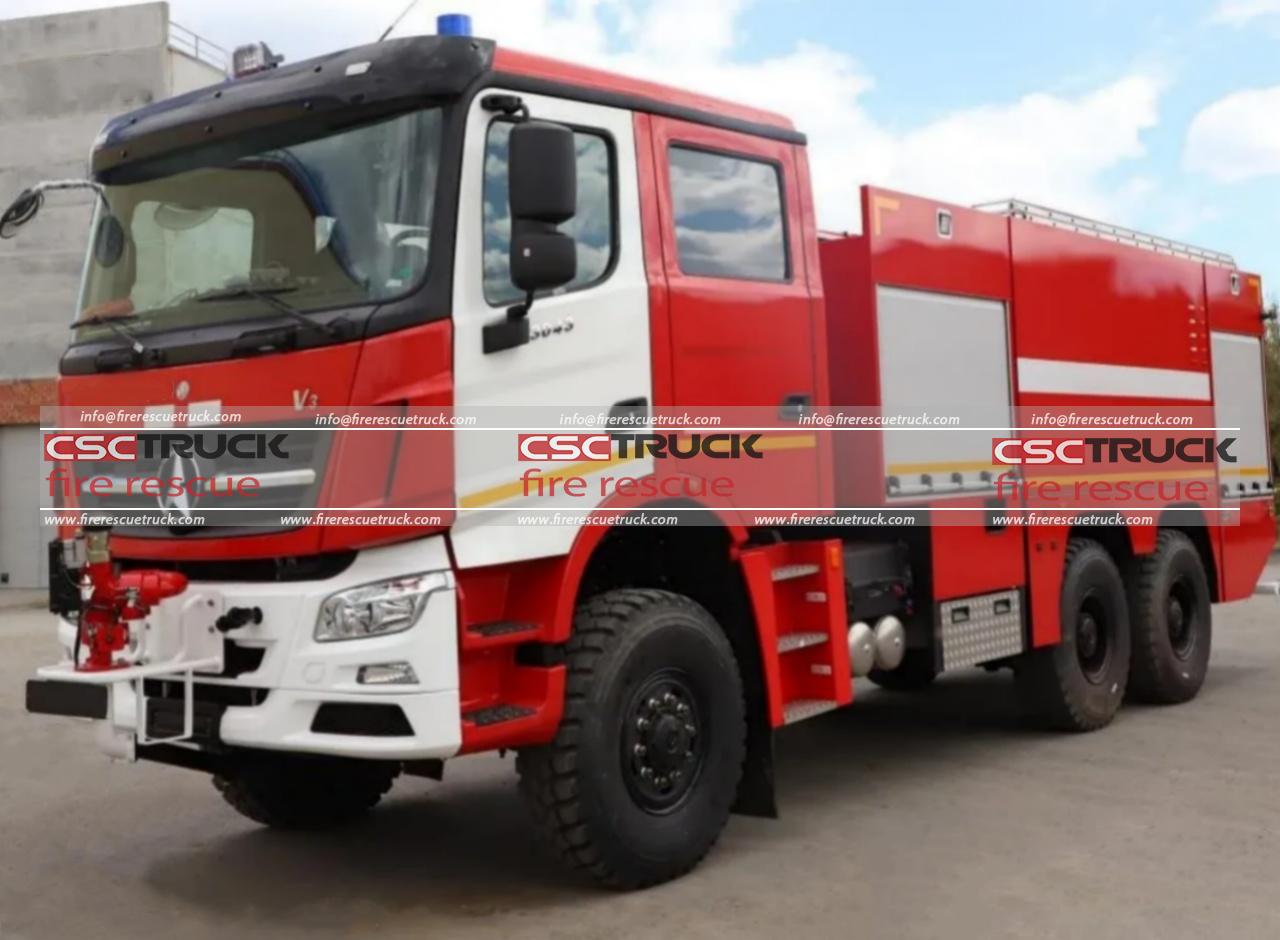
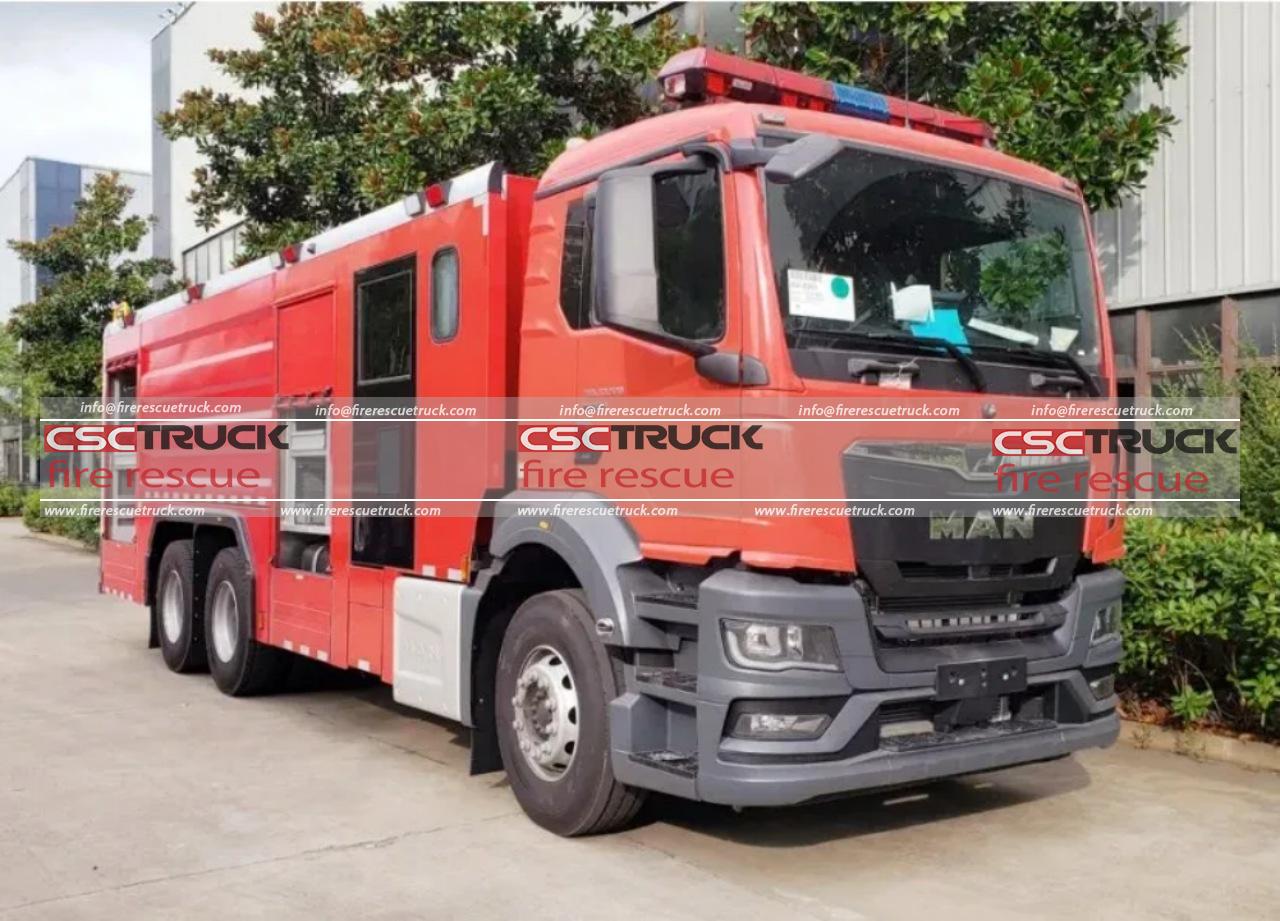
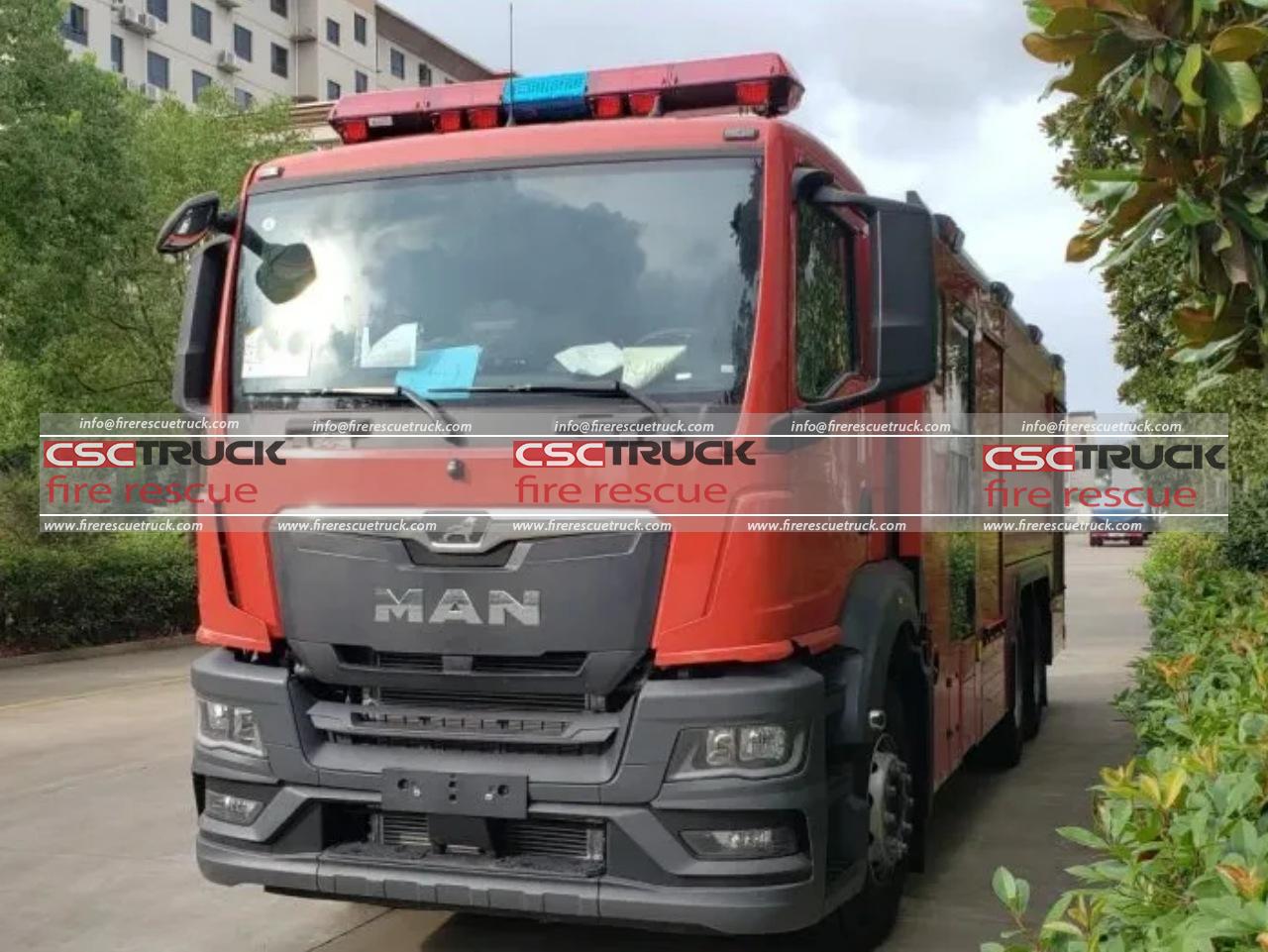
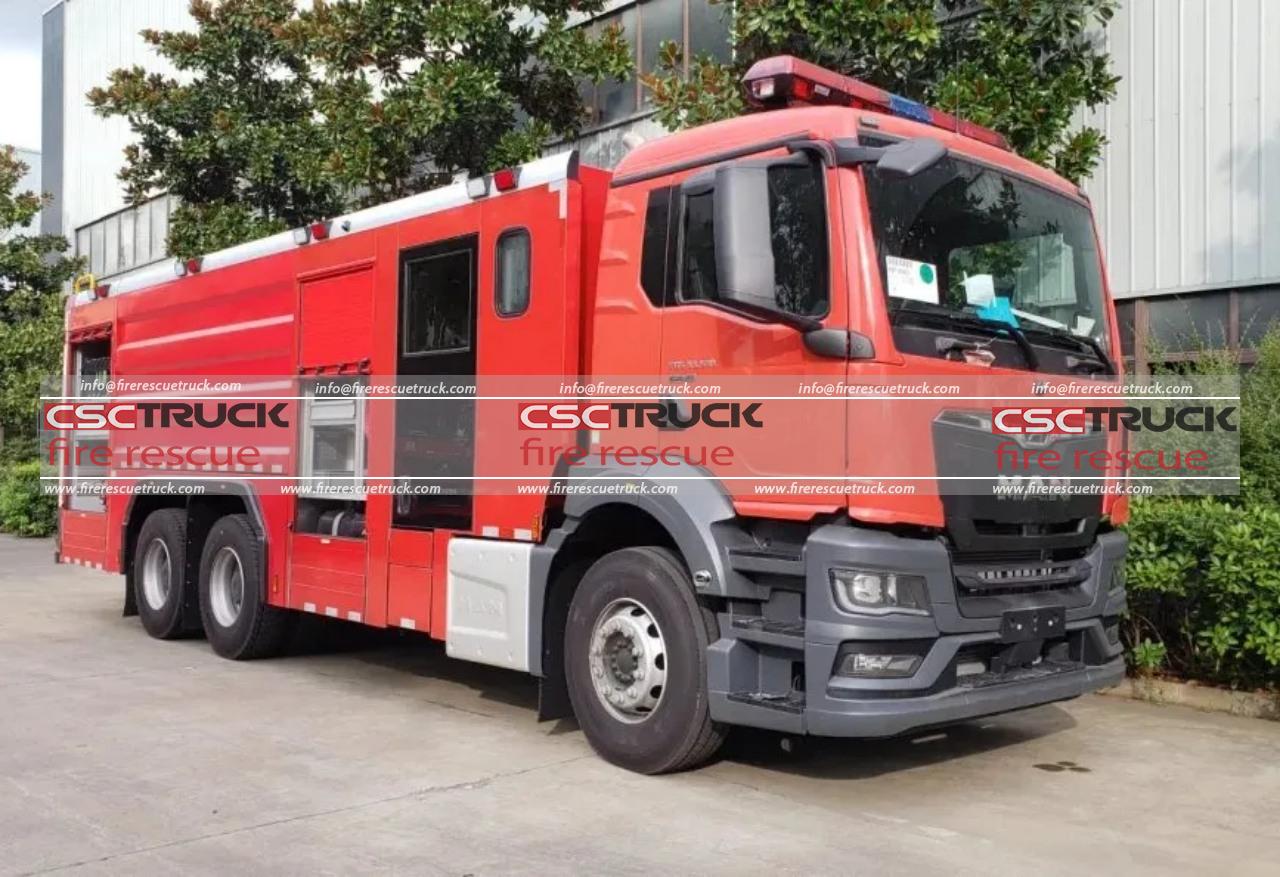
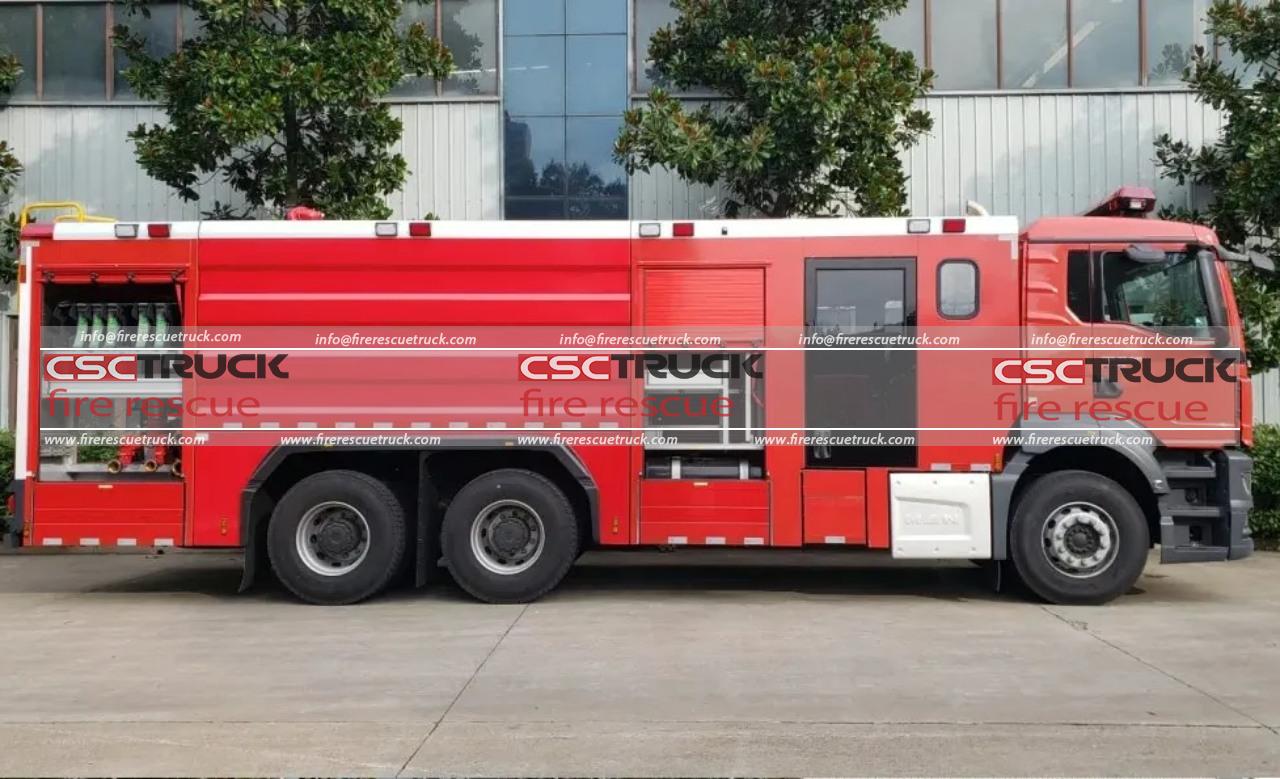
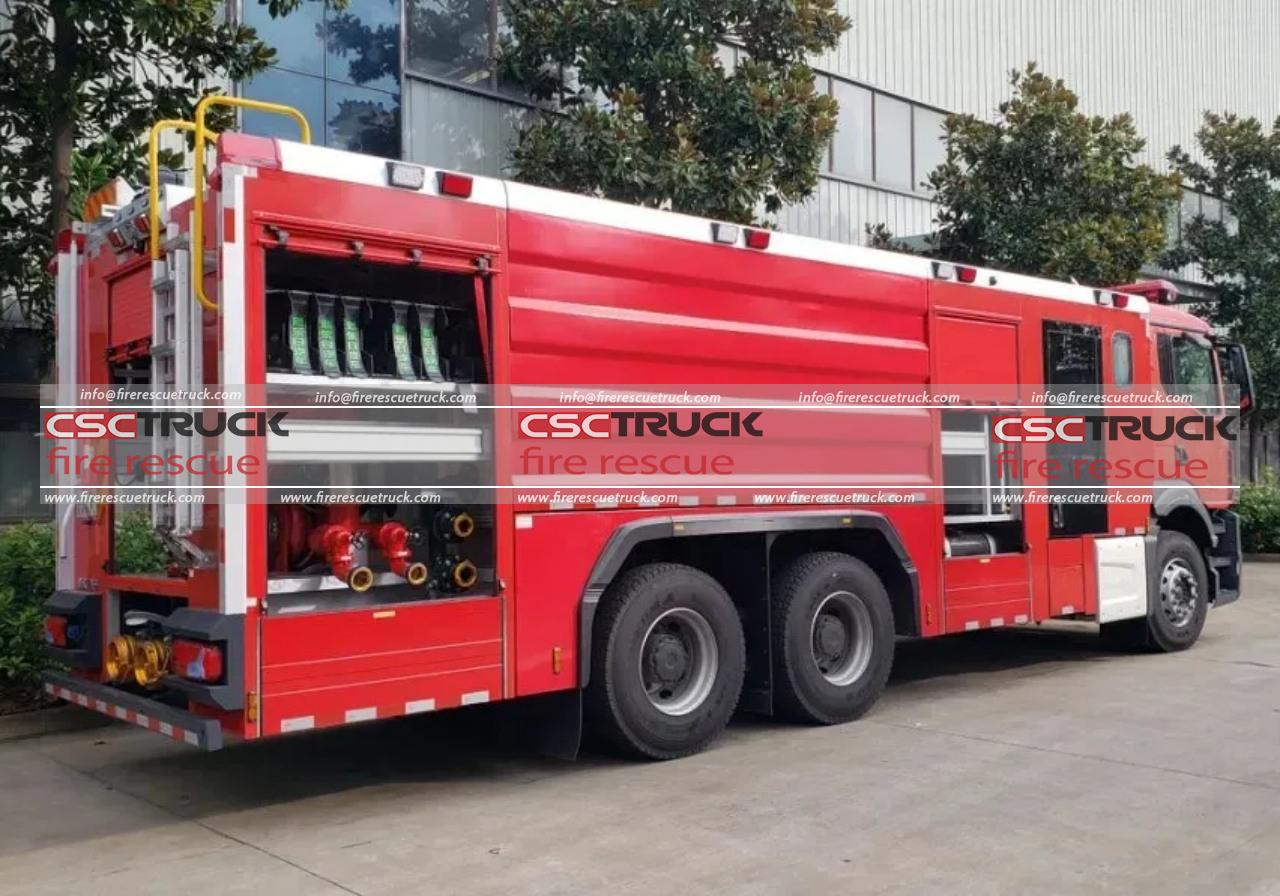
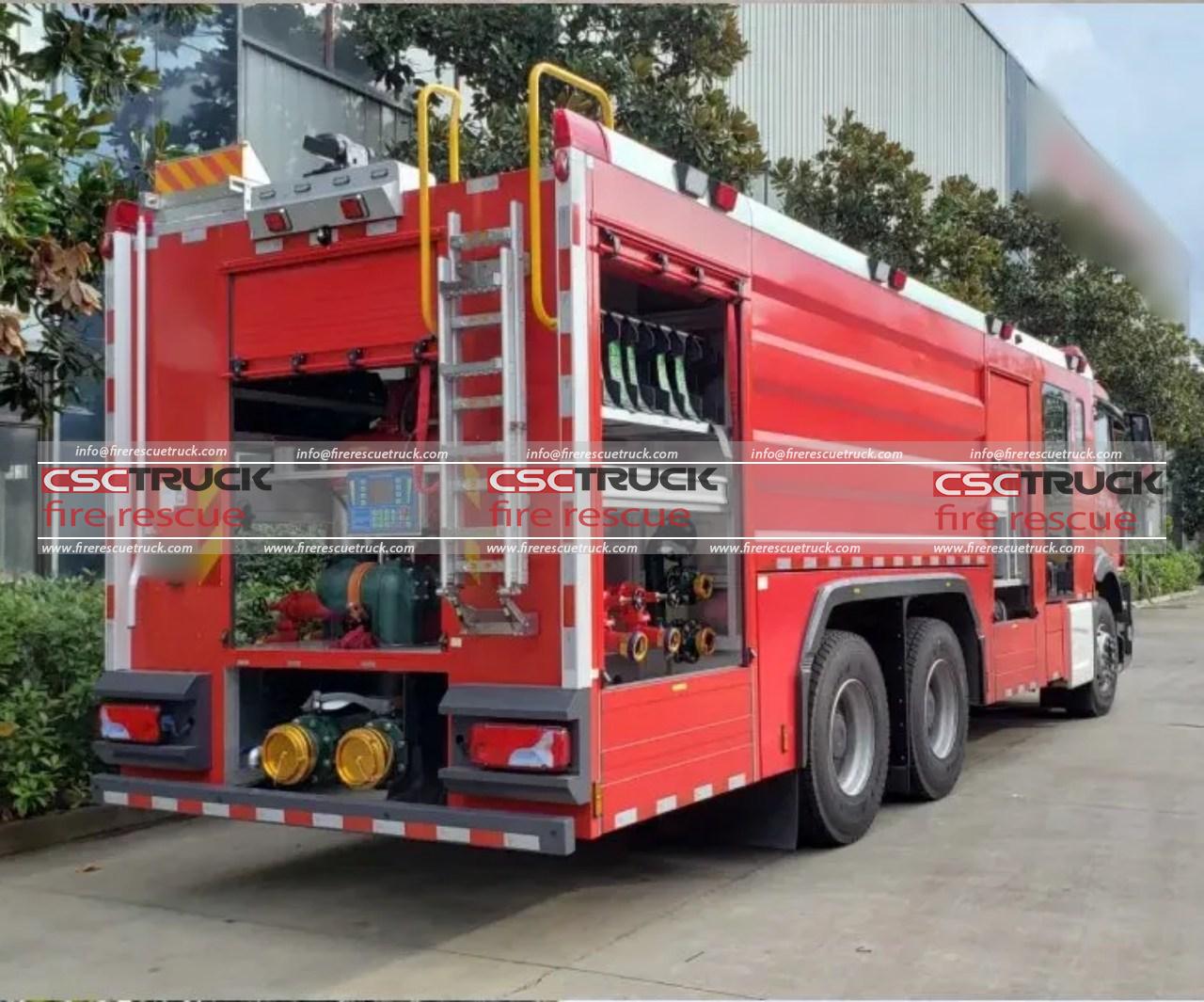
Airports require specialized firefighting vehicles capable of responding rapidly to aircraft accidents, fuel fires, and other airfield emergencies. Among the most important of these vehicles is the airport foam fire truck, commonly configured as an Aircraft Rescue and Fire Fighting (ARFF) vehicle. Unlike conventional fire engines, airport foam fire trucks are designed to carry large quantities of water and foam concentrate and discharge them rapidly through powerful pumps, monitors, and other firefighting equipment.
The basic principle is straightforward: Water provides cooling and helps form the firefighting solution, while foam is used to control flammable-liquid fires by forming a protective layer over the fuel surface. The vehicle’s tanks, pump, proportioning system, piping, and monitors must work together to deliver the agent quickly and accurately.
For airports looking for specialized firefighting equipment, CSCTRUCK Fire Rescue Truck provides a range of fire rescue and ARFF vehicles designed for demanding emergency-response applications. Its product range includes water-foam fire trucks, airport fire trucks, rescue vehicles, and customized firefighting solutions.
What Is an Airport Foam Fire Truck?
An airport foam fire truck is a specialized emergency vehicle designed primarily to fight aircraft and aviation-fuel fires. The FAA maintains dedicated guidance for ARFF vehicles, extinguishing agents, rescue equipment, communications, and related airport firefighting requirements.
A typical airport foam fire truck can include:
Large-capacity water tank
Foam concentrate tank
High-capacity fire pump
Foam proportioning system
Roof-mounted fire monitor
Bumper or front monitor
Hose outlets
Emergency lighting and warning systems
Rescue equipment
Advanced control and monitoring systems
The vehicle is also designed for rapid acceleration and high mobility. Airport emergencies may occur anywhere around a runway, taxiway, apron, or aircraft parking area, so the truck needs to reach the incident quickly and operate effectively on different paved and unpaved surfaces.
Why Do Airport Fire Trucks Use Both Water and Foam?
Water and foam have different but complementary firefighting functions.
Water is an excellent cooling agent. It absorbs large amounts of heat and can reduce the temperature of burning materials and nearby surfaces.
However, aviation fuel fires present a special challenge. Aviation fuel is a flammable liquid, and simply applying water is generally not the primary method for extinguishing a fuel-surface fire. FAA research notes that water in specialized aviation firefighting systems is used to mix with foam concentrate to produce firefighting foam.
Foam works by creating a layer over the fuel surface. Depending on the foam system and agent being used, this blanket can help:
Separate fuel from oxygen
Reduce vapor release
Suppress flames
Cool the fuel surface
Reduce the possibility of re-ignition
This makes foam particularly important when an aircraft accident results in spilled or burning aviation fuel.
How the Water System Works
The water system begins with the truck’s onboard water tank.
When firefighters activate the firefighting system, water flows from the tank toward the fire pump. The pump increases the pressure and provides the flow required by the monitor, hose, or other discharge device.
The basic process is:
Water tank → fire pump → piping → monitor/nozzle → fire
The pump must provide sufficient flow and pressure to project the agent over an appropriate distance. This is particularly important at airports because firefighters may need to attack a fire from a relatively safe distance.
For example, CSCTRUCK Fire Rescue Truck‘s Benz 11,000-liter airport fire truck is equipped with a fire pump rated at 100 L/s at 10 bar and a roof-mounted monitor capable of 80 L/s at 10 bar, with a stated water and foam range of up to 85 meters.
These specifications illustrate how an airport foam fire truck combines a large agent supply with high-capacity pumping and long-range discharge.
How the Foam System Works
The foam system adds another important stage to the process.
Instead of simply pumping water directly to the monitor, the truck introduces foam concentrate into the water stream through a foam proportioning system.
The simplified process is:
Water tank + foam tank → pump → proportioning system → foam solution → monitor → fire
The proportioning system controls how much foam concentrate is introduced into the water. Maintaining the appropriate mixture is important because insufficient or excessive concentrate can affect system performance and agent consumption.
Modern systems may use automatic controls to maintain the selected foam proportion as flow conditions change. CSCTRUCK Fire Rescue Truck‘s Benz airport fire truck, for example, uses CANBUS 2.0 controls and automatic foam-ratio adjustment as part of its firefighting system.
The Role of the Fire Pump
The fire pump is effectively the heart of the water and foam delivery system.
Its main functions are to:
Draw water from the onboard tank or an external source.
Increase water pressure.
Deliver the required flow rate.
Supply the monitor and hose systems.
Support foam production through the proportioning system.
A high-capacity pump allows firefighters to discharge a large quantity of extinguishing agent in a short period.
CSCTRUCK Fire Rescue Truck‘s 42M water and foam tower fire truck, for example, combines a water-and-foam system with a Hill CB10/100-RSD fire pump and a large-capacity water monitor. Its listed water-monitor flow is at least 120 L/s.
The actual pump and flow requirements should always be selected according to the airport’s operational requirements, vehicle configuration, applicable regulations, and firefighting strategy.
Fire Monitors: Delivering Foam to the Fire
A fire monitor, sometimes called a turret, is the device that directs water or foam toward the incident.
Airport fire trucks commonly use roof-mounted monitors because they can project extinguishing agents over significant distances while allowing firefighters to remain farther from the fire.
A monitor can typically rotate horizontally and vertically, allowing the operator to adjust the discharge direction.
For example, CSCTRUCK Fire Rescue Truck‘s Benz airport fire truck specifies a remotely controlled monitor with horizontal rotation from 0° to 340° and vertical movement from -15° to 70°.
Remote operation can also reduce the need for firefighters to stand close to intense flames or fuel spills.
Water Foam Systems and Aircraft Emergencies
Consider an aircraft experiencing an emergency during landing.
Once the airport emergency alarm is activated, the ARFF crew rapidly dispatches the airport foam fire truck. The vehicle travels toward the aircraft while firefighters prepare the firefighting system.
After positioning the vehicle, the crew can activate the pump and monitor. If a fuel fire is present, water and foam concentrate are proportioned to create the required firefighting solution. The monitor then projects the foam toward the burning fuel.
At the same time, firefighters may deploy rescue equipment and establish access routes for aircraft occupants.
This integrated response is one of the key differences between an airport foam fire truck and an ordinary municipal fire engine.
Water and Foam Capacity
Capacity is another important consideration when selecting an airport foam fire truck.
A vehicle needs enough extinguishing agent to support its initial attack while considering the airport’s required response strategy and available replenishment infrastructure.
Different CSCTRUCK Fire Rescue Truck models demonstrate how capacities can vary. Its Volvo 12,000L water foam fire apparatus, for example, is configured with 6,000 liters of water and 6,000 liters of foam, along with a 100 L/s fire pump and an 80 L/s monitor.
The appropriate capacity depends on factors such as:
Airport category and operational requirements
Aircraft types using the airport
Required firefighting agent quantities
Runway and taxiway layout
Water replenishment availability
Required response time
Local regulations and standards
Airports should therefore evaluate the complete firefighting system rather than selecting a truck based only on tank capacity.
Foam Agent Selection Is Also Important
Foam technology is changing as environmental requirements evolve.
The FAA currently provides information concerning the transition from traditional AFFF to fluorine-free foam (F3) systems at certificated Part 139 airports. In August 2026, the FAA highlighted testing requirements related to AFFF and synthetic fluorine-free foam at these airports.
Therefore, buyers should consider not only the foam tank size but also foam-agent compatibility, proportioning accuracy, testing requirements, maintenance, and local regulatory requirements.
The foam system installed on an airport fire truck should be matched to the foam agent approved or required for the specific airport application.
How to Choose an Airport Foam Fire Truck
When purchasing an airport foam fire truck, buyers should evaluate the complete system rather than focusing on a single specification.
Important parameters include:
1. Water Capacity
Determine the required onboard water quantity according to airport firefighting requirements.
2. Foam Capacity
The foam tank should be compatible with the selected firefighting agent and operational strategy.
3. Pump Flow and Pressure
A high-capacity pump is necessary for effective monitor and hose operation.
4. Monitor Performance
Check flow rate, operating pressure, throw range, rotation, elevation, and control method.
5. Vehicle Mobility
Acceleration, drivetrain, suspension, braking, and all-terrain capability can be critical during emergency response.
6. Foam Proportioning
The system should provide reliable and accurate foam proportioning across the required operating range.
7. Control System
Modern electronic controls can simplify pump, monitor, and foam-system operation.
8. Maintenance and Support
Consider spare parts, technical support, operator training, inspection requirements, and long-term service availability.
CSCTRUCK Fire Rescue Truck Airport Foam Fire Truck Solutions
CSCTRUCK Fire Rescue Truck manufactures specialized firefighting vehicles for different applications, including airport, industrial, municipal, petrochemical, and other emergency-response environments.
Its product range demonstrates different approaches to combining water, foam, pumping, and monitor systems. For example, CSCTRUCK Fire Rescue Truck offers airport fire trucks with large water and foam capacities as well as water-and-foam tower vehicles for specialized firefighting applications.
The company can also provide customized vehicle configurations based on chassis selection, tank capacity, pump performance, monitor specifications, firefighting agents, and operational requirements.
Conclusion
An airport foam fire truck is much more than a large water tanker. It is an integrated firefighting platform combining a high-mobility chassis, water and foam tanks, a high-capacity pump, foam proportioning equipment, piping, monitors, controls, and rescue equipment.
The basic operating principle can be summarized as:
Store water and foam → pump water → proportion foam → deliver the foam solution → attack the fuel fire → support rescue operations.
Water provides important cooling capability, while foam is particularly valuable for controlling flammable-liquid fires. The effectiveness of the complete system depends on the correct combination of agent capacity, pump performance, proportioning accuracy, monitor range, vehicle mobility, and operator control.
For airports evaluating new ARFF equipment, the best starting point is to define the required firefighting performance and regulatory requirements first, then select an airport foam fire truck whose water, foam, pump, monitor, chassis, and control systems meet those requirements.