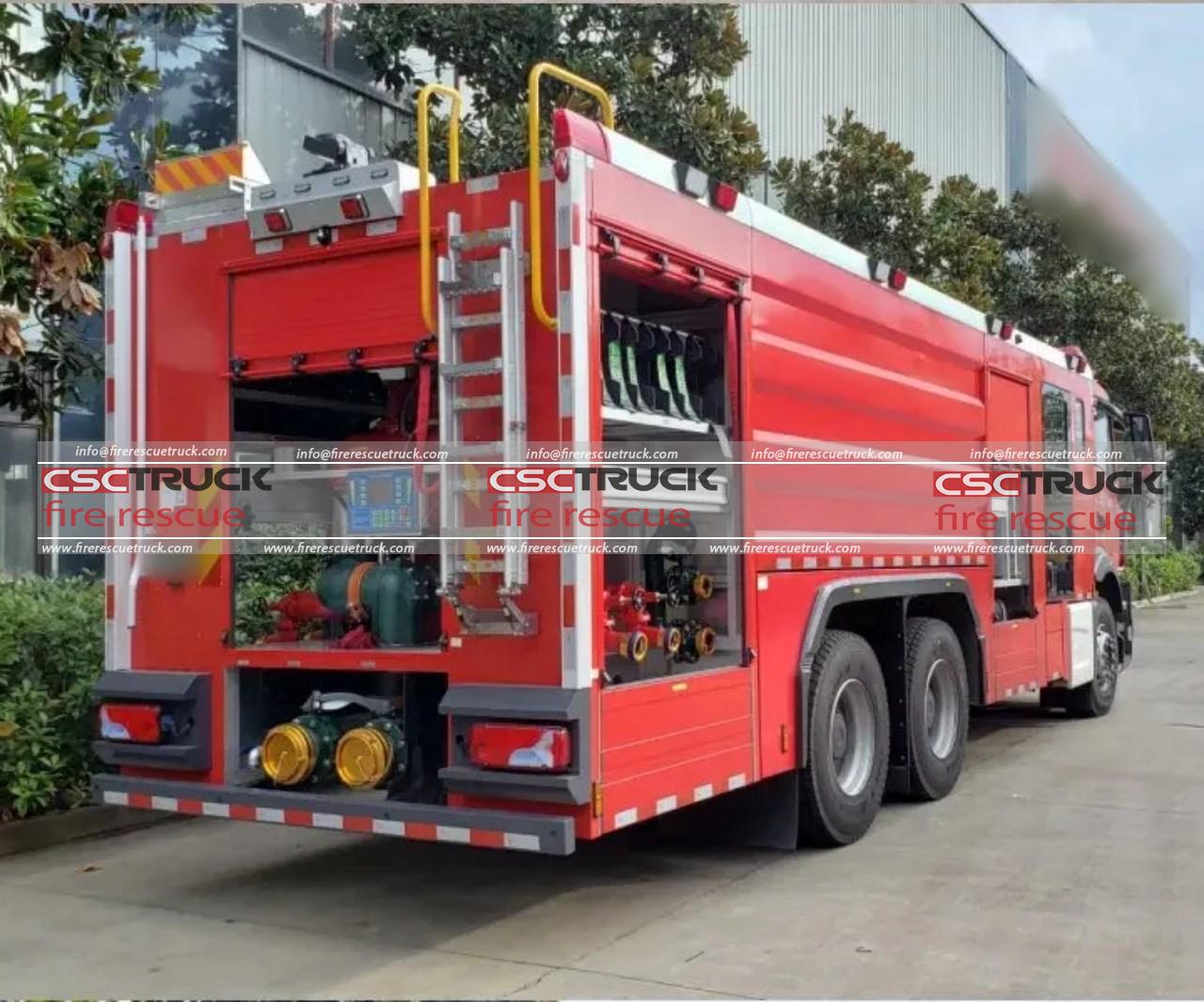

Introduction to CSCTRUCK Fire Rescue Truck
Modern firefighting operations require vehicles that combine mobility, power, and advanced suppression technology. For demanding environments such as airports, industrial zones, oil facilities, forests, and remote areas, a standard fire engine may not provide enough capability. This is where heavy-duty 6×6 fire trucks become essential.
CSCTRUCK Fire Rescue Truck specializes in manufacturing high-performance emergency response vehicles, including 4×4 and 6×6 rescue fire trucks, airport rescue and firefighting (ARFF) vehicles, and customized firefighting solutions. Their 6×6 fire trucks are designed with strong off-road mobility, a large capacity for extinguishing agents, and advanced firefighting systems for operating in extreme conditions.
A common question from firefighting organizations is: Can foam systems be installed on a 6×6 fire truck? The answer is YES. In fact, many heavy-duty 6×6 fire trucks are specifically designed to integrate foam systems, allowing them to fight fuel fires, chemical fires, and other high-risk incidents more effectively.
What Is a Foam System on a Fire Truck?
A foam system is a firefighting technology that mixes water with foam concentrate to create firefighting foam. Unlike water alone, foam works by forming a blanket over burning materials, cutting off oxygen supply, reducing vapor release, and preventing re-ignition.
Foam systems are especially important for:
- Aircraft fuel fires
- Oil and gas fires
- Chemical facility fires
- Industrial equipment fires
- Vehicle fuel fires
- Hazardous material incidents
A typical foam firefighting system includes:
- Foam concentrate tank
- Water tank
- Foam proportioning system
- Pump system
- Foam discharge equipment, such as monitors and nozzles
By combining these components, a fire truck can deliver a mixture of water and foam at high pressure and high flow rates.
Can a 6×6 Fire Truck Support a Foam System?
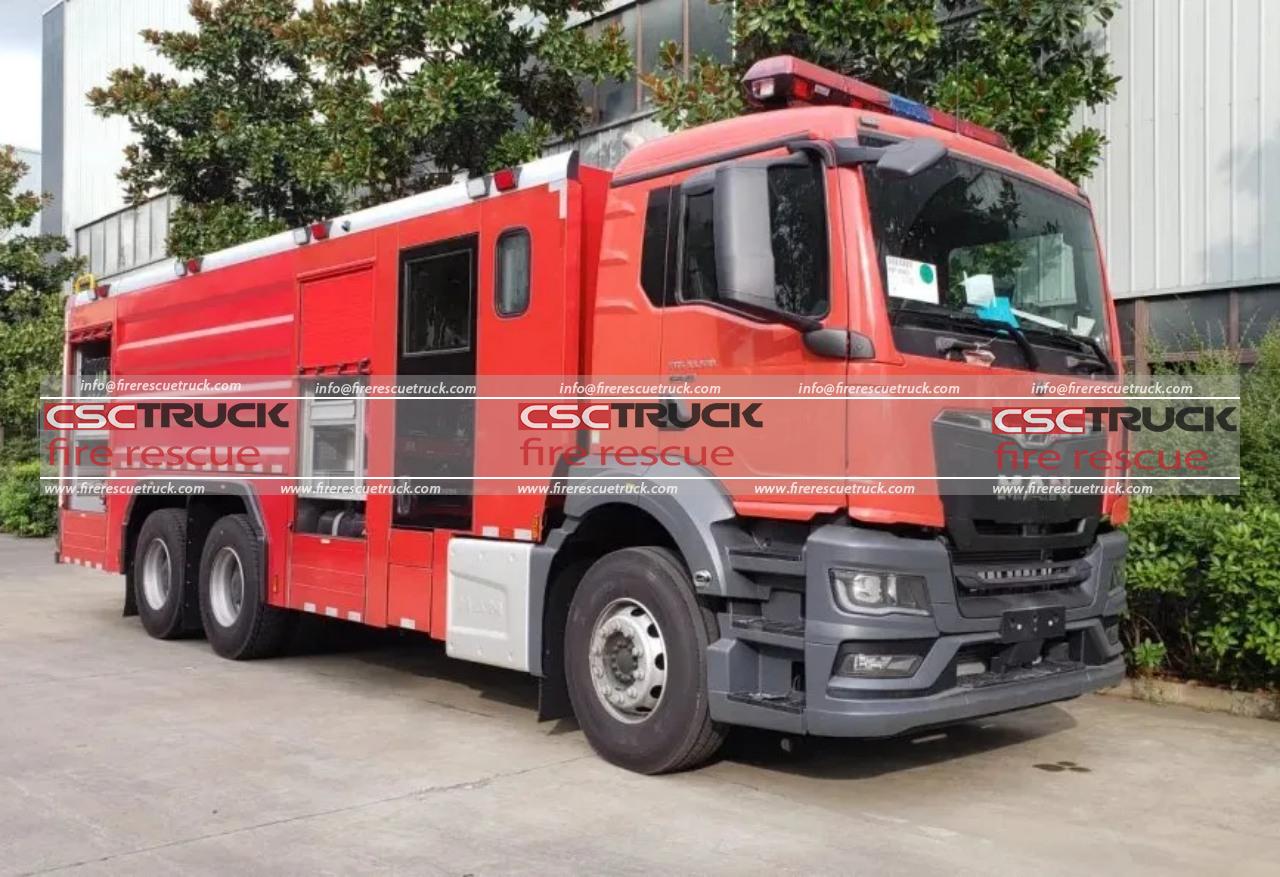
Yes. A 6×6 fire truck can support a foam system, and many specialized models are built with integrated water-foam firefighting capabilities.
The 6×6 chassis provides several advantages for foam-equipped firefighting vehicles:
1. High Load Capacity
Foam systems require additional equipment, including:
- Large foam tanks
- High-capacity pumps
- Piping systems
- Foam proportioning equipment
- Fire monitors
A 6×6 chassis offers a higher payload capacity compared to smaller vehicles. This allows manufacturers to install larger firefighting tanks without significantly reducing vehicle performance.
For example, CSCTRUCK Fire Rescue Truck 6×6 ARFF fire trucks can be configured with thousands of liters of water and foam storage capacity. Some models include water tanks exceeding 10,000 liters and foam tanks ranging from hundreds to thousands of liters.
2. Stable Platform for High-Flow Fire Pumps
Large fires require enormous amounts of extinguishing agent. A foam-equipped 6×6 fire truck usually uses a high-performance fire pump capable of delivering high flow rates.
The six-wheel-drive configuration improves stability because:
- Weight is distributed across three axles
- Traction is improved on uneven terrain
- Vehicle stability is increased during high-pressure water or foam discharge
This is particularly important when operating roof monitors or bumper-mounted foam monitors.
CSCTRUCK Fire Rescue Truck 6×6 airport firefighting vehicles, for example, can be equipped with high-flow pumps and foam projection systems designed for rapid suppression of aircraft and fuel fires.
Types of Foam Systems Available for 6×6 Fire Trucks
Different firefighting applications require different foam technologies.
1. Low-Expansion Foam Systems
Low-expansion foam is commonly used for:
- Aircraft fires
- Petroleum fires
- Industrial fires
It creates a dense foam blanket that spreads quickly over large burning surfaces.
Many airport rescue firefighting trucks use this type of foam system because aviation fuel fires require rapid suppression over large areas.
2. Compressed Air Foam Systems (CAFS)
A CAFS system combines:
- Water
- Foam concentrate
- Compressed air
The result is a lighter, more stable foam that provides improved coverage and longer-lasting protection.
Advantages of CAFS include:
- Less water consumption
- Faster fire knockdown
- Better heat absorption
- Improved foam adhesion on vertical surfaces
CSCTRUCK Fire Rescue Truck also manufactures firefighting vehicles equipped with CAFS technology, combining foam concentrate systems with compressed air foam generation equipment.
3. High-Expansion Foam Systems
High-expansion foam produces large volumes of foam and is commonly used in:
- Aircraft hangars
- Warehouses
- Underground facilities
- Large industrial buildings
A customized 6×6 fire truck can be equipped with high-expansion foam equipment depending on customer requirements.
How Is a Foam System Installed on a 6×6 Fire Truck?
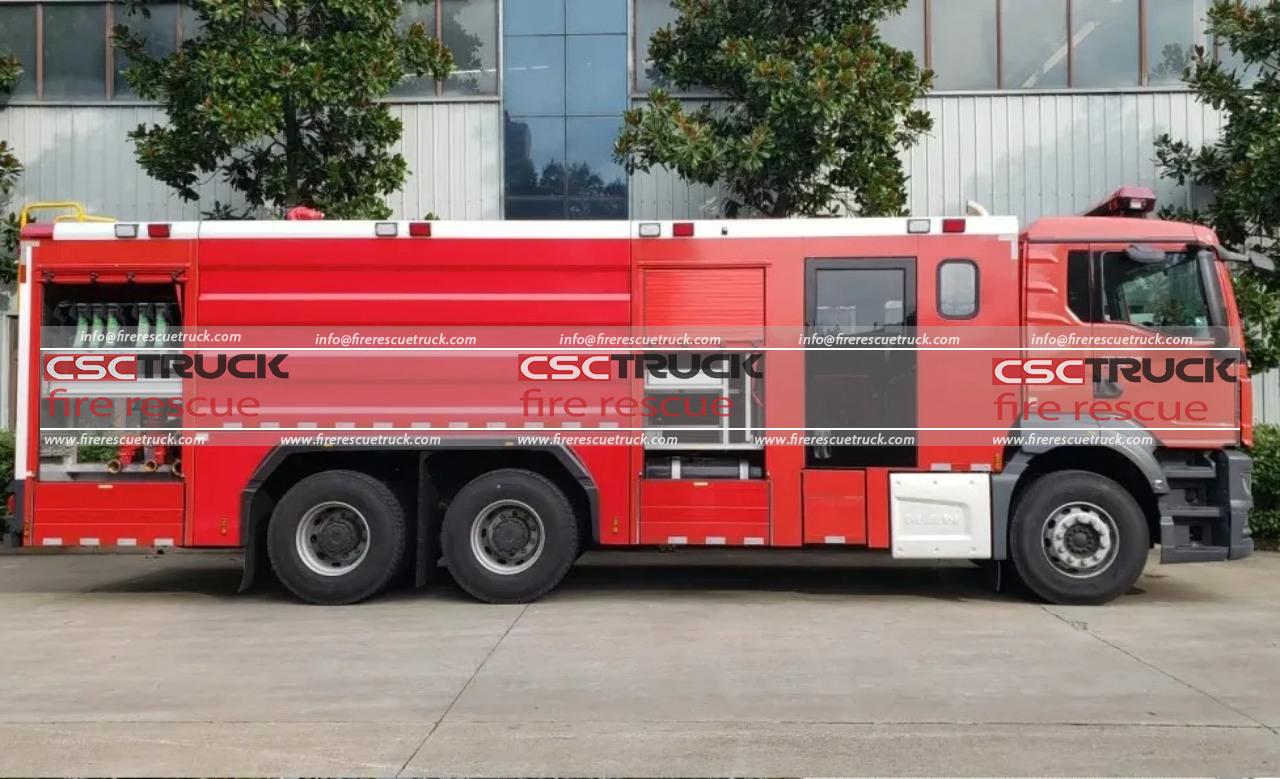
Installing a foam system requires careful vehicle engineering. The main installation steps include:
1. Chassis Assessment
Engineers first evaluate:
- Vehicle weight capacity
- Axle load distribution
- Available installation space
- Power requirements
A 6×6 chassis is usually preferred because it provides additional strength for heavy firefighting equipment.
2. Tank Installation
The vehicle body is designed with separate tanks for:
- Water
- Foam concentrate
The tanks must be corrosion-resistant and securely mounted to withstand vibration and emergency driving conditions.
Materials such as composite tanks are often used because they provide durability while reducing weight.
3. Pump and Mixing System Integration
The foam proportioning system must accurately control the ratio between:
- Water flow
- Foam concentrate
- Air (for CAFS systems)
Incorrect mixing can reduce firefighting performance, so precision control systems are essential.
4. Monitor and Nozzle Installation
Foam can be discharged through:
- Roof monitors
- Front bumper monitors
- Side outlets
- Hand lines
For airport rescue vehicles, roof monitors are especially important because they allow firefighters to attack aircraft fires from a safer distance.
Advantages of a Foam-Equipped 6×6 Fire Truck
Strong Fire Suppression Capability
Foam systems provide superior performance against flammable liquid fires compared with water alone.
Longer Operational Time
Large tanks allow firefighters to continue operations before an external water supply becomes available.
Better Performance in Remote Areas
The 6×6 drivetrain allows the vehicle to reach:
- Airports
- Mining areas
- Oil fields
- Forest regions
- Industrial sites
where road conditions may be difficult.
Multi-Purpose Operation
A foam-equipped 6×6 truck can handle:
- Structural fires
- Vehicle fires
- Fuel fires
- Rescue operations
- Industrial emergencies
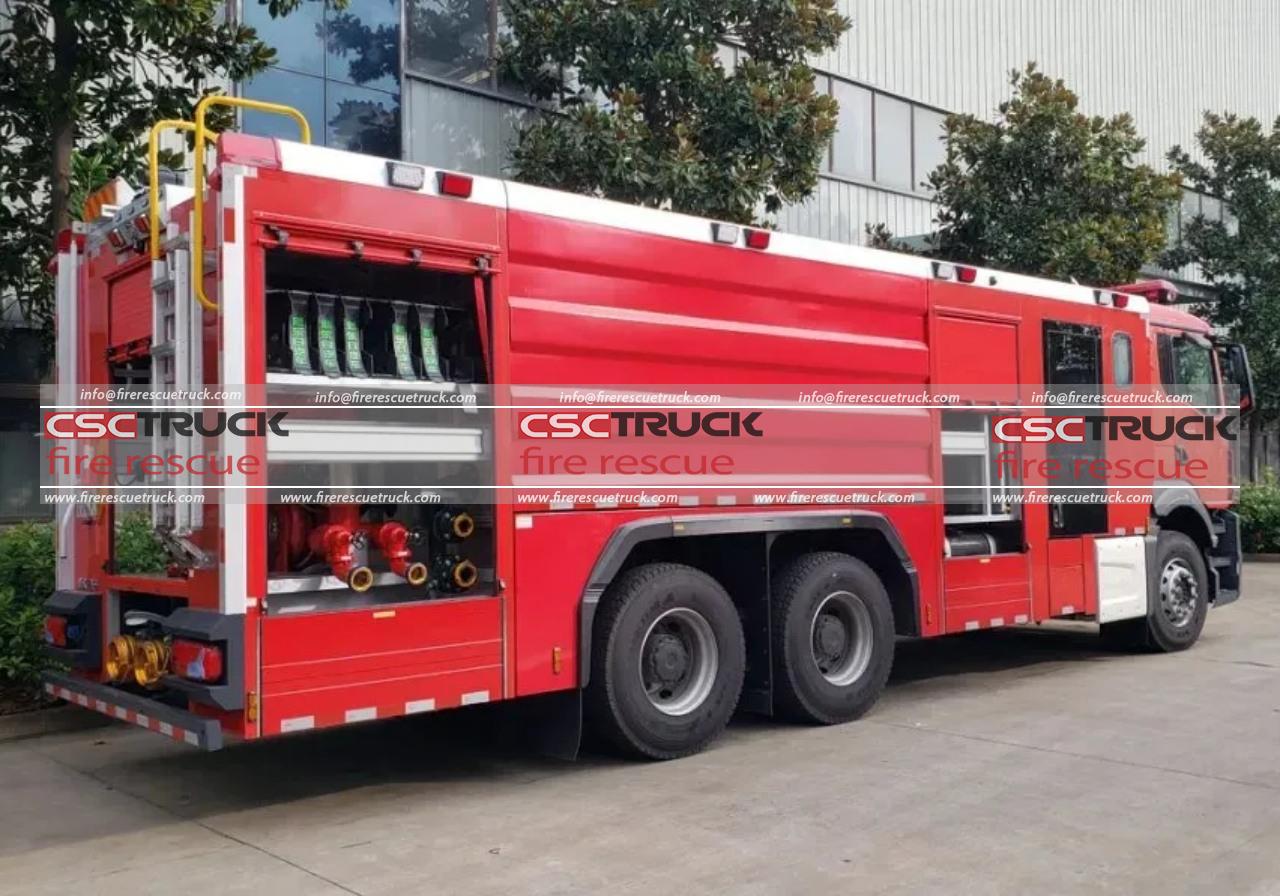
Applications of Foam Systems on 6×6 Fire Trucks
Airport Firefighting
Aircraft accidents often involve aviation fuel fires requiring immediate foam application. 6×6 ARFF trucks are widely used because they combine high speed, large capacity, and foam capability.
Oil and Chemical Industries
Foam is essential for controlling:
- Crude oil fires
- Gasoline fires
- Chemical storage fires
A heavy-duty 6×6 platform provides the necessary equipment capacity.
Military and Remote Emergency Response
Military bases and remote facilities often require vehicles capable of operating away from paved roads. The 6×6 drivetrain provides additional mobility.
Conclusion
A foam system can absolutely be installed on a 6×6 fire truck. In fact, many modern 6×6 firefighting vehicles are designed specifically around foam-based suppression systems.
The combination of a powerful 6×6 chassis, large water and foam capacity, high-flow pumps, and advanced foam technology creates a highly effective emergency response platform. Whether used for airport rescue, industrial firefighting, or remote disaster response, a foam-equipped 6×6 fire truck provides the mobility and firefighting power needed for complex fire situations.
CSCTRUCK Fire Rescue Truck offers customized 6×6 firefighting solutions with integrated water-foam systems, CAFS options, and specialized rescue configurations to meet different operational requirements worldwide.