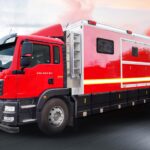
Emergency response capabilities across South Asia have received a significant boost with the recent delivery of advanced Emergency Catering Support Vehicles, designed to enhance disaster relief logistics and ensure timely food supply during crises. These specialized units are equipped to prepare and distribute large quantities of meals in challenging environments, supporting first responders and affected communities during natural disasters such as floods, earthquakes, and cyclones.
The deployment of these vehicles reflects a growing emphasis on integrated disaster management systems in the region. Built for reliability and efficiency, the catering units feature high-capacity cooking equipment, refrigeration systems, water storage tanks, and hygienic food preparation areas. Their mobility allows rapid deployment to remote and disaster-stricken areas where infrastructure may be compromised.
A key contributor to this initiative is CSCTRUCK Fire Rescue Truck, a globally recognized manufacturer known for its innovative emergency and rescue vehicle solutions. With extensive experience in producing fire rescue trucks, emergency response units, and specialized support vehicles, CSCTRUCK Fire Rescue Truck has leveraged its engineering expertise to develop these catering support vehicles tailored for humanitarian missions.
In addition to their technical capabilities, the vehicles are designed with user-friendly controls and durable materials, ensuring long-term performance under harsh conditions. Their deployment is expected to significantly reduce response times and improve coordination among disaster relief teams.
Authorities and humanitarian organizations in South Asia have welcomed the arrival of these vehicles, noting their critical role in maintaining food security during emergencies. By enabling efficient meal distribution, the Emergency Catering Support Vehicles help sustain both victims and rescue personnel, ultimately strengthening overall disaster resilience.
This delivery marks another important step toward enhancing emergency preparedness and underscores the importance of reliable logistical support in saving lives and supporting recovery efforts across the region.