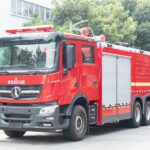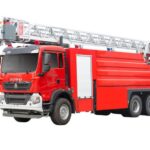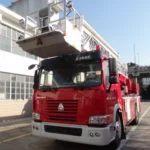
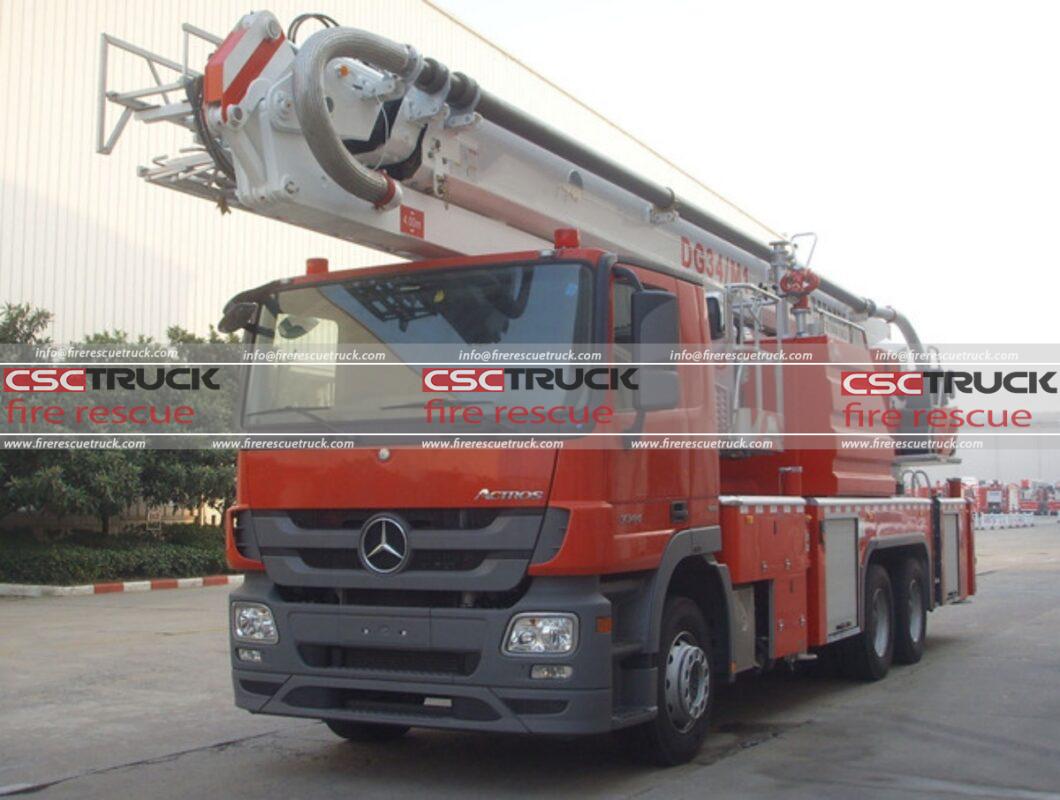
In the field of firefighting and emergency rescue, the ability to perform efficient, safe, and high-reaching operations is of utmost importance. The platform fire truck, also known as an aerial platform fire truck, plays a critical role in enabling firefighters to access elevated areas during fires, rescues, and other emergencies. Equipped with a hydraulically operated platform or basket mounted on an extendable boom, this truck allows for the safe evacuation of people, the delivery of water or foam at high elevations, and the execution of complex firefighting tasks. Its reliability, stability, and advanced safety systems make it one of the most trusted vehicles in modern fire departments around the world.
1. Introduction to Platform Fire Trucks
A platform fire truck is a specialized firefighting vehicle designed to provide vertical and horizontal reach using a telescopic or articulating boom fitted with a working platform. Unlike ladder fire trucks that rely on mechanical ladders, platform fire trucks use hydraulic systems to raise, extend, and rotate the platform smoothly, offering enhanced safety and stability for firefighters working at heights.
These trucks are primarily used for high-rise building fires, rescue operations in tall structures, and situations requiring water or foam discharge from above. They combine mobility, hydraulic precision, and firefighting capability into 1 integrated machine, ensuring quick and safe emergency response.

2. Structure and Components
A typical platform fire truck is built on a heavy-duty commercial chassis, ensuring durability and strength. The main components include:
- Chassis and Powertrain: Built on robust platforms such as Mercedes-Benz, MAN, Scania, or HOWO, these trucks are powered by high-torque diesel engines. They provide the necessary power to operate the hydraulic system, water pumps, and auxiliary equipment.
- Hydraulic Boom System: The core of the platform fire truck is its extendable boom, which may be telescopic, articulated, or a combination of both. The boom can typically reach heights ranging from 20 to over 100 meters, depending on the model.
- Platform or Basket: The platform at the end of the boom is designed to carry firefighters, rescue personnel, or victims. It is equipped with safety railings, anti-slip flooring, communication systems, and controls for movement. Some models also feature integrated water monitors (nozzles) for direct firefighting from the platform.
- Water Pump and Tank System: Many platform fire trucks are equipped with high-capacity centrifugal water pumps and onboard water or foam tanks, allowing them to perform aerial firefighting independently or in coordination with other fire engines.
- Control Systems: The truck features advanced electro-hydraulic controls, allowing operators to maneuver the boom with precision. Modern systems include computerized stabilization, automatic leveling, and load monitoring for safety.
- Safety Features: Outriggers provide ground stability, while emergency descent systems ensure safety during power failure. Some models also integrate thermal cameras, LED floodlights, and remote-control functions to enhance visibility and control in difficult conditions.
3. Working Principles
The platform fire truck operates through a combination of hydraulic, mechanical, and electronic systems. Once deployed, the outriggers are extended to stabilize the truck. The operator then controls the hydraulic boom from either the base or the platform, extending it to the required height and angle.
The hydraulic lift system provides smooth and controlled movement, even under heavy load conditions. The water or foam system can be operated simultaneously, allowing firefighters to extinguish fires from elevated positions. The platform can rotate 360 degrees, offering full spatial coverage and flexibility during operations.

4. Applications of Platform Fire Trucks
The platform fire truck is versatile and can be used in a wide range of scenarios, including:
- High-Rise Firefighting: Essential for combating fires in tall buildings where conventional hoses and ladders are ineffective.
- Rescue Operations: Ideal for rescuing trapped individuals from upper floors or rooftops during building fires, earthquakes, or industrial accidents.
- Industrial Firefighting: Used in refineries, factories, and chemical plants to provide elevated firefighting access.
- Disaster Relief and Evacuation: In natural disasters or urban emergencies, the platform can be used for aerial surveillance, rescue, and debris removal.
- Maintenance and Inspection: Outside firefighting, some municipalities use platform trucks for streetlight maintenance, inspection of bridges, and installation of high signage.
5. Key Features and Advantages
(a) Extended Reach and Flexibility:
Modern platform fire trucks offer an extended vertical reach—some models reaching up to 100 meters—and a significant horizontal outreach. This enables firefighters to access hard-to-reach areas safely and efficiently.
(b) Enhanced Safety:
The enclosed working platform provides a stable and secure space for personnel, reducing the risks of falls compared to traditional ladders. The hydraulic stabilization system ensures the vehicle remains balanced even on uneven ground.
(c) High Firefighting Capacity:
Equipped with high-pressure water pumps (up to 100 L/s or more) and foam systems, these trucks can deliver powerful water or foam streams from elevated nozzles. The ability to direct water from above improves extinguishing effectiveness, especially for large-scale fires.
(d) Multi-Functional Design:
The platform truck can perform multiple functions—firefighting, rescue, and observation—making it a cost-effective and essential tool for fire departments.
(e) Advanced Technology Integration:
Many modern trucks include computerized control systems, remote operation capabilities, automatic positioning, and real-time monitoring of load, angle, and boom stability. These features enhance operational efficiency and safety.

6. Safety and Reliability
Safety is the defining characteristic of the platform fire truck. The hydraulic boom and platform undergo rigorous testing to ensure they can withstand high loads and dynamic stress. The outrigger system prevents tipping, while redundant hydraulic circuits allow continued operation even if one system fails.
The use of high-strength steel or aluminum alloy ensures durability while keeping the boom lightweight. Fire departments also benefit from integrated emergency descent systems, ensuring firefighters can safely return to the ground in case of power or hydraulic failure.
Reliability is further reinforced by the truck’s automatic control and feedback mechanisms, which prevent overextension or unsafe angles. Together, these features make the platform fire truck one of the safest high-reach rescue vehicles in operation.
7. Global Variants and Manufacturers
Leading global manufacturers such as Magirus, Rosenbauer, Bronto Skylift, Morita, XCMG, and CSCTRUCK produce a wide range of platform fire trucks with varying heights, capacities, and functions.
For example, the Bronto Skylift F112HLA offers a reach of 112 meters, one of the highest in the world, while CSCTRUCK’s Platform Fire Trucks provide reliable performance for municipal and industrial firefighting, combining high lifting capability with durable engineering.
These vehicles are tailored to meet different regional requirements—ranging from compact urban models for narrow city streets to large-scale aerial trucks designed for airports, petrochemical plants, and metropolitan fire brigades.

8. Conclusion
The platform fire truck stands as a symbol of reliability, safety, and technological innovation in modern firefighting. By combining powerful hydraulic lifting systems, advanced control mechanisms, and robust firefighting equipment, it enables firefighters to tackle emergencies that would otherwise be beyond human reach.
From rescuing people trapped in high-rise buildings to delivering powerful water or foam jets at great heights, the platform fire truck plays an irreplaceable role in saving lives and protecting property. Its reliability under extreme conditions and versatility in diverse rescue operations make it a cornerstone of any advanced firefighting fleet.
As urban environments continue to grow vertically and industrial risks become more complex, the need for dependable and safe aerial rescue vehicles will only increase. The platform fire truck, with its exceptional reach, precision, and safety features, remains the ultimate solution for safe and effective rescue operations in modern fire service.