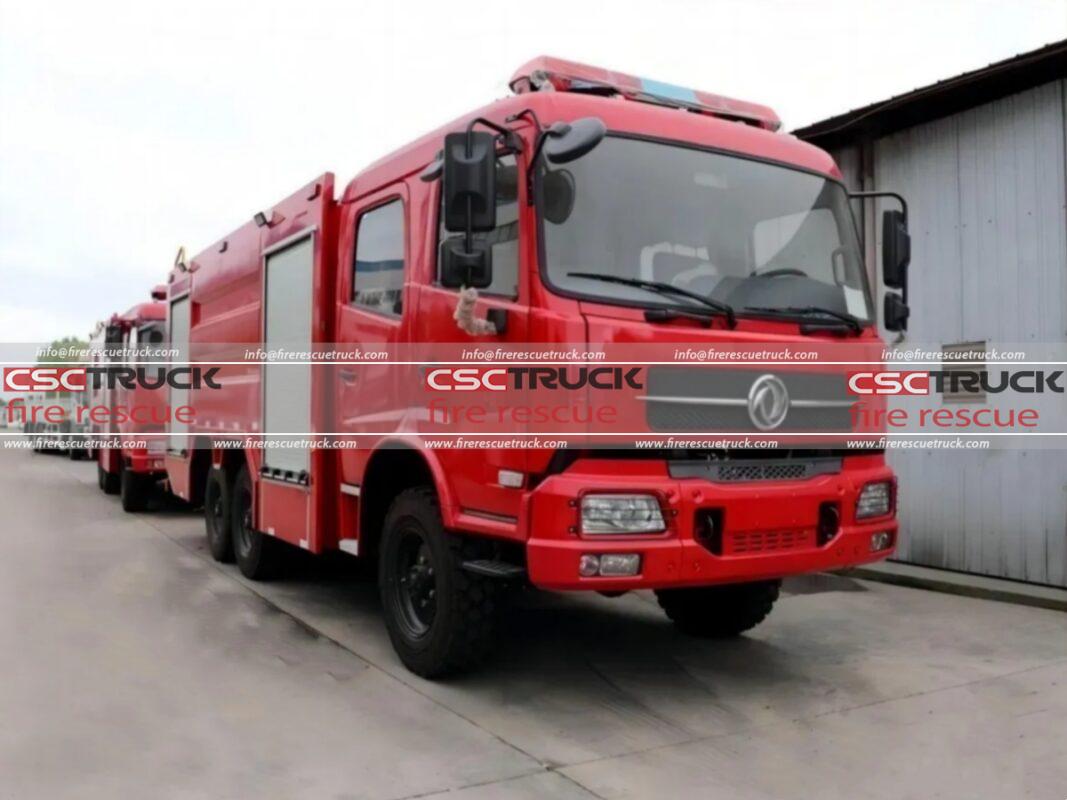
A 6×6 fire truck is a heavy-duty, all-terrain firefighting vehicle designed to operate in some of the most demanding environments—mountain roads, deserts, forests, industrial sites, and off-road disaster zones. One of its most critical performance parameters is pump capacity, which determines how effectively it can deliver water or foam to suppress fires.
Modern manufacturers such as CSCTRUCK Fire Rescue Truck design advanced 6×6 fire and rescue vehicles equipped with robust pumping systems tailored for municipal, industrial, and off-road emergency response. These trucks combine high mobility with strong firefighting power, making them essential assets for rapid intervention in remote or high-risk areas.
Understanding Pump Capacity in Fire Trucks
Pump capacity refers to the volume of water a fire truck pump can deliver per minute, usually measured in:
- GPM (gallons per minute) in the United States
- LPM (liters per minute) internationally
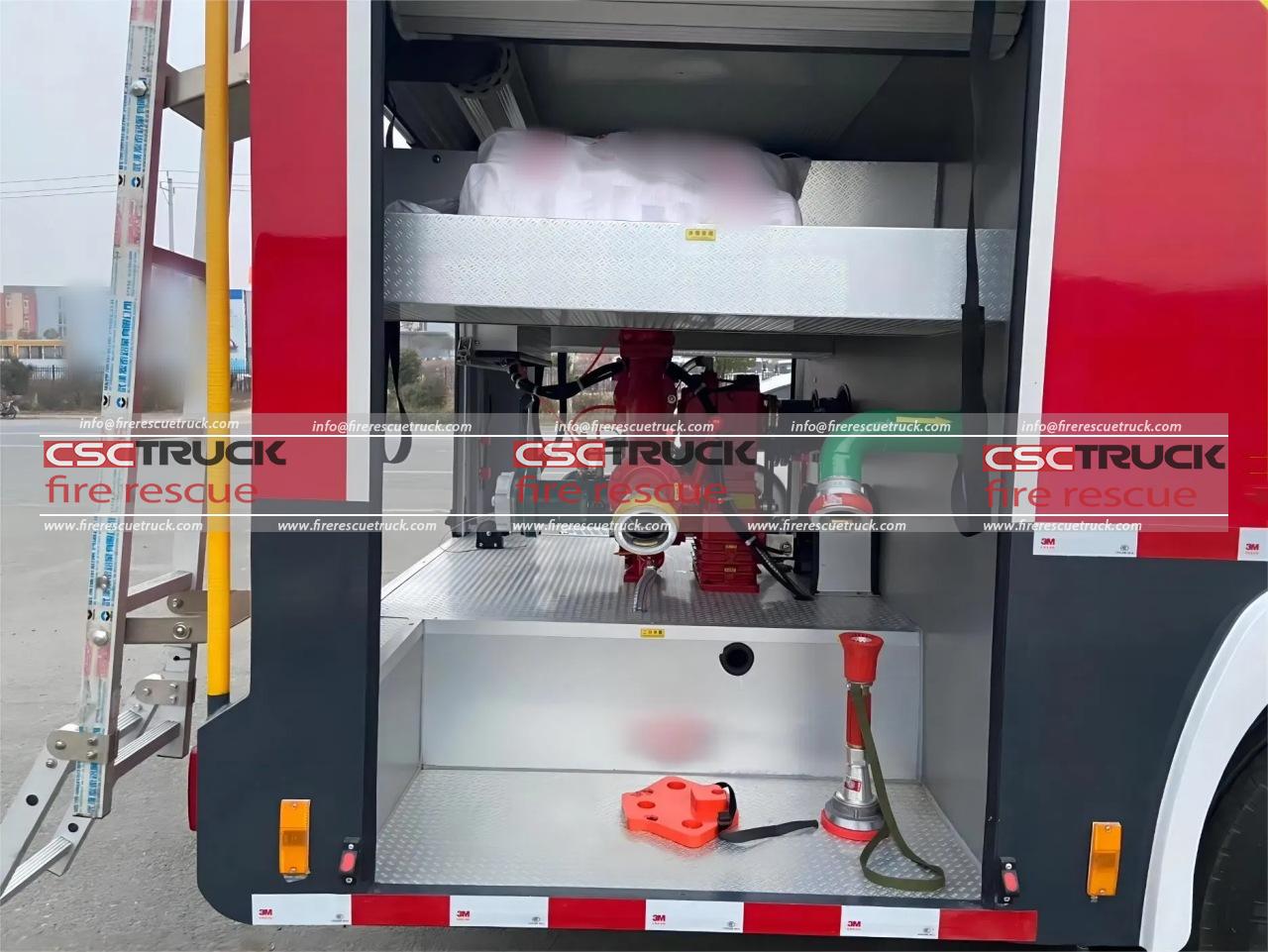
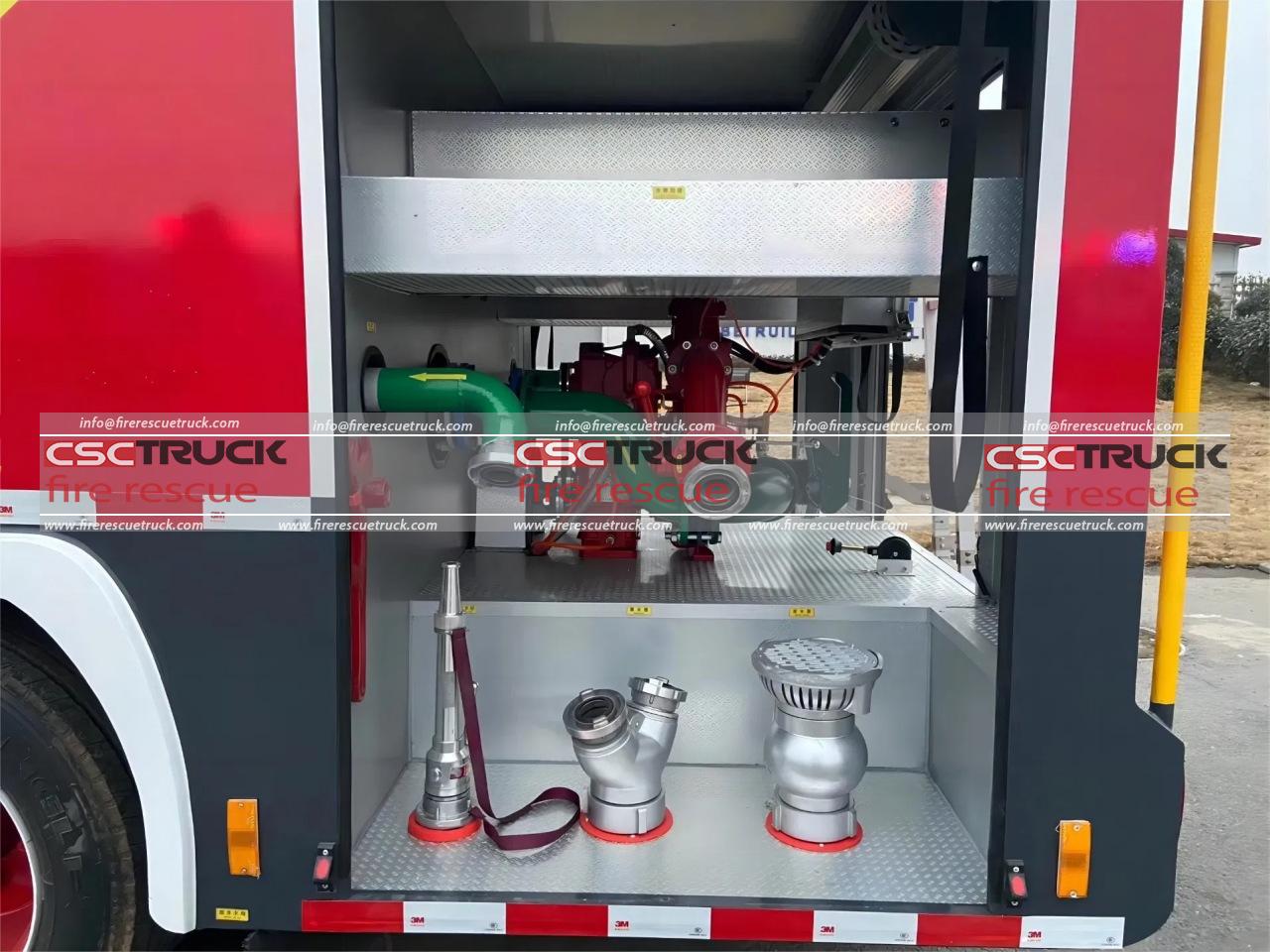
In firefighting systems, the pump acts as the “heart” of the vehicle, pushing water from onboard tanks or external sources (hydrants, lakes, or reservoirs) through hoses and nozzles at high pressure.
For a 6×6 fire truck, this capacity depends on its mission profile—whether it is designed for urban firefighting, wildland operations, industrial protection, or airport rescue.
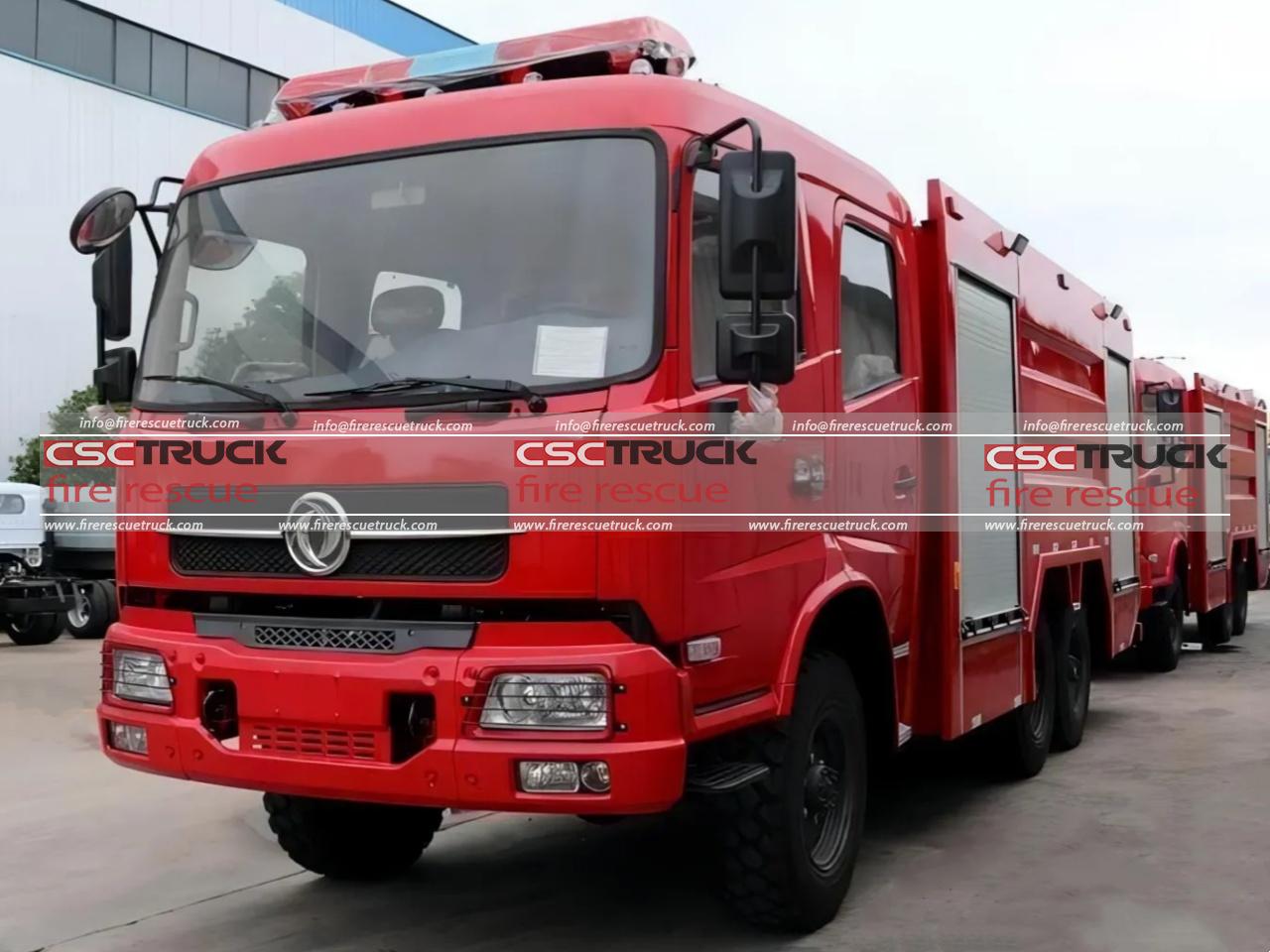
Typical Pump Capacities of 6×6 Fire Trucks
A 6×6 configuration is usually used for medium to heavy-duty fire apparatus, where stability, off-road traction, and water delivery power are all critical.
1. Standard Municipal 6×6 Fire Engines
These are used for structural firefighting in cities or suburban zones.
- Pump capacity: 1,000–2,000 GPM (3,800–7,600 LPM)
- Designed for hydrant-fed operations
- Supports multiple hose lines simultaneously
Most modern municipal pumpers fall around 1,500 GPM, which is considered a global benchmark for structural firefighting effectiveness.
2. Industrial 6×6 Fire Trucks
Used in refineries, chemical plants, ports, and power stations.
- Pump capacity: 2,000–3,000+ GPM (7,600–11,400+ LPM)
- Often equipped with foam systems
- Built for continuous high-output discharge
These trucks prioritize sustained flow and high-pressure performance for large-scale industrial fires.
3. Wildland 6×6 Fire Engines
Built for forests, mountains, and rough terrain.
- Pump capacity: 150–500 GPM (570–1,900 LPM)
- Focus on mobility and water efficiency
- Often includes pump-and-roll capability
Although lower in output, they are extremely effective for brush fires where agility matters more than volume.
4. Airport 6×6 Crash Fire Trucks (ARFF)
Among the most powerful firefighting vehicles in the world.
- Pump capacity: 3,000–10,000 LPM (800–2,600 GPM) or more
- High-output monitors for foam/water cannons
- Designed for aircraft fuel fires
Some advanced ARFF units can exceed 10,000 LPM, enabling rapid knockdown of aviation fuel fires within seconds.
Why 6×6 Fire Trucks Often Use Higher-Capacity Pumps
A 6×6 fire truck is not just about water—it is about combining mobility and sustained firepower. Several design factors influence pump capacity:
1. Larger Vehicle Size
A 6×6 chassis can support:
- Bigger water tanks (4,000–15,000+ liters)
- Heavy-duty centrifugal pumps
- Multiple discharge outlets
This allows higher flow rates without destabilizing the vehicle.
2. Off-Road Operations
In rural or disaster zones:
- Fire hydrants may not exist
- Trucks must rely on onboard tanks
- High-capacity pumps ensure maximum water output before resupply
3. Multi-Line Firefighting Capability
A typical 6×6 pumper can operate:
- Several hose lines simultaneously
- Roof monitors or deck guns
- Foam systems for chemical fires
High pump capacity ensures all outputs maintain pressure and effectiveness.
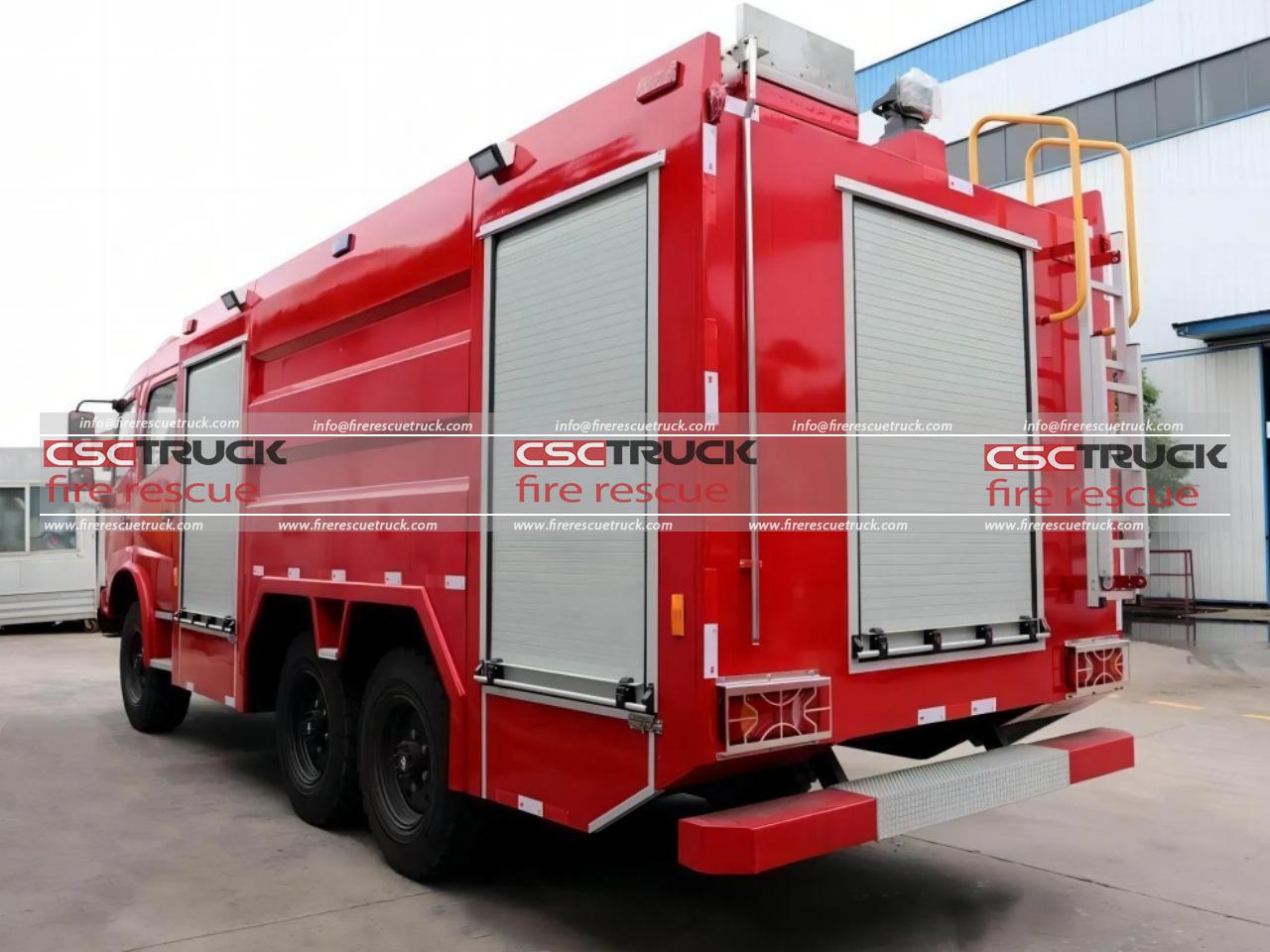
Key Factors That Affect Pump Capacity
Even if a truck is rated for a specific GPM/LPM, actual performance depends on:
Water Supply
- Hydrant pressure or tank volume
- Drafting from lakes or rivers
Engine Power
The diesel engine drives the pump—more horsepower supports higher flow under pressure.
Hose and Nozzle Design
- Larger hoses reduce friction loss
- Specialized nozzles control flow patterns
Elevation and Terrain
High altitude or uphill pumping reduces effective output.
How Pump Capacity Is Tested
Fire truck pumps must meet strict international standards such as NFPA 1901, which requires:
- Full rated flow performance
- Continuous operation under pressure (often 20–30 minutes)
- Stability across multiple pressure levels
This ensures that a 6×6 fire truck can perform reliably under real emergency conditions.
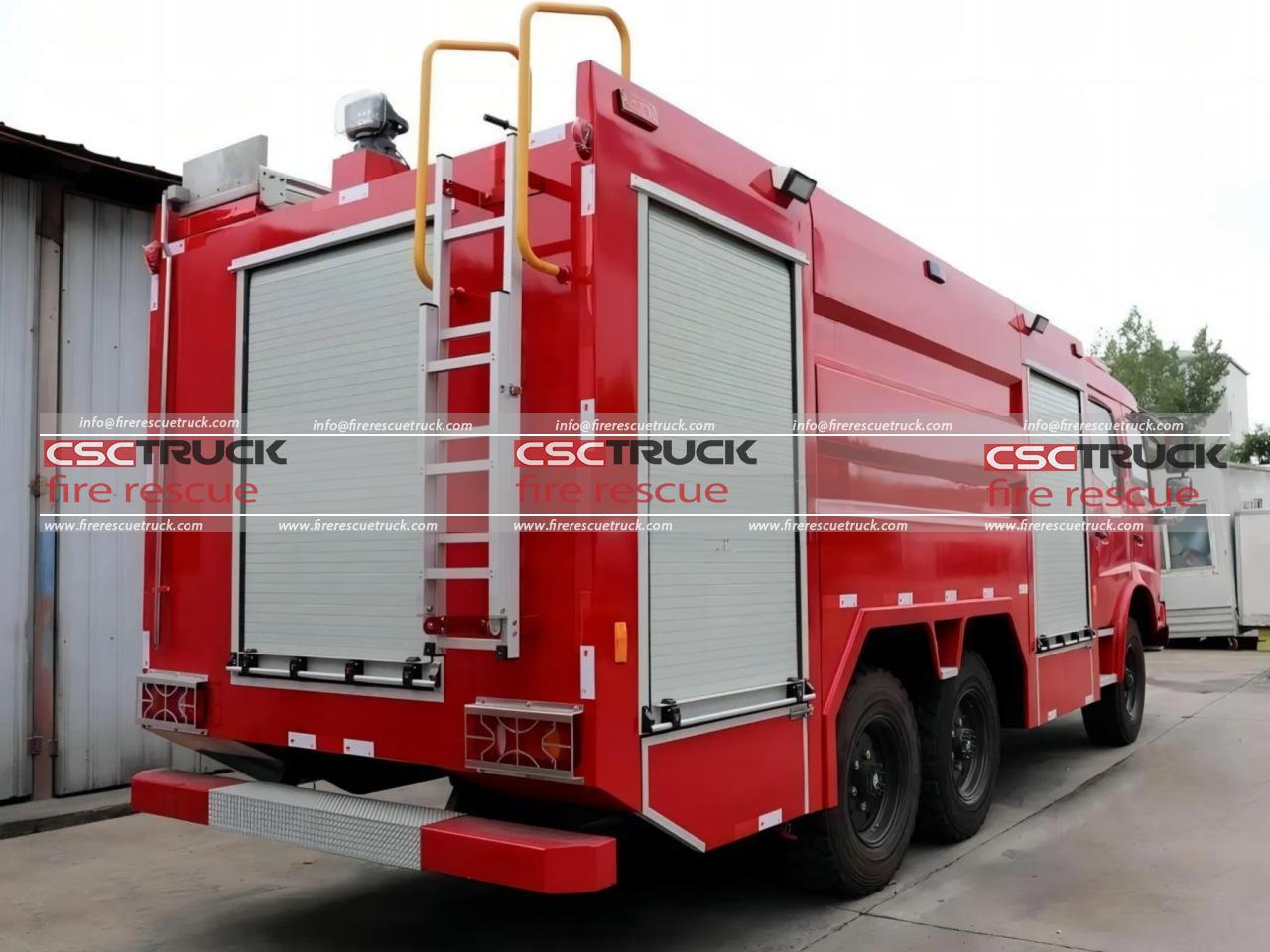
Role of Pump Capacity in Real Firefighting
Pump capacity directly impacts:
- Speed of fire suppression
- Number of active hose lines
- Ability to protect structures or aircraft
- Foam/water mixing performance
- Overall scene control efficiency
For example, a 1,500 GPM pump can supply multiple attack lines simultaneously while still feeding a master stream device, making it ideal for structural firefighting.
CSCTRUCK Fire Rescue Truck 6×6 Fire Rescue Trucks and Pump Systems
Manufacturers like CSCTRUCK Fire Rescue Truck focus on integrating:
- High-efficiency centrifugal pumps
- Modular foam systems
- High-capacity water tanks
- Off-road 6×6 drivetrains
These systems are designed to ensure that pump performance remains stable even in extreme environments such as deserts, mountains, and industrial disaster zones.
Conclusion
The pump capacity of a 6×6 fire truck typically ranges from 150 GPM in wildland units to over 3,000 GPM in industrial and airport configurations, depending on its role and design.
Most standard 6×6 firefighting engines operate in the 1,000–2,000 GPM range, balancing power, mobility, and water efficiency. More specialized versions, such as ARFF vehicles, can exceed this significantly for high-risk emergency scenarios.
Ultimately, pump capacity is not just a number—it defines how quickly a 6×6 fire truck can control a fire, protect lives, and support emergency operations in the most challenging conditions.