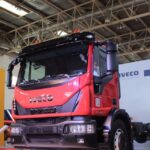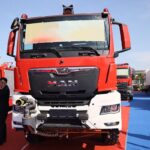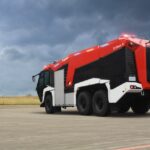

Airport fire trucks, often referred to as Aircraft Rescue and Firefighting (ARFF) vehicles, are specialized emergency response vehicles designed to handle aircraft emergencies and large-scale fires at airports. Unlike conventional fire trucks, these vehicles are built to respond to high-risk scenarios involving aviation fuel, large passenger aircraft, and expansive airport facilities. They combine advanced engineering, high-capacity firefighting systems, and specialized designs to ensure rapid response and effective incident management. This article delves into the design, firefighting systems, and global deployment of airport fire trucks, highlighting their critical role in aviation safety.
1. Unique Design Features of Airport Fire Trucks
The design of airport fire trucks differs significantly from municipal fire engines due to the specialized requirements of airport operations. These vehicles are built for speed, stability, and functionality under extreme conditions.
a. Chassis and Mobility
Airport fire trucks are typically constructed on heavy-duty, all-terrain chassis to ensure high mobility on runways, taxiways, and unpaved airport areas. Many use 4×4, 6×6, or even 8×8 drivetrains to navigate challenging surfaces and handle heavy loads. Their suspension systems are reinforced to support large firefighting tanks, foam systems, and equipment compartments, while maintaining high-speed performance.
b. Vehicle Dimensions and Capacity
ARFF vehicles are considerably larger than standard fire trucks, allowing them to carry thousands of liters of water and foam. A typical medium-sized ARFF vehicle might carry 3,000–6,000 liters of water and 500–1,000 liters of foam concentrate. Larger models can transport over 12,000 liters of water and up to 1,500 liters of foam. The cab design often features elevated seating for better visibility and situational awareness during emergencies.
c. Safety and Ergonomics
Given the high-risk nature of airport firefighting, these vehicles incorporate reinforced cabins, rollover protection, and advanced safety systems. Controls for water and foam delivery are ergonomically placed for rapid operation, and visibility-enhancing features such as high-intensity LED lighting and thermal imaging cameras are common. Some vehicles also include remote-control systems for firefighting operations in extreme conditions where human presence is unsafe.

2. Advanced Firefighting Systems
Airport fire trucks are equipped with sophisticated firefighting systems designed to combat the unique hazards associated with aircraft fires, including jet fuel fires, engine explosions, and chemical spills.
a. Water and Foam Delivery
A core feature of airport fire trucks is their combined water and foam systems. Foam is particularly crucial for suppressing flammable liquid fires, such as aviation fuel. Vehicles are typically fitted with:
- Roof-mounted turrets (monitors): Capable of discharging water or foam over long distances, allowing firefighters to attack fires from a safe distance.
- Bumper turrets: Positioned at the front, enabling rapid response to fires in tight or hard-to-reach areas.
- Handlines: Flexible hoses for manual firefighting efforts, especially for precise targeting or indoor operations.
b. Compressed Air Foam Systems (CAFS)
Many modern ARFF vehicles use compressed air foam systems, which mix foam concentrate, water, and compressed air to produce a dense foam with superior heat resistance and adherence. CAFS improves firefighting efficiency by creating a foam blanket that smothers flames and prevents re-ignition, particularly in hydrocarbon fires.
c. Specialized Agents and Fire Suppression Technologies
In addition to foam, airport fire trucks often carry dry chemical powders (such as Purple-K or ABC powders) for flammable liquid fires and specialized extinguishing agents for electrical or aircraft-specific fires. Some vehicles incorporate water mist systems or clean agent suppression systems to reduce water damage in sensitive areas like terminals and aircraft interiors.
d. Onboard Detection and Monitoring
Advanced airport fire trucks feature integrated fire detection and monitoring systems. Thermal cameras, infrared sensors, and automated pressure monitoring allow firefighters to assess fire intensity and hotspots in real-time, improving situational awareness and targeting efficiency.
3. Operational Roles and Rapid Response
The primary mission of airport fire trucks is to respond quickly to aircraft emergencies, including crashes, runway incidents, and fuel spills. Due to the potentially catastrophic consequences of aviation accidents, response times are critical. Many airports require ARFF vehicles to reach any point on the runway within two to three minutes.
a. Rescue Operations
ARFF vehicles often carry rescue equipment in addition to firefighting tools. This may include hydraulic cutters and spreaders, ladders, medical supplies, and personal protective equipment for the rapid evacuation and treatment of passengers and crew.
b. Coordination and Incident Management
Modern airport fire trucks are integrated into a broader emergency response network. They communicate with airport control towers, other firefighting units, and emergency medical teams to coordinate containment, evacuation, and suppression efforts. Some vehicles feature onboard command consoles, allowing the incident commander to monitor multiple firefighting operations simultaneously.

4. Global Deployment and Variations
Airport fire trucks are used worldwide, but their design and capabilities can vary depending on regional regulations, airport size, and climate conditions.
a. North America
In the United States and Canada, ARFF vehicles must comply with Federal Aviation Administration (FAA) or Transport Canada regulations. These vehicles often feature large foam capacities, high-speed capabilities, and multiple turrets for simultaneous firefighting efforts.
b. Europe
European airports typically follow International Civil Aviation Organization (ICAO) and European Union Aviation Safety Agency (EASA) guidelines. ARFF vehicles in Europe emphasize maneuverability and environmental considerations, with some models incorporating hybrid engines and eco-friendly firefighting agents.
c. Asia and the Middle East
In fast-growing aviation markets like China, India, and the Middle East, airport fire trucks are increasingly equipped with cutting-edge technologies such as automated foam monitoring, remote-controlled turrets, and advanced telematics for fleet management. High-capacity models are common to serve large international airports with extensive runways and high passenger volumes.
d. Remote and Specialized Airports
Smaller or remote airports may use compact ARFF vehicles designed for limited runway lengths and lower passenger volumes. These trucks prioritize rapid acceleration and mobility over massive foam capacity, ensuring effective coverage despite space or resource constraints.
5. Future Trends in Airport Fire Truck Technology
The field of airport firefighting is evolving rapidly, with ongoing innovations aimed at improving safety, efficiency, and environmental impact.
- Automation and Remote Operation: Emerging ARFF vehicles can be operated remotely, allowing firefighting in extremely hazardous conditions without endangering personnel.
- Hybrid and Electric Systems: To reduce fuel consumption and emissions, manufacturers are introducing hybrid or fully electric airport fire trucks while maintaining high performance.
- Integrated Data Systems: Advanced sensors, AI-powered analytics, and real-time telemetry are being integrated into ARFF vehicles to enhance decision-making and optimize firefighting strategies.

Conclusion
Airport fire trucks are highly specialized vehicles that combine robust engineering, advanced firefighting systems, and rapid response capabilities to ensure the safety of passengers, crew, and airport infrastructure. Their unique designs, powerful foam and water delivery systems, and integration with modern emergency management technologies make them indispensable in aviation safety worldwide. As airports grow and aviation technology advances, airport fire trucks will continue to evolve, incorporating smarter systems and greener technologies, ensuring they remain a cornerstone of effective airport emergency response.