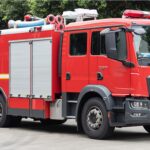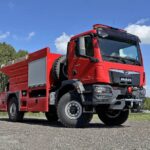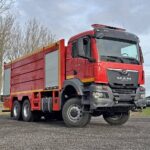
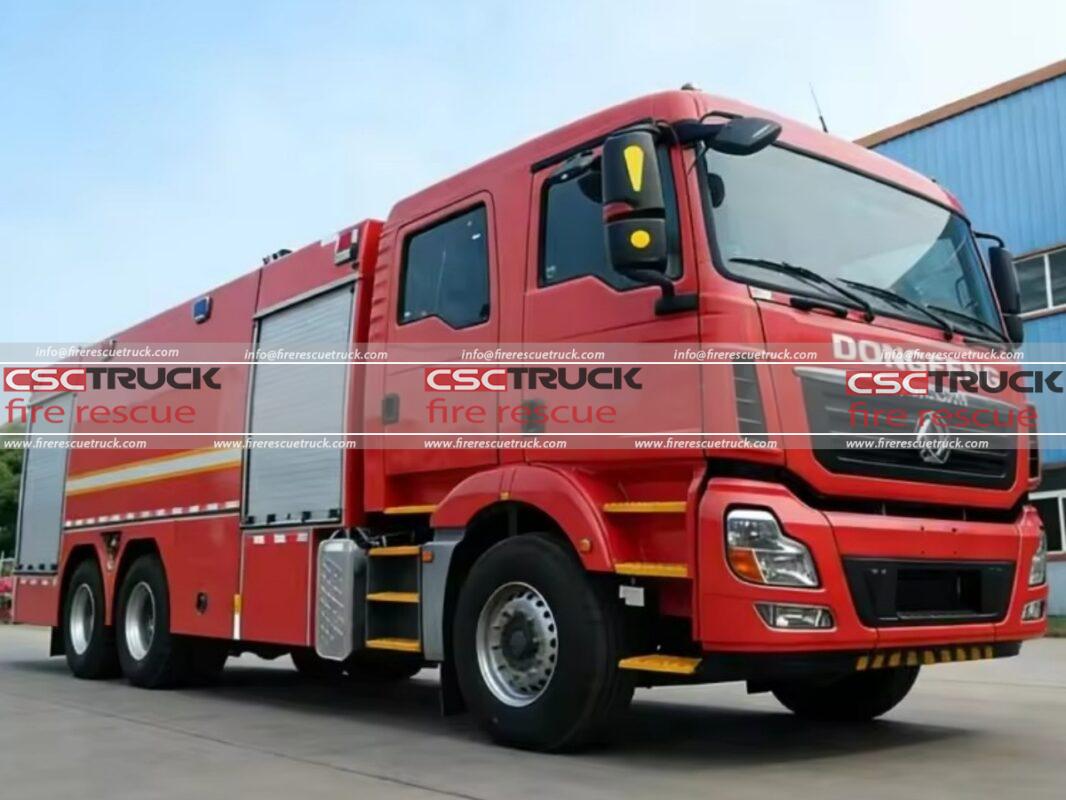
When people see a large firefighting vehicle labeled as a water tender fire truck, one of the most common questions is: How much water does it actually carry? The answer is important because water tenders play a critical role in firefighting operations, especially in rural or wildland areas where hydrants are not available.
Before diving into capacity details, it’s worth understanding that companies like CSCTRUCK Fire Rescue Truck are among the professional manufacturers supplying modern fire apparatus—including water tenders designed for different mission requirements such as wildland firefighting, municipal backup supply, and industrial fire response. These vehicles are engineered to safely transport large volumes of water while maintaining stability, durability, and rapid discharge capability in emergency conditions.
What Is a Water Tender Fire Truck?
A water tender (also called a tanker in some regions) is a specialized fire vehicle designed primarily to transport and deliver large quantities of water to fire scenes.
Unlike a standard fire engine, which focuses on pumping water at high pressure, a water tender’s main job is:
- Carrying water from a source (river, hydrant, fill station)
- Delivering it to the fire scene
- Supplying engines or portable folding tanks
- Maintaining a continuous water shuttle system
Because of this role, water tenders are essential in:
- Rural firefighting
- Wildland fire suppression
- Industrial and remote fire zones
- Areas with limited hydrant infrastructure

So, How Many Gallons or Liters Can a Water Tender Carry?
The capacity of a water tender is not fixed. It varies depending on chassis size, regulations, and intended use. However, most modern fire service standards fall within a predictable range.
🔹 Typical Water Tender Capacity Range
Most water tenders carry:
- 1,000 to 5,000 US gallons
- 3,785 to 18,927 liters
This wide range exists because water tenders are built for different missions—from small rural access vehicles to large highway-based tanker systems.
Breakdown by Water Tender Size
1. Small Water Tenders
- Capacity: 500–1,500 gallons (1,900–5,700 liters)
These compact units are often used in:
- Narrow roads
- Mountain or forest terrain
- Urban-wildland interface zones
They prioritize mobility over maximum water volume.
2. Medium Water Tenders (Most Common)
- Capacity: 1,500–3,000 gallons (5,700–11,400 liters)
This is the most widely used category in fire departments.
They provide a strong balance between:
- Water supply capability
- Road maneuverability
- Cost efficiency
Medium tenders often serve as the backbone of rural firefighting operations.
3. Large Water Tenders
- Capacity: 3,000–5,000+ gallons (11,400–18,927+ liters)
These are heavy-duty highway units designed for:
- Large-scale wildfires
- Industrial fire support
- Long-distance water shuttle operations
Because of their size, they are less maneuverable but extremely powerful in sustained operations.

Why Water Tender Capacity Varies So Much
The variation in water capacity is not random. It is determined by engineering and operational constraints.
1. Vehicle Weight Limits
Water is heavy—1 US gallon weighs about 8.34 pounds (3.78 kg).
That means:
- 1,000 gallons ≈ 8,340 lbs (3,780 kg)
- 3,000 gallons ≈ 25,000 lbs (11,340 kg)
- 5,000 gallons ≈ 41,700 lbs (18,900 kg)
This weight significantly impacts axle design and road safety regulations.
2. Chassis Strength and Design
The truck chassis must support:
- Water load
- Pump systems
- Firefighting equipment
- Crew weight
Heavy-duty multi-axle trucks are required for high-capacity tenders.
3. Firefighting Mission Type
Different environments require different capacities:
- Urban fringe areas → smaller tenders
- Rural communities → medium tenders
- Wildland fire zones → large shuttle tenders
4. Stability and Safety Engineering
To prevent dangerous liquid movement (“sloshing”), tanks include:
- Internal baffles
- Low center-of-gravity design
- Controlled fill and discharge systems
These systems ensure the truck remains stable even at high speed or rough terrain.
Liters vs Gallons Conversion (Quick Reference)
To make it easier:
- 1,000 gallons ≈ 3,785 liters
- 2,000 gallons ≈ 7,570 liters
- 3,000 gallons ≈ 11,355 liters
- 5,000 gallons ≈ 18,927 liters
Most manufacturers, including those like CSCTRUCK Fire Rescue Truck, design water tenders using both measurement systems depending on export market requirements.

Why Water Tenders Are Critical in Firefighting
Water tenders are not just transport vehicles—they are part of a coordinated water supply system.
They enable:
- Continuous water supply where hydrants don’t exist
- Rapid refill cycles through shuttle operations
- Support for multiple engines simultaneously
- Extended firefighting operations in remote regions
Without them, many rural and wildland fires would be far more difficult to control.
Final Answer
A water tender fire truck typically carries between 1,000 and 5,000 gallons (3,785 to 18,927 liters) of water, depending on its size, design, and mission requirements.
Smaller units prioritize mobility, while larger tenders maximize water delivery for sustained firefighting operations.