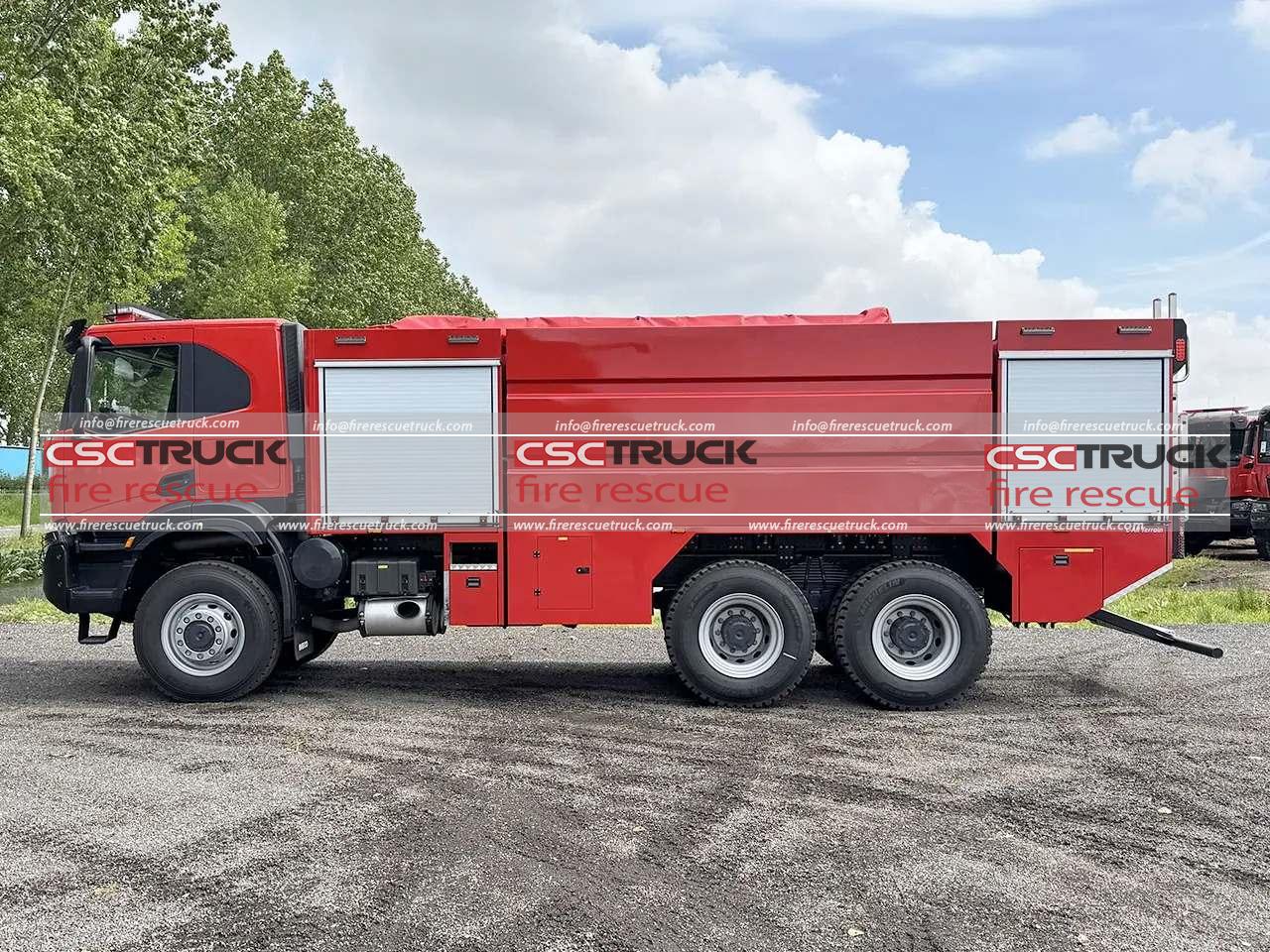
Introduction: CSCTRUCK Fire Rescue Truck and Heavy-Duty Firefighting Vehicles
Modern firefighting operations increasingly require vehicles that can perform in extreme environments, including mountains, forests, industrial zones, airports, and disaster areas. A 6×6 fire truck is designed specifically for these demanding applications, combining high mobility, large firefighting capacity, and heavy-duty load capability.
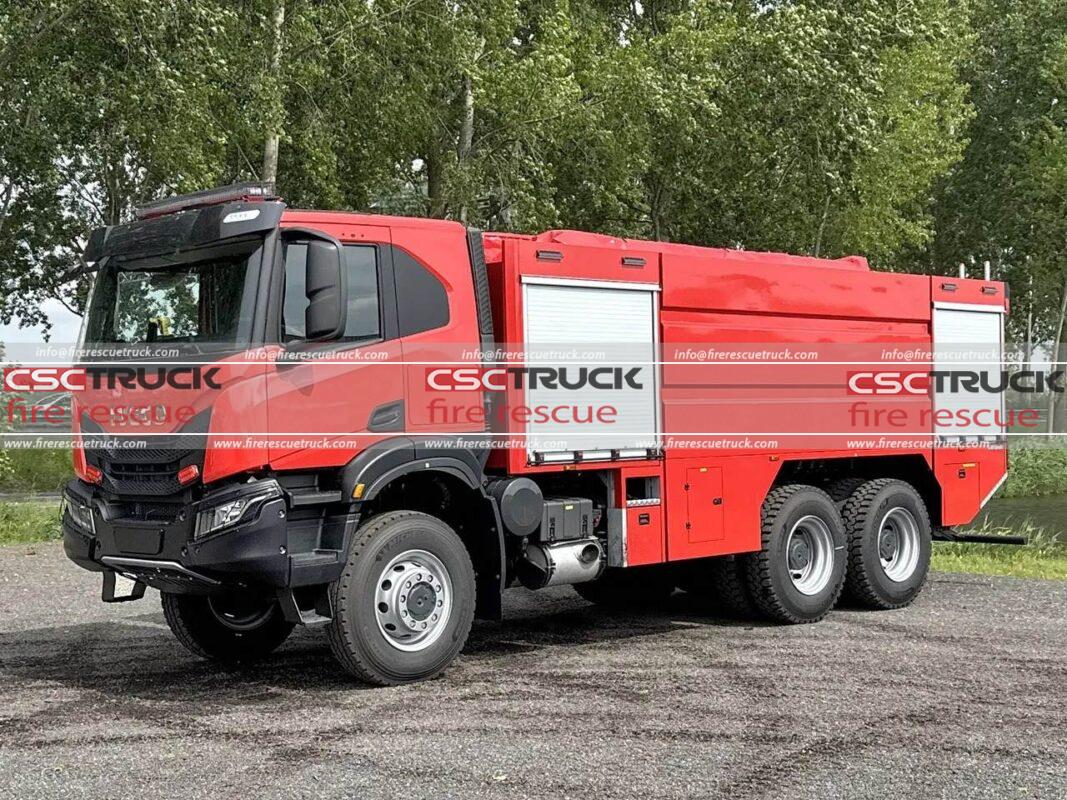
CSCTRUCK Fire Rescue Truck specializes in manufacturing advanced fire and rescue vehicles, including 6×6 fire trucks, airport rescue firefighting vehicles (ARFF), water foam fire trucks, and multi-purpose rescue units. These vehicles are engineered with powerful chassis systems, high-torque engines, reinforced suspension, and large payload capacity to support complex emergency missions.
One of the most important specifications when evaluating a 6×6 fire truck is GVWR (Gross Vehicle Weight Rating). GVWR determines the maximum allowable total weight of the vehicle, including the chassis, firefighting equipment, water, foam, tools, crew members, fuel, and all other payloads. Understanding GVWR helps fire departments select the right truck for their operational requirements and ensures safe performance under fully loaded conditions.
What Does GVWR Mean on a Fire Truck?
GVWR stands for Gross Vehicle Weight Rating. It is the maximum weight that a vehicle is designed to safely carry according to the manufacturer’s engineering specifications.
Unlike the actual vehicle weight, GVWR is a fixed rating that includes:
- Empty vehicle weight (curb weight)
- Driver and firefighter crew
- Water tank contents
- Foam concentrate
- Pumps and firefighting systems
- Hoses and rescue equipment
- Tools and accessories
- Fuel and fluids
- Additional operational payload
For a fire truck, GVWR is especially important because firefighting vehicles often carry thousands of liters of water and hundreds of kilograms of specialized equipment. Exceeding the GVWR can negatively affect braking performance, suspension durability, tire safety, handling stability, and overall vehicle reliability.
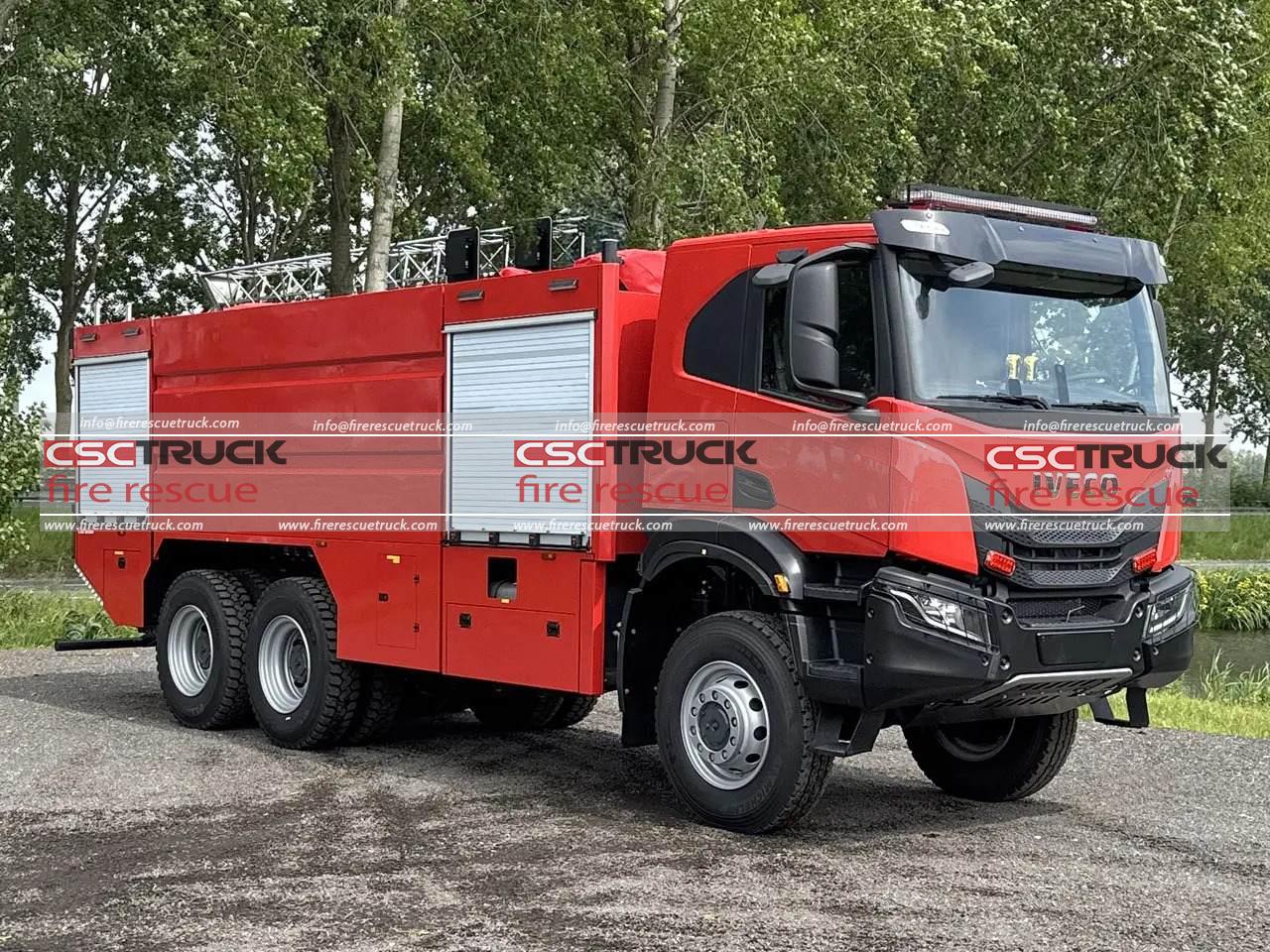
Typical GVWR Range of a 6×6 Fire Truck
The GVWR of a 6×6 fire truck varies depending on its chassis design, tank capacity, equipment configuration, and mission purpose. There is no single standard GVWR for all 6×6 fire trucks.
However, most heavy-duty 6×6 fire trucks generally fall into the following ranges:
| Type of 6×6 Fire Truck | Typical GVWR Range |
|---|---|
| Medium 6×6 rescue fire truck | 20–30 tons |
| 6×6 water foam fire truck | 30–40 tons |
| Large-capacity ARFF fire truck | 35–50+ tons |
| Heavy industrial firefighting vehicle | 40–60 tons |
A common 6×6 firefighting platform may have a GVWR of approximately 30,000 kg to 45,000 kg (66,000–99,000 lbs) depending on the chassis and equipment installed.
Large airport rescue firefighting vehicles or industrial firefighting trucks can exceed this range because they carry very large water tanks, foam tanks, powerful pumps, and specialized rescue equipment.
Why Do 6×6 Fire Trucks Need High GVWR?
A 6×6 fire truck is built for missions where ordinary fire engines may not be capable enough. The third axle provides additional load capacity, traction, and stability, allowing the vehicle to carry more firefighting resources while maintaining off-road capability.
1. Large Water and Foam Capacity
Water is one of the heaviest components carried by a fire truck.
The weight of water is approximately:
- 1 liter of water = 1 kilogram
- 10,000 liters of water = about 10 tons
A 6×6 water foam fire truck equipped with a 10,000–15,000 liter tank may already carry 10–15 tons of water alone. When combined with foam concentrate, equipment, and vehicle structure, the required GVWR increases significantly.
2. Heavy Firefighting Equipment
6×6 fire trucks often carry:
- High-pressure fire pumps
- Water monitors
- Foam proportioning systems
- Hydraulic rescue tools
- Winches
- Breathing apparatus
- Lighting systems
- Communication equipment
- Search and rescue tools
For example, a CSCTRUCK Fire Rescue Truck 6×6 combination rescue fire truck is designed as a multi-purpose emergency platform carrying extensive rescue equipment while maintaining high mobility for difficult environments.
3. Off-Road Capability Requirements
Many 6×6 fire trucks operate in locations such as:
- Wildfire zones
- Mining areas
- Oil fields
- Mountain regions
- Flooded areas
- Earthquake disaster sites
These environments require reinforced chassis structures and suspension systems capable of supporting heavy loads while traveling over uneven terrain. CSCTRUCK Fire Rescue Truck’s 4×4 and 6×6 fire rescue platforms are designed specifically for these types of extreme terrain applications.
A higher GVWR allows engineers to balance firefighting capacity with durability and mobility.
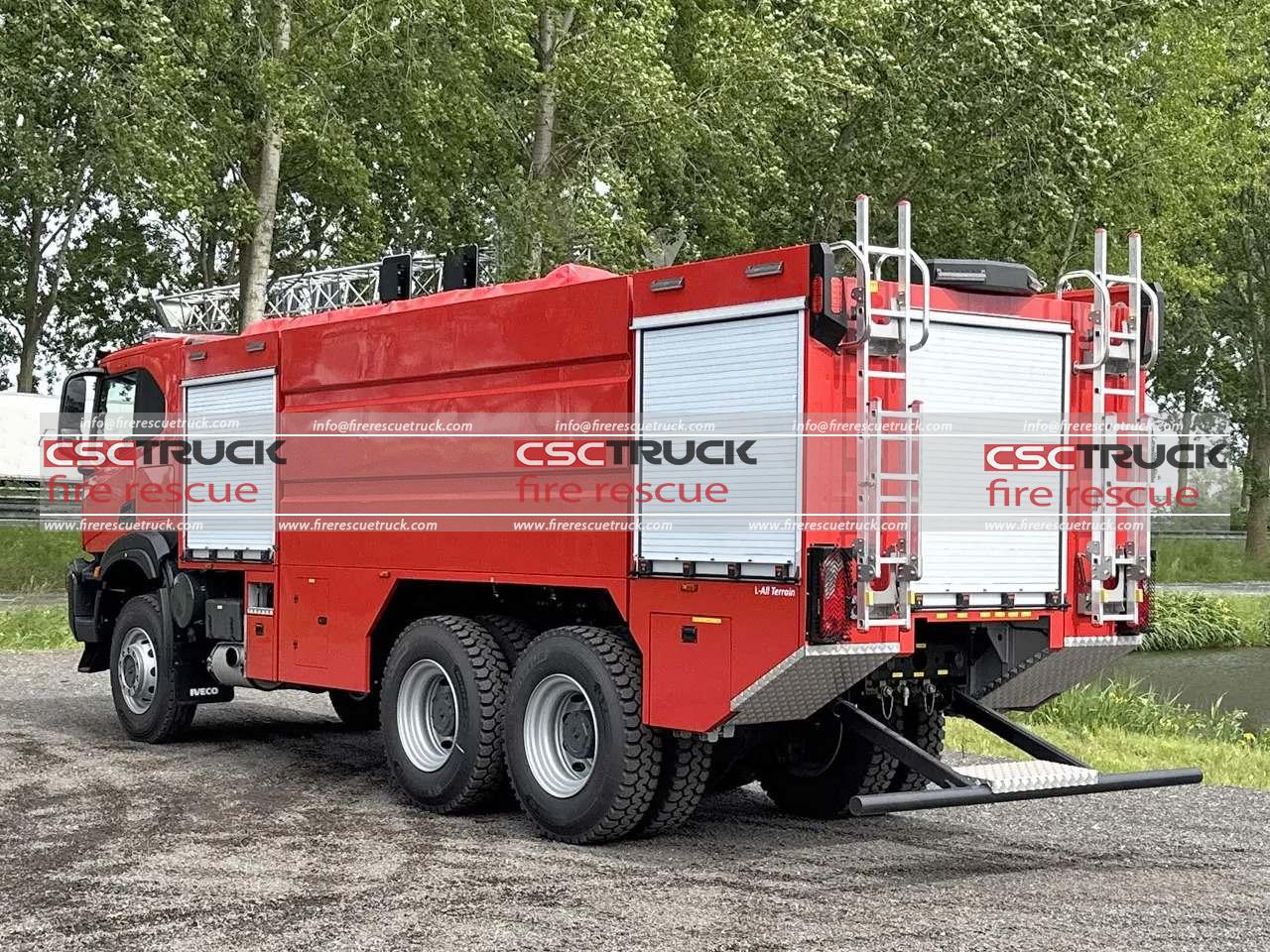
Factors That Determine the GVWR of a 6×6 Fire Truck
Several factors influence the final GVWR rating:
1. Chassis Design
The chassis is the foundation of the fire truck. Heavy-duty commercial chassis from manufacturers such as MAN, Mercedes-Benz, Volvo, Scania, HOWO, and other truck suppliers are commonly used for large firefighting vehicles.
A stronger chassis with larger axles and suspension components can support higher GVWR ratings.
2. Number of Axles and Axle Capacity
A 6×6 configuration includes:
- 3 axles
- 6 driven wheels
- Full-time all-wheel drive capability
Compared with 4×4 trucks, 6×6 trucks distribute weight over more axles, improving:
- Payload capacity
- Ground pressure distribution
- Traction
- Stability
This makes them suitable for carrying larger tanks and more equipment.
3. Tank Volume
The tank size directly affects GVWR requirements.
Examples:
- 5,000-liter water tank: lower GVWR requirement
- 10,000-liter water tank: medium/heavy GVWR requirement
- 20,000-liter+ ARFF configuration: very high GVWR requirement
Airport firefighting vehicles often require especially high GVWR because rapid fire suppression demands large volumes of water and foam.
4. Equipment Configuration
A basic water tender may have a lower GVWR than a fully equipped rescue fire truck with:
- Crane systems
- Rescue platforms
- Foam systems
- Generators
- Lighting towers
- Command equipment
Customized configurations can significantly change the required GVWR.
GVWR vs Payload Capacity: What Is the Difference?
GVWR and payload capacity are related but not identical.
GVWR = Maximum allowable total vehicle weight.
Payload capacity = How much additional weight the truck can carry after subtracting the empty vehicle weight.
Formula:
Payload Capacity = GVWR − Curb Weight
Example:
- GVWR: 35,000 kg
- Empty truck weight: 22,000 kg
Payload capacity:
35,000 − 22,000 = 13,000 kg
This 13-ton payload includes water, foam, firefighters, tools, and equipment.
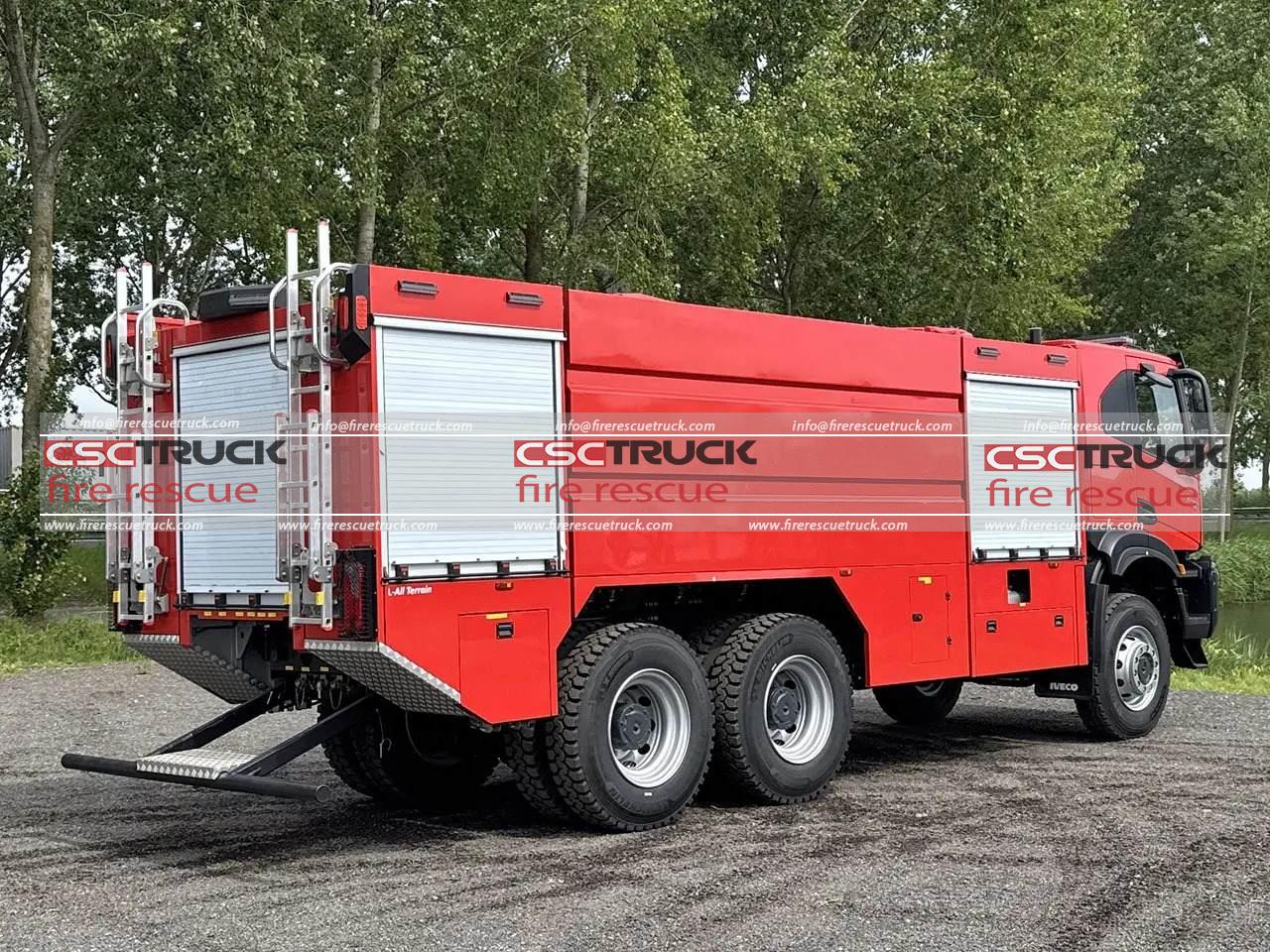
How GVWR Affects Fire Truck Performance
A properly selected GVWR provides several operational advantages:
Safety
A truck operating within its GVWR maintains better:
- Braking performance
- Steering control
- Suspension life
- Tire reliability
Durability
Heavy-duty components experience less stress when the vehicle operates within its designed limits.
Mission Capability
A higher GVWR allows fire departments to carry more:
- Water
- Foam
- Rescue equipment
- Emergency supplies
This increases operational independence during remote firefighting missions.
Conclusion
The GVWR of a 6×6 fire truck is typically between 30 and 45 tons, although some specialized airport rescue and industrial firefighting vehicles can exceed 50 tons. The exact GVWR depends on the chassis, tank capacity, firefighting equipment, and intended application.
For organizations requiring high-performance emergency vehicles, CSCTRUCK Fire Rescue Truck provides customized 6×6 firefighting solutions designed for challenging environments. With strong chassis systems, advanced firefighting equipment, and flexible configurations, these vehicles are built to deliver reliable performance while maintaining safe weight distribution and operational capability.
Understanding GVWR is essential when selecting a 6×6 fire truck because it directly affects safety, payload capacity, durability, and firefighting effectiveness in real-world emergencies.