
Introduction to CSCTRUCK Fire Rescue Truck
A 6×6 fire truck is one of the most capable emergency response vehicles available today. Designed for extreme environments such as airports, forests, mountains, industrial facilities, oil fields, and disaster zones, these trucks require powerful drivetrains that can deliver high torque, smooth control, and reliable performance under heavy loads. The transmission is a critical component because it transfers engine power to all 6 wheels while supporting rapid acceleration, off-road mobility, and firefighting operations.
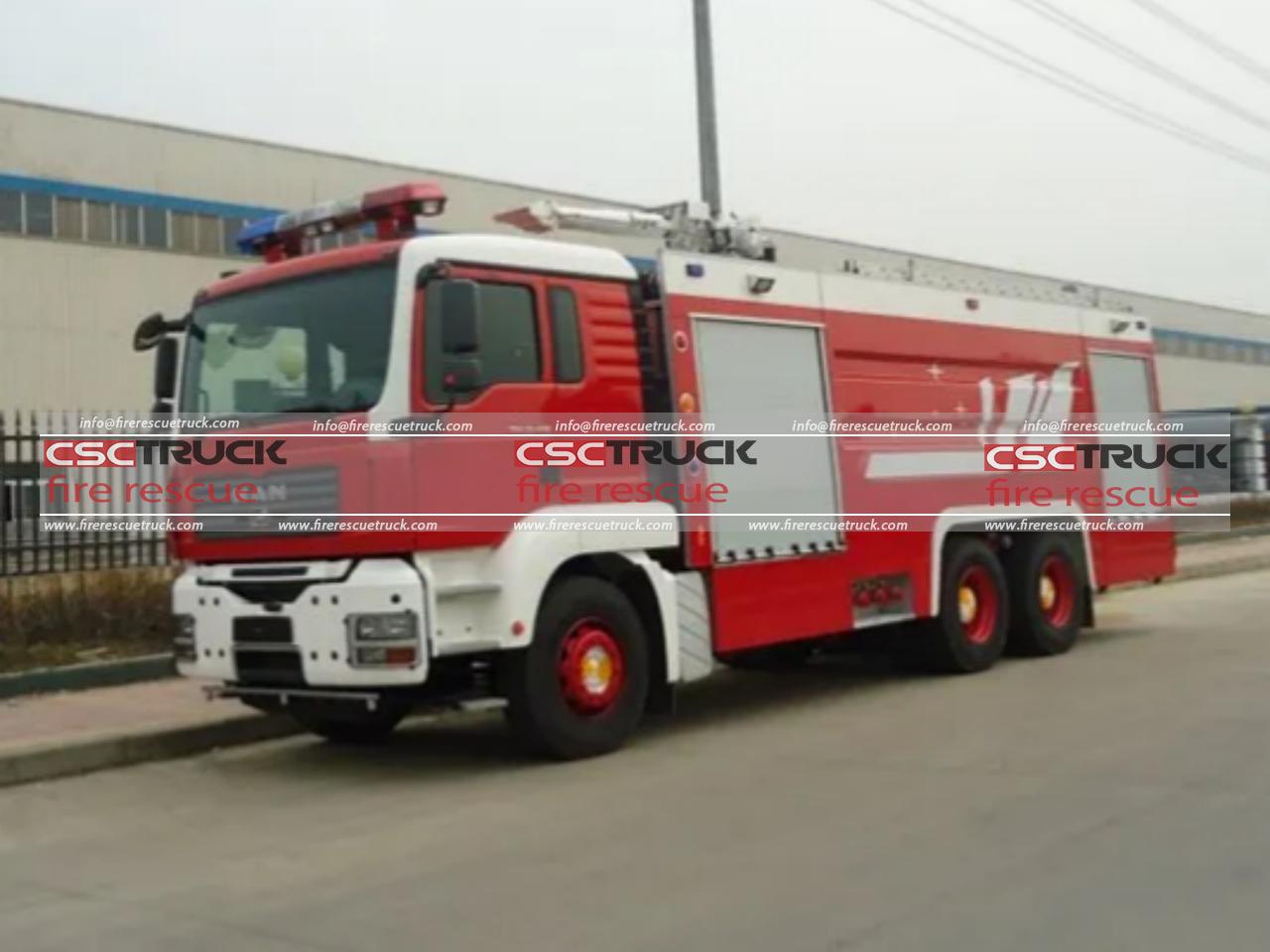
CSCTRUCK Fire Rescue Truck specializes in manufacturing advanced firefighting and rescue vehicles, including heavy-duty 6×6 fire trucks, airport rescue firefighting vehicles, and all-terrain emergency response trucks. CSCTRUCK Fire Rescue Truck 6×6 models are designed with powerful engines, advanced drivetrains, and customized firefighting systems to meet demanding operational requirements worldwide. For example, CSCTRUCK Fire Rescue Truck’s 6×6 ARFF fire trucks combine high-output engines, large firefighting capacities, and specialized chassis systems for rapid airport emergency response.
Understanding the transmission systems used in 6×6 fire trucks helps explain why these vehicles can carry large water tanks, operate firefighting pumps, and travel through challenging terrain while maintaining reliability.
Why Transmission Choice Matters in a 6×6 Fire Truck
A 6×6 fire truck is much heavier and more demanding than a standard commercial truck. A typical vehicle may carry:
- Thousands of liters of water and foam
- Heavy firefighting equipment
- Rescue tools
- Crew members
- Pumping systems and hydraulic equipment
The total vehicle weight can exceed 30–40 tons in some configurations. For example, some CSCTRUCK Fire Rescue Truck 6×6 ARFF fire trucks have a gross vehicle weight of approximately 39,000 kg and are equipped with high-power engines designed for rapid airport emergency response.
The transmission must therefore provide:
- High torque multiplication
- Reliable gear shifting under heavy loads
- Smooth power delivery during off-road driving
- Compatibility with all-wheel-drive systems
- Ability to operate firefighting pumps through PTO systems
A poor transmission design could reduce mobility, increase fuel consumption, or limit firefighting performance.
Common Types of Transmissions Used in 6×6 Fire Trucks
1. Automatic Transmission
Modern 6×6 fire trucks commonly use heavy-duty automatic transmissions because they provide excellent control and reduce driver workload during emergency operations.
Advantages include:
Faster Response
Firefighters often need immediate acceleration when responding to emergencies. Automatic transmissions allow drivers to focus on steering, terrain, and communication instead of manually changing gears.
Better Low-Speed Control
During firefighting operations, trucks may need to move slowly while maintaining pump operation. Automatic transmissions provide smooth torque delivery at low speeds.
Reduced Driver Fatigue
Emergency driving can involve long hours and difficult conditions. Automatic systems make vehicle operation easier, especially for large rescue trucks.
Many manufacturers use heavy-duty automatic transmissions from specialized commercial vehicle suppliers, depending on chassis requirements and regional standards.
2. Allison Automatic Transmission
One of the most widely used transmissions in heavy emergency vehicles is the Allison automatic transmission.
Allison transmissions are popular in fire apparatus because they are designed for:
- High torque applications
- Frequent acceleration and braking
- Heavy vehicle operation
- Long service life
A 6×6 fire truck equipped with an Allison transmission can efficiently transfer engine power to multiple axles while maintaining smooth shifting.
Typical features include:
- Torque converter technology
- Electronic control systems
- Multiple forward gears
- Optimized shift patterns
These characteristics make Allison transmissions suitable for rescue vehicles, airport crash tenders, and industrial firefighting trucks.
3. Continuously Variable Transmission (CVT)
Some advanced 6×6 fire trucks use continuously variable transmission technology.
A CVT does not rely on fixed gear ratios. Instead, it continuously adjusts the transmission ratio according to driving conditions.
Benefits include:
- Smooth acceleration
- Maximum engine efficiency
- Excellent low-speed torque control
- Improved off-road capability
For extreme firefighting vehicles, CVT systems can be especially useful because they allow the engine to operate within its optimal power range while climbing steep terrain or moving through mud.
For example, some high-performance CSCTRUCK Fire Rescue Truck 6×6 ARFF configurations use specialized transmission systems designed for maximum mobility and high torque output. One example configuration uses a Kessler continuously variable transmission with integrated Power Shift PTO capability, allowing efficient power management for vehicle movement and firefighting pump operation.
4. Manual Transmission
Older-generation fire trucks and some military-style 6×6 vehicles may use manual transmissions.
Advantages:
- Simple mechanical structure
- High durability
- Easier maintenance in remote areas
- Good driver control
However, manual transmissions are becoming less common because modern emergency vehicles require:
- Faster response
- Easier operation
- Better fuel efficiency
- Integration with electronic vehicle systems
For modern commercial firefighting fleets, automatic transmissions are usually preferred.
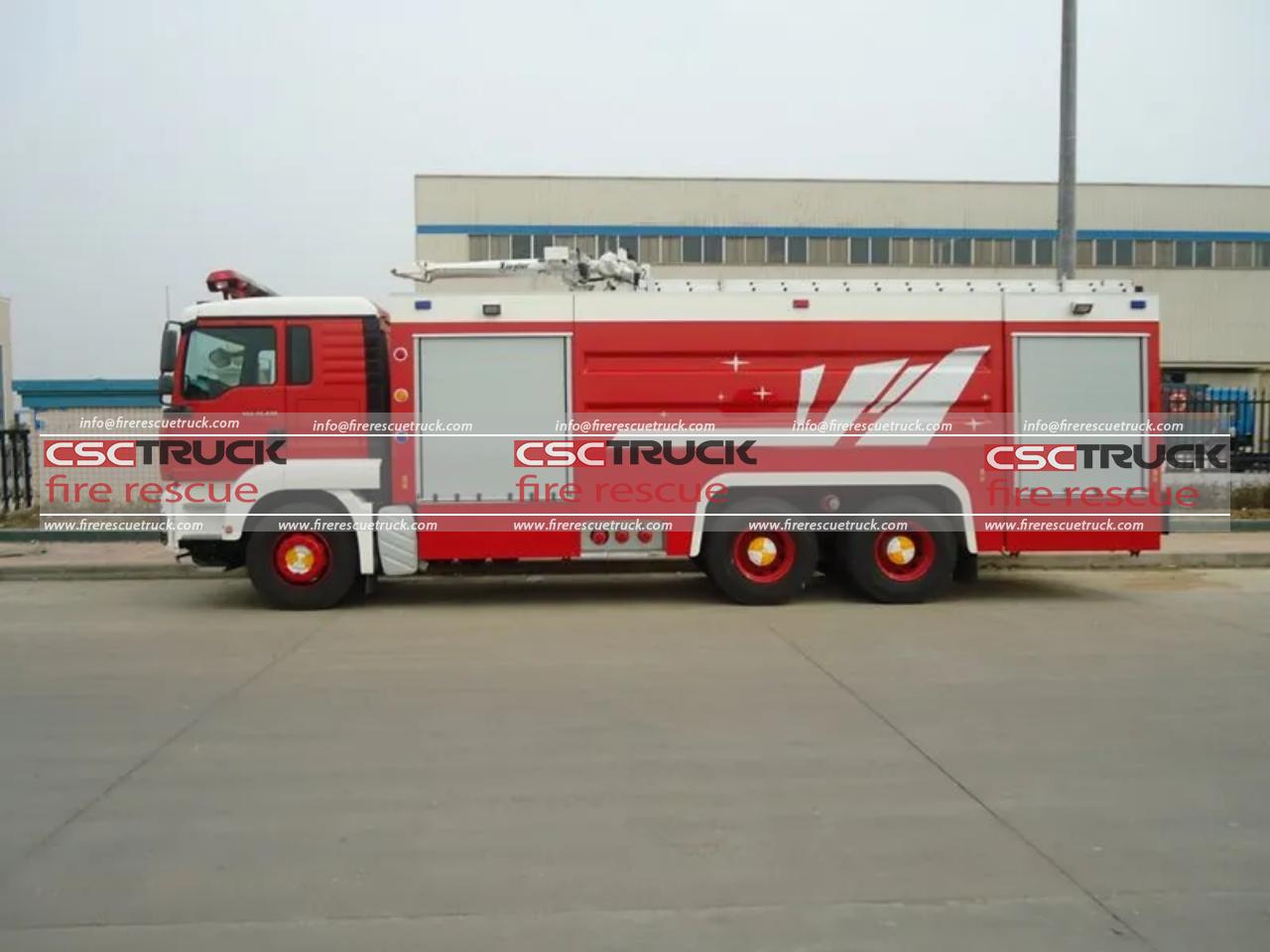
Transmission and 6×6 All-Wheel Drive Systems
The transmission in a 6×6 fire truck does more than control speed. It works together with:
- Transfer cases
- Differential locks
- Axles
- Suspension systems
- Traction control systems
The power flow usually follows this path:
Engine → Transmission → Transfer Case → Front and Rear Axles → Six Wheels
The transfer case distributes power between the front and rear axles, ensuring that all six wheels contribute traction.
This is essential when operating on:
- Mud
- Sand
- Snow
- Rocky terrain
- Flooded roads
- Steep slopes
CSCTRUCK Fire Rescue Truck’s 4×4 and 6×6 rescue trucks are specifically engineered for challenging environments where conventional firefighting vehicles may struggle.
Transmission Power Take-Off (PTO) Function
Another important requirement for fire truck transmissions is PTO capability.
A firefighting vehicle does not only need to move—it must operate pumps, foam systems, hydraulic equipment, and rescue tools.
A PTO allows the transmission to transfer engine power to auxiliary equipment.
Applications include:
- Fire pumps
- Hydraulic rescue systems
- Water monitors
- Winches
- Generators
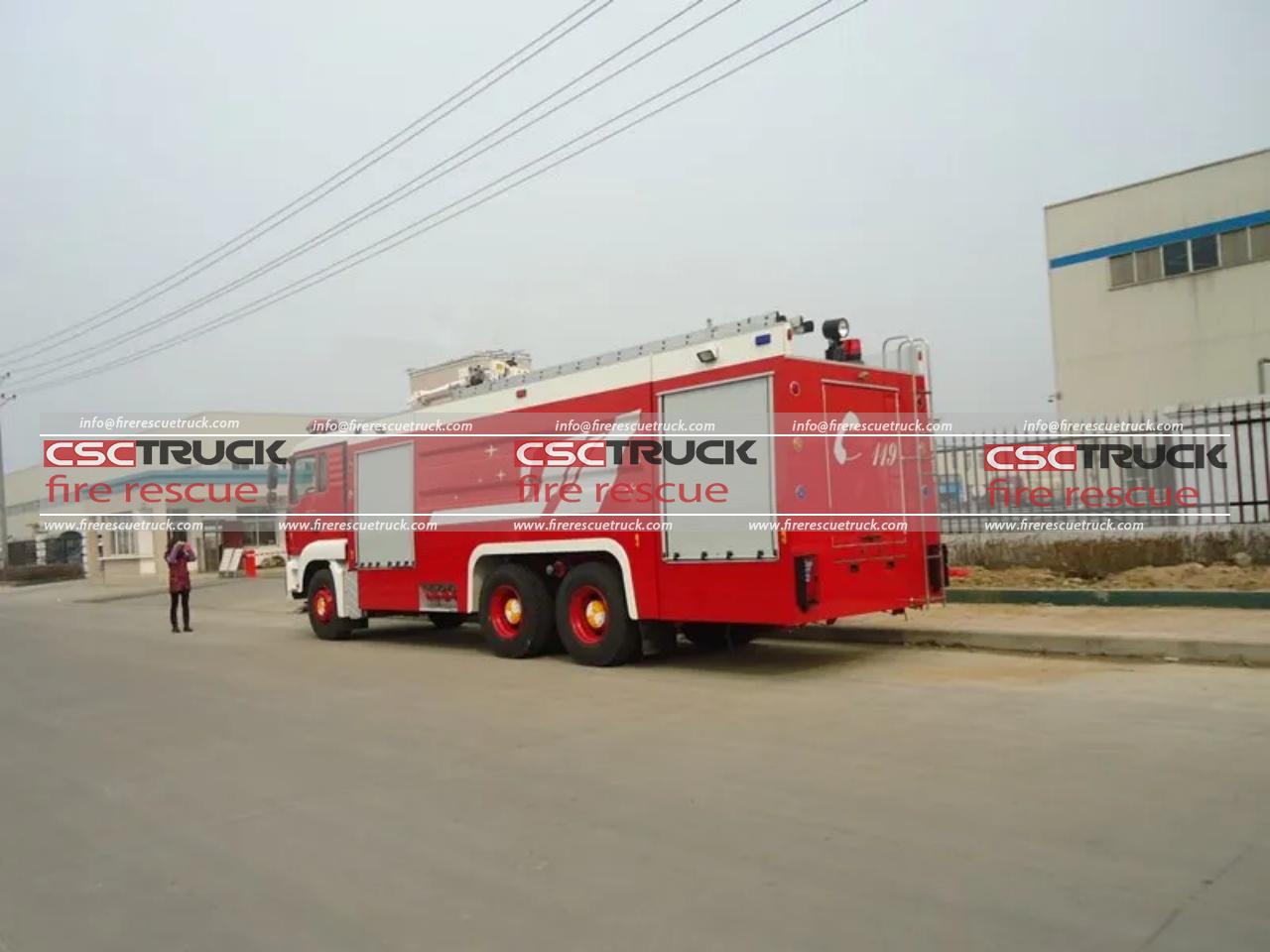
For example, advanced CSCTRUCK Fire Rescue Truck 6×6 ARFF vehicles can integrate transmission systems with Power Shift PTO solutions to supply power to high-capacity firefighting pumps.
How Transmission Affects Fire Truck Performance
The transmission directly influences several key performance factors.
Acceleration
A properly matched transmission allows a heavy fire truck to reach emergency speeds quickly.
Off-Road Ability
Low-range gears and intelligent shifting improve traction on difficult terrain.
Fuel Efficiency
Modern automatic and CVT systems keep engines operating efficiently.
Pump Operation
PTO-compatible transmissions allow firefighting equipment to operate effectively without sacrificing vehicle mobility.
Maintenance Requirements for 6×6 Fire Truck Transmissions
Because fire trucks operate under extreme conditions, transmission maintenance is essential.
Important maintenance tasks include:
Regular Fluid Inspection
Transmission oil should be frequently checked to ensure proper lubrication and cooling.
Filter Replacement
Clean filters help prevent contamination and component wear.
Electronic Diagnostics
Modern transmissions use electronic control modules that require periodic inspection.
Cooling System Maintenance
Heavy-duty transmissions generate significant heat during emergency operation, especially when carrying maximum loads.
Conclusion
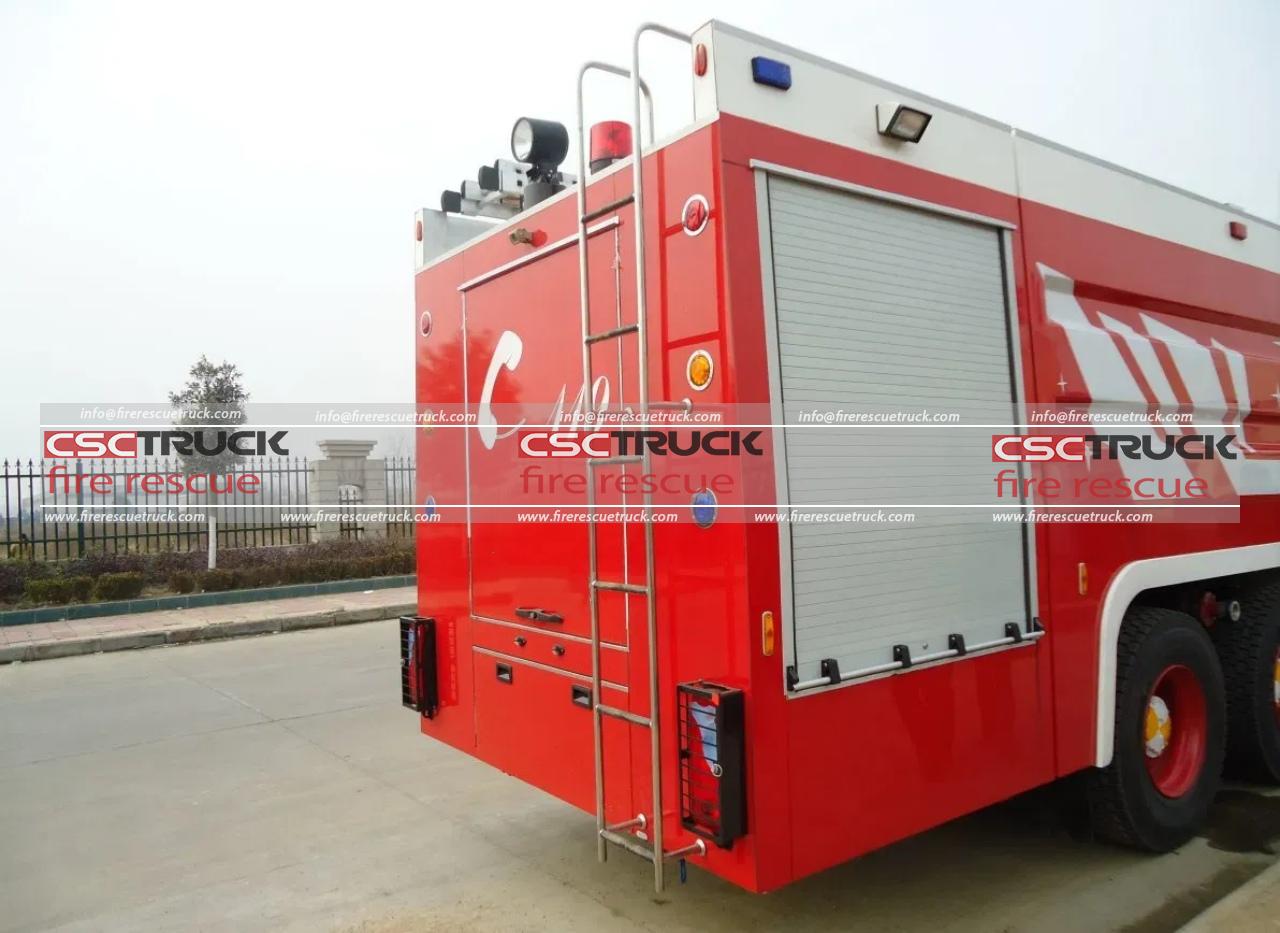
The transmission used in a 6×6 fire truck is typically a heavy-duty automatic or specialized continuously variable transmission designed to handle extreme weight, high torque, and demanding terrain. While traditional manual transmissions still exist in some older vehicles, modern firefighting trucks increasingly rely on advanced automatic systems for reliability, efficiency, and ease of operation.
A high-performance transmission allows a 6×6 fire truck to combine speed, traction, and firefighting capability. Manufacturers such as CSCTRUCK Fire Rescue Truck integrate powerful drivetrains, advanced transmission technology, and customized firefighting equipment to produce emergency vehicles capable of operating in the world’s most challenging environments.
For departments requiring a vehicle that can travel beyond normal roads while delivering massive firefighting capacity, the transmission system is one of the most important technologies behind a modern 6×6 fire truck.