
Wildland firefighting presents some of the most challenging conditions for emergency response teams. Unlike urban fires, wildfires often occur in remote forests, mountains, grasslands, deserts, and areas with limited road access. Firefighting vehicles must not only carry water and equipment but also travel through mud, steep slopes, loose soil, rocks, and unstable terrain.
When choosing a vehicle for extreme wildfire environments, two platforms are often considered: 6×6 off-road fire trucks and tracked firefighting vehicles. Both offer excellent mobility, but their designs serve different operational needs. A 6×6 fire truck provides a balance of speed, payload capacity, and firefighting capability, while a tracked vehicle delivers exceptional mobility in the most difficult terrain.
As a professional manufacturer of specialized emergency vehicles, CSCTRUCK Fire Rescue Truck provides advanced 4×4 and 6×6 fire rescue vehicles designed for wildland firefighting, industrial emergencies, and extreme environments. These vehicles combine powerful all-wheel-drive chassis, large-capacity water tanks, high-performance pumps, and customized firefighting equipment to support missions where conventional fire engines cannot operate.
So, between a 6×6 fire truck and a tracked firefighting vehicle, which one is better for wildfire response? The answer depends on terrain conditions, mission requirements, and operational priorities.
Understanding 6×6 Wildland Fire Trucks
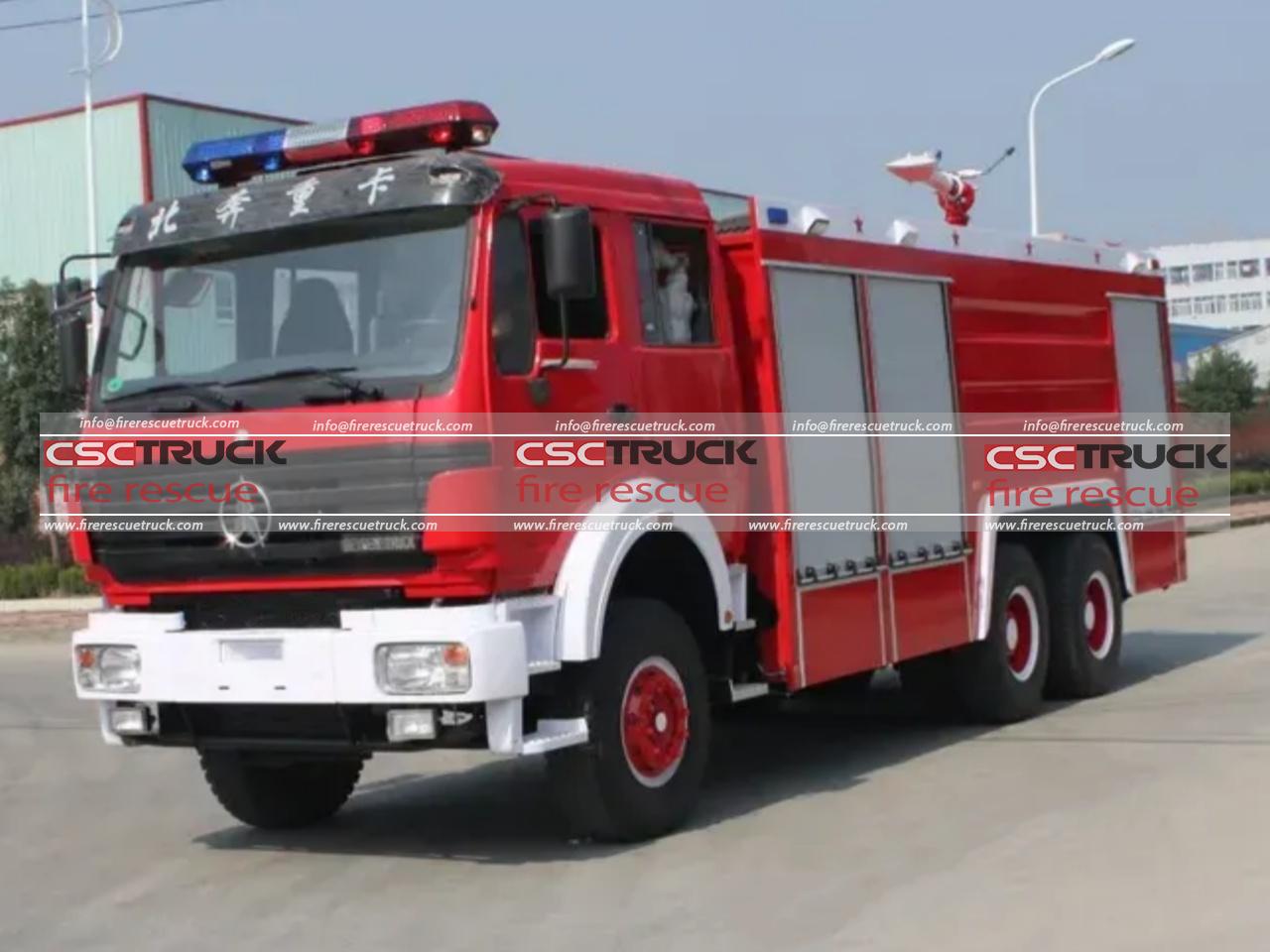
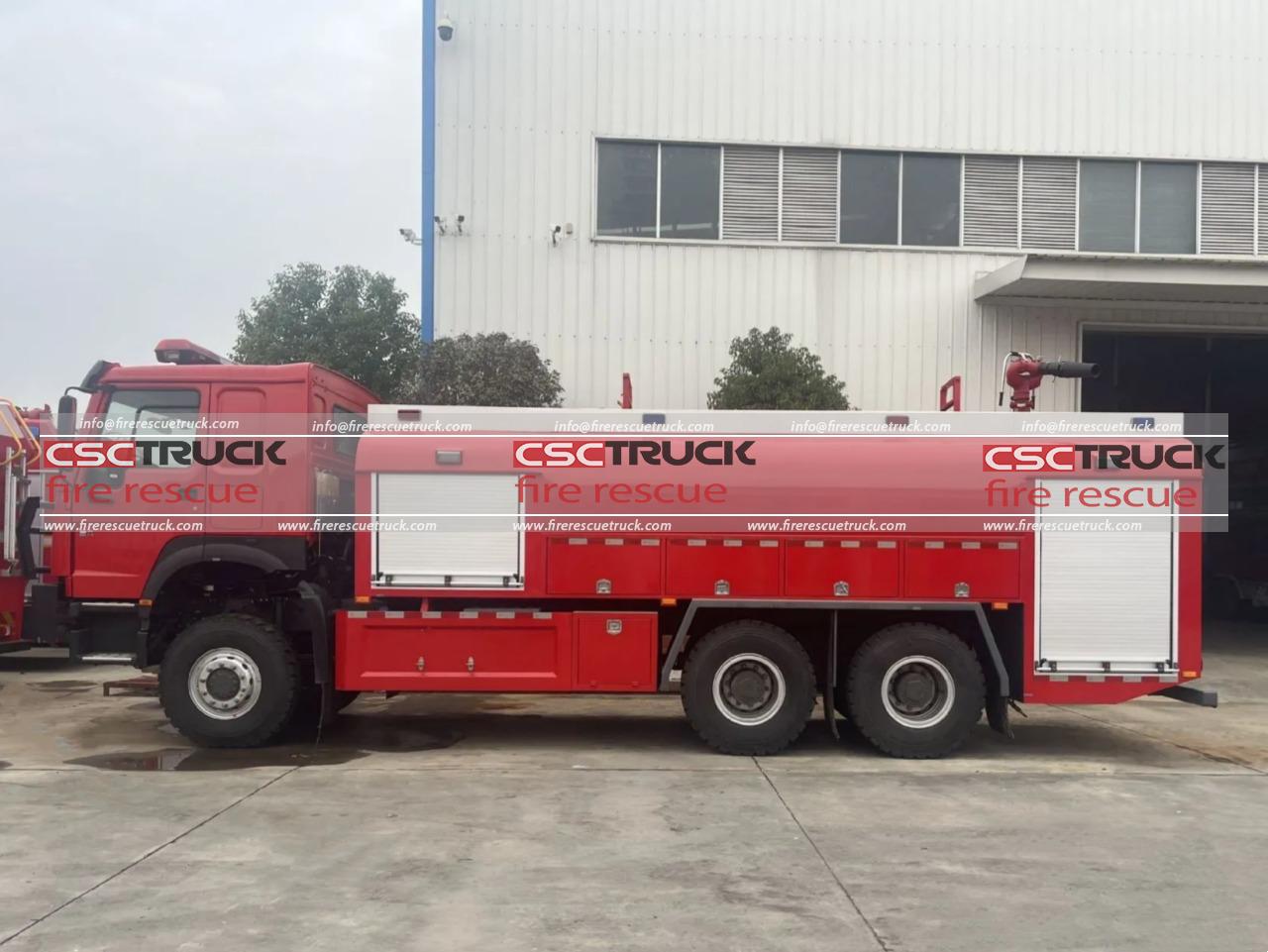
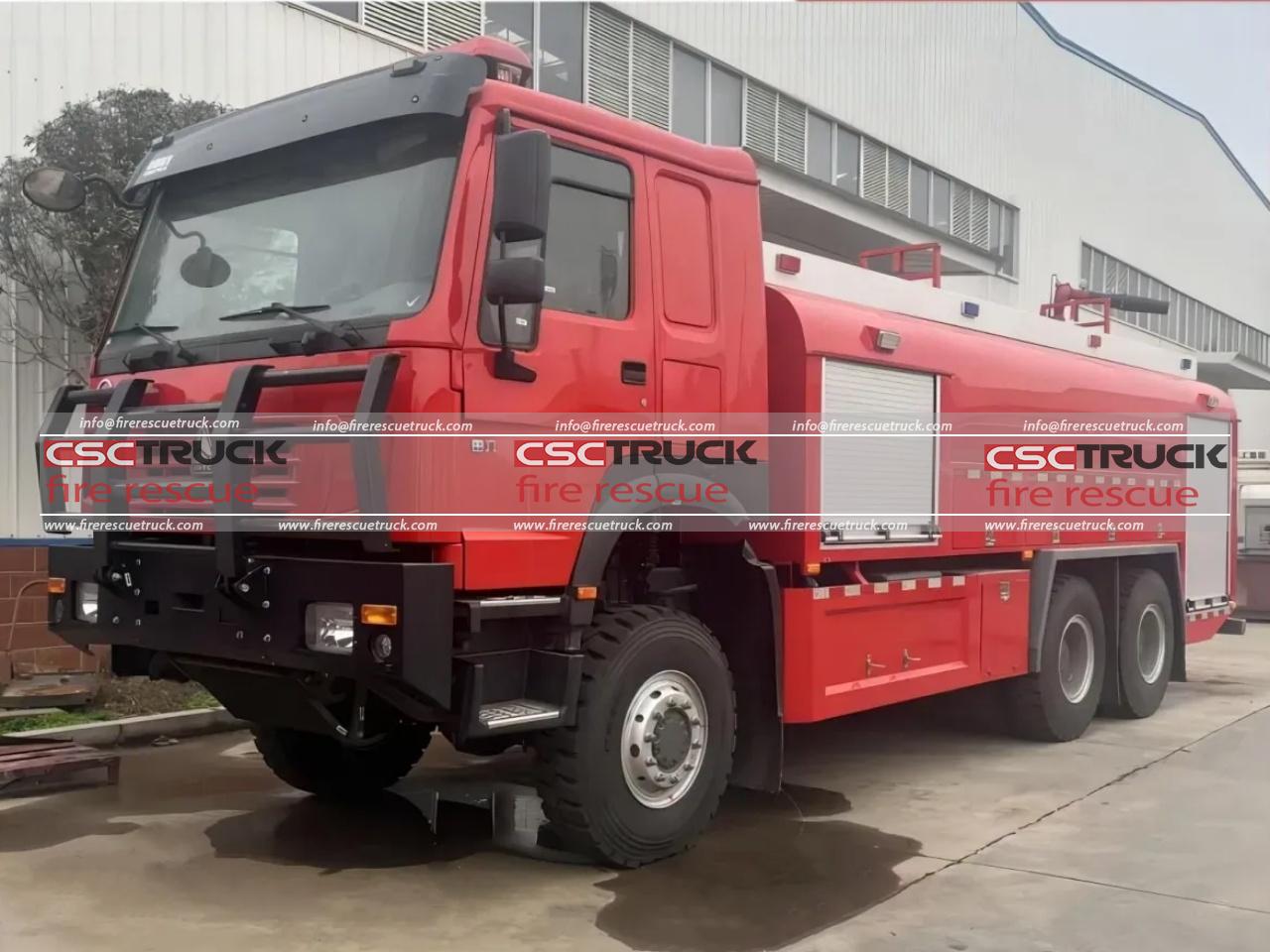
A 6×6 fire truck is built on a heavy-duty 3-axle chassis with power delivered to all 6 wheels. This configuration provides excellent traction and stability while allowing the vehicle to carry large firefighting systems.
Modern 6×6 wildland fire trucks are commonly equipped with:
- Large water tanks
- Foam systems
- High-pressure fire pumps
- Front and roof-mounted monitors
- Rescue equipment compartments
- Crew cabins
- Off-road suspension systems
- Specialized tires for mud, sand, and rocky terrain
The main advantage of a 6×6 platform is that it combines truck practicality with off-road capability. These vehicles can travel quickly between fire stations and incident areas while carrying substantial firefighting resources.
Advantages of 6×6 Fire Trucks for Wildland Firefighting
1. Higher Speed and Faster Deployment
One of the biggest advantages of a 6×6 fire truck is mobility over long distances.
Wildfires can spread across thousands of acres, requiring firefighting vehicles to relocate quickly between different areas. A wheeled 6×6 truck can achieve much higher road speeds than tracked vehicles, allowing faster deployment from stations, highways, and rural roads.
For emergencies where every minute matters, rapid arrival can significantly improve initial fire suppression.
2. Larger Water and Equipment Capacity
Wildland firefighting requires more than mobility. Firefighters need enough water, foam, tools, and supplies to continue operations after reaching the fire line.
A 6×6 chassis supports:
- Larger water tanks
- Additional foam storage
- Bigger pumps
- More rescue equipment
- Larger crew compartments
Compared with many tracked vehicles, 6×6 trucks generally provide greater payload capacity. This allows them to operate independently for longer periods without constant resupply.
For example, CSCTRUCK Fire Rescue Truck’s off-road fire trucks can be customized with different tank capacities, pump systems, and firefighting configurations depending on operational requirements.
3. Better Highway and Mixed-Terrain Performance
Wildland incidents rarely happen in only 1 type of environment. A firefighting vehicle may need to travel:
- Highways
- Dirt roads
- Forest trails
- Construction areas
- Mountain access routes
A 6×6 truck performs well across mixed terrain. It can drive efficiently on paved roads while still maintaining strong off-road capability.
This makes it suitable for:
- Forestry departments
- Rural fire services
- Industrial fire brigades
- Mining operations
- Oil and gas facilities
4. Easier Maintenance and Logistics
Because 6×6 fire trucks use conventional truck technology, maintenance is generally easier compared with tracked vehicles.
Advantages include:
- More widely available spare parts
- Standard truck servicing procedures
- Lower transportation costs
- Easier driver training
For fire departments operating large fleets, these factors can significantly reduce long-term operating expenses.
Understanding Tracked Firefighting Vehicles
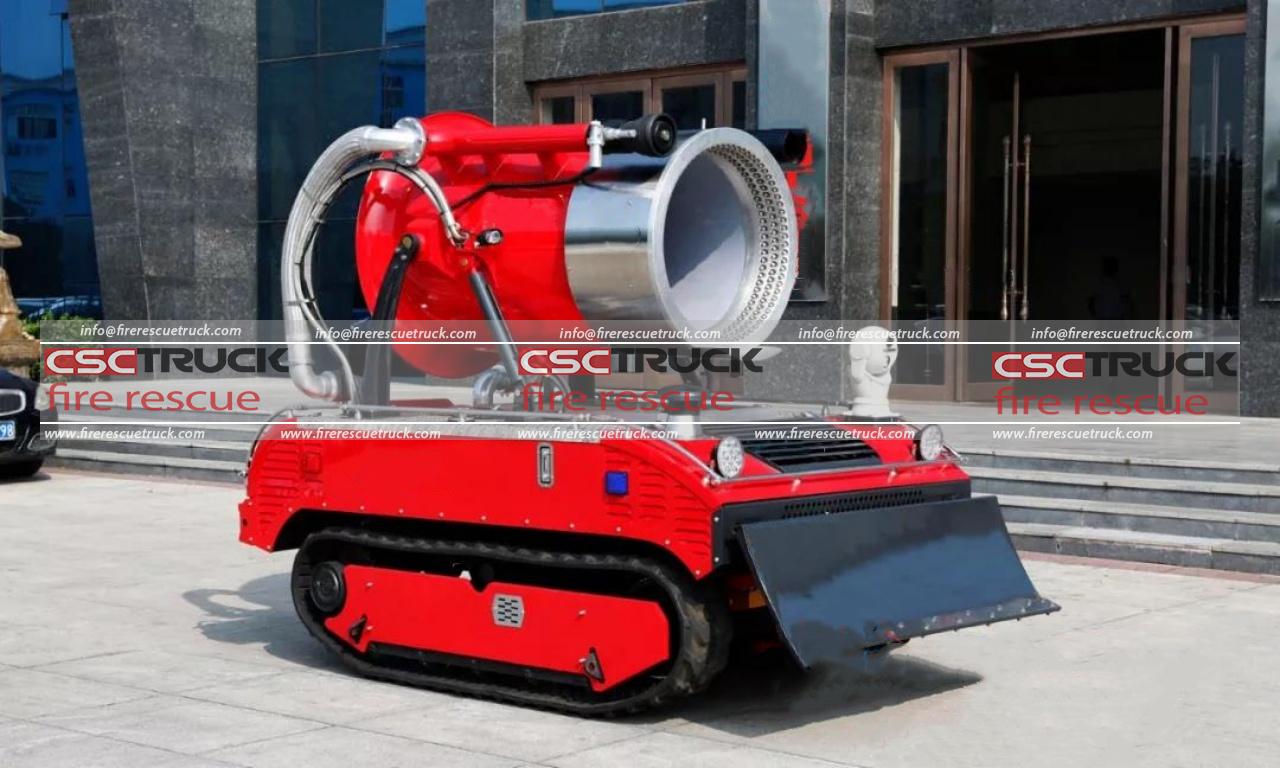
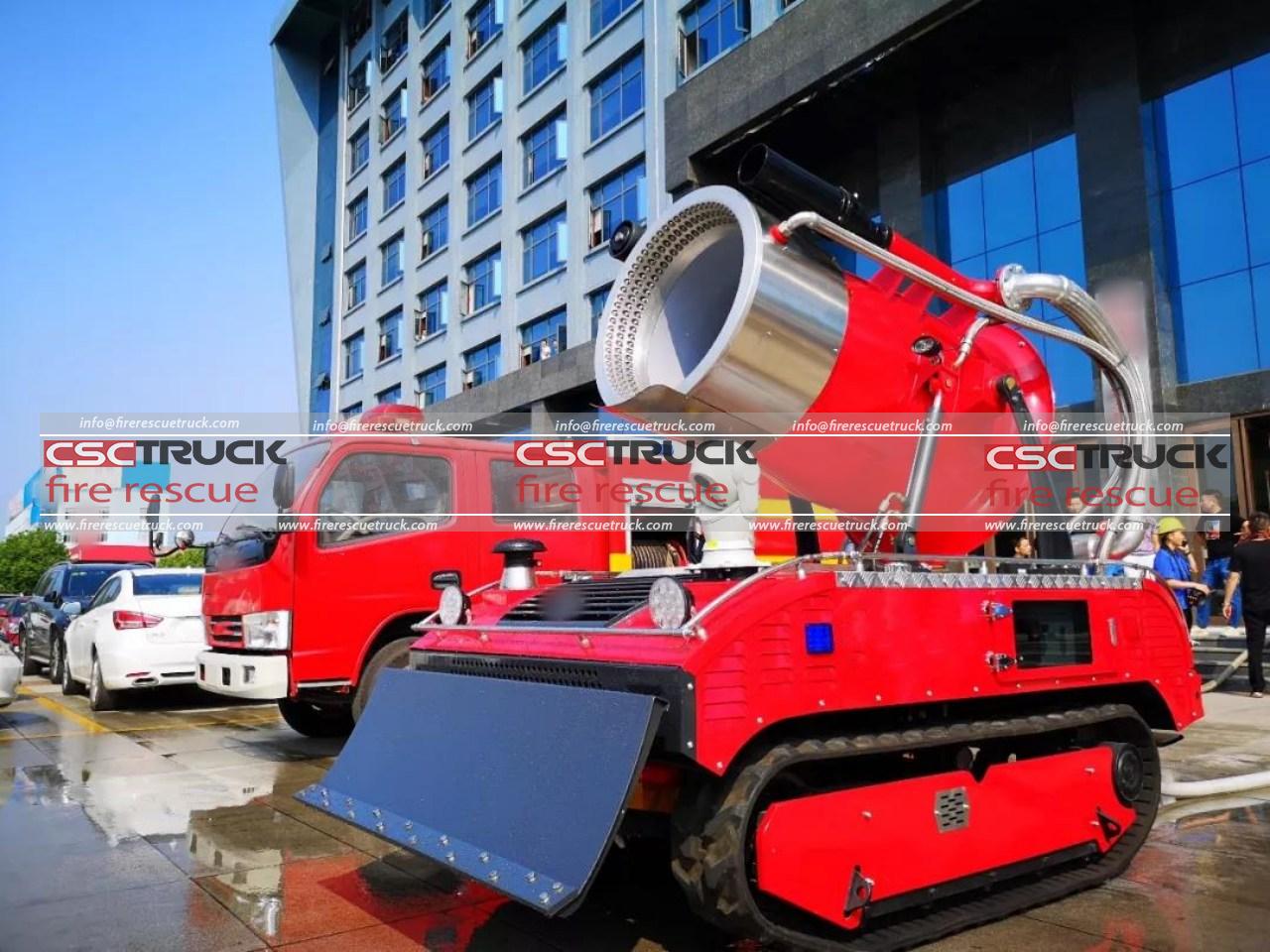
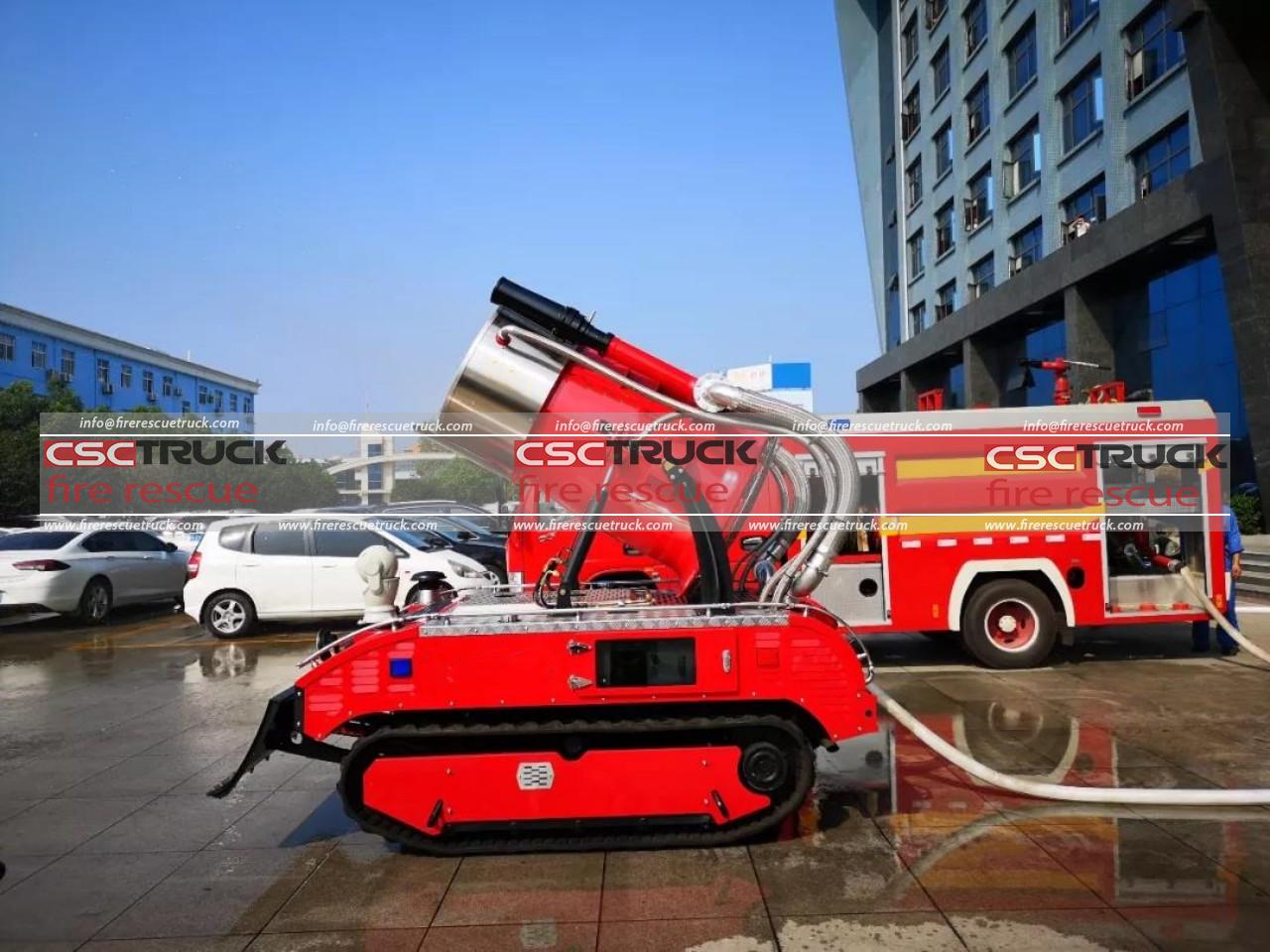
Tracked firefighting vehicles replace traditional wheels with continuous tracks similar to military vehicles or construction equipment.
Instead of relying on individual tires, tracks distribute vehicle weight over a larger surface area. This reduces ground pressure and allows movement across extremely soft or unstable terrain.
Tracked vehicles are often used in:
- Deep mud
- Swamps
- Snow-covered areas
- Steep mountain terrain
- Volcanic regions
- Areas damaged by natural disasters
Advantages of Tracked Vehicles for Wildland Firefighting
1. Superior Extreme-Terrain Mobility
The biggest strength of tracked vehicles is their ability to operate where wheeled vehicles struggle.
Tracks provide:
- Excellent flotation on soft ground
- Reduced risk of sinking
- High climbing ability
- Stable movement over obstacles
In areas with deep mud, loose volcanic soil, or destroyed access roads, tracked vehicles can continue moving when conventional trucks may become immobilized.
2. Lower Ground Pressure
A tracked vehicle spreads its weight over a much larger contact area compared with tires.
This creates lower ground pressure, allowing it to travel across:
- Wet forests
- Marshlands
- Loose soil
- Snow
- Ash-covered areas
During wildfire operations, this capability can provide access to remote fire zones that are otherwise unreachable.
3. Increased Stability on Difficult Slopes
Tracked platforms usually have excellent balance on uneven terrain.
They can maintain traction when climbing:
- Steep hills
- Rocky slopes
- Damaged roads
This makes them valuable for specialized firefighting teams operating in mountainous regions.
Limitations of Tracked Firefighting Vehicles
Despite their impressive off-road ability, tracked vehicles also have disadvantages.
1. Lower Road Speed
Tracked vehicles are generally slower than wheeled trucks.
Long-distance transportation often requires:
- Special trailers
- Additional logistics support
- More preparation time
For rapidly spreading wildfires covering large regions, this can become a limitation.
2. Higher Maintenance Requirements
Tracks contain many moving components, including:
- Track chains
- Rollers
- Drive systems
- Suspension components
These systems can require specialized maintenance and may increase operating costs.
3. Limited Firefighting Payload
Many tracked vehicles prioritize mobility over carrying capacity.
Compared with a heavy-duty 6×6 fire truck, some tracked platforms may carry:
- Less water
- Fewer firefighters
- Less equipment
This means they often work best as specialized support vehicles rather than primary attack engines.
6×6 vs Tracked Vehicle: Direct Comparison
| Feature | 6×6 Fire Truck | Tracked Fire Vehicle |
|---|---|---|
| Road Speed | Excellent | Limited |
| Extreme Terrain Ability | Very Good | Excellent |
| Water Capacity | High | Medium |
| Payload Capacity | High | Medium |
| Maintenance | Easier | More Complex |
| Operating Cost | Lower | Higher |
| Long-Distance Deployment | Excellent | Requires Support |
| Deep Mud/Snow Capability | Good | Excellent |
| Multi-Purpose Use | Excellent | Specialized |
Which One Is Better for Wildland Firefighting?
For most wildfire agencies, a 6×6 fire truck provides the best overall balance.
It offers:
- Strong off-road capability
- High water capacity
- Fast deployment
- Lower operating costs
- Easier maintenance
- Greater operational flexibility
A 6×6 fire truck is ideal for forests, grasslands, rural areas, and industrial wildfire protection.
However, tracked vehicles are superior when operating conditions become extreme. In environments with deep mud, destroyed roads, steep mountains, or inaccessible terrain, tracked platforms may provide capabilities that wheeled trucks cannot match.
The best solution for many professional firefighting organizations is not choosing one over the other, but using them together:
- 6×6 fire trucks for rapid response and main firefighting operations
- Tracked vehicles for specialized access and extreme terrain missions
Conclusion
The choice between a 6×6 fire truck and a tracked firefighting vehicle depends on the mission environment.
A 6×6 wildland fire truck is the better all-around firefighting solution, offering excellent mobility, large firefighting capacity, fast deployment, and practical ownership costs. A tracked vehicle is the better choice for the most challenging terrain where maximum mobility is required.
For forestry agencies, industrial operators, and emergency response organizations seeking a reliable wildfire solution, CSCTRUCK Fire Rescue Truck’s 6×6 off-road fire trucks provide a powerful combination of terrain capability, firefighting performance, and customization options for demanding environments worldwide.