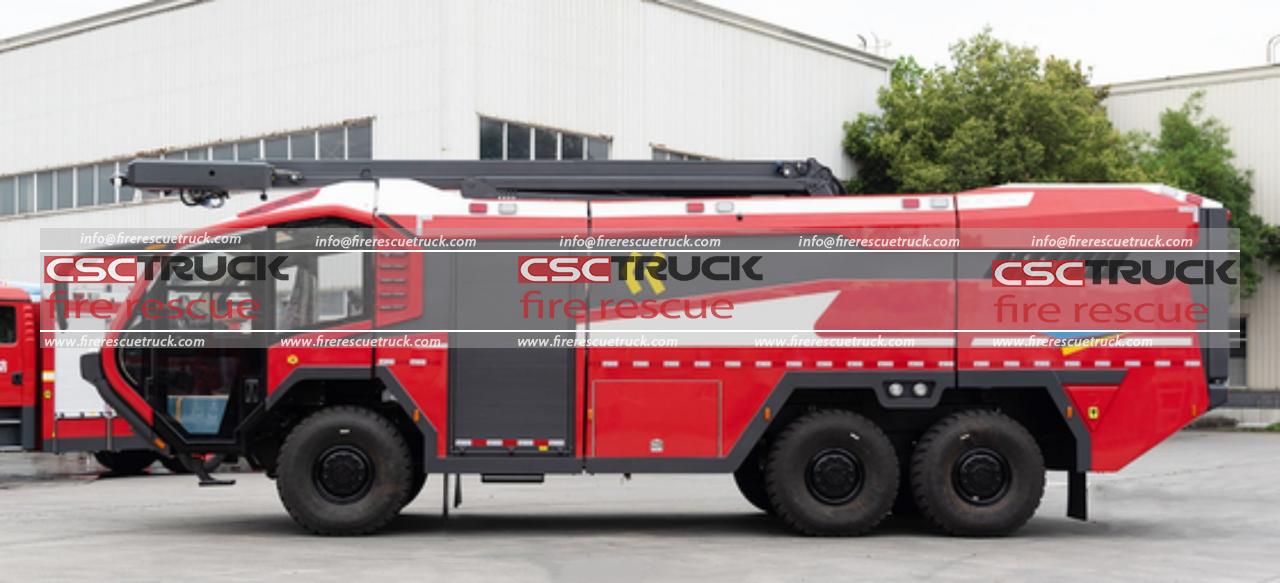
Airports handle thousands of aircraft movements every day, and aircraft emergencies require specialized firefighting equipment capable of reaching incidents within seconds. Unlike conventional fire engines, airport fire trucks—also known as Aircraft Rescue and Firefighting (ARFF) vehicles—are designed specifically for aircraft accidents, aviation fuel fires, runway emergencies, and large-scale rescue operations.
Choosing the right airport fire truck requires careful evaluation of specifications such as vehicle size, firefighting capacity, chassis performance, pump flow rate, monitor range, rescue equipment, and operational requirements. This buyer’s guide explains the key specifications that airport operators, aviation authorities, and emergency response organizations should consider before purchasing an ARFF vehicle.
About CSCTRUCK Fire Rescue Truck
CSCTRUCK Fire Rescue Truck is a professional manufacturer and supplier of specialized firefighting vehicles, including airport fire trucks, rescue fire trucks, water tender trucks, foam fire trucks, and customized emergency vehicles. With factory-direct production capabilities, CSCTRUCK Fire Rescue Truck provides complete solutions for airports, industrial facilities, government agencies, and emergency organizations worldwide.
The company offers a wide range of ARFF vehicles with different capacities and configurations, including 4×4, 6×6, and heavy-duty airport rescue fire trucks. Models can be equipped with large water tanks, foam tanks, dry powder systems, high-flow pumps, roof monitors, front monitors, and advanced rescue systems to meet different airport firefighting requirements.
1. What Is an Airport Fire Truck?
An airport fire truck is a specialized emergency vehicle designed to fight aircraft fires and rescue passengers and crew members during aviation accidents. These vehicles are built for:
Rapid acceleration and high-speed response
Operation on airport runways and unpaved areas
Large-volume fire suppression
Long-distance water and foam projection
Aircraft penetration and rescue operations
Compared with standard municipal fire engines, ARFF trucks carry much larger quantities of extinguishing agents and use specialized chassis systems for fast movement across large airport areas.
A typical airport fire truck combines:
Water tank
Foam concentrate tank
Dry chemical powder system (optional)
High-capacity fire pump
Roof-mounted fire monitor
Front bumper monitor
Rescue tools
Emergency lighting and communication systems
2. Key Airport Fire Truck Specifications Buyers Should Evaluate
2.1 Chassis Type and Driving Configuration
The chassis determines the vehicle’s mobility, durability, and ability to operate under extreme conditions.
Common airport fire truck configurations include:
4×4 Airport Fire Trucks
Suitable for:
Small airports
Regional airports
Private airfields
Aircraft maintenance facilities
Advantages:
Lower purchase cost
Better maneuverability
Easier maintenance
6×6 Airport Fire Trucks
Heavy-duty airports typically choose 6×6 configurations because they provide:
Higher load capacity
Improved traction
Better off-road performance
Greater stability when carrying large tanks
For example, CSCTRUCK Fire Rescue Truck’s 6×6 ARFF models are designed with large capacities and high-speed response capability. One 6×6 ARFF model carries 12,000L water, 1,500L foam, and 250kg dry powder, with a maximum speed of 115km/h.
3. Water Tank and Foam Tank Capacity
Tank capacity is one of the most important specifications for airport fire trucks.
Aviation fires, especially fuel fires, can spread rapidly and require large amounts of foam solution.
Typical capacities include:
Vehicle Class
Water Capacity
Foam Capacity
Small Airport Fire Truck
3,000–6,000L
300–1,000L
Medium ARFF Truck
6,000–10,000L
1,000–2,000L
Heavy ARFF Truck
10,000–15,000L+
1,500–3,000L
For example, CSCTRUCK Fire Rescue Truck’s electric 6×6 airport rescue fire truck features an 11,000L water tank and a 1,000L foam tank, supporting large-scale airport firefighting operations.
Tank materials are also important. Common materials include:
Stainless steel
Aluminum alloy
PP composite materials
PP composite tanks are increasingly used because they offer:
Corrosion resistance
Lightweight construction
Long service life
4. Fire Pump Flow Rate
The fire pump determines how quickly an airport fire truck can deliver extinguishing agents.
Important pump specifications include:
Flow rate (L/s)
Pressure rating (bar or MPa)
Priming system
Continuous operation capability
Typical ARFF pump performance:
Medium vehicles: 50–100 L/s
Heavy vehicles: 100–150 L/s or higher
For example, a CSCTRUCK Fire Rescue Truck 13-ton hybrid airport firefighter truck uses a 150 L/s fire pump, allowing rapid foam and water delivery during aircraft emergencies.
A higher flow rate helps firefighters:
Cover larger fire areas
Control aviation fuel fires faster
Protect aircraft structures
Reduce emergency response risks
5. Fire Monitor Range and Performance
Fire monitors are essential to ARFF trucks because they let firefighters attack fires from a safe distance.
Airport fire trucks normally include:
Roof Monitor
The main firefighting monitor provides:
High flow output
Long projection distance
Wide coverage area
Typical specifications:
Flow rate: 60–120 L/s
Water range: 70–100 meters
Foam range: 60–90 meters
Front Bumper Monitor
The front monitor allows firefighters to suppress fires while approaching aircraft.
Advantages:
Faster initial attack
Better runway operation
Improved driver visibility
Some advanced ARFF vehicles can discharge extinguishing agents while moving toward the emergency scene.
6. Vehicle Speed and Acceleration
Airport emergencies require extremely fast response.
Important performance parameters include:
Maximum speed
0–80 km/h acceleration time
Power-to-weight ratio
Driving stability
Heavy ARFF vehicles may weigh over 30 tons when fully loaded but still need high-speed performance.
For example, a CSCTRUCK Fire Rescue Truck6×6 hybrid airport firefighter truck has a maximum speed of 120 km/h and can accelerate from 0–80 km/h in approximately 20 seconds.
7. Rescue Equipment and Additional Systems
Modern airport fire trucks are not only firefighting vehicles. They are also rescue platforms.
Common optional equipment includes:
Aircraft Piercing System
Used to:
Penetrate aircraft fuselage
Deliver extinguishing agents inside cabins
Improve internal fire suppression
Rescue Tools
Including:
Hydraulic cutters
Spreaders
Winches
Cutting equipment
Dry Powder System
Useful for:
Fuel fires
Chemical fires
Electrical hazards
Foam Systems
Foam is essential for aviation fuel fires because it:
Covers fuel surfaces
Prevents vapor release
Reduces reignition risk
8. Dimensions and Weight Considerations
Before purchasing, airports must ensure the vehicle matches their infrastructure.
Important measurements include:
Overall length
Width
Height
Turning radius
Gross vehicle weight
Heavy ARFF trucks commonly have:
Length: 10–12 meters
Width: 2.8–3.2 meters
Height: 3.5–4 meters
Weight: 30,000–40,000kg
For example, CSCTRUCK Fire Rescue Truck’s electric 6×6 airport rescue fire truck measures 11,700×3,160×3,960mm and has a full load weight of 39,000kg.
9. How to Choose the Right Airport Fire Truck
When selecting an ARFF vehicle, buyers should consider:
Airport Size
Small regional airports may need:
Compact 4×4 vehicles
Lower capacity trucks
Large international airports usually require:
Heavy-duty 6×6 ARFF trucks
Large foam and water capacity
Advanced rescue systems
Aircraft Type
Different aircraft sizes require different firefighting capabilities.
Consider:
Aircraft category
Passenger capacity
Fuel volume
Emergency response regulations
Operating Environment
Evaluate:
Climate conditions
Terrain
Runway size
Maintenance capability
Conclusion
Airport fire truck specifications directly influence emergency response capability, firefighting efficiency, and passenger safety. Key factors such as chassis configuration, tank capacity, pump flow rate, monitor range, speed, and rescue systems should all be carefully evaluated before purchase.
CSCTRUCK Fire Rescue Truckprovides customized airport firefighting solutions with multiple ARFF configurations, including 4×4 and 6×6 airport fire trucks designed for different operational requirements. With factory manufacturing experience, flexible customization options, and advanced firefighting technologies, CSCTRUCK Fire Rescue Truck supports airports worldwide in building reliable emergency response systems.
For airport authorities and firefighting organizations looking for a professional ARFF vehicle, selecting the right specifications is the first step toward ensuring fast, effective, and safe aviation emergency response.